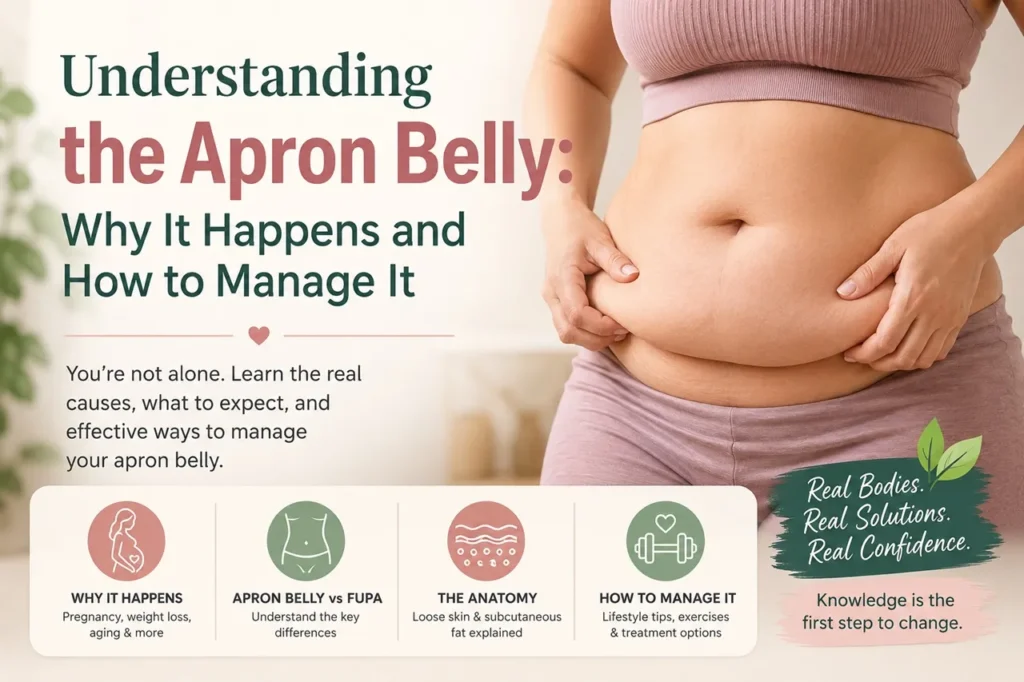

A heavier lower belly changes the way movement and exercise feel, and not always in ways that standard fitness advice accounts for. Floor exercises can be uncomfortable or impossible when an overhang presses against the mat. High-impact routines can cause chafing, pain, or simply feel humiliating in a gym setting. If you have looked at exercise guides and thought “none of this applies to me,” this article is written specifically for you. The goal here is not to push you through a punishing programme but to show you how consistent, low-impact movement and exercise can contribute to fat loss, improved circulation, and real confidence, without requiring you to do anything that hurts or feels unsafe.
For a broader picture, our guide on how to get rid of an apron belly covers causes, diet, exercise and long-term options in one place.
Quick answer: how to approach movement and exercise
If you want a single principle to anchor everything else: start with what you can sustain, not what looks most impressive. Apron belly exercises do not need to be intense to be effective. The body responds to consistent caloric expenditure and gentle muscular engagement over time. Low-impact movement such as walking, seated work and water-based activity burns calories, reduces visceral fat, and builds a habit of controlled movement exercises for core strength without the joint stress or discomfort that high-impact routines create.
The practical sequence is: choose a format that does not cause pain or skin irritation, build duration before intensity, and track consistency rather than performance. Readers who want to know how to get rid of apron belly through exercise often expect dramatic protocols. The reality is that steady, repeatable effort across weeks and months outperforms short bursts of punishing activity that lead to injury or dropout.
Pitfall to check early: if you are avoiding all movement because nothing feels accessible, that avoidance itself becomes the barrier. Even ten minutes of slow walking counts as movement and exercise, and it is a legitimate starting point.
Step-by-step process for movement and exercise
Understanding what an apron belly actually is helps clarify why certain exercises feel different for this body type. The overhang is a combination of subcutaneous fat, sometimes loose skin, and in many cases weakened abdominal muscles, and each of those factors responds differently to movement. The steps below are ordered so that each one builds on the last.
Prepare the right setup

Before you begin any routine, sort out the practical environment. Clothing matters more than most fitness guides acknowledge. Compression shorts or a supportive belly band can hold the overhang in place during movement, reducing friction and making exercise involving controlled movement far more comfortable. Look for seamless, moisture-wicking fabric that sits firmly without digging in.
If you plan to do any seated or standing work at home, clear enough floor space to move your arms freely and step side to side. A chair with a firm seat and no armrests is useful for seated apron belly exercises. If you intend to walk outdoors, choose a route with a smooth surface and minimal inclines until your stamina builds.
Check your footwear. Supportive trainers with cushioning reduce impact on knees and hips, which carry more load when the lower belly is heavier. This is not a minor detail. Poor footwear is one of the most common reasons people stop exercising after a few sessions because of joint pain.
Finally, set a realistic time target. Twenty minutes of movement and exercise on five days per week is a credible starting goal. It is more achievable than an hour three times per week for most people in this situation, and the frequency matters for building habit.
Follow the core process

Begin each session with two to three minutes of slow walking in place or gentle shoulder rolls to warm the body without jarring it. This is especially important when the lower belly is heavy, because the spine and hips need time to adjust to load.
Walking is the single most accessible apron belly exercise available. It requires no equipment, no gym membership, and no floor work. Start with flat routes at a pace where you can hold a conversation. Gradually extend duration, adding five minutes every week or two, before you think about speed. A brisk thirty-minute walk burns a meaningful number of calories and, over weeks, contributes to the caloric deficit needed to reduce overall body fat.
Seated exercises are a practical complement to walking. Seated marching, lifting alternate knees while sitting upright in a chair, engages the hip flexors and lower abdominals without any pressure on the overhang. Seated side bends and gentle torso rotations improve spinal mobility. These are real apron belly exercises, not consolation prizes; they build the muscular endurance that makes longer walks easier.
Water-based movement is worth considering if you have access to a pool. The buoyancy removes pressure from joints and the overhang, making exercise involving controlled movement far more comfortable. Even slow walking in chest-deep water provides resistance training for the legs and core.
Standing wall push-ups and standing calf raises can be added once walking feels routine. Both are low-impact, require no floor work, and build upper body and lower leg strength that supports posture, which in turn makes the lower belly appear and feel less burdensome.
Cool down with two minutes of slow walking and gentle stretching of the calves, hamstrings, and lower back. Never skip this when you are carrying extra abdominal weight, as the spine is under more anterior load than usual.
Check whether it is working

Progress with movement and exercise when you have a heavier lower belly does not always show up on the scales first. Look for these signs that the approach is working:
Walking the same route feels easier than it did two weeks ago. This indicates cardiovascular adaptation. Seated exercises feel less effortful, suggesting muscular endurance is building. You are completing sessions more consistently: five days a week rather than two. Clothing fits differently around the hips and thighs even if the belly itself has not visibly changed yet. Energy levels during the day have improved.
Fat loss from the lower abdomen tends to be slower than from other areas, so do not use the overhang as your only measure of progress. Track your progress over months, not weeks. If you are also managing diet alongside movement and exercise, a modest caloric deficit combined with consistent activity is the evidence-based route to reducing the fat component of the overhang.
If nothing is improving after six to eight weeks of consistent effort, the most likely causes are: sessions are too short, diet is counteracting the deficit, or an underlying health condition is affecting metabolism. In that case, a GP appointment is the right next step.
Avoid the common mistakes
The most common mistake is starting too hard. Readers who want to know how to get rid of apron belly sometimes attempt intense core work (crunches, leg raises, planks) before their body is conditioned for it. These exercises are not wrong in principle, but they are often painful or impossible when the overhang is large, and failing at them early kills motivation.
A second mistake is avoiding all exercise involving controlled movement because floor work is off the table. Floor work is one option among many. Seated and standing apron belly exercises are equally valid and often more appropriate at the start.
Skipping the support garment is another common error. Without compression, the overhang moves freely during exercise, causing skin-on-skin friction, chafing, and discomfort that makes people stop. A simple pair of high-waisted compression shorts changes the experience considerably.
Finally, treating rest days as failures. Rest is part of the process. Two rest days per week allow muscles to recover and reduce the risk of overuse injuries that would force a longer break.
When to adjust your movement and exercise approach
There are situations where the standard low-impact approach needs modification. If you experience lower back pain during or after walking, shorten the session and add seated core work to strengthen the muscles supporting the spine. If skin irritation or rashes develop under the overhang, prioritise moisture-wicking compression wear and apply a barrier cream before exercise.
If you have been diagnosed with diastasis recti, a separation of the abdominal muscles that is common after pregnancy, avoid exercises that cause the belly to dome or bulge outward. Seated marching and gentle pelvic tilts are generally safe, but a physiotherapist should guide your specific programme.
If joint pain in the knees or hips limits walking, water-based movement or cycling on a recumbent bike are the most practical alternatives. Both provide cardiovascular benefit and caloric expenditure without the impact load.
When movement and exercise have become consistent and comfortable over two to three months, it is reasonable to introduce slightly more challenging apron belly exercises: standing resistance band work, gentle incline walking, or longer swimming sessions. Increase one variable at a time (duration, resistance or frequency) and never all three simultaneously.
FAQ about movement and exercise
What is the difference between movement and exercise on a fitness tracker?
Most fitness trackers separate passive movement (steps and general activity throughout the day) from dedicated exercise sessions. Both count toward overall caloric expenditure, so daily movement matters even outside formal workouts.
What are the 4 movement exercises?
The four foundational movement patterns are push, pull, hinge, and squat. For apron belly exercises, low-impact versions of each (wall push-ups, seated rows with a band, standing hip hinges and shallow chair squats) are the most accessible starting points.
Does exercise need to be intense to help a heavier lower belly?
Consistency matters more than intensity. Short, regular exercise sessions with controlled movement produce better long-term results than occasional intense efforts, especially when managing a heavier lower belly.
How do you choose where to start?
Choose based on what you can do without pain today, not what you aspire to do eventually. Walking and seated apron belly exercises are the most universally accessible starting points for this body type.
What mistakes make people give up?
Starting too intensely, skipping compression support, and using the overhang as the only measure of progress are the three most common mistakes that cause people to stop before results appear.
Is daily low-impact movement worth it?
Yes. Daily low-impact movement and exercise improves cardiovascular health, supports fat loss, and builds the muscular endurance that makes everyday tasks easier, all of which matter when carrying extra abdominal weight.
How do you judge whether an exercise suits you?
Compare how each option feels in practice: does it cause pain, chafing, or breathlessness that stops you mid-session? The best apron belly exercises are the ones you will actually repeat consistently over months.
Recommended next steps
If you are new to movement and exercise with a heavier lower belly, the clearest next step is to commit to one format for two weeks before adding anything else. Walking is the most practical choice for most people. Set a specific time (morning, lunchtime or evening) and treat it as a fixed appointment.
Once walking feels routine, add two or three seated apron belly exercises on the same days. Seated marching, torso rotations, and seated side bends take fewer than ten minutes and require no equipment. From there, the progression is simply more time, more days, and gradually more challenge, always guided by what your body tolerates rather than what a generic fitness plan demands.
Our guide on how to get rid of an apron belly brings together exercise, diet and other practical options. It shows how movement fits into a wider approach. Exercise involving controlled movement is one piece of the picture, and combining it with modest dietary changes is where the most meaningful progress tends to happen.