
Apron belly surgery (panniculectomy) removes excess hanging skin for medical reasons and may be covered by insurance. A tummy tuck (abdominoplasty) is a cosmetic procedure that removes skin and tightens abdominal muscles. The right choice depends on your goals, health history, and whether you’re seeking functional relief or aesthetic improvement.
Losing a significant amount of weight is an achievement worth celebrating. But for many people, that milestone comes with an unexpected challenge: a large fold of loose, hanging skin across the lower abdomen commonly called an apron belly, or medically, a panniculus.
This excess skin can cause more than just discomfort with clothing. Chronic skin rashes, persistent infections, hygiene difficulties, and lower back strain are all real consequences that affect daily life. And for those dealing with these challenges, the question of surgery often comes up, but which procedure is actually right for you?
Two options come up most often: panniculectomy (the clinical term for apron belly surgery) and abdominoplasty (commonly known as a tummy tuck). While both involve removing excess abdominal skin, they serve distinctly different purposes, carry different costs, and suit different patients.
This guide breaks down everything you need to know clearly, without medical jargon, so you can walk into a surgeon’s consultation feeling informed and prepared.
What Is a Panniculectomy (Apron Belly Surgery)?
A panniculectomy is a surgical procedure designed to remove the pannus, the overhanging fold of skin and fat that droops below the lower abdomen, sometimes covering the pubic area entirely.
The primary goal is medical, not cosmetic. Surgeons perform panniculectomies to address physical health problems caused by excess skin, including:
- Recurring skin rashes or intertrigo (skin inflammation caused by skin-on-skin friction)
- Chronic bacterial or fungal infections in the skin fold
- Difficulty with personal hygiene
- Skin ulcers or breakdown
- Restricted mobility or interference with walking
The procedure involves a horizontal incision low on the abdomen. The surgeon removes the hanging tissue, sometimes a substantial amount of skin and fat and closes the incision. Crucially, a standard panniculectomy does not include muscle repair. The abdominal muscles are left as-is.
Who is a good candidate? Panniculectomy is typically recommended for people who have experienced massive weight loss, whether through bariatric surgery or lifestyle changes and are left with a significant panniculus that is causing verifiable medical problems. Most surgeons require patients to have maintained a stable weight for at least six months before proceeding.
What Is a Tummy Tuck (Abdominoplasty)?
A tummy tuck is a cosmetic surgical procedure that reshapes and tightens the entire abdominal area. Unlike a panniculectomy, it goes further than skin removal.
During an abdominoplasty, the surgeon:
- Removes excess skin from the lower and sometimes mid-abdomen
- Tightens the rectus abdominis muscles, correcting diastasis recti (separation of the abdominal wall that commonly occurs during pregnancy)
- Repositions or reshapes the belly button (umbilicoplasty) for a natural, proportionate appearance.
- May use liposuction to contour the surrounding areas
The result is a flatter, firmer, and more toned-looking abdomen. The goal here is aesthetic improvement and core reconstruction, not the treatment of a medical condition.
Who is a good candidate? A tummy tuck suits people who are close to their ideal weight, have loose or sagging abdominal skin, and want visible aesthetic improvement. It’s especially popular among those who have completed their family (since future pregnancies can reverse the results) and individuals who have lost significant weight but want a more sculpted contour.
For a broader overview of surgical and non-surgical options available for managing an apron belly, visit our full guide on how to reduce an apron belly.
Panniculectomy vs. Tummy Tuck: Side-by-Side Comparison
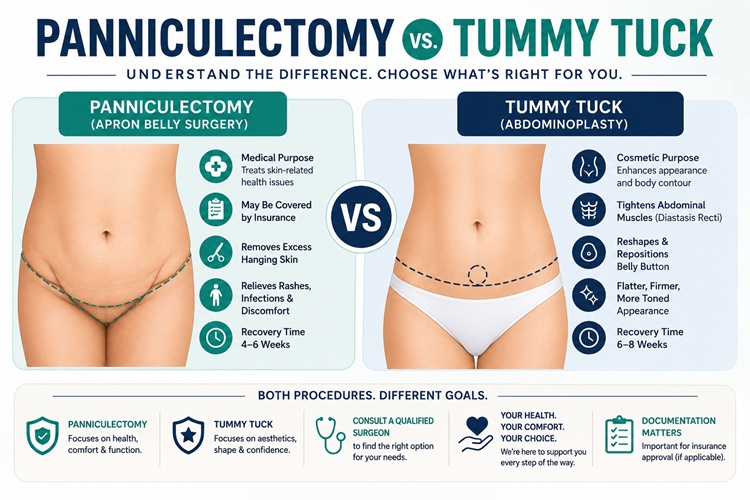
| Feature | Panniculectomy | Tummy Tuck (Abdominoplasty) |
| Primary Goal | Remove medically problematic hanging skin | Cosmetic reshaping and skin removal |
| Muscle Repair | No | Yes, corrects diastasis recti |
| Insurance Coverage | Often covered when medically necessary | Rarely covered; typically self-funded |
| Recovery Time | 4–6 weeks | 6–8 weeks |
| Belly Button Repositioning | No | Yes |
| Ideal Candidate | Significant weight loss with skin-related health issues | Near-ideal weight with cosmetic concerns |
| Procedure Complexity | Moderate | Higher (more extensive surgery) |
The Medical vs. Cosmetic Debate: Why It Matters for Insurance
This distinction is one of the most practical differences between the two procedures, and it directly affects cost.
Panniculectomy and insurance coverage: Because apron belly surgery is performed to address documented medical conditions (infections, rashes, mobility issues), many health insurers, including NHS coverage in the UK, and Medicare or Medicaid in the US, will consider covering it. However, coverage is not guaranteed. You’ll typically need:
- Documented evidence of chronic skin infections or rashes
- Proof that conservative treatments (antifungal creams, hygiene protocols) have failed
- Medical photographs and a letter from your GP or specialist
Tummy tuck and insurance coverage: Abdominoplasty is classified as elective cosmetic surgery in virtually all cases. Insurers do not cover it. Patients pay out of pocket, and costs can range from £4,000 to £10,000+ in the UK, depending on the surgeon, clinic, and extent of the procedure.
The bottom line: If you’re pursuing surgery primarily for health reasons and can document those reasons, a panniculectomy may be financially accessible in a way a tummy tuck simply is not.
How to Choose the Right Procedure for You
The right procedure isn’t always obvious, and it’s rarely a one-size-fits-all answer. Here are the key questions to ask yourself:
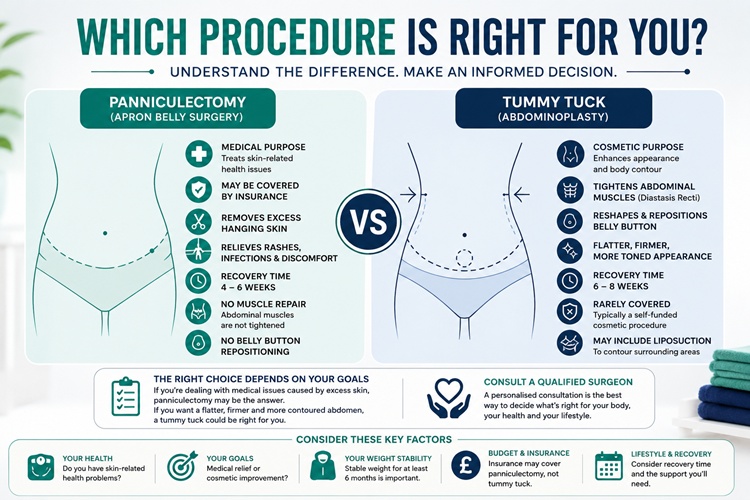
Are you dealing with skin-related health problems?
If chronic rashes, infections, or hygiene challenges are affecting your daily life, a panniculectomy is likely the more appropriate starting point. It addresses the physical cause of those problems and may be partially or fully covered by insurance.
Is your main concern how your abdomen looks and feels?
If your skin is reasonably healthy but you want a flatter stomach, improved core strength, or correction of post-pregnancy muscle separation (diastasis recti), a tummy tuck will deliver results that a panniculectomy cannot. Abdominoplasty targets the muscles beneath the skin, something a standard panniculectomy skips entirely.
Can these procedures be combined?
In some cases, yes. A surgeon may perform both a panniculectomy and abdominoplasty in a single operation, particularly when the patient has both medical and cosmetic needs. This is a more complex procedure with a longer recovery, but it eliminates the need for two separate surgeries.
What does your surgeon recommend?
No article, including this one, can replace a thorough consultation with a qualified, board-certified plastic surgeon. Only a physical examination can determine the extent of your panniculus, assess your overall health, and identify whether you’re a suitable surgical candidate.
To understand what real outcomes look like before committing to surgery, our apron belly before-and-after pictures guide offers an honest look at both procedures.
Recovery and Aftercare: What to Expect
Recovery from both procedures shares some similarities, but the timeline and demands differ.
Pain Management
Both surgeries involve post-operative discomfort, managed with prescribed pain medication in the first week or two. Swelling, bruising, and tenderness in the abdominal area are normal and expected.
Compression Garments
Surgeons routinely recommend wearing a compression garment for several weeks after either procedure. These garments reduce swelling, support healing tissue, and help the skin conform to its new contour.
Activity Restrictions
- Panniculectomy: Most patients return to light daily activities within 4–6 weeks. Strenuous exercise and heavy lifting should be avoided during this period.
- Tummy tuck: Recovery typically extends to 6–8 weeks before normal activity resumes. Because muscle repair is involved, the abdomen takes longer to heal, and any strain on the core must be avoided.
Scarring
Both procedures leave a horizontal scar low on the abdomen, ideally positioned so it falls below the bikini line. Scars are permanent but typically fade significantly over 12–18 months. A skilled surgeon will place incisions carefully to minimise visibility.
Frequently Asked Questions
Yes, in some cases. When a patient has both medical necessity (qualifying for panniculectomy) and aesthetic goals (requiring muscle repair), a surgeon may combine both procedures into a single operation. This approach reduces overall recovery time compared to two separate surgeries.
Scars from both panniculectomy and abdominoplasty are typically most visible in the first three to six months post-surgery. Over time, usually 12 to 18 months, scars flatten and fade to a lighter tone. Using silicone scar sheets, avoiding direct sunlight, and following your surgeon’s aftercare instructions all support better scar outcomes.
Insurance may cover a panniculectomy if you can prove medical necessity. This typically requires documented evidence of recurring skin infections, rashes, or ulcers that have not responded to conservative treatment, along with photos and a clinical referral.
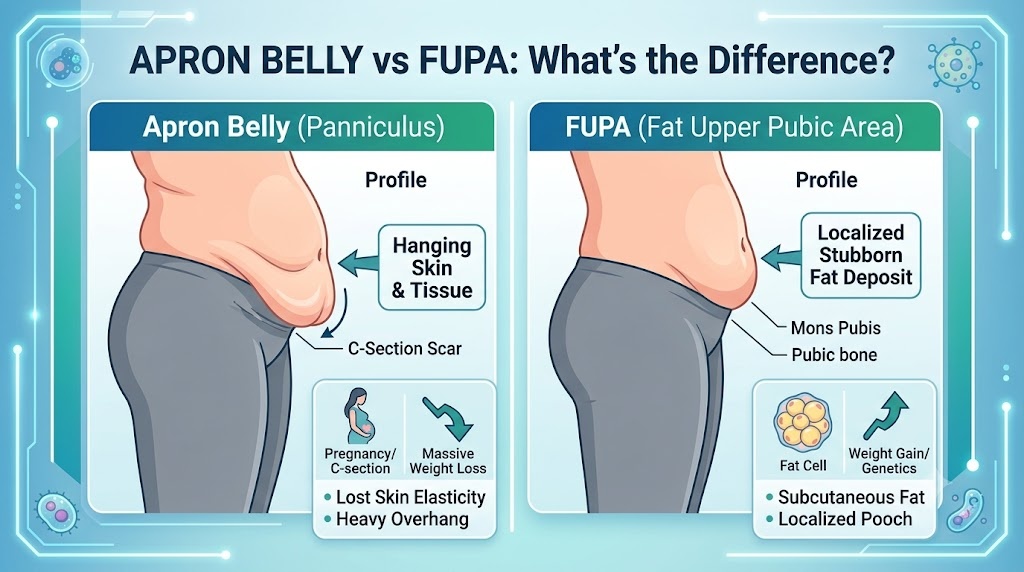
An apron belly is a hanging fold of skin and fat from the lower abdomen, while a FUPA (fat upper pubic area) is a localized pocket of fat sitting higher, above the pubic bone. The two can occur together but require different management approaches. For a detailed breakdown, see our apron belly vs. FUPA comparison guide.
A tummy tuck produces long-lasting results, but they are not unconditional. Significant weight gain or pregnancy after surgery can stretch the skin and separate the repaired muscles again, reversing the aesthetic outcome. Most surgeons recommend waiting until after you’ve completed your family before undergoing abdominoplasty.
Final Words
Both panniculectomy and abdominoplasty are meaningful procedures that can genuinely improve quality of life, but they’re not interchangeable. One addresses a medical problem. The other reshapes the body for cosmetic reasons. Choosing correctly comes down to understanding which category your needs fall into, and being honest with yourself and your surgeon about your goals.
What both procedures have in common is that they require a qualified, experienced surgeon. Board certification in plastic surgery matters. So does a surgeon’s specific experience with body contouring procedures following weight loss. Take time to research, ask questions, and seek consultations from more than one specialist if needed.
You’ve already done something remarkable by getting to this point, whether that’s losing weight, recovering after pregnancy, or simply deciding to take your health seriously. The next step is getting the right professional guidance to move forward with confidence.
Disclaimer: This content is for informational purposes only and is not a substitute for professional medical advice. Always consult with a board-certified plastic surgeon.