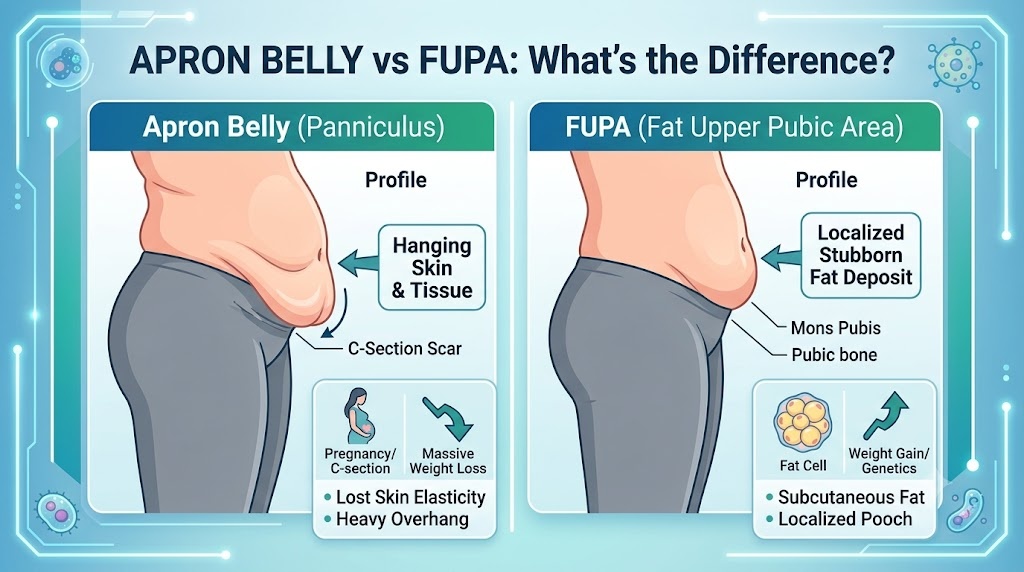

An apron belly, medically called a panniculus, is a fold of excess skin and fat that hangs over the lower abdomen. It develops after major weight loss (often following bariatric surgery) or after pregnancy, stretching the abdominal skin beyond its ability to recover. People seek surgery to remove it for two main reasons: physical discomfort and medical complications like rashes, infections, and back pain.
Cost is the first question most people ask. It is not the only one that matters. Surgeon skill, facility accreditation, and post-operative care affect your health outcome as much as your bill. This guide breaks down the real cost of apron belly surgery in 2026, what drives the price up or down, and how insurance coverage works for procedures that qualify as medically necessary.
A panniculus differs from ordinary belly fat. It is loose, hanging skin combined with fat that no longer responds to diet or exercise because the skin itself has lost elasticity. Surgeons grade panniculus severity on a scale from 1 (mild overhang) to 5 (extending past the knees). The grade affects both surgical complexity and cost, since higher grades require more tissue removal and longer operating time.
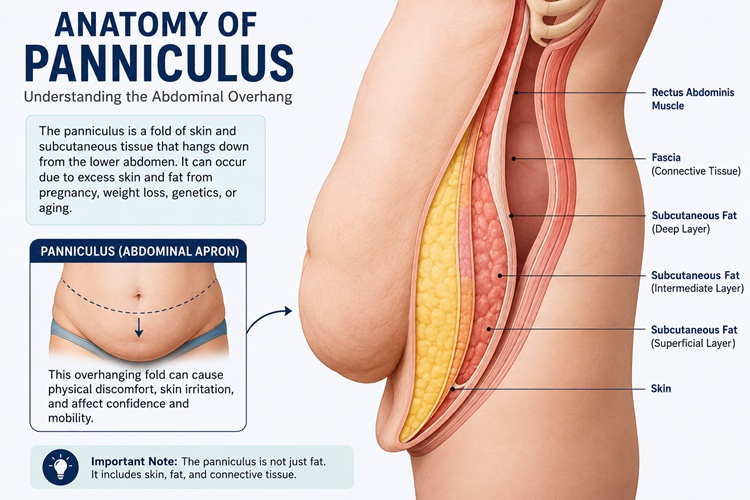
What Is Apron Belly Surgery?
Apron belly surgery is not one single procedure. It refers to two distinct operations, and the difference matters for both your recovery and your bill.
Panniculectomy
A panniculectomy removes the excess skin and fat hanging over the abdomen. It does not repair the abdominal wall muscles or reposition the belly button. Surgeons perform it to resolve functional problems: skin infections, chronic rashes, mobility limits, or hygiene difficulties caused by the overhanging tissue.
Tummy Tuck (Abdominoplasty)
A tummy tuck is a cosmetic surgical procedure. In addition to removing skin, the surgeon tightens the abdominal wall muscles and repositions the belly button for a flatter contour. Insurance companies classify this as elective and cosmetic, so coverage is rare.
Some patients need both procedures, combined skin removal plus muscle repair. This combination changes the surgical time, the recovery period, and the total cost.
How Panniculus Grade Affects Cost
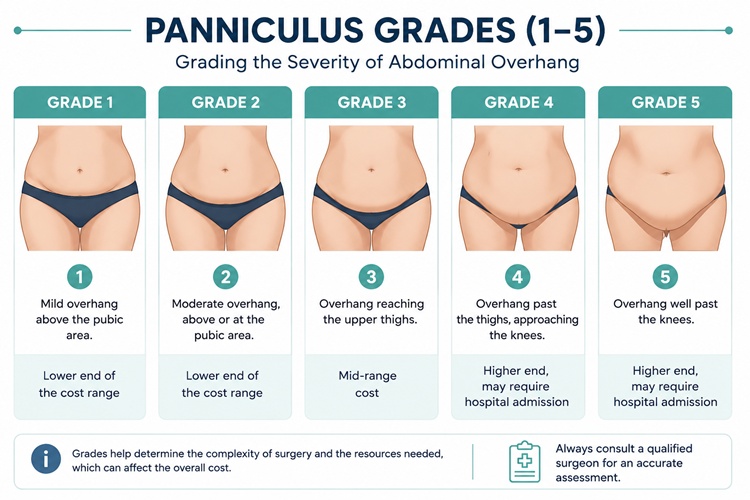
Higher grades often involve longer surgical time, a greater risk of complications, and a higher likelihood of needing an overnight hospital stay. Surgeons factor this into their quoted fee during the initial consultation.
What Determines Apron Belly Surgery Cost
Several factors set the final price. Understanding them helps you compare quotes accurately.
- Surgeon’s fee. A board-certified plastic surgeon with experience in post-bariatric body contouring typically charges more than a general provider.
- Facility type. Outpatient surgery centres cost less than hospitals. Cases requiring an overnight stay add facility charges.
- Anesthesia. General anaesthesia requires an anesthesiologist and monitoring equipment, billed separately from the surgeon’s fee.
- Geographic location. Major metro areas run 30–50% higher than smaller markets due to clinic overhead and local demand.
- Surgical complexity. The amount of tissue removed, hernia repair, and whether the procedure is combined with a tummy tuck all raise the price.
- Pre-operative testing. Bloodwork, imaging, and medical clearance exams add smaller but necessary costs.
Apron Belly Surgery Cost Breakdown (2026)
The table below shows the typical cost range for each component of the small apron surgery in 2026.
| Cost Component | Typical Range |
| Surgeon’s fee | $3,000 – $10,000 |
| Facility / operating room fee | $1,500 – $6,000 |
| Anesthesia | $800 – $3,000 |
| Pre-operative testing | $200 – $1,000 |
| Total: Panniculectomy alone | $7,000 – $15,000 |
| Total: Combined with tummy tuck or hernia repair | $15,000 – $25,000+ |
Regional Cost Differences
Location changes the total significantly. The table below shows general patterns by region type.
| Region Type | Cost Adjustment |
| Major metro area (e.g., New York, Los Angeles, San Francisco) | 30–50% above national average |
| Mid-size city | Close to national average |
| Smaller city or rural area | 10–20% below national average |
Financing Options
If insurance does not cover your procedure, several payment options can reduce the upfront burden:
- Medical loans through third-party lenders
- In-house payment plans offered directly by the surgical practice
- Healthcare credit cards (e.g., CareCredit), which often include a deferred-interest period
Read the terms on any financing option before signing. Deferred-interest plans can carry high retroactive interest if the balance is not paid in full by the deadline.
Is Apron Belly Surgery Covered by Insurance?
Coverage depends entirely on whether the procedure is classified as medically necessary or cosmetic.

Medically Necessary vs Cosmetic
A panniculectomy is a real candidate for coverage because it treats a documented health condition. A tummy tuck is almost never covered because its primary purpose is cosmetic.
To support a medical necessity claim, insurers generally want documentation of:
- Intertrigo, a chronic rash or skin breakdown, where the panniculus rests against the body
- Recurrent skin infections treated with antibiotics
- Back pain or posture problems are linked to the weight of the excess tissue.
- Difficulty walking, exercising, or maintaining hygiene due to the overhang
Requirements for Approval
Most insurers require:
- Documented, failed conservative treatment (creams, powders, hygiene measures) for 3–6 months.
- Stable weight for 6–18 months after bariatric surgery, if applicable
- A letter of medical necessity from your primary care physician
- Pre-authorisation submitted before the surgery date
If Your Claim Is Denied
Initial denials are common. Insurers frequently reject the first submission even when the case is well-documented. An appeal with additional records, photos, treatment history, and physician notes often succeeds where the first attempt did not. Contact your insurer’s patient advocacy department for guidance on the appeals process specific to your plan.
Recovery and Long-Term Expectations
A panniculectomy is a major abdominal surgery. Recovery follows a predictable timeline, though individual healing varies.
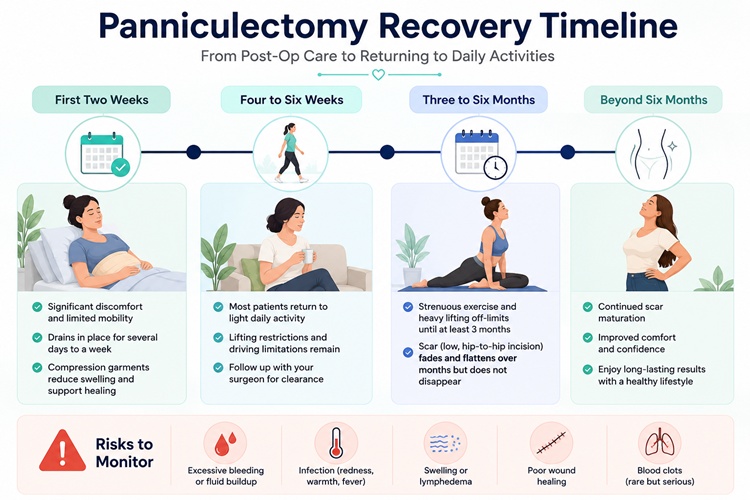
First Two Weeks
Expect significant discomfort and limited mobility. Surgeons typically place drains for several days to a week to prevent fluid buildup under the skin. Compression garments are standard during this period to reduce swelling and support healing tissue.
Four to Six Weeks
Most patients return to light daily activity by this point. Lifting restrictions and driving limitations usually stay in place until your surgeon clears you at a follow-up appointment.
Three to Six Months
Strenuous exercise and heavy lifting are typically off-limits until at least 3 months post-surgery. Scarring a low, hip-to-hip incision fades and flattens over the following months but does not disappear.
Risks to Monitor
- Infection at the incision site
- Poor wound healing
- Fluid accumulation (seroma)
- Blood clots, particularly in patients with other risk factors
Follow-up appointments let your surgeon catch these issues early. Skipping them increases risk.
Signs That Require Immediate Medical Attention
- Fever above 101°F
- Increasing redness, warmth, or discharge at the incision
- Sudden swelling in one leg (possible sign of a blood clot)
- Chest pain or shortness of breath
- Incision separation
Contact your surgeon’s office immediately if any of these occur. Do not wait for your next scheduled follow-up.
Work and Activity Timeline
| Activity | Typical Timeline |
| Desk work / remote job | 2–3 weeks |
| Physical job (lifting, standing) | 6–8 weeks |
| Light cardio (walking) | As soon as cleared, often within days |
| Core exercise, running, weightlifting | 3 months minimum, with surgeon clearance |
| Driving | 1–2 weeks, once off prescription pain medication |
These timelines are general guidelines. Your surgeon will set the specific schedule based on your procedure and your individual healing.
How to Choose a Surgeon
Price alone is a poor way to select a surgeon. A lower quote that results in a complication or a revision surgery costs more in the end, financially and medically.
Confirm the following before booking:
- Board certification through the American Board of Plastic Surgery or an equivalent recognized body
- Direct experience with post-bariatric body contouring, not just general cosmetic procedures
- Accredited facility, whether hospital-based or a certified outpatient center
- Verifiable before-and-after photos from patients with a similar starting point to yours
- A full in-person consultation where the surgeon reviews your anatomy, medical history, and specific risks
Frequently Asked Questions
No. A standard panniculectomy removes only skin and fat. Muscle repair is part of abdominoplasty. Some patients undergo both procedures in a single surgery.
A standard panniculectomy takes two to three hours. Combined with a tummy tuck or hernia repair, surgical time can extend to four hours or more.
No, not once the skin has lost its elasticity. Diet and exercise reduce fat underneath the skin, but stretched skin from pregnancy or major weight loss generally does not retract on its own. Surgical removal is the only reliable solution for a true panniculus.
No. Bariatric surgery (gastric bypass, sleeve gastrectomy) causes the initial weight loss. A panniculectomy is a separate, later procedure to remove the excess skin that remains after weight has stabilised.
Without insurance, total cost typically ranges from $7,000 to $15,000 for a standard panniculectomy, and up to $25,000 or more for complex or combined procedures.
Disclaimer: This article is for informational purposes only and does not constitute medical advice. Costs, insurance outcomes, and recovery timelines vary by patient, surgeon, and location. Consult a board-certified plastic surgeon and your insurance provider before making decisions about this procedure.