
Quick Answer
Pannus cellulitis is a bacterial infection of the deeper layers of the skin on or under an apron belly. The skin becomes painful, hot and swollen, often red, and you may feel unwell. It needs antibiotics, so ask for an urgent GP appointment or contact NHS 111 straight away. Call 999 or go to A&E if you also have a very high temperature, a fast heartbeat, confusion or feel faint.
- Painful, hot, swollen skin is the key warning sign
- A simple rash in the fold is not the same as cellulitis
- Daily washing and drying lowers the risk of infection
Pannus cellulitis is an infection of the skin on or under the hanging fold of an apron belly. The warm, damp crease under a pannus is prone to rashes and small cracks, and these can let bacteria into the deeper layers of the skin. Cellulitis is more serious than a simple rash and needs prompt treatment with antibiotics. This guide explains the warning signs, how to tell an apron belly infection from an ordinary rash, what treatment involves, and how to lower the chance of it coming back.
This article is part of our belly skin hub. If the medical terms are new to you, our guide to the pannus belly explains what a pannus is and how it is graded.
What Is Pannus Cellulitis?
Pannus cellulitis is cellulitis, a bacterial skin infection, that affects the skin of an abdominal apron, most often in or near the crease underneath it.
Cellulitis in plain terms
Cellulitis is an infection of the deeper layers of the skin, usually caused by bacteria. The NHS explains that bacteria can get in through broken skin, such as a cut, or skin that is cracked and dry, and that the break is sometimes too small to notice. You cannot catch cellulitis from another person.
Why the belly fold is at risk
The crease under a pannus stays warm and moist and the skin rubs on itself. This often leads to intertrigo, a rash in the fold, and the softened skin can split. Each small break is a way in for bacteria. Our guide to the apron belly rash treatment covers how these rashes start.
Other risk factors
According to the NHS, you are more at risk of cellulitis if you have poor circulation, for example because you are overweight, find it hard to move around, have a weakened immune system such as with diabetes, have lymphoedema, have a wound from surgery, or have had cellulitis before. Several of these are common in people with a large apron belly.
Warning Signs of an Apron Belly Infection
Cellulitis can develop over a day or two. Check the skin under and around the fold every day, especially if you have had problems before.
Signs in the skin
- skin that is painful, hot and swollen
- redness that spreads, although this may be less obvious on brown or black skin
- skin that feels tight, tender or firm to touch
- blisters on the affected area
Signs in your body
You may feel generally unwell with flu-like symptoms and have swollen, painful glands. These are signs that your body is fighting an infection and that you should not wait for it to settle on its own.
A note on lymphoedema
A very large pannus can sometimes hold fluid, which makes the skin thick, heavy and more prone to infection. If your fold has become swollen, hard or pitted like orange peel, read our guide to apron belly and lymphoedema and mention it to your GP.
Rash or Cellulitis? How to Tell the Difference
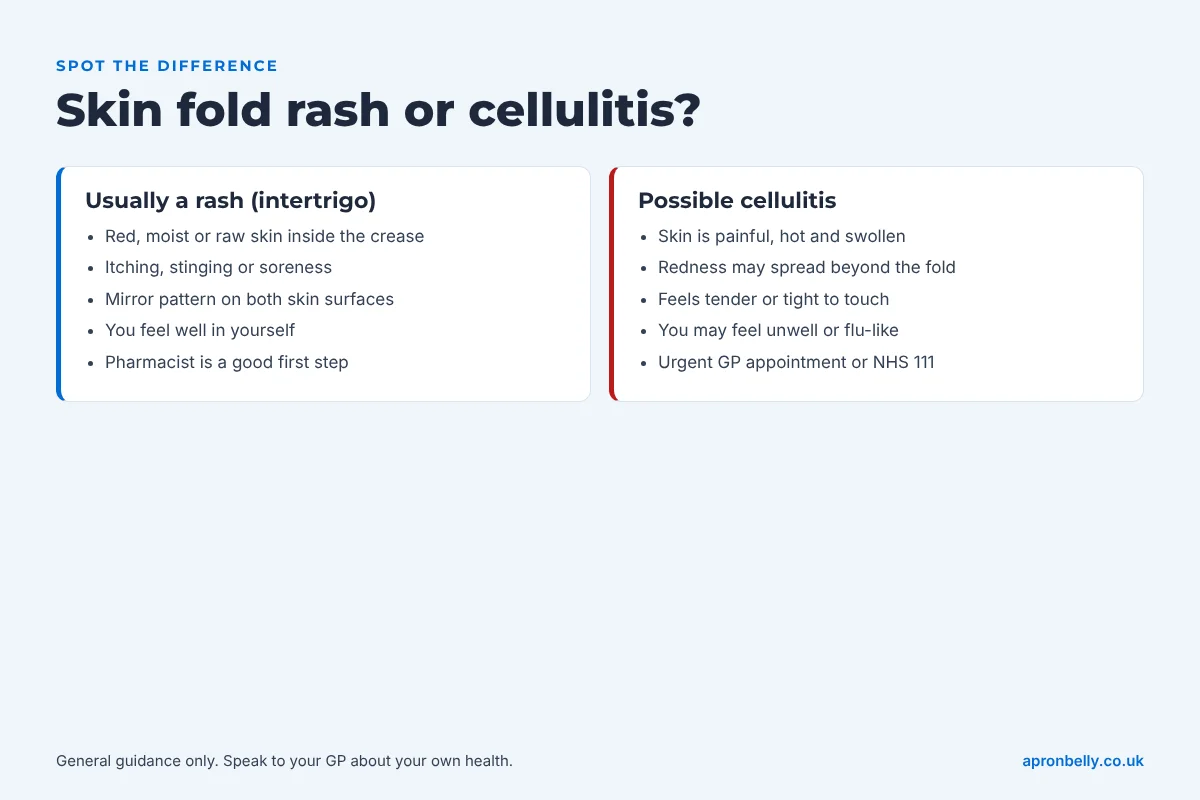
Most problems in the fold are rashes, not cellulitis. Knowing the difference helps you choose the right help.
| Feature | Skin fold rash (intertrigo) | Possible cellulitis |
|---|---|---|
| Where | Surface of the skin inside the crease | Deeper skin, may spread beyond the fold |
| How it feels | Itchy, stinging or sore | Painful, tender, tight |
| Temperature | Skin feels normal | Skin feels hot |
| Swelling | Little or none | Swollen |
| How you feel | Well in yourself | May feel unwell or flu-like |
| First step | Pharmacist | Urgent GP appointment or NHS 111 |
Yeast infection in the fold
A rash with small red spots at the edges is often a yeast infection. It can be itchy and uncomfortable, but it does not usually cause hot, painful swelling. A pharmacist can advise on treatment.
When a rash turns into an infection
A rash that becomes more painful, warmer, more swollen or starts to spread needs a medical check. Do not keep treating it with creams at home if it is getting worse.
When to Get Urgent Help
Cellulitis can become serious if it is not treated quickly, because the infection can spread to the blood, muscles and bones.
Urgent GP appointment or NHS 111
Ask for an urgent GP appointment or get help from NHS 111 if the skin is painful, hot and swollen. Early antibiotics can stop cellulitis becoming more serious. You can call 111 or use 111 online.
Call 999 or go to A&E
The NHS cellulitis guidance says to call 999 or go to A&E if you have cellulitis with any of these:
- a very high temperature, or you feel hot, cold or shivery
- a fast heartbeat or fast breathing
- purple patches on the skin
- feeling dizzy or faint
- confusion or disorientation
- cold, clammy or pale skin
Do not drive yourself. Ask someone to take you or call 999.
Pain far worse than expected
A much rarer and very serious infection called necrotising fasciitis can look like cellulitis at first. The NHS advises calling 999 or going to A&E if an area of red or swollen skin is much more painful than you would expect, or if you notice black, purple or grey blotches or blisters.

How Pannus Cellulitis Is Treated
Treatment depends on how severe the infection is and how well you are.
Antibiotics
For mild cellulitis affecting a small area, a doctor will usually prescribe antibiotic tablets, often for about a week. The NHS notes that symptoms can get worse in the first 48 hours before they improve. Contact your GP if you do not start to feel better 2 to 3 days after starting antibiotics, and finish the full course even when you feel better. Most people recover fully in 7 to 10 days.
Hospital treatment
If cellulitis is severe, you might be referred to hospital, for example for antibiotics through a drip. A large or heavy pannus can make the infected area harder to assess and care for, so do not delay getting help.
Looking after yourself at home
- take paracetamol or ibuprofen for the pain if they are suitable for you
- drink plenty of fluids
- keep the fold clean and dry, and the skin surfaces apart with soft cotton
- lie back and support the fold on a pillow when you can, which lets air reach the skin
- mark the edge of the redness with a pen if your doctor suggests it, so you can see whether it spreads
If cellulitis keeps coming back
The NHS says some people with recurring cellulitis may be prescribed low dose long term antibiotics to stop infections returning. Your GP will also look for the cause, such as repeated rashes, diabetes or swelling in the fold.
How to Prevent Infection Under the Fold
Good daily care does not remove every risk, but it makes infection much less likely.
Keep the crease clean and dry
Wash under the fold once or twice a day with an unperfumed product, rinse well and pat completely dry. Our step by step guide on how to wash under an apron belly sets out the full routine.
Treat rashes and cracks early
A rash or a split in the skin is the usual way in for bacteria. Speak to a pharmacist as soon as you notice soreness, and keep any small cuts clean.
Look after your general health
If you have diabetes, keeping your blood sugar in your target range helps the skin heal. Moving more where you can helps circulation. Moisturise dry skin outside the crease, but keep thick creams out of the fold itself.
Think about the longer term
If you have repeated skin infections under a pannus despite good care, this is one of the problems that may count towards NHS surgery to remove the apron. Our guide to the large apron belly explains when surgery may be considered.
A Worked Example
A 57 year old woman with a grade 4 pannus and type 2 diabetes notices that the skin under her fold has become tender and warm over a day, with a patch of redness spreading on to the front of her tummy. She feels shivery but not confused. She calls NHS 111, is seen the same day and prescribed antibiotics. The area looks a little worse the next day, which she was told could happen, and then starts to improve by day three. Once it has healed, she talks to her GP about her rashes and her diabetes control to lower the chance of it happening again.
Questions to ask your GP
- What should I do if the redness spreads while I am taking antibiotics?
- How can I keep the fold dry while it heals?
- Do repeated infections affect my options for surgery?
Frequently Asked Questions
What does pannus cellulitis look like?
The skin on or under the belly fold becomes painful, hot and swollen. It usually looks red, although redness can be harder to see on brown or black skin, and it may blister. You may also feel unwell with flu-like symptoms.
Is pannus cellulitis an emergency?
It needs prompt treatment. Ask for an urgent GP appointment or contact NHS 111 if the skin is painful, hot and swollen. Call 999 or go to A&E if you also have a very high temperature, a fast heartbeat or breathing, confusion, or feel faint.
How is cellulitis under the belly treated?
Mild cellulitis is usually treated with antibiotic tablets, often for about a week. Severe cellulitis may need treatment in hospital. Contact your GP if you are not starting to feel better 2 to 3 days after starting antibiotics.
What is the difference between an apron belly rash and cellulitis?
A rash in the fold, called intertrigo, is usually red, moist, itchy or sore on the skin surface and you feel well. Cellulitis is an infection of the deeper skin that makes it painful, hot and swollen, and you may feel unwell.
How can I stop cellulitis under my belly coming back?
Wash and fully dry the fold every day, keep the skin surfaces apart, treat rashes and cracks early, and keep the skin moisturised outside the crease. If infections keep returning, talk to your GP, who may discuss longer term options.
The Bottom Line
Pannus cellulitis is a bacterial infection of the skin on or under an apron belly. Painful, hot and swollen skin is the key sign, and it needs prompt antibiotics, so ask for an urgent GP appointment or contact NHS 111. Call 999 if you also feel very unwell. Daily washing and drying, early treatment of rashes and good general health all lower the risk. Our page on apron belly health risks covers other problems to watch for.
Your next step
Check the skin under your fold with a mirror today. Save NHS 111 in your phone, and if you have had cellulitis before, ask your GP what to do if it returns.
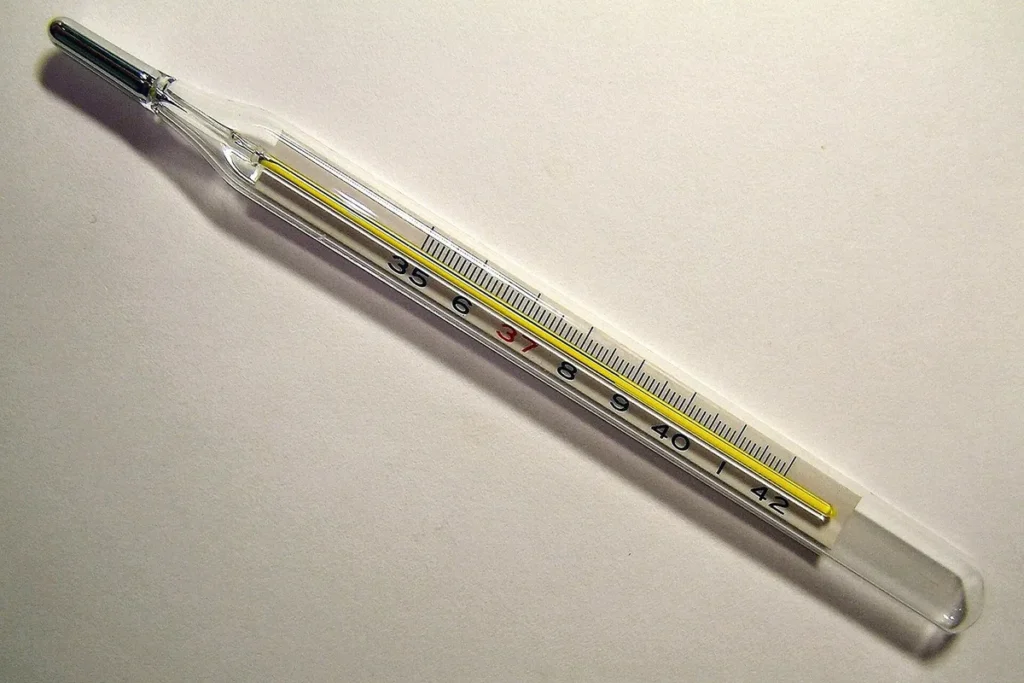
Featured image: clinical thermometer by Menchi, Wikimedia Commons, CC BY-SA 3.0, cropped.