It’s late. You’ve brushed your teeth, plumped the pillows and climbed into bed, and now the shuffling begins. Roll onto your left side and your lower back aches. Roll onto your right and the weight of your belly fold drags on your hip. Lie flat and within ten minutes you’re hot, sticky and wide awake.
If that sounds familiar, you’re in good company. Sleeping with an apron belly is something plenty of people quietly struggle with, and it rarely gets talked about. Most advice online focuses on how an apron belly looks, not on how it feels at 2am.
This guide is all about the feel. Below you’ll find the sleeping positions that tend to be most comfortable, where to put your pillows, how to handle heat and skin irritation overnight, and when a sleep problem is worth mentioning to your GP. None of it needs special equipment or a big budget. Most of it is small adjustments you can try tonight.
Why an Apron Belly Can Make Sleep Harder
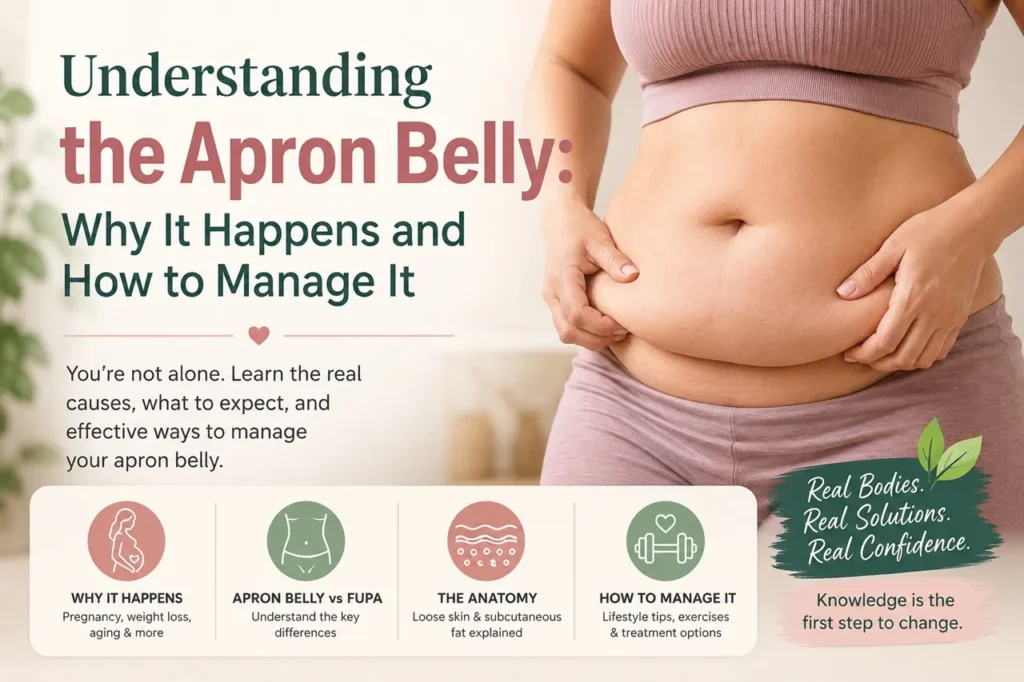
An apron belly is a fold of loose skin and fat that hangs from the lower abdomen. It isn’t a medical problem in itself, but the way it behaves when you lie down can cause a few very specific headaches.
Weight and pull. When you’re standing, the fold hangs straight down. In bed, gravity changes direction, so the tissue shifts sideways or tugs against your waist and lower back. That change in pull is one reason many people wake up with a sore back or hips.
Heat and moisture. Skin resting against skin traps warmth. Over eight hours under a duvet, that can mean sweating, damp skin and a restless night.
Friction. Every time you turn over, the fold can rub against itself and against your nightwear. Do that a dozen times a night and the skin gets tired and sore.
Core and posture changes. If your stomach muscles were stretched by pregnancy or weight change, your lower back can end up doing more work than it should. You tend to notice it most when you’re finally trying to relax.
None of this means something is wrong with you. It just means your sleep setup may need to work a little harder for you than it does for someone else.
The Best Sleeping Positions for an Apron Belly
There’s no single perfect position. Bodies are different, and what feels lovely to one person can be miserable for another. Still, a few options come up again and again as the most comfortable.
Side sleeping with support
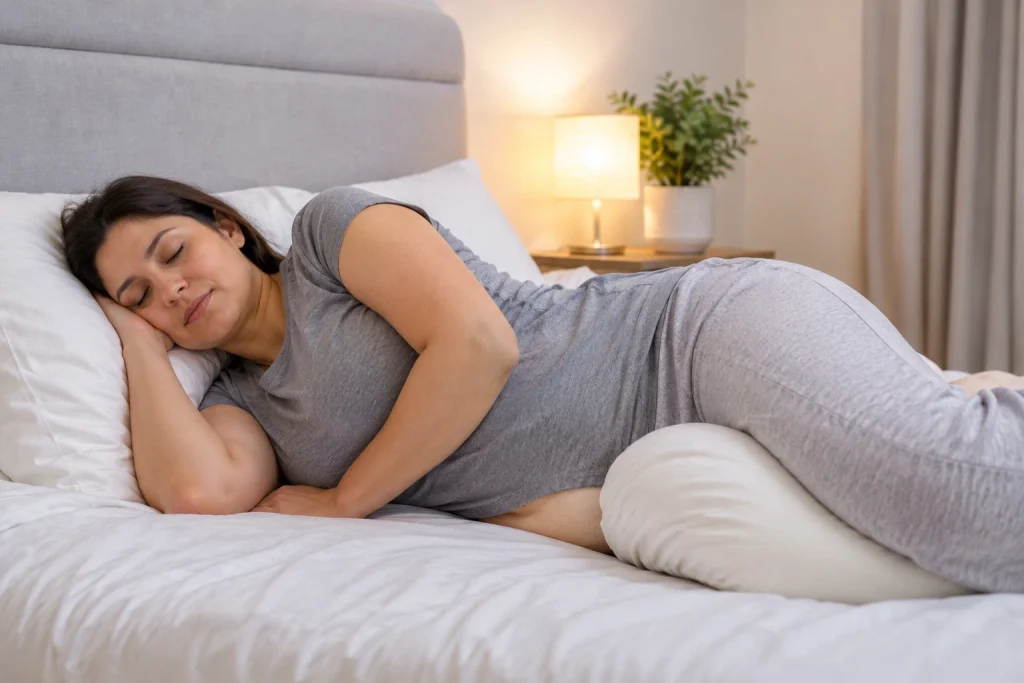
For most people, this is the winner. Lying on your side lets the belly rest forward and down instead of dragging across your hips, and it takes pressure off your lower back.
Here’s how to set it up. Lie on whichever side feels natural and bend your knees slightly. Place a pillow between your knees, which keeps your hips stacked and stops your top leg from pulling your spine out of line. Then tuck a small pillow or a folded towel under the curve of your belly so the fold is held up instead of hanging. Most people feel the weight lift off their waist almost straight away.
If one side is clearly more comfortable, don’t force yourself to switch. Plenty of people find the side where the fold can rest on the mattress feels more natural than the side where it stretches across the body.
Back sleeping with raised knees
Sleeping on your back spreads your weight evenly and stops the skin from folding in on itself. The catch is that it can feel warm, and it can strain the lower back if your legs are completely straight.
Slide a pillow or a rolled blanket under your knees so your lower back can relax into the mattress. Use one thin pillow under your head rather than a tall stack, which keeps your neck neutral. If you notice you snore more on your back, or wake with a dry mouth, it’s worth reading the GP section further down.
Slightly propped up
If lying completely flat is uncomfortable, a wedge pillow or a couple of firm pillows can lift your upper body a little. Some people find this takes the pressed-in feeling off their middle and makes breathing feel easier. Keep the angle gentle. Too steep and you’ll slide down the bed and wake with a sore neck.
Stomach sleeping
You can sleep on your front if you love it, but it’s rarely the easiest choice with an apron belly. The pressure on your abdomen and the twist in your neck often leave people stiff in the morning. If it’s your lifelong habit and it feels fine, a thin pillow under your hips can help. Otherwise, try easing yourself onto your side.
Hugging a body pillow
A long body pillow is a good in-between option. Lie on your side, rest your top leg over it and hug it against your chest. It supports your hip, your knee and your belly all at once, and the feeling of being held helps some people settle faster.
Pillow Placement That Actually Helps
Pillows are the cheapest comfort upgrade you can make, and where you put them matters more than how much they cost.
- Between your knees: keeps your hips lined up if you sleep on your side.
- Under your belly: a small, firm pillow or folded towel supports the fold so it doesn’t pull on your waist.
- Behind your back: a rolled blanket stops you rolling flat if that position bothers you.
- Under your knees: for back sleepers, it eases tension in the lower back.
- Along your front: a body pillow works as a support and a hug in one.
Aim for something supportive but not rock hard. Memory foam wedges and body pillows are popular, but a firm cushion from the sofa is a perfectly good test run. Change one thing at a time for a few nights, because swapping everything at once makes it impossible to know what helped.
Your Mattress and Bedding
You don’t need to rush out and buy a new bed. That said, if your mattress sags in the middle, your hips can sink in a way that pulls your back out of line. A medium-firm mattress suits most people best because it supports the middle without feeling like a board. If a new one isn’t realistic right now, a mattress topper can add support or cushioning for far less money.
For bedding, think breathable. Cotton, linen and bamboo blends let air through and stop sweat building up, while heavy synthetic duvets and polyester sheets tend to trap heat. A lighter duvet with a throw you can kick off often works better than one thick quilt.
Night Sweats, Heat and Skin Care in Bed
Waking up damp is one of the most common complaints, and a few habits make a real difference.
Dry the fold before bed. After your evening shower, pat the area thoroughly, then give it a few minutes to air dry before you get dressed. Moisture trapped overnight is what usually leads to irritation.
Add a barrier. A light barrier balm or a cornstarch-based powder can cut down friction. A clean, soft cotton cloth tucked loosely into the fold can also wick away sweat. Swap it if it gets damp.
Keep the room cool. Most people sleep best in a bedroom somewhere around 16 to 18 degrees. A fan or a slightly open window can help a lot.
Know the warning signs. Redness, itching, a sour smell or skin that looks cracked can point to friction or a yeast infection. Our guide to apron belly rash and skin irritation explains what to look for and when to get it checked. If a rash isn’t improving after a few days, speak to your GP or pharmacist.
What to Wear to Bed
Think loose, soft and breathable. A cotton nightshirt or a loose two-piece set with a wide, soft waistband won’t dig into the fold. Avoid thin elastic that leaves marks, and skip tight shapewear overnight, since it can trap heat and press on the skin for hours. If your nightwear keeps riding up and bunching underneath you, a longer cut usually solves it. Moisture-wicking sleepwear is also worth a try if you tend to sweat.
Easing Back and Hip Pain at Night
A sore lower back at 3am is often the belly’s weight pulling you forward. Along with the pillow tricks above, a few daytime habits can help.
Gentle core work, like pelvic tilts and bird-dogs, builds the muscles that support your spine. If you think you might have a gap in your stomach muscles, read our guide to apron belly and diastasis recti before starting anything intense, because some exercises can make it worse.
It also helps to think about how you spend your evenings. Hours on the sofa or at a desk can leave your hips tight and your back stiff by the time you lie down. Our tips on sitting all day with an apron belly include easy set-up changes and movement breaks that carry over into a better night. A short walk after dinner and a few minutes of gentle stretching before bed, such as knee-to-chest or child’s pose, can loosen things up nicely.
Winding Down When You’re Stressed
Sleep and stress feed each other. If worries about your body keep your mind busy at bedtime, it’s no surprise you end up tossing and turning. Stress can also leave you more tense and more tired the next day, something we look at in stress, cortisol and apron belly.
A simple routine helps. Dim the lights an hour before bed, put your phone down, and try slow breathing: in for four counts, out for six. Keep a notebook beside the bed for any thoughts that won’t switch off. Consistency matters more than perfection, so going to bed and getting up at roughly the same times helps your body clock settle.
When Poor Sleep Is Worth Mentioning to Your GP
Most sleep trouble with an apron belly comes down to comfort, and comfort is fixable. Sometimes, though, there’s more going on. Speak to your GP if you:
- Snore loudly, seem to stop breathing briefly in your sleep or wake up gasping. These can be signs of sleep apnoea, which is more common when carrying extra weight around the middle. The NHS page on sleep apnoea explains the symptoms and treatment options.
- Feel exhausted all day despite spending enough hours in bed.
- Notice swelling, heaviness or firmness in your belly or legs that’s getting worse. Our guide to apron belly and lymphoedema explains what to look out for.
- Have pain that wakes you regularly, or a rash that isn’t clearing.
- Feel low or anxious, which can be both a cause and a result of poor sleep.
Call 111 or seek urgent help if you have sudden severe abdominal pain, a hot, red, spreading patch of skin with a fever, or a painful bulge you can’t push back.
Your Quick Night-Time Checklist
- Dry the skin fold fully before getting dressed for bed.
- Wear loose, breathable nightwear with a soft waistband.
- Try side sleeping with a pillow between your knees.
- Support the belly with a small pillow or folded towel.
- Keep the bedroom cool and use breathable bedding.
- Stretch gently and wind down for 30 to 60 minutes.
- Mention loud snoring, severe tiredness or worsening swelling to your GP.
Frequently Asked Questions
Is it okay to sleep on my back with an apron belly?
Yes, for most people. Raising your knees on a pillow takes strain off the lower back. If you snore heavily or feel breathless lying flat, try a slight incline and check in with your GP.
Which side is best to sleep on?
There’s no universal answer. Choose the side where the fold feels supported rather than pulled, and use a pillow under the belly to take the weight.
Should I wear shapewear to bed?
It’s best not to. Tight garments can trap heat and moisture and press into the skin for hours, which makes irritation more likely. Save them for the daytime if you like them.
Why does my lower belly ache at night?
Often it’s a mix of pull from the fold, tight hips after a long day, and tired core muscles. If the ache is severe, sudden or comes with a bulge, fever or sickness, get medical advice promptly.
Will sleeping better change my apron belly?
Sleep won’t remove loose skin, but good rest supports your mood, energy and healthy habits, which makes everything else easier to manage.
Final Thoughts
Sleeping with an apron belly doesn’t have to mean lying awake and bargaining with your pillows. A supported side position, a pillow in the right place, a cool room and a dry, calm fold can turn a restless night into a much easier one. Start with one or two changes, give them a few nights, and build from there.
If you’re still struggling after trying these, or you spot any of the warning signs above, a quick chat with your GP is always worth it. You deserve proper rest, and comfort is very much within reach.
This article is for general information and isn’t a substitute for personal medical advice.