
You’ve found a name you love, or at least you’ve started to wonder about one. Maybe you already have a little one and your family doesn’t feel quite complete. And then a thought creeps in: what about my tummy? You’ve got an apron belly, you’ve been thinking about getting it treated, and now you’re not sure whether to do that first or have another baby.
It’s a really common dilemma, and it rarely gets a straight answer. Friends have opinions, forums are full of conflicting stories, and clinic websites tend to focus on the surgery rather than the bigger picture.
This guide walks through what actually happens with an apron belly and pregnancy, why surgeons usually suggest finishing your family before any operation, how long people typically wait, and how to stay comfortable and safe in the meantime. It’s general information, not personal medical advice, so treat it as a starting point for the conversation with your GP, midwife or surgeon.
The Short Answer
Having an apron belly doesn’t stop you from getting pregnant, and it isn’t a reason on its own to avoid another baby. Plenty of people carry a second or third pregnancy with loose abdominal skin and go on to have healthy pregnancies and births.
The bigger question is timing for surgery. Most surgeons advise people to have their operation after they’ve finished having children, because pregnancy stretches the abdomen again and can undo some of the result. That doesn’t mean you have to put your life on hold. It means the order matters, and it’s worth knowing why before you decide.
What Happens to an Apron Belly During Pregnancy
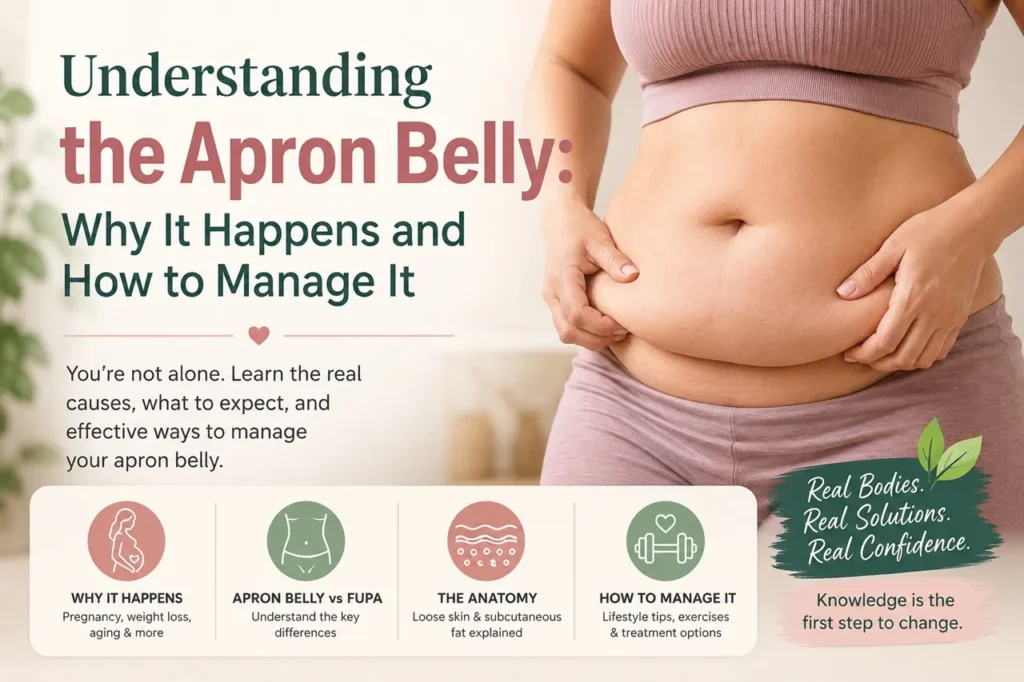
An apron belly is a fold of loose skin and fat that hangs from the lower abdomen, often after a previous pregnancy, weight loss or changes with age. When you become pregnant again, the abdomen has to make room for a growing baby, and an existing fold doesn’t disappear. Instead, the skin and the muscles beneath it stretch further.
Here’s what people commonly notice.
The fold stretches and moves. As your bump grows, the hanging skin usually gets drawn upwards and outwards, and it can feel tighter and more sensitive. Some people find the fold becomes less obvious during pregnancy, simply because the bump fills the space.
Skin goes through more. Repeated stretching can make marks and looseness worse, and the skin may take longer to settle afterwards. Your genetics play a big part here, and no cream has been proven to prevent it.
The stomach muscles work harder. Pregnancy commonly causes the two sides of the stomach muscles to move apart, which is known as diastasis recti. If you already had some separation from a previous pregnancy, it can widen. Our guide to apron belly and diastasis recti explains how to check at home and what helps.
Heat and moisture build up. Pregnancy hormones and extra body heat can make you sweatier, and a fold that traps moisture is more likely to become irritated.
If you’re expecting more than one baby, the stretch is greater still. We cover that in our post on apron belly after twins or a multiple pregnancy.
Why Surgeons Usually Say Wait
If you’re considering a panniculectomy or a tummy tuck, the usual advice is to finish having children first. There are a few sensible reasons behind it.
Pregnancy can undo the result. A tummy tuck removes loose skin and, in some cases, tightens the stomach muscles. A later pregnancy stretches that repaired area again, and the tightened muscles can separate once more. The scar may also stretch or move.
It protects your investment. Surgery is a big step, physically, emotionally and financially. Most people would rather not go through it twice.
Your body needs to settle first. Surgeons generally prefer your weight to be stable and your body fully recovered from pregnancy before operating. That’s hard to judge when another pregnancy is on the horizon.
Pregnancy after surgery needs extra planning. It’s possible to get pregnant after a tummy tuck, but it’s something to discuss with your surgeon and your midwife, so everyone is aware of the history.
This is general guidance, and surgeons vary in their approach. Some people have a good reason to treat the problem sooner, such as persistent rashes, pain or difficulty with daily life, and that’s a conversation to have with a qualified surgeon rather than guess at online.
How Long Should You Wait After Having a Baby?
If you’ve just had your baby and you’re thinking about surgery in the future, patience really pays off. Surgeons commonly suggest waiting around six months to a year after birth, and often longer, before considering an operation. During that time, your body continues to heal, your hormones settle, and if you’re breastfeeding, you’d typically need to have finished before surgery.
It also gives you time to see how much your skin tightens naturally. Many people find the picture looks quite different at twelve months than it did at three. Your surgeon will want to see that you’re at a stable weight and, if you’re planning more children, may ask you to wait until your family is complete.
If you do go ahead later, knowing what to expect helps enormously. Our tummy tuck recovery timeline covers the weeks after surgery in detail, so you can plan work, childcare and help at home.
What If You’ve Already Had Surgery and Want Another Baby?
It happens more often than you’d think. Life changes, plans change, and some people find themselves pregnant after a tummy tuck.
The key points are fairly simple. Speak to your surgeon about how long they’d like you to wait between your operation and trying to conceive, since many suggest leaving a good gap so that healing is complete. Let your midwife know about your surgical history at the start of your care, so your team can plan around it. And be realistic about the result: a second pregnancy may soften the outcome, and some people choose a revision later, once their family is complete.
None of this is a reason to panic. It simply means being open with the people looking after you.
Staying Active Safely With an Apron Belly in Pregnancy
Moving your body during pregnancy is good for energy, mood, sleep and back comfort. The NHS guidance on exercise in pregnancy says that staying active is healthy for most people, and it’s worth reading before you start anything new.
For most people, the gentle options are the best ones:
- Walking, which is easy to build up and kind on the joints.
- Swimming or water aerobics, where the water takes the weight off your belly.
- Pregnancy yoga or Pilates classes led by a qualified instructor.
- Gentle pelvic floor exercises, which many midwives recommend from early on.
A few things are better avoided. Skip sit-ups and crunches, which push the stomach muscles outwards and can make separation worse. Avoid lying flat on your back for long periods later in pregnancy, and steer clear of anything with a risk of falling or being hit in the tummy.
If you already had a gap in your stomach muscles, mention it to your midwife or a women’s health physiotherapist, who can show you safe ways to support your core. Pay attention to your body too: if something pulls, burns or makes the fold feel painful, stop and check with a professional.
Comfort Tips: Skin, Clothes and Support
Pregnancy with an apron belly is manageable, and a few small habits make everyday life easier.
Look after the skin in the fold. Wash gently each day, pat the area completely dry and let it air for a few minutes. A light barrier balm or cornstarch-based powder can reduce rubbing. If you notice redness, itching or a sour smell, our guide to apron belly rash and skin irritation explains what’s normal and when to see your GP or pharmacist, who can also advise on what is safe to use during pregnancy.
Choose supportive maternity wear. Look for stretchy, breathable fabrics and soft waistbands that sit over the bump rather than digging in. Many people find a maternity support band takes some of the weight off the lower back and belly. Ask your midwife or physiotherapist if you’re unsure which style suits you.
Be kind to your back. Sleep on your side with a pillow between your knees and another tucked under the bump. It also helps to take short movement breaks if you sit for long stretches.
Keep cool. Wear natural fibres, drink plenty of water and use a fan if you can. Less sweat means less irritation.
Telling Your Midwife and Medical Team
It’s a good idea to mention your apron belly, and any previous surgery, at your booking appointment. You don’t need to feel awkward about it. Midwives and doctors see every kind of body, and the information helps them look after you.
If you may need a caesarean, it’s worth asking how a skin fold could affect things like wound care afterwards, since keeping the area clean and dry helps healing. And if you’re taking a weight-loss medication and are thinking about pregnancy, speak to your GP or prescriber first, because they may advise stopping it before you try to conceive.
When to Speak to Your Midwife or GP
Most of the changes above are normal, but some symptoms deserve a prompt check. Contact your midwife or GP if you notice:
- A new lump or bulge near your tummy button or the fold that doesn’t go away. Our guide on apron belly or hernia explains how a hernia can feel different from a skin fold.
- A rash that isn’t improving, skin that’s cracked or weeping, or an unpleasant smell.
- Pain, swelling or heaviness that is getting worse.
- Back pain that stops you from doing everyday things.
- Feeling low, anxious or very worried about how your body is changing.
Call 111 or seek urgent help for severe abdominal pain, heavy bleeding, reduced baby movements, or a hot, red, spreading area of skin with a fever.
A Simple Planning Checklist
- Talk to your GP about your plans and any medication.
- Finish your family before booking elective abdominal surgery if you can.
- Wait at least six months to a year after birth before considering surgery.
- Mention your apron belly and any past surgery to your midwife early.
- Choose gentle, pregnancy-safe movement and skip crunches.
- Keep the skin fold clean, dry and cool.
- Check with a professional if you spot a new bulge, rash or pain.
Frequently Asked Questions
Can I get pregnant if I have an apron belly?
Yes. An apron belly doesn’t affect your ability to conceive. If you have trouble getting pregnant, that’s worth discussing with your GP, but the fold itself isn’t the cause.
Will a second pregnancy make my apron belly worse?
It can, especially if your skin was already stretched. It varies from person to person, and genetics, age and weight changes all play a part.
Should I have a tummy tuck before or after having children?
Most surgeons suggest after, because a later pregnancy can stretch the repaired area. Speak to a qualified surgeon about your own situation.
Can I exercise with an apron belly while pregnant?
For most people, gentle activity such as walking and swimming is encouraged. Avoid crunches and check with your midwife if you have diastasis recti or any concerns.
Is it safe to get pregnant after a tummy tuck?
Many people do, but it’s best to wait until your surgeon says healing is complete and to let your midwife know your history.
Final Thoughts
An apron belly shouldn’t make you feel you have to choose between the family you want and the body you’d like to feel comfortable in. For most people, the sensible path is simple: have your baby, look after your skin and core in the meantime, and revisit surgery once your family feels complete and your body has had time to settle.
If you’re unsure where you stand, a chat with your GP or midwife is a good first step, and a consultation with a qualified surgeon can help you plan the timing for later. Take your time with the decision. There’s no rush, and you deserve clear information every step of the way.
This article is for general information and isn’t a substitute for personal medical advice.