
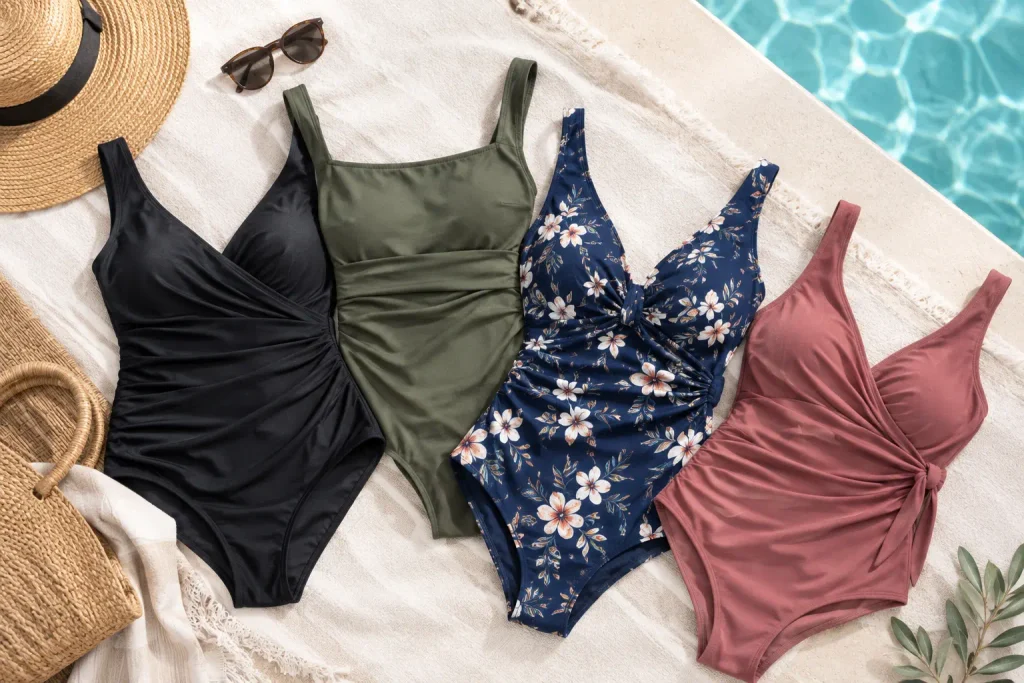
Few shopping trips feel as loaded as swimsuit shopping. The changing room lighting is harsh, the mirror is unforgiving, and half the options seem designed for a body that isn’t yours. If you live with an apron belly or a FUPA, it’s easy to leave with nothing, or worse, with a suit that digs, rides up, and has you tugging at it all afternoon.
It doesn’t have to go that way. The best swimsuit for an apron belly isn’t a magic style that hides everything. It’s a suit that fits the way your body actually sits, holds you comfortably, and lets you get into the water and enjoy it. This guide walks through what to look for, which styles tend to work, and how to shop sensibly in the UK, whether you’re heading to a hotel pool in Spain or your local leisure centre on a wet Tuesday.
If you’re still getting to grips with what an apron belly is, our apron belly overview explains it. And if you’re not sure whether what you have is an apron belly, a FUPA, or both, our FUPA articles cover the difference in plain English.
First, a Quick Note on What You’re Dressing
An apron belly is a fold of loose skin and soft tissue that hangs over the lower abdomen. A FUPA, short for fat upper pubic area, is a rounded pocket of fat that sits above the pubic bone. Many people have one, the other, or both together, and they behave differently in a swimsuit.
A FUPA tends to create a rounded bump low on the front, which can make a thin, clingy gusset or a low-cut leg feel uncomfortable. An apron belly adds a softer, hanging fold that can bunch under tight fabric or peek out beneath a short-cut top. Knowing which one is giving you trouble helps you choose better. A suit that solves one problem can sometimes make the other worse.
What Actually Makes a Swimsuit Work
Style matters less than most guides admit. Construction matters far more. Before you worry about colour or print, check these five things.
Fabric weight and stretch. Look for a thicker, double-layered fabric with good recovery. Thin, shiny fabric clings to every contour and loses its shape quickly. A sturdier fabric with plenty of stretch holds you smoothly without cutting in. Check the label for a decent amount of elastane, since that’s what keeps a suit supportive after a few swims.
A lined or ruched front. Gathered fabric across the tummy, often called ruching, breaks up the surface so the eye doesn’t land on one spot. A built-in lining adds a little extra coverage and smoothing. Many shoppers find ruching is the single most forgiving detail on a swimsuit, though it works best when it’s placed across the middle rather than in one tight column.
Coverage that matches your comfort. Some people want a skirt or a high waist. Others want a plain, supportive one-piece. There’s no right answer. The point is to choose the level of coverage that lets you stop thinking about your stomach once you’re in the water.
The right rise. For a FUPA, a high-cut brief or a mid-rise bottom often sits more comfortably than a low-rise one that digs in beneath the bump. For an apron belly, a high waist can hold the fold gently in place instead of letting it roll over a waistband.
Straps and seams. Wide, adjustable straps share the load and stop that red line across your shoulders. Flat seams reduce rubbing, which matters more than you’d think once you add water, sun, and a long afternoon.
The Best Swimsuit Styles for Apron Belly
Ruched one-pieces
A one-piece with gathered fabric across the tummy is the classic choice for good reason. The ruching adds texture that softens the outline, and the continuous fabric stops anything riding up or rolling over. Look for ruching that’s anchored at the sides and runs across the front, not just down the centre.
Wrap-style swimsuits
A wrap front crosses the fabric diagonally over the stomach. It follows the body’s natural curves, offers adjustable support, and lets you tighten or loosen the fit depending on the day. It’s also flattering on a wide range of shapes, which is why you’ll see it in so many UK swimwear ranges.
Tankinis with a longer top
A tankini lets you pick the top and bottom separately, which helps if your top and bottom sizes differ. Choose a longer, looser top that skims over the tummy, then pair it with high-waisted briefs. It’s also far easier to nip to the loo in than a one-piece.
Swim dresses and skirted swimsuits
A swim dress has a built-in skirt that floats away from the body, which gives full coverage over an apron belly and the upper thighs. Many people find these the most relaxing option for holidays or family pool days. Make sure the skirt has a lined brief underneath so nothing rides up or catches the water.
High-waisted bikinis
If you want a two-piece, high-waisted bottoms with a firm waistband give gentle control, and a longer top covers the rest. Check that the waistband is wide and flat, not a thin elastic that will bite into a fold.
The Best Swimwear for FUPA
Swimwear for a FUPA works best when it respects the curve instead of fighting it. A few tips apply across styles.
Choose a lined front panel so the fabric doesn’t cling or go see-through when wet. Pick a full-coverage or moderate-coverage brief with a leg cut that sits comfortably rather than squeezing the upper thigh. A mid or high rise helps the waistband sit above the fullest part, so it doesn’t dig in under it. And look for darker or patterned fabric in the lower half, since busy prints and deep colours are more forgiving than pale, plain ones.
Skirted bottoms and board-short-style swim shorts are worth considering too. Shorts with a lined brief offer more coverage, a flat front, and no clingy fabric against the pubic area. Many swimmers find them the easiest option for active days, such as paddleboarding or playing with the kids.
A Word About Colour and Print
Dark colours, such as navy, black, deep green, and burgundy, tend to read as smoother because they absorb light instead of reflecting it. Small, busy prints and gentle patterns break up the surface. Large, bold stripes can work, but vertical lines and diagonal wrap patterns tend to be kinder than wide horizontal bands.
That said, don’t let a rulebook push you into hiding. If a bright colour makes you smile, wear it. Confidence photographs far better than any clever print.
Comfort Issues Nobody Warns You About
Fit isn’t the only challenge. Spending time in a wet swimsuit can cause problems under a fold of skin.
Chafing and rashes. Wet fabric rubbing against skin, combined with trapped moisture inside a fold, is a recipe for irritation. The Primary Care Dermatology Society, whose guidance UK GPs use, notes that prevention includes minimising skin-on-skin friction and keeping high-risk areas clean and dry. After swimming, rinse off chlorine or salt, pat the area completely dry, and change out of your wet suit promptly rather than sitting in it. If you get recurring redness or soreness, our Belly Skin guide covers skin care in more detail.
A caesarean scar. If you’re relatively new to life after a C-section, check with your GP or midwife before swimming, and wait until your scar has healed. A high-waisted or wrap-style suit can feel gentler over a tender scar, and our guide to apron belly after a C-section explains what recovery usually looks like.
Straps and wires that dig in. If a suit leaves deep red marks within ten minutes, it’s too tight, whatever the label says. Go up a size. Nobody sees the number inside.
How to Shop for Swimwear in the UK
Shopping smart saves money and stress. Here are some practical points specific to buying in the UK.
Try before you commit, or check the returns policy. Sizing varies hugely between brands, and it’s common to be one size up in one range and one size down in another. If you’re buying online, choose a retailer with free or low-cost returns, and order two sizes if you’re unsure. Most UK retailers accept returns on unworn swimwear with the hygiene liner intact, so check the policy and keep the sticker in place until you’re certain.
Look beyond the high street basics. UK high street shops, supermarkets, and online-only retailers all sell swimwear, but plus-size and supportive ranges are often better at specialist and online retailers. Search by feature, such as “tummy control swimsuit” or “wrap swimsuit with lining”, not by dress size alone.
Shop out of season. Prices often drop in late summer and autumn. If you swim year-round at a leisure centre, an autumn sale can be the best time to stock up.
Check chlorine resistance. If you swim regularly in a pool, look for chlorine-resistant fabric. Standard fashion swimwear can fade, thin, and lose its stretch within weeks of regular pool use.
Keep the right sizing mindset. Use your measurements instead of the size you think you “should” be. Measure your bust, waist, and hips, and compare them with each brand’s chart.
Beyond the Swimsuit: Cover-Ups That Help
A good cover-up gives you confidence on the walk between your sunlounger and the water. A long, lightweight kaftan, a wrap skirt, a pair of linen trousers, or a loose shirt all work well. Choose natural, breathable fabrics, since they dry quickly and don’t trap heat against the skin.
Think about practicality too. A quick-dry sarong ties in several ways and doubles as a towel or beach blanket. A pair of loose swim shorts over a one-piece gives extra coverage and keeps your thighs from rubbing in warm weather.
Making the Most of the Water
A swimsuit is only the start. The real benefit is what it lets you do. Swimming and water-based exercise are gentle on joints, supportive for the body, and an excellent way to build fitness at your own pace. Water carries your weight, so movement often feels easier, and many people feel far less self-conscious once they’re submerged.
If swimming sparks a wider interest in strengthening your core, our belly exercises guide offers a beginner-friendly routine you can start at home, which pairs nicely with regular time in the pool.
A Final Thought on Confidence
No swimsuit changes your body, and it doesn’t need to. The goal is a suit that supports you, stays put, and lets you focus on the sun, the water, and the people you’re with. Your apron belly or FUPA doesn’t need an apology or an excuse. It simply needs a well-made suit that fits.
Start with the construction details, choose the style that feels most comfortable to you, and give yourself permission to say no to anything that pinches or pulls. The best swimsuit for an apron belly is the one you forget you’re wearing.
Frequently Asked Questions
What is the best swimsuit style for an apron belly?
A ruched or wrap-style one-piece with a lined front is a popular and forgiving choice, since the gathered fabric softens the outline and the continuous cut stops anything rolling over a waistband. A swim dress offers fuller coverage if you’d like it.
Can I wear a bikini with an apron belly?
Yes, if you want to. High-waisted bottoms with a wide, flat waistband and a longer top give comfortable support and coverage. Choose whatever makes you feel relaxed, since there’s no rule about what you should wear.
What swimwear works best for a FUPA?
Look for a lined front panel, a mid or high rise, and a leg cut that doesn’t squeeze. Skirted bottoms and lined swim shorts are comfortable options, and darker or patterned fabric in the lower half tends to be more forgiving than pale, plain colours.
How do I stop chafing under my apron belly when swimming?
Rinse off after swimming, dry the area completely, and change out of your wet suit as soon as you can. Wear a swimsuit with flat seams and a soft lining, and consider a barrier cream if friction is a problem. See a GP if redness or soreness keeps returning.
Are shaping or compression swimsuits worth buying?
They can help some people feel more supported, but they shouldn’t feel painful or restrict your breathing. If a suit digs in, rolls down, or leaves deep marks, it’s too tight, so go up a size or choose a gentler style.