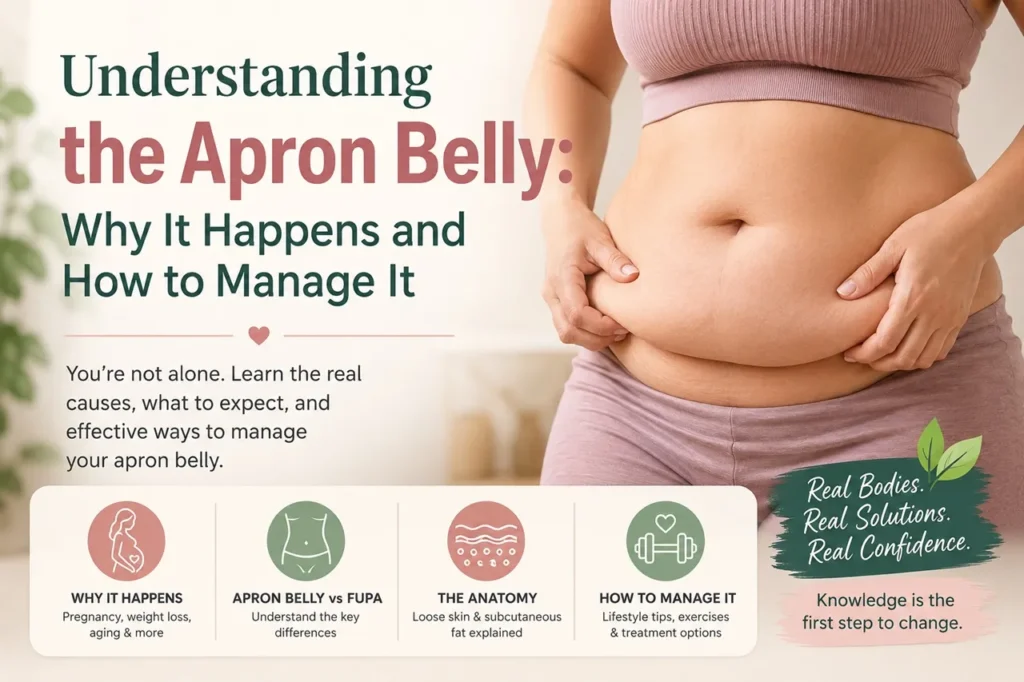

Losing a large amount of weight after bariatric surgery is a real achievement. Even so, many women then notice a soft fold of skin hanging over the lower tummy. An apron belly after gastric sleeve or bypass surgery is common, and it does not mean the operation failed.
This guide explains why the fold forms and how it tends to change month by month. It also covers skin care, everyday support, surgery options, NHS rules and when to call your bariatric team.
Why Loose Skin Forms After Bariatric Surgery
Skin stretches slowly as weight goes up over many years. Over time, the collagen and elastin fibres that help it spring back become thinner and weaker. So when weight then drops quickly, the skin cannot shrink at the same speed.
As a result, spare skin and some remaining fat gather low on the tummy, where gravity pulls hardest. Doctors call this hanging fold a panniculus. The NHS guide to weight loss surgery complications warns that excess folds of skin can remain. These often appear on the tummy, breasts, hips and limbs.
You are far from alone. A Swedish survey asked people about their skin after weight loss surgery. Three in four wanted skin surgery on at least one area. Moreover, the tummy caused the most discomfort for both women and men.
Sleeve Gastrectomy vs Gastric Bypass
Both operations reduce how much you can eat, but they work in slightly different ways. However, neither one is known to cause more loose skin on its own. What matters most is how much weight you lose and how your skin responds.
| Feature | Sleeve gastrectomy | Gastric bypass |
|---|---|---|
| What the surgeon does | Removes a large part of the stomach, leaving a narrow tube | Creates a small stomach pouch and joins it to a lower part of the small intestine |
| How it helps weight loss | Smaller stomach and less hunger | Smaller pouch, and food skips part of the gut |
| Pace of weight loss | Fastest in the first year | Fastest in the first year, often slightly more in total |
| Nutrient risks | Iron, vitamin B12, folate and vitamin D | The same, with a higher risk of iron and B12 problems |
| Likely effect on skin | Depends on total weight lost, age and skin quality | Depends on the same factors |
What Affects How Much Skin You Have
Two women can lose the same weight and end up with very different tummies. The main factors include:
- The size of your BMI drop. Losing 50kg usually leaves more spare skin than losing 20kg.
- Speed of loss, since skin has less time to adapt.
- Age, because collagen production falls as we get older.
- How long you carried the extra weight.
- Past pregnancies, which stretch the tummy skin further.
- Smoking and sun damage, which both weaken skin.
- Genes and where your body tends to store fat.
Overhangs range from a small roll to a deep fold that reaches the thighs. Our guide to apron belly grades explains how doctors describe each size.
Loose Skin Timeline: What Often Happens Month by Month
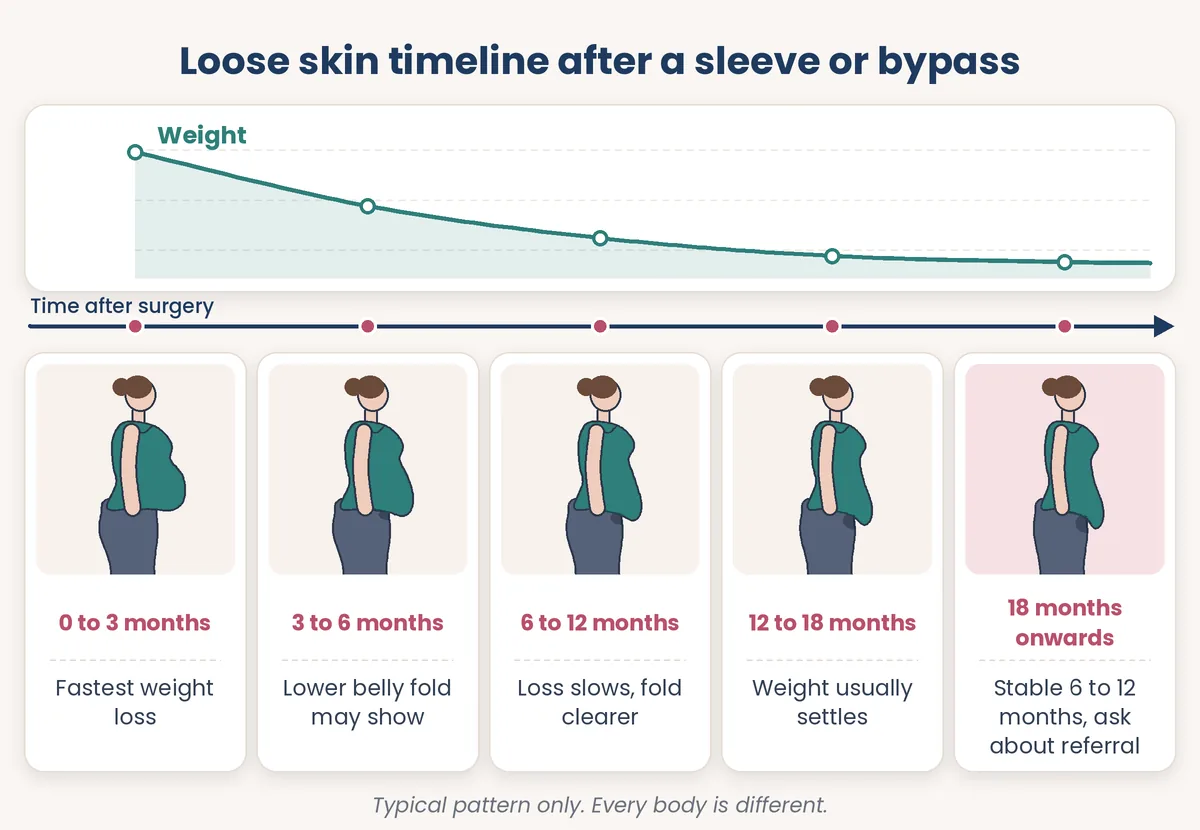
Every body follows its own pace, so treat the table below as a rough pattern. In general, weight drops fastest in the first few months and then slows. Most people find their weight settles somewhere between 12 and 18 months after surgery. In fact, the NHS advises avoiding pregnancy for 12 to 18 months after weight loss surgery, until weight has stabilised.
| Time after surgery | Weight | Skin | What to focus on |
|---|---|---|---|
| 0 to 3 months | Fastest loss while you move from liquids to soft food | Tummy starts to feel softer and looser | Protein, fluids, vitamins and gentle walking |
| 3 to 6 months | Steady loss continues | A lower belly fold may begin to show | Strength work once your team clears you, plus fold hygiene |
| 6 to 12 months | Loss slows down | The fold often becomes clearer, and rashes may start | Blood tests, muscle building and light support garments |
| 12 to 18 months | Weight usually settles near its lowest point | The true size of the overhang is easier to judge | Weigh yourself monthly and keep a record of skin problems |
| 18 months onwards | Ideally stable, although some people regain a little | Skin may soften slightly, but loose skin stays | Ask about a referral once weight has held steady for 6 to 12 months |
Why Surgeons Ask You to Wait
Many plastic surgeons like your weight to stay steady for at least 6 to 12 months before body contouring. For NHS funding, national guidance from plastic surgeons asks for 12 months of stable weight.
There are good reasons for this. If you keep losing weight after surgery, new loose skin can form. Meanwhile, a later weight gain can stretch the repair. Waiting also gives your body time to rebuild nutrient stores, which helps wounds heal.
Skin Problems Under the Fold
A heavy fold traps heat and sweat against the skin beneath it. Over time, this can cause intertrigo, a red, raw rash where skin rubs on skin. Yeast and bacteria then thrive in the warm, damp crease.
Common signs include itching, soreness, a musty smell, weeping patches and cracked skin. In addition, the fold can make washing, drying and dressing harder than before.
A simple daily routine usually helps:
- Wash the fold once or twice a day with a mild, unperfumed cleanser.
- Lift the fold and pat it fully dry, or use a hairdryer on a cool setting.
- Place a soft cotton layer or moisture-wicking fabric under the fold.
- Change damp clothing quickly after exercise or hot days.
- Ask a pharmacist about barrier creams or antifungal treatments if a rash appears.
For more detail, read our guide on caring for a sweaty, sore apron belly fold. Keep notes and photos of any infections, because these records can support a later NHS referral.
Non-Surgical Support That Helps
No cream, wrap or workout can remove a true panniculus. Still, several habits can make the skin healthier and the fold easier to live with.
Protein and Nutrition
Skin and muscle both need protein to repair. Many bariatric programmes suggest around 60g of protein a day for women, but your dietitian will set your own target. Spread it across small meals, and eat the protein part of each meal first.
Strength Training
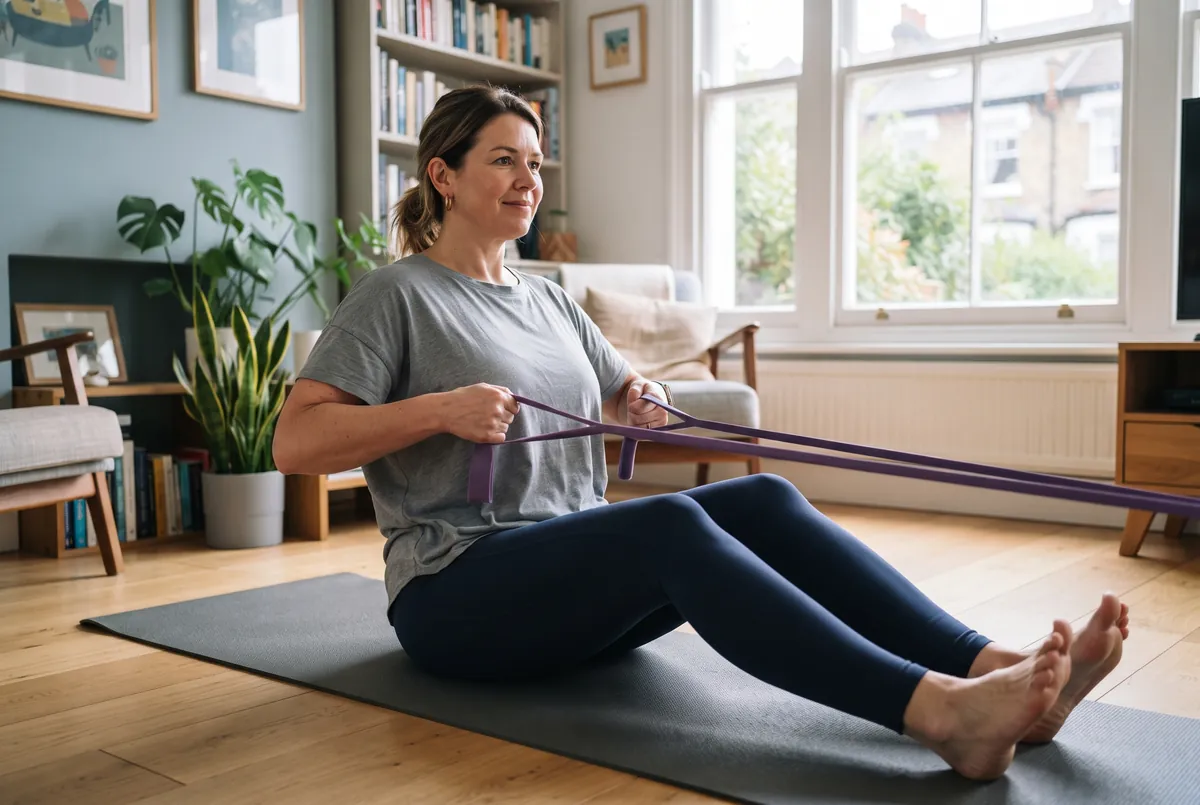
Muscle sits under the skin and fills out some of the space left by lost fat. Therefore, regular resistance work can improve shape and tone, even though it cannot shrink skin. Start with bands, light weights or body-weight moves, and build up slowly once your team agrees.
Support Garments
A gentle support band can lift the fold, reduce rubbing and help clothes sit better. Our comparison of apron belly support belts, slings and binders covers the main styles. Choose a breathable fabric, and take it off at night so your skin can rest.
Creams and Skin-Tightening Treatments
Moisturisers keep skin comfortable, but no cream is proven to tighten a large amount of loose skin. Similarly, clinic treatments such as radiofrequency may help mild laxity, yet they cannot lift a heavy fold. Our article on loose skin after Ozempic weight loss looks at these options in more detail.
Surgical Options for an Apron Belly After Weight Loss Surgery
When the fold causes rashes, pain or trouble moving, surgery is the only way to remove it. A consultant plastic surgeon will suggest an operation based on how much skin you have and where it sits.
Panniculectomy (Apronectomy)
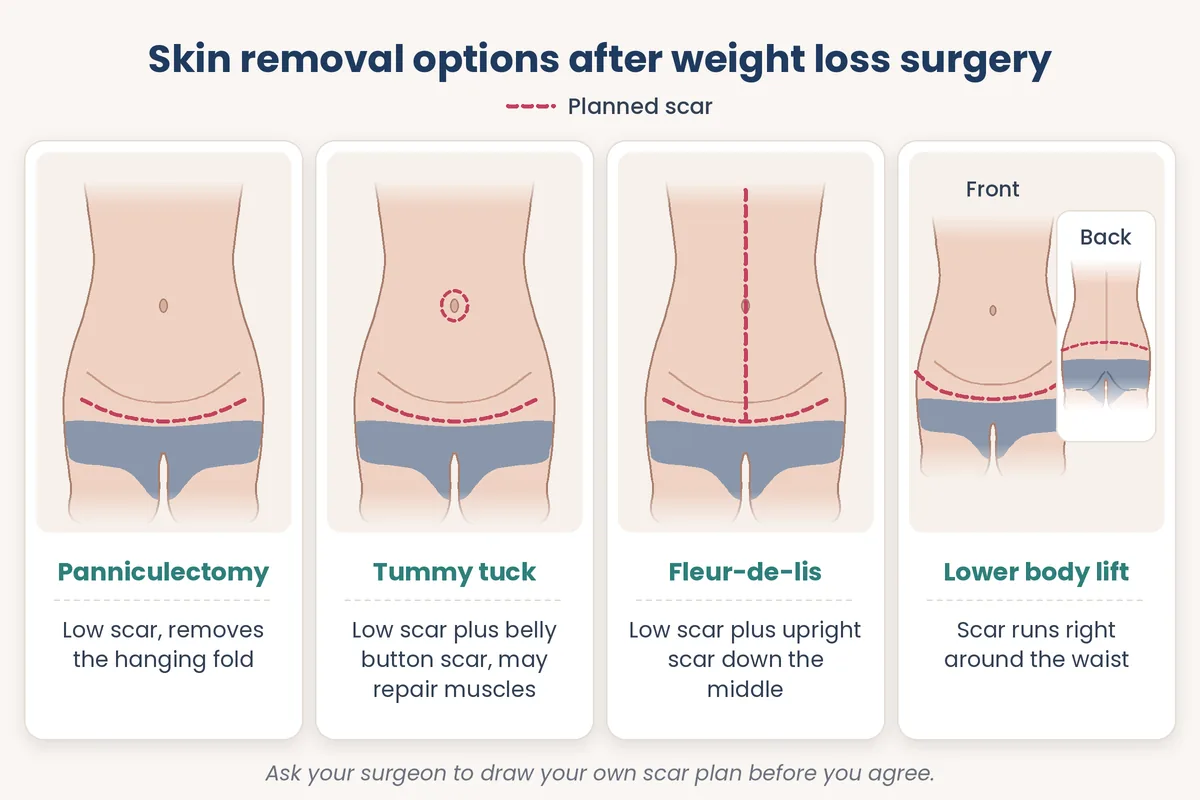
This operation removes the hanging fold of skin and fat below the belly button. It is mainly functional, so it targets hygiene, rashes and movement rather than shape. It does not usually tighten the tummy muscles.
Abdominoplasty (Tummy Tuck)
A tummy tuck removes loose skin and fat from the lower tummy. In addition, the surgeon may tighten the muscles and create a new opening for the belly button. Our article on panniculectomy vs tummy tuck compares the two in depth.
Fleur-de-Lis and Lower Body Lift
After major weight loss, skin often hangs in more than one direction. A fleur-de-lis repair adds an upright scar down the middle, so the surgeon can also remove extra width. Meanwhile, a lower body lift, or belt lipectomy, runs right around the waist to treat the tummy, hips and back together.
| Operation | What it treats | Scar | Typical hospital stay |
|---|---|---|---|
| Panniculectomy | The hanging fold only | Long, low scar across the lower tummy | 1 to 2 nights |
| Abdominoplasty | Lower tummy skin and fat, often with muscle repair | Low scar plus a scar around the belly button | 1 to 2 nights |
| Fleur-de-lis | Skin excess from top to bottom and side to side | Low scar plus an upright scar down the middle | Varies, so ask your surgeon |
| Lower body lift | Tummy, hips, back and buttocks | Scar right around the waist | 2 to 3 nights |
These are big operations with real risks. Plastic surgeons report that up to half of patients have a complication, although most are minor. Wound breakdown, fluid build-up (seroma), infection and blood clots are the main concerns. Smoking raises these risks sharply, so surgeons expect you to stop well beforehand. Our week-by-week tummy tuck recovery timeline shows what healing usually looks like.
Can You Get Skin Removal on the NHS?
Sometimes, but the rules are strict and they depend on where you live. Each Integrated Care Board (ICB) in England sets its own policy. Many treat a tummy tuck as cosmetic, while a panniculectomy may be funded when the fold causes real health problems.
The BAPRAS body contouring guidance suggests these broad criteria:
- A starting BMI over 40, or over 35 with a condition such as diabetes.
- A current BMI of 28 or below.
- Weight stable for 12 months.
- Clear physical and psychological problems caused by the excess skin.
- Not smoking.
However, local policies can be tougher. For example, one local NHS policy asks for a BMI of 25 or below, or a set share of excess weight lost. It also wants an apron that hangs below the pubic area. In addition, infections must have failed to settle after 6 months of treatment. Your GP can check the current rules for your area. Our guide to getting an apron belly operation on the NHS explains the referral steps.
Private Costs in the UK (A Guide)
The NHS estimates that a private tummy tuck costs about £5,000 to £10,000, plus consultations and follow-up care. A larger or combined operation, such as a lower body lift, will usually cost more. Prices also rise in London and with longer hospital stays.
Always ask for a written quote that lists the surgeon, anaesthetist, hospital stay, garments and aftercare. Our full breakdown of apron belly surgery costs covers payment plans and hidden extras.
Getting Ready for Surgery: Nutrition Checks
Bariatric surgery changes how your body absorbs nutrients. Consequently, low levels can slow wound healing after skin surgery. UK bariatric guidelines advise lifelong supplements and regular blood tests after a sleeve or bypass.
- Protein: low protein can weaken wound repair and muscle.
- Iron: both operations raise the risk of anaemia, and women with periods may need higher doses.
- Vitamin B12: UK guidance recommends injections every 3 months after a sleeve or bypass.
- Folate, vitamin D and calcium: these also need checking and topping up.
Before any skin operation, ask your GP or bariatric team for recent blood results. Bring them to your surgical consultation, so any gaps can be fixed first.
When to See Your GP or Bariatric Team
Contact your GP, pharmacist or bariatric team if you notice any of these:
- A rash under the fold that keeps coming back or does not settle with treatment.
- Skin that is hot, swollen, very painful, bleeding or weeping pus.
- Back pain, chafing or trouble walking caused by the fold.
- Tiredness, breathlessness, pins and needles or hair loss, which may point to low iron or B12.
- Weight loss that keeps going well past 18 months, or fast weight regain.
- Low mood or worry about your body that affects daily life.
Seek urgent help if you have a high temperature with a spreading red area, or feel very unwell.
Frequently Asked Questions
Will I get an apron belly after a gastric sleeve?
Not everyone does, but loose tummy skin is common after large weight loss. Your risk depends mainly on how much weight you lose, your age, past pregnancies and your skin quality. People who lose more weight, or who are older, tend to have more spare skin.
Does a gastric bypass cause more loose skin than a sleeve?
Neither operation directly causes more loose skin. A bypass can lead to slightly more weight loss for some people, and more weight loss can mean more spare skin. In practice, total weight lost, age and skin elasticity matter more than the type of operation.
How long after bariatric surgery can I have skin removed?
Most people wait until their weight settles, often 12 to 18 months after surgery. Surgeons then usually want your weight stable for 6 to 12 months. NHS funding guidance asks for 12 months of stable weight, so many people wait around 2 years in total.
Can exercise get rid of an apron belly after weight loss surgery?
Exercise cannot remove loose skin. Strength training builds muscle under the skin, improves posture and helps you keep the weight off. Those changes can make the fold look smaller, but only surgery can remove a true panniculus.
Is a panniculectomy available on the NHS after a gastric sleeve?
Sometimes. Funding depends on your local ICB policy. Most require a lower BMI and at least 12 months of steady weight. You will also need to be a non-smoker with clear health problems, such as repeated infections. Your GP can check the current criteria for your area.
How much does skin removal cost privately in the UK?
The NHS estimates that a private tummy tuck costs about £5,000 to £10,000, plus consultations and aftercare. Larger operations, such as a lower body lift, usually cost more. Always get a written quote that lists every fee before you agree to surgery.
Which vitamins should I check before skin removal surgery?
Ask for tests of iron, vitamin B12, folate and vitamin D, along with a full blood count. Protein intake matters too, because skin needs it to heal. Your bariatric team can correct any low levels before you have more surgery.
Final Thoughts
Loose skin after a sleeve or bypass is a common result of major weight loss, not a personal failure. In the first year, focus on protein, supplements, strength work and caring for the fold. Then, once your weight has settled, you can make a calm decision about surgery.
If the fold causes rashes, pain or distress, speak to your GP or bariatric team. You have already done the hard work, and you deserve skin that feels comfortable to live in.