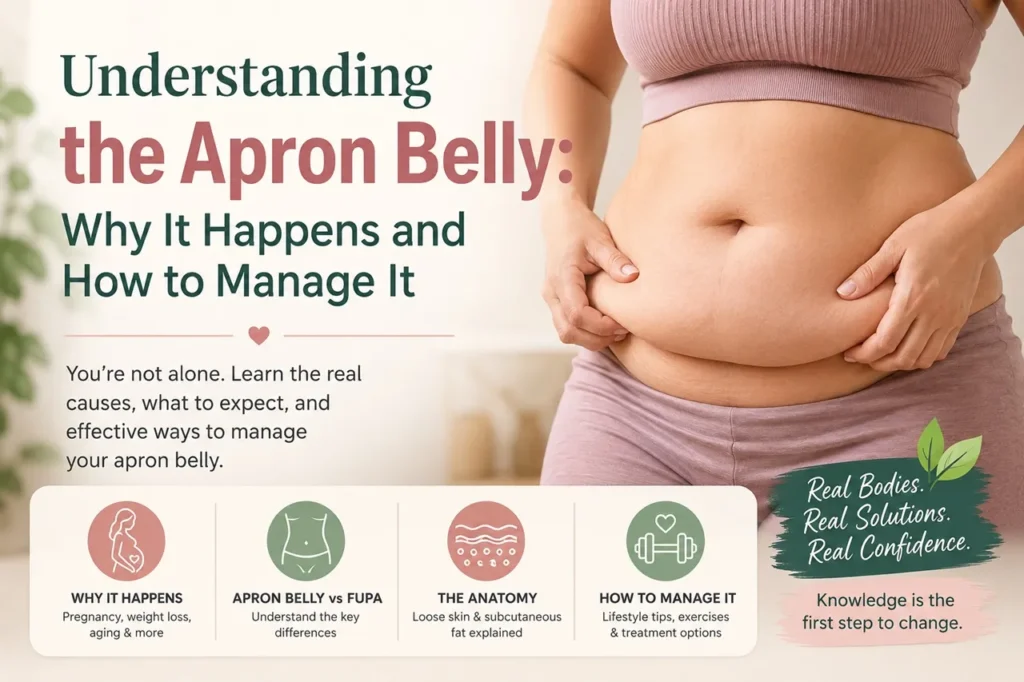
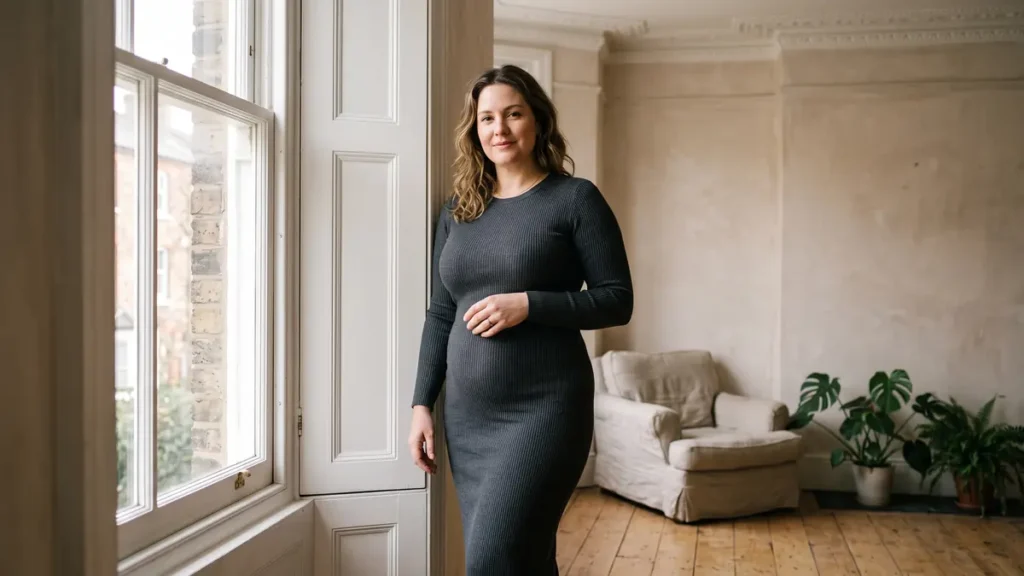
Two belly shapes often get mixed up online. One has a crease across the middle, so the tummy looks like a capital B from the side. The other hangs down over the pubic area like an apron. If you are weighing up B belly vs apron belly, the shape of the lower half is the key. Each one has different causes, and each one responds to different fixes.
This guide explains both shapes in plain terms. It also shows how to tell them apart in the mirror and what actually helps. Finally, it covers when a change in your tummy needs a GP visit.
B Belly vs Apron Belly: The Quick Answer
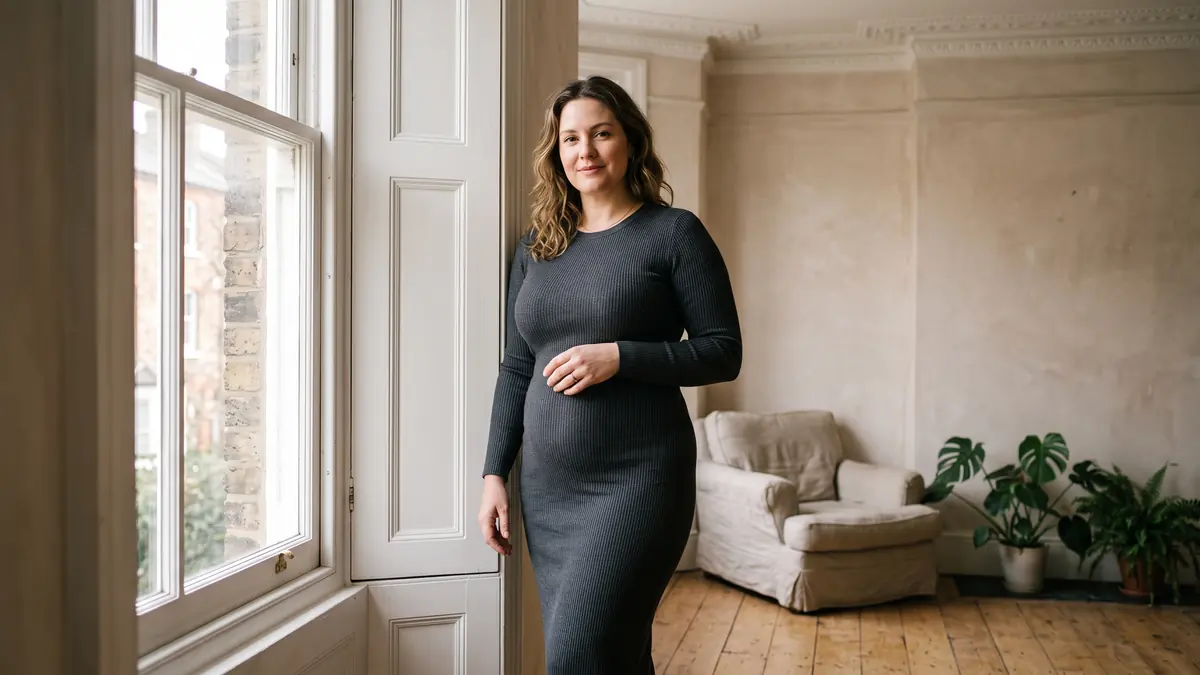
A B belly has two rounded sections with a fold or crease between them. The crease usually sits near the belly button or where your waistband rests. However, the lower section sits forward rather than hanging down.
An apron belly, by contrast, is a fold of skin and fat that hangs from the lower tummy. It drops down over the pubic area and, in larger cases, towards the thighs. The underside of the fold rests against the skin beneath it.
So the simplest test is this: does the lower part of your tummy hang down, or does it simply bulge? A bulge points to a B shape. A hanging fold points to an apron belly. Some women sit somewhere in between, and that is normal too.
What Is a B Belly?
“B belly” is an everyday description, not a medical diagnosis. You will not find it in NHS guidance or clinical grading systems. Instead, the term describes a profile: an upper curve, a dip, then a lower curve.
The phrase is used most often in pregnancy. Here it describes a bump that looks divided into a top half and a bottom half. However, many women outside pregnancy use it to describe their everyday tummy shape too.
A B belly is a shape, not a health condition, and having one does not mean anything is wrong. Even so, the factors behind it, such as tummy fat or stretched muscles, can be worth looking at.
What Creates the Crease
The dip in the middle usually forms where skin and fat fold over a fixed line. For many women, that line is the belly button area. For others, it is the spot where trousers or knickers sit every day.
Above the crease, the upper bulge may contain fat under the skin as well as deeper fat around the organs. Below it, the lower bulge is mostly fat under the skin and, sometimes, loose skin. Bloating can also push the upper section out further on some days.
B Belly in Pregnancy
In pregnancy, a B-shaped bump is more common in women who carried weight around the tummy before conceiving. It can also appear after previous pregnancies, when the tummy wall is looser. Women who already had an apron belly may notice it too. Our guide to apron belly in pregnancy covers that situation.

A B-shaped bump is not, on its own, a sign of a problem with the baby. The shape can also change as pregnancy moves on. If you have any worries about your bump, mention them to your midwife.
What Is an Apron Belly?
An apron belly is a fold of skin and fat hanging from the lower abdomen. Doctors call it a pannus or panniculus. Our guide on what an apron belly is covers the basics in more detail.
Unlike a B belly, an apron belly has a recognised clinical grading. Grades run from a small fold over the pubic hairline to a large fold reaching the thighs or knees. Our guide to apron belly grades walks through each level.
An apron belly usually contains two things: fat and stretched skin. The fat can shrink with weight loss. The stretched skin, however, often stays behind. That mix is what makes it harder to change than a B belly.
How to Tell Them Apart in the Mirror
First, stand side-on to a full-length mirror in fitted underwear. Then relax your tummy rather than holding it in. Finally, look at three areas: the crease, the lower section and the skin underneath.
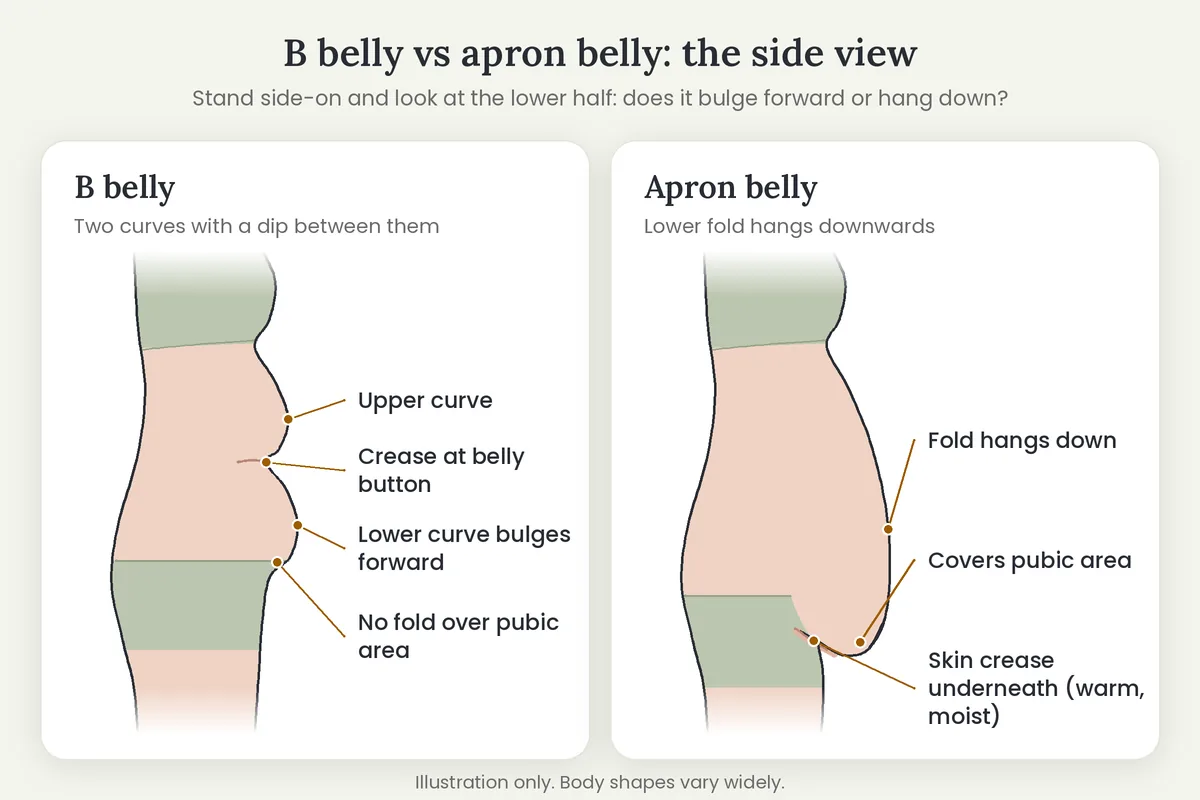
With a B belly, you will see a clear dip across the middle. The lower curve pushes forward but its lower edge stays roughly level with the top of your knickers. When you lie on your back, the shape usually flattens out.
With an apron belly, the lower section folds down. You may need to lift it to see your pubic area or the top of your thighs. There is a skin-to-skin crease underneath, and that crease often feels warm or damp.
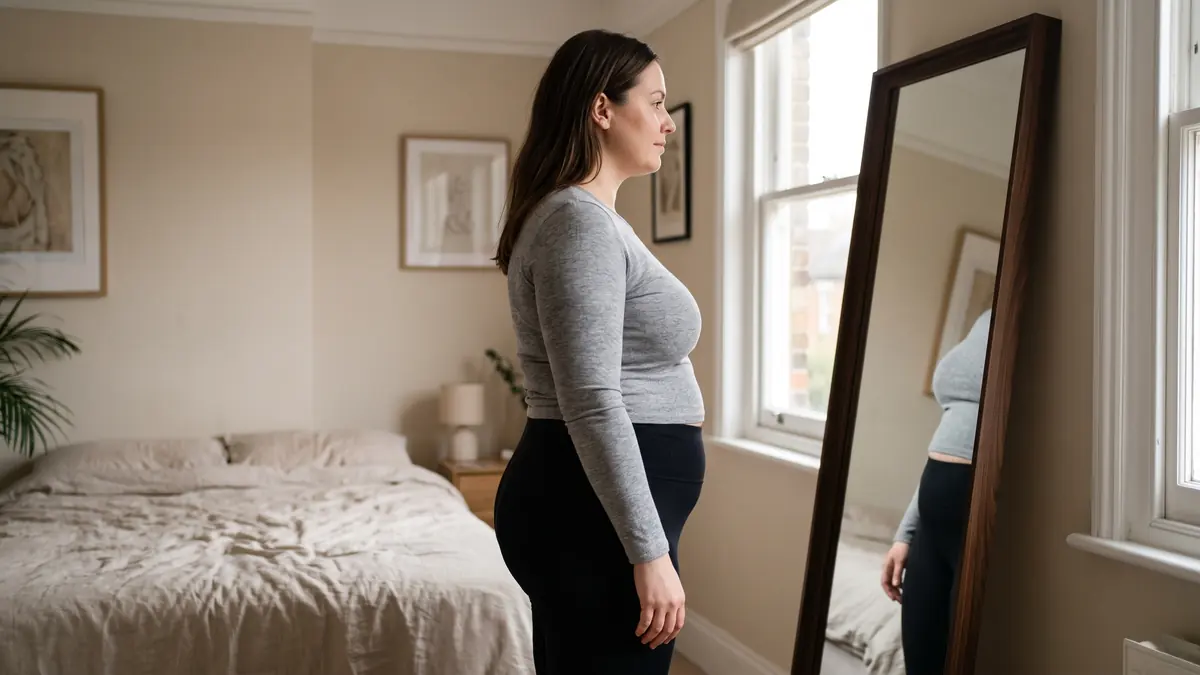
Next, try the lift test. Gently lift the lower section with both hands and let go. If a fold drops back and covers skin below it, that points to an apron belly. If nothing drops, you are more likely looking at a B shape.
Side-by-Side Comparison Table
This table sums up the main differences. Use it as a guide only, as body shapes vary widely.
| Feature | B belly | Apron belly |
|---|---|---|
| Side profile | Two curves with a dip between them | Lower fold hangs downwards |
| Medical status | Descriptive term, not a diagnosis | Recognised as a pannus, with clinical grades |
| Lower section | Bulges forward | Drops over the pubic area or thighs |
| Skin fold underneath | Usually none | Yes, a warm and moist crease |
| Main tissue | Mostly fat, sometimes stretched muscles | Fat plus loose, stretched skin |
| Response to weight loss | Often softens or disappears | Fat shrinks, but loose skin often stays |
| Common skin problems | Rare | Rash, sweating and chafing in the fold |
| Surgery usually needed? | Rarely | Sometimes, for larger or troublesome folds |
What Causes a B Belly?
There is no single cause, and there is very little research on the B shape itself. The points below are the most likely contributors based on how tummy fat and muscles behave.
- Fat distribution: Some women store more fat around the middle, and the tummy folds where it is weakest.
- Clothing: A waistband that sits in the same place every day can deepen an existing crease.
- Previous pregnancies: Stretched skin and muscles make the lower tummy more prone to bulging.
- Tummy muscle separation: A gap between the two long tummy muscles can let the middle dome forward.
- Bloating: Wind or constipation can make the upper section look bigger on some days.
- Menopause: Falling oestrogen tends to shift fat towards the tummy.
Muscle separation is worth a closer look if you have had a baby. In pregnancy, the band of tissue between the tummy muscles stretches. A small gap is common after birth and often closes within the first couple of months. A wider gap, however, can cause doming when you sit up. Our guide on apron belly and diastasis recti explains how to check for it.

What Causes an Apron Belly?
An apron belly forms when skin stretches beyond its ability to spring back. Several factors often work together.

- Large weight gain, followed by weight loss
- Pregnancy, especially more than one
- C-section scarring, which can anchor tissue and create a shelf above it
- Ageing, as skin loses collagen and elastin
- Hormonal changes, including menopause and conditions such as PCOS
- Genetics, which shape both skin quality and where you store fat
Our full guide to what causes an apron belly covers each of these in more depth. The common thread is stretched skin. That is the main thing a B belly usually does not have.
Can a B Belly Turn Into an Apron Belly?
It can, although it does not always happen. The two shapes can sit on a spectrum. A B belly with a soft lower bulge may start to hang if skin keeps stretching and loses firmness.
For example, further weight gain, another pregnancy or the skin changes of menopause can tip the balance. Over time, the lower curve may begin to fold down rather than push forward. At that point, it behaves more like a small apron belly.
On the other hand, many women keep a B shape for years without change. Stable weight, regular movement and good muscle tone all help. Nobody can predict exactly how one person’s skin will behave, so treat this as a possibility rather than a certainty.
What Fixes a B Belly
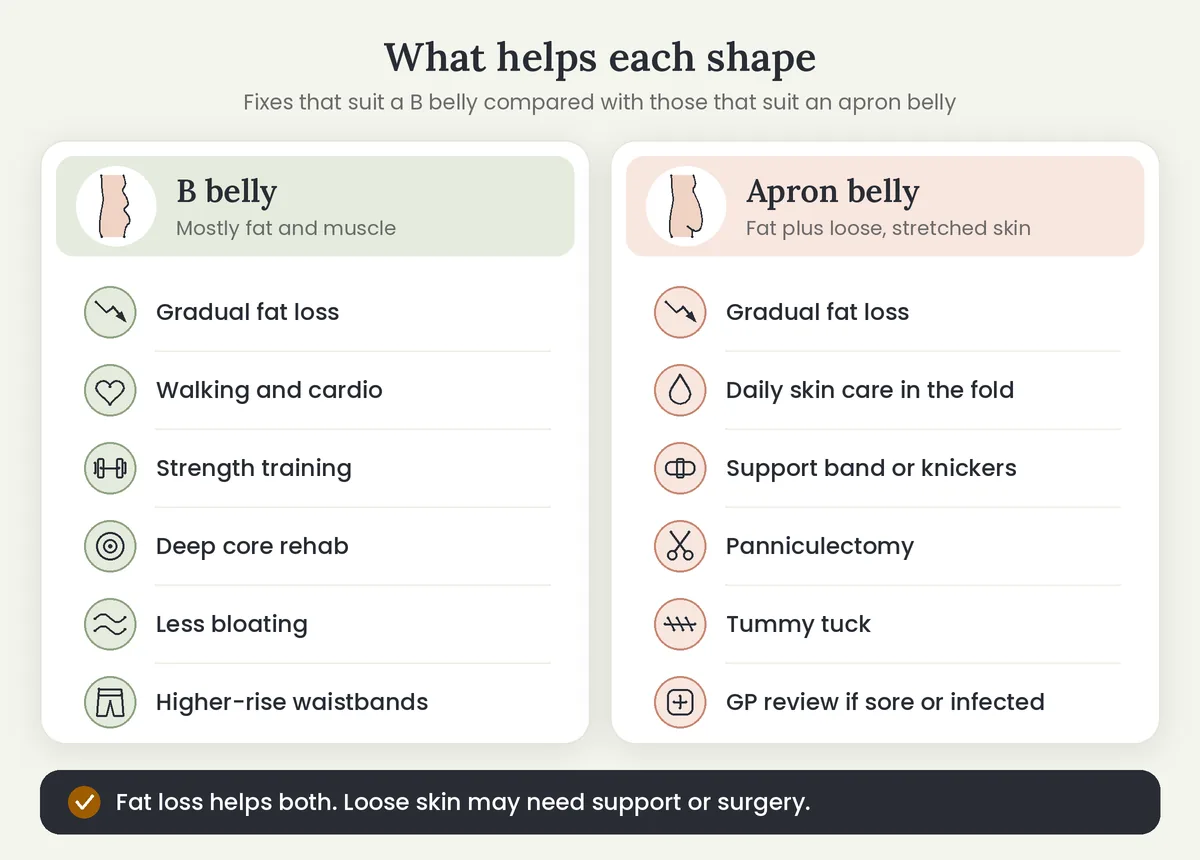
A B belly is mostly fat and muscle, so it often responds well to everyday changes. Results take months rather than weeks, though.
- Gradual fat loss: A steady calorie deficit reduces fat across the whole body, including both curves.
- Regular walking or cardio: This supports fat loss and heart health without strain.
- Strength training: Building muscle helps your body use energy and improves posture.
- Core rehabilitation: Gentle deep core work can help if muscle separation is part of the picture.
- Digestive habits: Smaller meals, enough fibre and fewer fizzy drinks can ease bloating.
- Better-fitting clothes: A higher-rise waistband that sits above the crease can smooth the shape day to day.

Crunches alone will not flatten a B belly. Studies on tummy exercises have not shown that working one area burns fat from that area. Core work still matters, however, because it supports your back and posture.
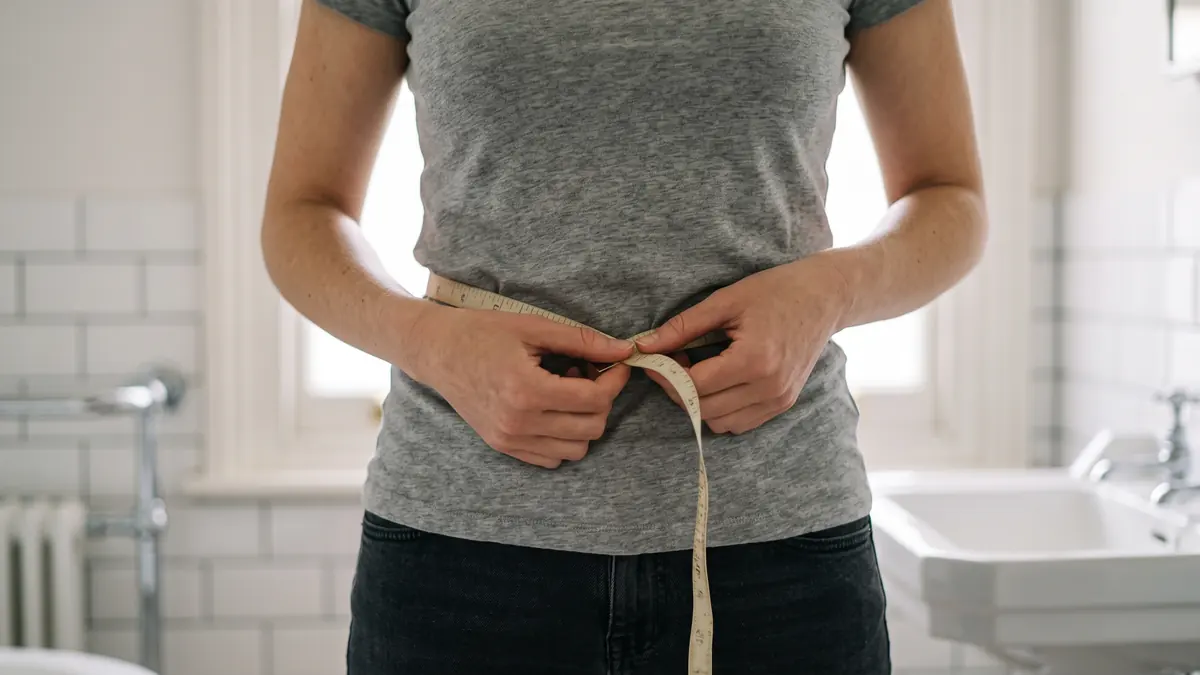
In addition, a useful target is your waist size. The NHS suggests keeping your waist to less than half your height. Measuring every few weeks can show progress even when the scales barely move.
What Fixes an Apron Belly
An apron belly usually needs a layered approach. First, weight loss can shrink the fat inside the fold. Next, daily skin care keeps the crease clean, dry and comfortable. A support band or well-fitting knickers can also reduce rubbing and ease back strain.
However, loose skin rarely tightens much on its own. Non-surgical skin treatments may give a small improvement in mild cases. For larger folds, surgery is the only way to remove the excess skin.
There are two main operations. A panniculectomy removes the hanging skin and fat. A tummy tuck goes further, as it also tightens the tummy muscles and reshapes the area. Our guide to panniculectomy versus tummy tuck compares the two side by side.

NHS access is limited. The NHS page on tummy tucks treats the operation as cosmetic. As a result, the NHS does not usually offer it. A panniculectomy may be funded when the fold causes repeated infections or other health problems. Our guide to apronectomy on the NHS explains the usual criteria.
Could It Be Something Else?
A few other problems can change the shape of your tummy. Therefore, it helps to rule them out.
Bloating
Unlike fat, bloating comes and goes, often within a day. Your tummy may feel tight and full, and the shape may look different by the evening. Our guide to apron belly versus bloating shows how to tell them apart. The NHS advice on bloating also lists when to see a GP.
Muscle Separation
Does your tummy dome or form a ridge as you sit up from lying down? If so, the muscles may have separated. This can make a B belly more obvious. A GP or women’s health physiotherapist can check the gap for you.
Hernia
A hernia is a lump where tissue pushes through a weak spot in the tummy wall. It often looks bigger when you cough or strain, and smaller when you lie down. Ask a GP to check any new lump in your tummy.
When to See a GP
Most changes in tummy shape are not urgent. Even so, book a GP appointment if:
- You notice a new lump or bulge, especially one that changes when you cough
- Your tummy feels bloated most days and diet changes have not helped
- The skin under your fold is broken, weeping, smelly or spreading
- The fold causes back pain or stops you moving comfortably
- Your tummy changes shape alongside unexplained weight loss
Get urgent help from a GP or NHS 111 if a lump becomes hard and painful. The same applies to tummy pain with vomiting. Similarly, seek urgent advice if the skin under a fold becomes hot, red and painful with a fever.
Frequently Asked Questions
What is the difference between a B belly and an apron belly?
A B belly has two rounded sections with a crease between them, and the lower part bulges forward. An apron belly has a lower fold of skin and fat that hangs down over the pubic area. The key test is whether the lower section hangs or simply bulges.
Is a B belly a medical condition?
No. A B belly is an everyday description of a tummy shape, not a medical diagnosis. However, the factors behind it, such as tummy fat or separated muscles, are worth raising with a GP or physiotherapist.
Can you get rid of a B belly without surgery?
Often, yes. Because a B belly is mostly fat, steady weight loss, regular activity and strength training can soften or remove it. Core rehabilitation can also help if muscle separation is involved. Results usually take several months.
Can a B belly become an apron belly?
It can. If the skin on the lower tummy keeps stretching, the lower bulge may start to fold down. Weight gain, further pregnancies and skin changes around menopause can all play a part. Many women, however, keep a B shape without it changing.
Is a B-shaped bump in pregnancy a problem?
A B-shaped bump is not, on its own, a sign of a problem. It is more common in women who carried weight around the tummy before pregnancy or have been pregnant before. Speak to your midwife if you have any worries about your bump.
Will exercise fix an apron belly?
Exercise can shrink the fat inside an apron belly and improve your strength. However, it cannot tighten loose, stretched skin. For larger folds, surgery such as a panniculectomy or tummy tuck is the only way to remove the excess skin.
Can I get apron belly surgery on the NHS?
Sometimes. A tummy tuck is regarded as cosmetic, so it is not usually available on the NHS. A panniculectomy may be funded if the fold causes repeated skin infections or other health problems. Rules vary by area, so start with your GP.
Final Thoughts
When comparing a B belly vs apron belly, start with one question: does the lower part hang? A B belly bulges forward below a crease and usually responds well to fat loss and core work. An apron belly hangs down and often includes loose skin, which may need skin care, support or surgery.
Neither shape is a personal failure, and both are common. Take a side-on photo, try the lift test and note any skin or back problems. If anything worries you, your GP is the right first step.