
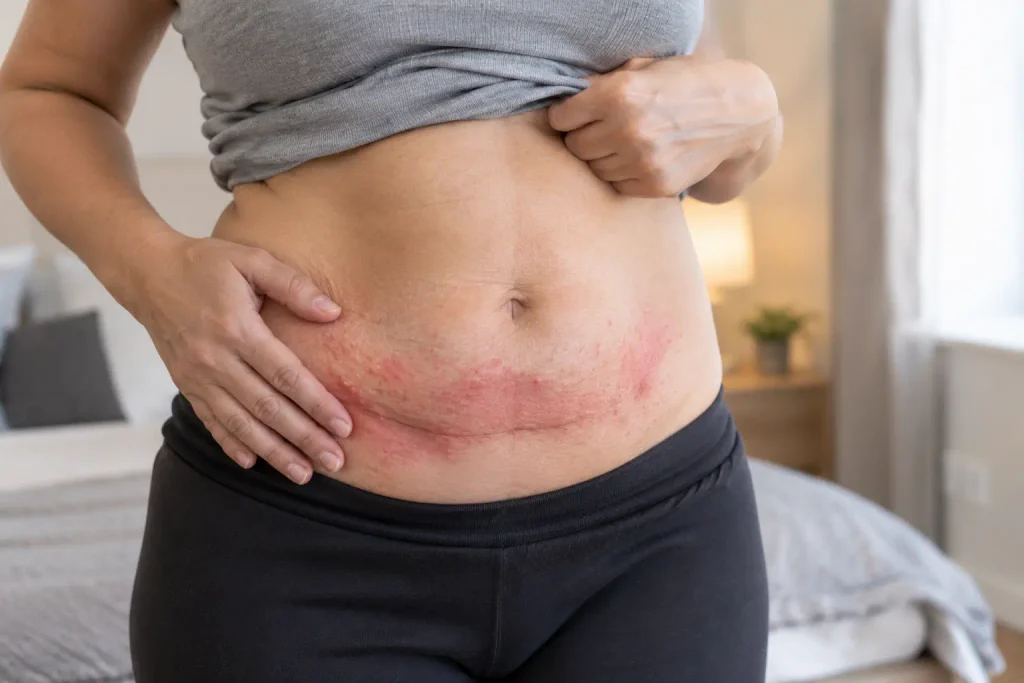
The redness showed up again today. Maybe it’s sore, maybe it’s starting to crack, and maybe you’ve been dealing with it on and off for months without really knowing what it is or how to stop it coming back. An apron belly rash is one of the most common, and least talked about, parts of living with an apron belly. Nobody warns you about it, yet for many women it’s the single most uncomfortable part of the whole condition.
This guide explains exactly what causes skin irritation under an apron belly, what you can do today to ease it, and how to stop it returning. We’ll also cover when it’s time to see a doctor, since persistent skin irritation can sometimes point toward a medical need for treatment, not just a cosmetic concern. If you’re also managing the broader picture of your apron belly, this rash is often the part that pushes people to look into every option available, including surgery.
This particular problem shows up often for women whose fold sits right over a healing scar, so if your apron belly developed after a caesarean, it’s worth reading our guide on recovering from an apron belly after a C-section alongside this one, since scar care and rash prevention often overlap. And if you’re still working out whether what you’re dealing with is a true apron belly or more general belly fat sitting low on your stomach, that distinction matters here too, since a well-defined hanging fold is far more prone to this kind of trapped-moisture irritation than an evenly distributed layer of fat.
What Causes an Apron Belly Rash?
The medical name for this condition is intertrigo, and it’s worth knowing that term, since it helps when you’re searching for information or speaking with a GP. Intertrigo apron belly rashes develop specifically because of how the fold of skin sits against itself. Where skin touches skin continuously, three things build up: warmth, moisture, and friction. Combined, they break down the skin’s natural barrier and trigger inflammation.
Research on intertrigo confirms around 1 in 8 people in the UK experience this kind of skin fold rash at some point, and it’s especially common wherever skin folds trap moisture, including the apron belly area. Sweat gets trapped against the skin with nowhere to evaporate. Every movement, walking, sitting, bending, creates friction between the two skin surfaces. Over hours, this combination irritates the skin until it becomes red, sore, and sometimes cracked.
Warm weather makes it worse, since higher temperatures mean more sweating. Tight clothing adds extra friction on top of what’s already happening within the fold itself. Not drying the area thoroughly after a shower leaves residual moisture that feeds the problem before the day even starts.
Why Does It Often Turn Into an Infection?
A simple rash can become something more complicated if it isn’t managed. The warm, moist environment inside an apron belly fold happens to be exactly the kind of environment fungi and bacteria thrive in. Candida, a type of yeast, is particularly common in this setting and often shows up as a rash with small, scattered red spots or pustules around the main irritated area.
Clinical guidance on intertrigo notes that secondary infection is common precisely because the skin barrier has already broken down by the time symptoms appear. Once that happens, the rash tends to feel more painful, may develop a distinct odour, and typically doesn’t improve with basic drying and moisturising alone. This is the point where topical treatment, sometimes an antifungal cream, sometimes a short course of antibiotics, often becomes necessary rather than optional.
Early Signs to Watch For
Catching an apron belly rash early makes treatment far simpler. Watch for redness that follows the shape of the fold itself, often appearing as a mirror image on both sides where the skin touches. A burning or stinging sensation, especially after sweating or showering, is usually one of the first symptoms people notice before visible redness fully develops.
As irritation progresses, the skin may feel raw to the touch, develop small cracks, or start weeping slightly. Itching often accompanies all of this, which creates a frustrating cycle, since scratching further damages already-compromised skin.
How to Prevent Chafing Under an Apron Belly
Prevention matters more here than almost any other aspect of managing an apron belly, since this particular problem responds very well to consistent daily habits. A few changes make a real difference.
Keep the area completely dry, not just after a shower but throughout the day where possible. Pat the skin dry rather than rubbing, since rubbing itself adds friction the skin doesn’t need. Some people find it helpful to use a hairdryer on a cool setting to fully dry the fold after washing, since towels alone sometimes leave residual dampness in deep creases.
Choose breathable fabrics wherever you can. Cotton allows air circulation and absorbs moisture better than synthetic materials, which tend to trap heat and sweat against the skin. Loose-fitting clothing around your midsection also reduces the friction that builds up throughout a normal day of movement.
Barrier creams or powders designed for skin folds can add a protective layer between the two skin surfaces. Clinical guidance specifically advises against talc or cornstarch-based powders, since these can actually irritate already-sensitive skin rather than protect it. Look instead for zinc oxide-based barrier creams or products specifically designed for skin fold protection.
Some people place a thin, breathable cloth or specially designed skin fold liner within the fold itself to absorb moisture and reduce direct skin-on-skin contact throughout the day. This small habit alone prevents a significant amount of daily irritation for many women.
Weight management plays a role too, since reducing the size of the fold reduces how much skin-on-skin contact occurs in the first place. This doesn’t mean rapid or extreme weight loss, but steady, sustainable fat loss over time can meaningfully ease this particular symptom, separate from any other benefits.
Treating an Existing Rash
If irritation has already developed, a few steps help calm it down. Clean the area gently with lukewarm water, avoiding harsh soaps that strip natural oils and worsen irritation. Dry thoroughly using the patting method described above, then apply a barrier cream to protect the skin while it heals.
If the rash looks like it may involve a fungal component, scattered small spots, a distinct pattern around the main rash, persistent itching, an over-the-counter antifungal cream can help. Give any treatment at least one to two weeks before judging whether it’s working, since skin fold rashes tend to improve gradually rather than overnight.
Avoid tight clothing entirely while the area heals, and prioritise keeping it dry over everything else during this period. Many women find loose, breathable loungewear far more comfortable and genuinely more effective for healing than anything structured or fitted.
When to See a Doctor
Some situations call for professional care rather than home treatment. See a GP if the rash doesn’t improve within two weeks despite consistent care, if it spreads beyond the original fold area, or if you notice pus, a strong odour, or increasing pain rather than gradual improvement. Fever alongside a worsening rash needs prompt medical attention, since this can indicate a more serious infection.
It’s also worth knowing that persistent, recurring skin irritation under an apron belly is one of the recognised medical justifications surgeons use when requesting NHS funding for surgery to remove the excess skin. If chafing, rashes, and skin breakdown are a frequent, ongoing problem for you rather than an occasional nuisance, it’s worth discussing this specifically with your GP, since it may change the conversation around what support or referral options are available to you. For a fuller picture of what that surgical route actually involves, our guide on the tummy tuck and panniculectomy options is a useful next read.
In the meantime, since skin health plays such a central role in managing an apron belly day to day, our Belly Skin guide covers broader skin care strategies that work alongside everything in this article.
The Crux
An apron belly rash is extremely common, genuinely uncomfortable, and almost entirely manageable once you understand what’s actually happening. Moisture, friction, and warmth combine to break down the skin barrier within the fold, and a few consistent daily habits, thorough drying, breathable fabric, the right barrier products, go a long way toward preventing it altogether. When irritation does flare up, treating it early stops a simple rash turning into a more stubborn infection. And if this becomes a frequent, recurring problem despite your best efforts, it’s a legitimate reason to have a proper conversation with your GP about further options, rather than something you need to just live with indefinitely.
Frequently Asked Questions
Is an apron belly rash the same as intertrigo?
Yes. Intertrigo is the medical term for the inflammatory skin fold rash that develops under an apron belly, caused by trapped moisture and friction between two skin surfaces.
Can an apron belly rash come back even after it heals?
Yes, it often does if the underlying causes aren’t addressed. Without consistent prevention habits, like keeping the area dry and reducing friction, the rash tends to return whenever conditions, heat, sweat, tight clothing, create the right environment again.
What’s the best cream for skin irritation under an apron belly?
A zinc oxide-based barrier cream works well for general prevention and mild irritation. If a fungal infection is suspected, an antifungal cream is more appropriate, and persistent cases may need a prescription treatment from a GP.
Does losing weight help with apron belly rash?
It can. Reducing the size of the fold reduces the amount of skin-on-skin contact, which lessens the friction and trapped moisture that cause the rash in the first place.
Can a rash under an apron belly be a sign I need surgery?
Not on its own, but frequent, severe, or recurring skin irritation is one of the recognized medical reasons surgeons cite when requesting NHS funding for surgery to remove excess skin, so it’s worth raising with your GP if it keeps happening.