
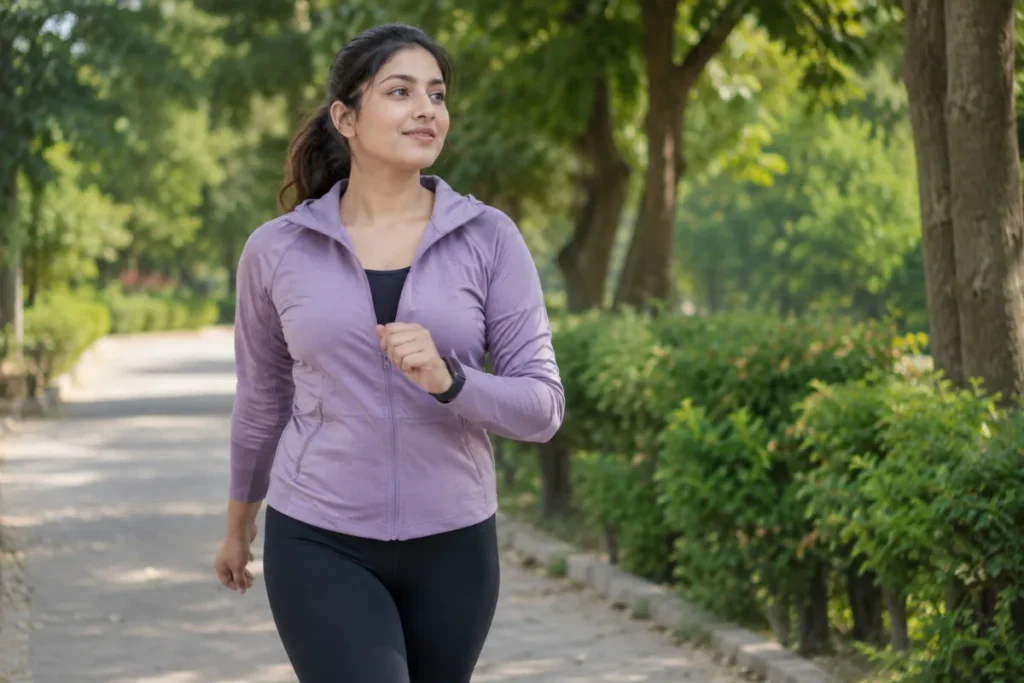
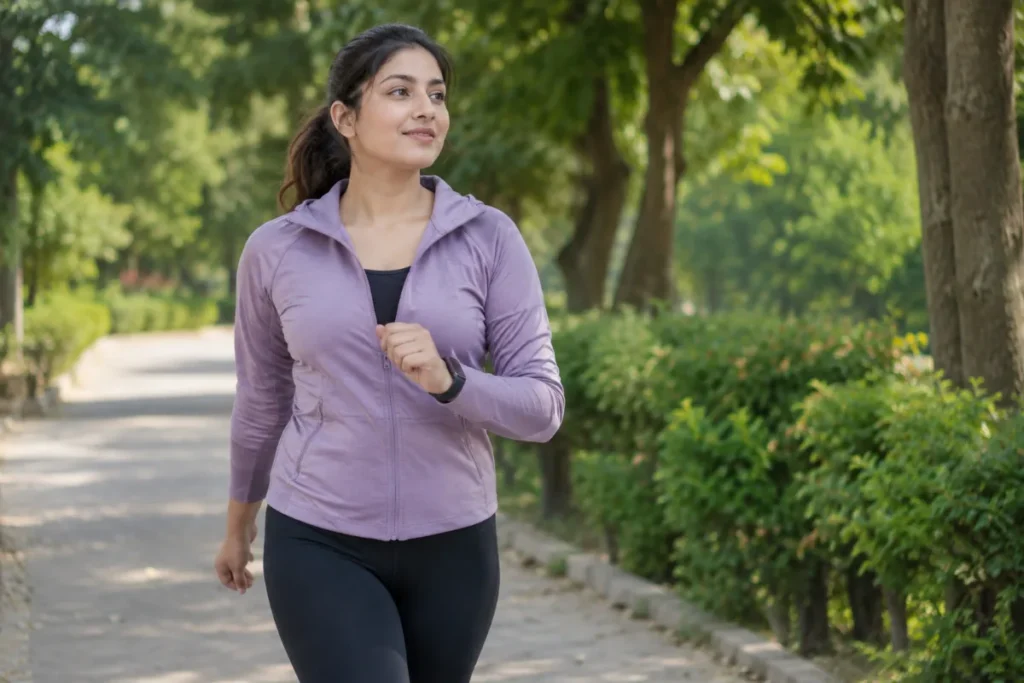
You’ve heard it a hundred times: just go for a walk. It sounds too simple to actually help with something as stubborn as an apron belly. So can walking reduce an apron belly, or is that just generic advice that applies to everything?
The honest answer sits in the middle. Walking for an apron belly won’t work miracles overnight, and it won’t fix loose skin on its own. But it does something most people underestimate: it creates steady, sustainable fat loss without stressing a healing core, which makes it one of the safest and most effective starting points you have, especially in the early months after pregnancy or a C-section.
Let’s look at what 30 minutes a day can genuinely do, and what it can’t.
Why Walking Helps an Apron Belly
An apron belly usually involves three things: excess fat, loose skin, and sometimes weakened core muscles from diastasis recti. Walking directly addresses the fat component. It burns calories, improves insulin sensitivity, and helps create the calorie deficit your body needs to shrink stored fat, including the fat sitting within an overhanging apron belly.
Walking to reduce belly fat works because it’s low-impact and repeatable. Unlike high-intensity workouts that you might dread or skip, a daily walk fits into ordinary life. You can do it with a pram, on a lunch break, or around your neighbourhood in the evening. That consistency matters more than intensity when your goal is gradual fat loss.
Walking also supports your posture and core engagement in a gentle way. Good walking form naturally activates your deep abdominal muscles, which can improve how your midsection looks and feels over time, even before major fat loss shows up on the scale.
What the Research Actually Shows
The benefits of walking for weight loss go well beyond your stomach. Public health researchers consistently find that brisk walking lowers blood pressure, improves heart health, and reduces the risk of type 2 diabetes. One clinical study found brisk walkers had a meaningfully lower diabetes risk than slower walkers. None of that is stomach-specific, but it matters here too: visceral fat, the deep abdominal fat linked to metabolic risk, responds well to this kind of steady cardiovascular activity.
Walking won’t out-perform a structured strength routine for building visible muscle definition. But for fat loss specifically, and for anyone who’s not ready for high-impact training, it holds up remarkably well against fancier alternatives.
If your apron belly involves excess fat sitting on top of your abdominal area, and you’re just starting to build an exercise habit, walking to reduce belly fat gives you real results with almost no injury risk. This makes it a smarter starting point than jumping straight into intense ab workouts, which target muscle tone but do nothing for the fat layer sitting above it.
Speaking of fat versus other causes, if you’re not sure whether your midsection is mostly fat, loose skin, or muscle separation, our guide to apron belly fat vs loose skin explains how to tell the difference.
How Much Should You Walk to Lose Belly Fat?
This is the question everyone actually wants answered: how much should I walk to lose belly fat? The most consistent guidance points to at least 150 minutes of moderate activity per week, which breaks down to about 30 minutes a day, five days a week. That’s the baseline the NHS recommends for general health, and it happens to line up well with what most fat-loss research supports too.
Thirty minutes doesn’t need to happen all at once. You can split it into three 10-minute walks throughout the day and still get meaningful benefits. What matters more than the exact chunking is intensity. A brisk pace, fast enough that you can talk but not sing, burns noticeably more calories than a slow stroll and pushes your heart rate into a range that supports real fat loss.
If you’re newer to exercise or still recovering postpartum, start smaller. Ten minutes a day for the first week is a completely valid starting point. Build up gradually rather than jumping straight to 30 minutes, since consistency beats intensity every time.
A Simple 30-Minute Walking Plan
Here’s a realistic way to build up to a full 30-minute daily walking habit over four weeks.
In week one, walk for 10 minutes a day at a comfortable pace. The goal here is simply building the habit, not pushing intensity.
In week two, extend to 15 to 20 minutes and start picking up your pace slightly during the second half of each walk.
In week three, aim for 25 minutes at a brisk pace throughout, using the talk-but-not-sing test to check your intensity.
By week four, you should be comfortably walking 30 minutes at a brisk pace most days of the week. From here, you can maintain this routine long-term or start adding short bursts of faster walking to increase the calorie burn further.
Pairing this walking routine with beginner-friendly core exercises speeds up results considerably, since walking handles the fat-loss side while targeted core work rebuilds the muscle structure underneath. If you haven’t already, our apron belly exercises guide walks you through exactly which moves complement a walking routine like this one.
What Walking Can’t Fix
It’s worth being honest here: walking helps enormously with fat, but it doesn’t tighten loose skin. If your apron belly involves marked skin laxity, particularly after a large amount of weight loss or multiple pregnancies, walking will improve the fat component and can make the area look noticeably better, but the skin itself often needs a different solution entirely.
Diastasis recti is another factor walking doesn’t directly address. Walking is safe and gentle for a separated core, but it won’t close the gap on its own. That requires specific, staged core rehabilitation exercises instead.
If you’ve built a solid walking habit, added appropriate core work, and you’re still left with a large fold of loose skin, that’s a sign the remaining issue is structural rather than something diet or exercise can resolve. At that point, it’s worth looking at what options like a tummy tuck actually involve, so you understand the full picture before deciding what’s right for you.
Walking Safely After a C-Section or Pregnancy
If your apron belly develops after a caesarean section, walking is usually one of the very first activities your medical team will clear you for. Short, gentle walks support circulation and healing without putting strain on your incision. Even so, it’s worth checking our guide on apron belly after a C-section for the full recovery timeline before pushing your pace or distance too quickly. Wait for your GP’s clearance before attempting a brisk 30-minute walk, and let comfort, not a fitness target, guide your pace in the early weeks.
The Bottom Line
Walking for an apron belly genuinely works, but it works as one part of a bigger picture rather than a complete solution on its own. It reliably reduces the fat component of an apron belly, supports your cardiovascular health, and fits into a busy schedule far more easily than most workout routines. Combine it with targeted core exercises, and you’re addressing both the fat and the muscle weakness at the same time. What it can’t do is remove loose skin, so if that’s your main concern, walking is still worth doing for your overall health, but you’ll want a different, more targeted plan for the skin itself.
Frequently Asked Questions
Can daily walking help with an apron belly if I’ve had multiple pregnancies?
Yes, walking still supports fat loss and core engagement regardless of how many pregnancies you’ve had. However, more pregnancies often mean more skin stretching, so expect walking to help less with the visible overhang and more with your overall fitness and the fat component underneath it.
Do I need to walk fast to see results, or does a slow stroll count?
A slow stroll still counts toward general activity, but brisk walking burns considerably more calories in the same amount of time. If fat loss is your main goal, aim for a pace where you can talk but not sing.
How long before I notice a difference in my apron belly from walking?
Most people notice improved energy and stamina within one to two weeks. Visible changes to your midsection typically take six to eight weeks of consistent walking, depending on your starting point and overall diet.
Is walking safe if I have diastasis recti?
Yes, walking is one of the safest activities for diastasis recti since it doesn’t strain your abdominal muscles the way crunches or planks can. It’s a good activity to continue throughout your core rehabilitation process.
Should I walk before or after eating for better fat loss?
Both work, and the research on timing is mixed. What matters far more than timing is consistency, so choose whichever time of day you’re most likely to actually stick with long-term.