
You’ve probably heard it before. Drink more water, and your belly will shrink. It sounds simple. It sounds almost too good to be true. So is there any truth to it, or is this just another wellness myth that refuses to die?
Let’s break down what water actually does inside your body, what it cannot do, and what genuinely helps when you’re trying to reduce belly overhang or improve how your midsection looks and feels.
What Is Belly Overhang, Exactly?
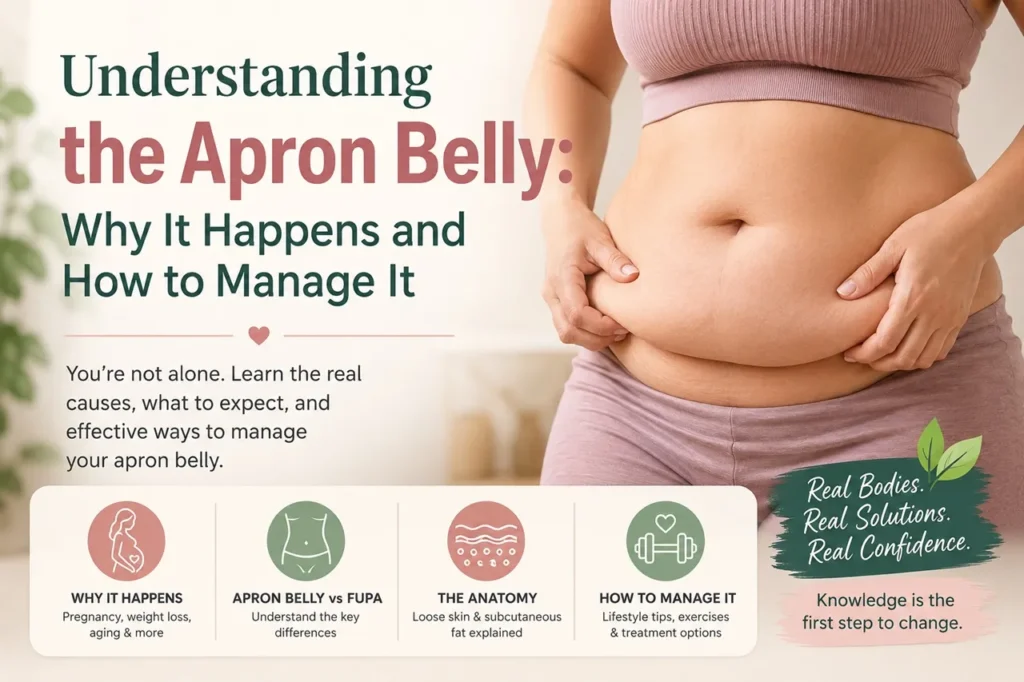
Before we get into the water, let’s clear up what we’re actually talking about. Belly overhang, sometimes called an “apron belly,” refers to loose or excess tissue in the lower abdomen that hangs over the waistline. It can happen for several reasons.
- Weight gain or weight loss, especially rapid changes
- Pregnancy and changes in skin elasticity afterwards
- Ageing, which naturally reduces skin elasticity
- Genetics and how your body stores fat
- Previous surgery, in some cases
It’s a common experience, and it affects people of all body types. It is not a sign of failure or poor discipline. It is simply how skin and tissue respond to change over time.
So, Does Water Actually Reduce Belly Fat?
Here’s the honest answer: not directly. Water does not burn fat. It has no calories, no fat-dissolving properties, and no magic ingredient that targets your midsection specifically. If a product or trend promises that water alone will melt belly fat, that claim is not backed by science.
But that doesn’t mean water is useless in this conversation. Far from it. Water plays several supporting roles that can genuinely help your body work more efficiently, which in turn can support fat loss and a flatter-looking stomach over time.
How Water Actually Helps Your Body
It supports your metabolism. Your body needs water to carry out basic metabolic processes, including breaking down fat for energy. Even mild dehydration can slow this process down, meaning your body isn’t working as efficiently as it could be.
It reduces water retention and bloating. This might sound backwards, but it’s true. When your body senses it isn’t getting enough water, it holds onto what it has as a defence mechanism. This can cause bloating and a puffier appearance around the stomach. Drinking enough water regularly signals to your body that it doesn’t need to hold onto extra fluid, which can genuinely reduce that puffy, swollen feeling. If you are unsure what you are seeing, our guide to apron belly vs bloating explains how to tell them apart.
It helps control appetite. Thirst is often mistaken for hunger. Many people eat when they’re actually just dehydrated. Drinking water before meals can help you feel fuller and prevent overeating, which supports fat loss indirectly over time.
It supports digestion. Proper hydration helps food move through your digestive system more smoothly, reducing constipation and the bloated, distended feeling that often makes the belly look larger than it actually is.
It helps your body burn calories more efficiently during exercise. Dehydration reduces physical performance, meaning workouts feel harder and burn fewer calories overall. Staying hydrated helps you get more out of your exercise routine, including our apron belly exercises.
So while water isn’t a fat-burning solution on its own, it removes several small obstacles that can otherwise slow your progress down.
What Water Cannot Do
It’s worth being clear about the limits here too, because so much of the confusion online comes from overstated claims.
- Water cannot spot-reduce fat from your belly specifically. Fat loss happens across the whole body, not in one targeted area.
- Water cannot undo the effects of a diet high in processed food and sugar.
- Water cannot replace physical activity or strength training.
- Water cannot tighten loose skin on its own, particularly in cases of major weight loss or post-pregnancy belly overhang.
If someone tells you that drinking a certain number of litres a day will “melt” belly fat, that claim is exaggerated. What water actually does is support the systems that make fat loss and a flatter stomach possible, rather than causing it directly.
What Actually Helps Reduce Belly Overhang
If you’re dealing with belly overhang and want to see real change, water works best as one part of a bigger picture, not a stand-alone fix.
A balanced, whole-food diet supports steady, sustainable fat loss far more effectively than any single habit on its own.
Regular movement, especially a mix of cardio and strength training, helps reduce overall body fat and builds muscle that supports your core.
Core-strengthening exercises can improve posture and muscle tone underneath the overhang, even though they won’t eliminate loose skin by themselves.
Consistent sleep plays a bigger role than most people realise. Poor sleep affects hormones that regulate hunger and fat storage.
Patience with skin elasticity. In cases where overhang is caused by loose skin rather than fat, lifestyle changes alone may not fully resolve it. This is a normal part of many people’s bodies and lives, and it’s worth approaching with self-compassion rather than frustration.
How Much Water Should You Actually Drink?
There’s no single perfect number that applies to everyone. General UK health guidance suggests around 6 to 8 glasses of fluids a day for most adults, though this can vary depending on activity level, climate, and individual needs. Rather than obsessing over an exact number, a more useful approach is simply paying attention to your body. Feeling thirsty, having noticeably dark urine, or experiencing frequent headaches can all be signs you need more fluids.
Sipping water steadily throughout the day tends to work better than trying to drink large amounts all at once.
The Bigger Picture: Progress Over Perfection
It’s easy to fall into the trap of looking for one simple fix, whether that’s water, a specific food, or a trending supplement. But the body doesn’t really work that way. Belly overhang, in particular, is shaped by a mix of genetics, hormones, history, and lifestyle, not any single habit.
Drinking enough water is a genuinely good habit. It supports digestion, reduces bloating, helps control appetite, and keeps your body functioning as it should. But it works best as part of a broader, realistic approach to health, rather than a stand-alone solution to belly overhang.
If you’re working on this, be kind to yourself along the way. Progress is rarely instant, and sustainable change tends to come from small, consistent habits stacked together over time, not a single trick.