

Skin irritation under an apron belly fold is one of the most common but least discussed complaints among people managing this body shape, and the fix usually has more to do with daily habits than any product. Persistent moisture, friction, and reduced airflow under the overhang create the conditions for soreness, redness, and sometimes infection. Most cases respond well to consistent hygiene and clothing adjustments, but there is a clear point at which a GP visit becomes necessary rather than optional.
What an apron belly means for your skin
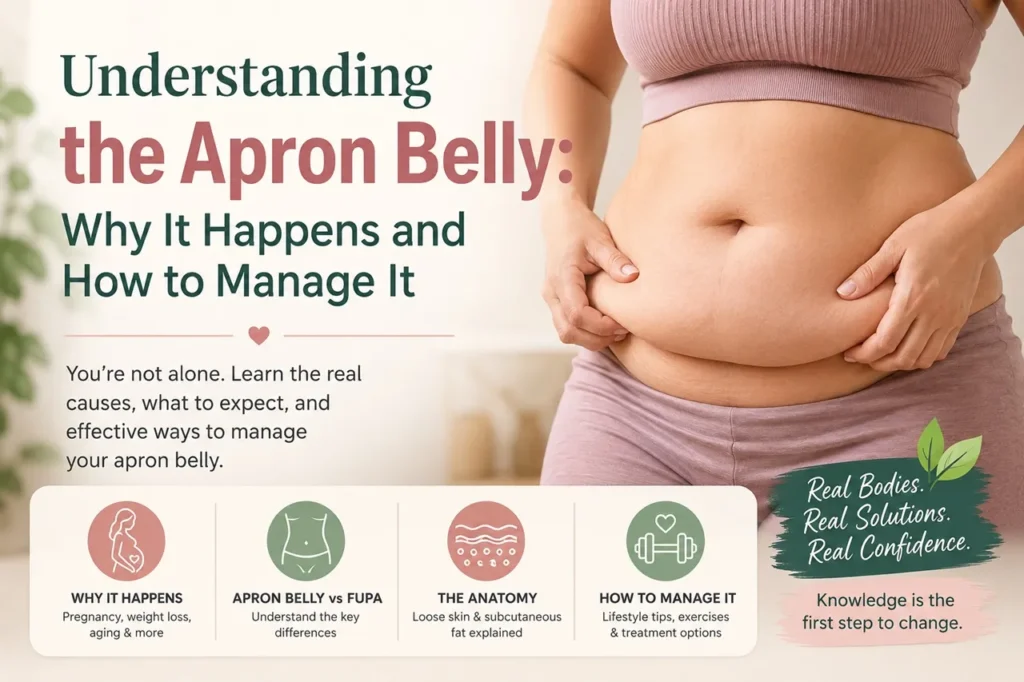
An apron belly refers to excess abdominal skin and tissue that hangs down over the lower abdomen, sometimes reaching the pubic area or thighs. It is a physical description, not a diagnosis, and it can develop after pregnancy, major weight change, ageing, or a combination of genetics and abdominal muscle laxity. If you’re asking what is an apron belly in the first place, the short answer is: it’s the overhang itself, distinct from general belly fat, and it behaves differently in clothing and in daily hygiene routines.
Why this matters for skin care specifically: the fold traps heat, sweat, and moisture against the skin, and that environment is where irritation starts. People searching for how to get rid of apron belly are often really asking two separate questions: how to reduce the fold long-term, and how to stop it being sore right now. Clothing choices, including jeans for apron belly, play a bigger role in comfort than most people expect, because tight waistbands and stiff seams increase friction exactly where skin is most vulnerable.
How to think about soreness under the fold
Managing the fold well means treating it as a skin-care and comfort issue first, and a body-shape issue second. The two are connected, but they need different solutions on different timelines.
The core problem to understand

The fold under an apron belly creates a warm, damp microclimate against the skin. Sweat doesn’t evaporate easily there, and constant skin-on-skin contact leads to friction. Over hours or days, this combination can produce redness, chafing, an itchy rash, or a sour odour. In more persistent cases, the warm and moist environment can encourage fungal or bacterial overgrowth, which is why hygiene routines matter more here than in most other parts of the body.
Understanding this mechanism is the first step toward managing it, whether your longer-term goal is comfort, confidence, or working toward how to get rid of apron belly through lifestyle changes. For background on the range of causes behind this body shape, see this site’s what is an apron belly explainer.
The practical decision criteria

When choosing a daily routine, weigh three factors: how much moisture builds up under the fold, how much friction your clothing creates, and how much time you can realistically commit to hygiene steps each day. A practical checklist:
- Wash and thoroughly dry the fold daily, patting rather than rubbing.
- Use a barrier product such as a plain, unscented powder or a doctor-recommended barrier cream if soreness is recurring.
- Choose breathable, natural fabrics over synthetic blends that trap heat.
- Prioritise soft waistbands and seamless inner linings when picking jeans for apron belly, since rigid denim seams sitting directly under the fold are a common trigger for chafing.
- Change out of sweaty clothing as soon as practical after exercise or a hot day.
These decisions matter more in warm weather or during physically active periods, when moisture builds up faster.
Common mistakes to avoid
The most frequent mistake is treating soreness as purely a fitness or weight problem rather than a hygiene and friction problem. Skipping the daily drying step, using scented products that irritate already-inflamed skin, and wearing overly tight jeans for apron belly out of habit rather than comfort all make symptoms worse. Another common error is ignoring early signs of chafing until they progress to broken skin, at which point recovery takes longer and the risk of infection rises. People focused solely on how to get rid of apron belly sometimes neglect the skin-care basics that would make the interim period far more comfortable.
A simple daily routine for the fold
Put simply: manage moisture and friction daily, and treat clothing as a tool rather than an afterthought. Start each day with a clean, fully dried fold, choose breathable fabrics, and reassess your jeans for apron belly if you notice recurring redness along the waistband or fold line. If soreness persists beyond a few days despite consistent hygiene, or if you notice broken skin, spreading redness, unusual discharge, or a strong odour that doesn’t resolve with washing, see a GP. These can be signs of a skin infection that needs treatment beyond home care.
FAQ about apron belly skin care
Is it possible to get rid of apron belly?
Reducing an apron belly is possible through weight management, targeted exercise, and in some cases surgery, though the extent of change depends on the underlying cause and skin elasticity.
What tightens the apron belly?
Core-strengthening exercise and gradual, sustained weight loss can tighten the area somewhat, but loose skin from prior stretching often needs medical options for a noticeable change.
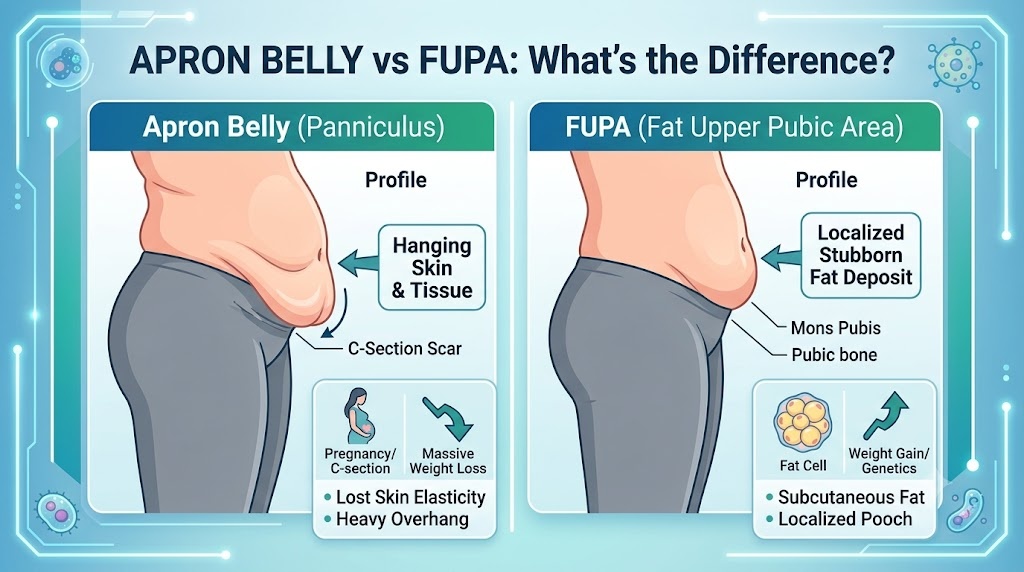
What is the difference between an apron belly and a fupa?
An apron belly is loose abdominal skin hanging over the lower belly, while a FUPA is a mound of fat sitting on the pubic area itself and is mainly fat rather than excess skin.
What causes an apron belly in females?
Common causes include pregnancy, large weight fluctuations, ageing-related skin laxity, and genetic factors affecting abdominal skin and muscle tone.
Why does the skin under an apron belly get sore?
The fold traps heat and sweat against the skin, and constant skin-on-skin contact adds friction. Together these cause redness, chafing and, if left unchecked, fungal or bacterial irritation.
Should you focus on skin care or on reducing the fold?
Match the approach to your goal: hygiene and clothing changes for daily comfort, exercise and diet for gradual change, and a GP or specialist consultation for medical options.
What makes soreness under the fold worse?
Avoid ignoring skin soreness, wearing tight or rigid clothing against the fold, and assuming exercise alone will resolve loose skin from major weight change.
Recommended next steps
Start with the basics: dry the fold thoroughly each day, choose breathable fabrics, and reconsider any jeans for apron belly that dig in or trap moisture along the waistband. If you’re still working out what is an apron belly and whether your symptoms fit that picture, the apronbelly.co.uk homepage offers a fuller overview of causes and options. For clothing-specific guidance, the site’s dedicated jeans for apron belly guide covers fit and fabric choices in more depth. And if long-term reduction is the goal, the how to get rid of apron belly guide lays out realistic paths, from lifestyle changes to medical routes. Persistent soreness that doesn’t improve with these steps is a reason to speak to a GP, not to wait it out.
Rachel has spent over a decade writing about women’s health, body composition, and post-pregnancy recovery for UK-based digital publications and NHS-adjacent health platforms. She holds a postgraduate certificate in science communication and has worked closely with physiotherapists and dietitians to translate clinical research into plain, usable advice. Her approach is straightforward: lead with what the evidence actually says, flag the limitations honestly, and skip the language that makes readers feel like a problem to be solved. She writes for people who have already Googled the optimistic version and want someone to level with them.