
FUPA surgery refers to procedures that remove excess fat and overhanging skin from the lower abdomen and mons pubis area. The most common options are panniculectomy, abdominoplasty, and liposuction. Costs range between £2,500 and £6,000 depending on the procedure, surgeon, and location.
If you’ve been researching ways to address stubborn lower belly fat or excess skin that won’t respond to diet and exercise, you’re not alone. Thousands of people, particularly those who have experienced significant weight loss or pregnancy, turn to FUPA surgery each year to address physical discomfort, hygiene challenges, and a loss of body confidence.
This guide covers everything you need to know: what FUPA surgery actually involves, who qualifies, how much it costs, what recovery looks like, and how it compares to alternatives such as a tummy tuck or panniculectomy. Whether you’re in the early research phase or close to booking a consultation, this resource is designed to give you accurate, evidence-based information to support an informed decision.
Medical decisions of this nature should always be made in consultation with a qualified plastic or reconstructive surgeon. This article is intended to inform, not replace professional medical advice.
What Is FUPA Surgery?
FUPA stands for Fat Upper Pubic Area (sometimes called Fat Upper Pelvic Area). It refers to the accumulation of fat and, in many cases, loose or overhanging skin in the lower abdomen and mons pubis region, the area just above the pubic bone.
For some people, this area becomes prominent after significant weight loss, pregnancy, or simply due to genetics and hormonal fat distribution. The term is widely used in both patient communities and medical contexts.
Is FUPA Fat, Loose Skin, or Both?
FUPA frequently involves a combination of excess subcutaneous fat and loose skin, not one or the other. In people who have experienced significant weight loss or post-pregnancy changes, the lower abdomen may contain a pannus, a hanging flap of excess skin and fat that droops over the pubic region. In others, the issue is primarily subcutaneous fat with skin that retains some elasticity.
Understanding the difference matters because it directly affects which procedure is most appropriate for you.
When Does Surgery Become an Option?
Surgery is typically considered when:
- Diet and exercise have not reduced the excess skin or fat.
- The overhanging skin causes recurrent rashes, infections, or hygiene problems.
- The patient has maintained a stable weight for at least 6–12 months.
- The patient is in generally good health and has realistic expectations.
What Types of FUPA Surgery Are Available?
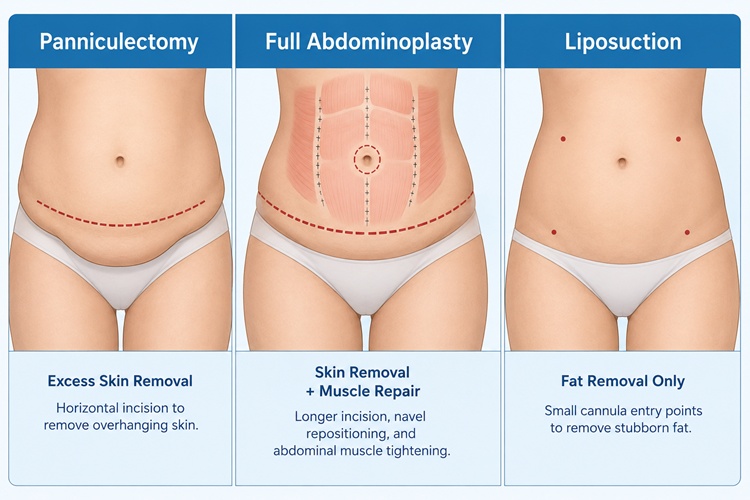
Several surgical procedures can address the lower abdomen, each with different goals, recovery times, and levels of invasiveness. Choosing the right option depends on whether the primary concern is functional, cosmetic, or both.
Panniculectomy
A panniculectomy is a reconstructive procedure that removes the pannus, the hanging apron of excess skin and fat from the lower abdomen. Unlike a tummy tuck, it does not tighten the underlying abdominal muscles. Its primary purpose is eliminating the overhanging skin that causes functional problems such as chronic rashes, infections, and restricted movement.
Panniculectomy is better suited for patients whose main concern is functional, particularly those recovering from bariatric surgery or significant weight loss. At the same time, abdominoplasty works best when cosmetic contouring and muscle tightening are the priority.
Abdominoplasty (Tummy Tuck)
A full abdominoplasty removes excess skin and fat from the lower and mid-abdomen whilst also tightening the abdominal wall muscles. This produces a flatter, more contoured appearance. Recovery is longer than a panniculectomy, but cosmetic results are typically more comprehensive.
Mini Tummy Tuck
A mini tummy tuck targets only the area below the navel. It suits patients with moderate excess skin concentrated in the lower abdomen who do not require muscle repair. Scarring is generally shorter, and recovery time is reduced compared to a full abdominoplasty.
Liposuction
Liposuction removes excess fat via a thin cannula but does not address loose or sagging skin. It works best for patients with good skin elasticity who primarily want to reduce fat volume in the FUPA area. It is not effective for patients whose main concern is a hanging pannus.
Combination Procedures
Many surgeons recommend combining a panniculectomy or tummy tuck with liposuction to achieve the best body contouring results. Some patients also pair these with procedures such as a mons pubis lift to address ptosis (drooping) in that region.
Procedure Comparison: Which FUPA Surgery Is Right for You?
| Procedure | Removes Fat | Removes Skin | Tightens Muscle | Best For |
|---|---|---|---|---|
| Panniculectomy | Yes | Yes | No | Functional skin overhang, post-bariatric patients |
| Abdominoplasty | Yes | Yes | Yes | Cosmetic contouring, muscle separation |
| Mini Tummy Tuck | Limited | Yes (below navel) | Partial | Mild lower belly skin laxity |
| Liposuction | Yes | No | No | Fat reduction with good skin elasticity |
| Combination | Yes | Yes | Sometimes | Comprehensive lower body contouring |
Who Is a Good Candidate for FUPA Surgery?
Not everyone is ready for surgery right away. Surgeons typically look for several key factors before recommending an elective procedure:
- Stable weight: Candidates should have maintained a consistent weight for at least 6–12 months. Significant weight fluctuations after surgery can compromise results.
- Healthy BMI: Most surgeons prefer a BMI between 30 and 35, though this varies depending on the procedure and individual circumstances.
- Non-smoker: Smoking significantly impairs wound healing and increases complication risk. Most surgeons require patients to stop smoking 4–6 weeks before and after surgery.
- Post-pregnancy: Women who have finished having children are better candidates, as future pregnancies can affect results.
- Post-massive weight loss: People who have lost 50+ pounds, whether through diet or bariatric surgery, often gain the greatest benefit from panniculectomy.
- Realistic expectations: Surgery improves but does not perfect. Patients must understand the limitations and accept that scarring is permanent.
What Are the Benefits of FUPA Surgery?
For those who qualify, the benefits of FUPA surgery are both physical and psychological:
- Improved hygiene: Removing overhanging skin eliminates the warm, moist environment where rashes and bacterial or fungal infections thrive.
- Reduced skin irritation: Chronic chafing and skin breakdown under the pannus can resolve entirely after surgery.
- Easier movement: A large pannus can restrict walking, exercising, and daily activity. Removal often restores a more comfortable range of movement.
- Better clothing fit: Many patients find it easier to wear fitted clothing and feel more comfortable in activewear or swimwear.
- Increased body confidence: Studies in reconstructive surgery literature consistently show improved quality of life and self-esteem outcomes following panniculectomy and abdominoplasty.
What Are the Risks and Possible Complications?
All surgical procedures carry risk. Being well informed helps you weigh those risks against the potential benefits.
Common risks include:
- Infection: The most frequently reported complication, particularly in patients with diabetes or compromised immunity.
- Bleeding and haematoma: Pooling of blood beneath the skin that may require drainage.
- Seroma: Accumulation of fluid under the surgical site, a common occurrence after panniculectomy, often managed with drainage.
- Scarring: All FUPA surgeries leave permanent scars, typically positioned low on the abdomen (below the bikini line for tummy tucks).
- Nerve numbness: Temporary or, in some cases, longer-lasting numbness in the lower abdomen due to nerve disruption during surgery.
- Blood clots (DVT): Deep vein thrombosis is a serious risk with any major surgery; compression stockings and early walking reduce this risk.
- Delayed healing: More common in smokers, diabetics, and those with poor nutritional status.
Your surgeon will discuss these in detail during your consultation and outline the steps taken to minimize them.
What Does FUPA Surgery Recovery Look Like?

Recovery varies depending on the type and extent of surgery. Most patients return to light activity within 3–4 weeks and resume normal daily activities within 6–8 weeks. Full recovery, including complete resolution of swelling, takes 12–18 months.
Week 1
Expect significant swelling, bruising, and discomfort. You’ll need a compression garment, and activity will be restricted to gentle short walks to promote circulation. Drain tubes may be in place following panniculectomy.
Week 2
Swelling begins to reduce. Most patients can move around more comfortably, though lifting anything heavy is still off the table. Wound care and keeping the incision clean are priorities.
Weeks 3–6
Energy returns gradually. Light daily activities become easier. Continue wearing the compression garment as directed. Scar care such as silicone gel or sheeting can begin once incisions are fully closed.
Months 2–3
Most patients return to desk-based work by week 3–4 and can begin light exercise (walking, swimming) around week 6, subject to surgeon approval. Swelling continues to decrease, and the scar begins to fade.
Long-Term Recovery
Full results including complete swelling resolution and scar maturation can take 12–18 months. Maintaining a stable weight, staying active, and protecting scars from sun exposure supports the best long-term outcome.
What Results Can You Expect Before and After FUPA Surgery?
It’s natural to want an idea of what to expect. Here’s an honest look at the timeline:
- Immediately post-surgery: Swelling, bruising, and tightness are normal. Final results are not visible at this stage.
- Weeks 2–6: Shape begins to emerge, but swelling is still present.
- Months 3–6: Most swelling has resolved; the final contour becomes clearer.
- 12+ months: Scars lighten from pink/red to a pale, flat line for most patients.
To maintain results over the long term, patients should commit to a healthy lifestyle. Weight gain, particularly around the abdomen, can diminish surgical outcomes over time.
How Much Does FUPA Surgery Cost?
Cost depends significantly on the type of procedure, the surgeon’s experience, facility fees, anesthesia, and geographic location.
FUPA Surgery Cost Comparison
| Country | Average Cost (USD Estimate) | Average Cost (GBP Estimate) |
| United Kingdom | $3,200 – $7,500 | £2,500 – £6,000 |
| Germany | $3,500 – $8,000 | £2,700 – £6,200 |
| United States | $4,000 – $9,000 | £3,100 – £7,000 |
| Canada | $3,500 – $7,500 | £2,700 – £5,800 |
| Australia | $4,000 – $10,000 | £3,100 – £7,800 |
| Turkey (Medical Tourism) | $2,000 – $4,500 | £1,500 – £3,500 |
Note: These are indicative ranges based on publicly available surgeon pricing data. Always request a detailed, itemised quote during your consultation.
Panniculectomy is generally less expensive than a full tummy tuck because it has a more limited scope. Combination procedures typically carry higher costs.
Does the NHS Cover FUPA Surgery?
The NHS may fund a panniculectomy when it is deemed medically necessary rather than purely cosmetic. Eligibility is assessed on a case-by-case basis and typically requires documented evidence of:
- Recurrent skin infections or rashes beneath the pannus that have not responded to other treatment
- Significant functional impairment caused by the overhanging skin
- Weight stability and a BMI within an acceptable range for surgery
The NHS does not fund cosmetic procedures such as a full abdominoplasty or liposuction. Criteria can vary between NHS Integrated Care Boards (ICBs), so it is worth speaking to your GP to understand local guidelines and obtain a specialist referral.
FUPA Surgery vs Panniculectomy vs Tummy Tuck: What’s the Difference?
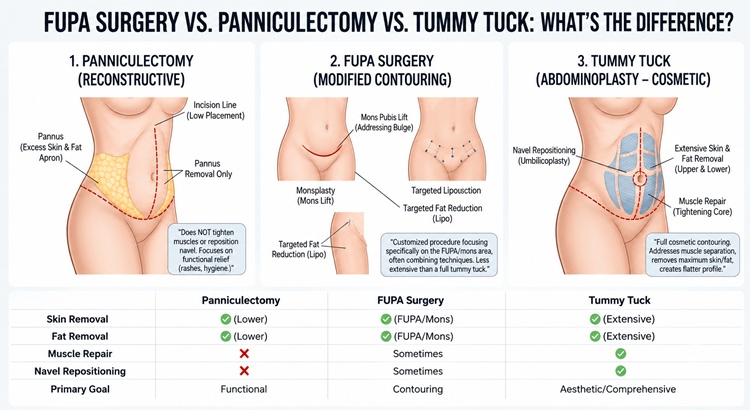
These terms are often used interchangeably online, but they describe meaningfully different procedures. The table below clarifies the key distinctions.
| Feature | Panniculectomy | Tummy Tuck (Abdominoplasty) | FUPA Surgery (General) |
|---|---|---|---|
| Purpose | Functional/reconstructive | Cosmetic contouring | Varies by procedure |
| Skin Removal | Yes | Yes | Yes (most options) |
| Fat Removal | Yes | Yes | Yes (most options) |
| Muscle Repair | No | Yes | No (unless tummy tuck) |
| Recovery | 4–6 weeks | 6–8 weeks | Varies |
| Cost | Lower | Higher | Varies |
| Ideal Candidate | Post-bariatric, functional issues | Cosmetic improvement, muscle laxity | Depends on specific concern |
What Are the Non-Surgical Alternatives to FUPA Surgery?
Surgery isn’t the right path for everyone. Several non-surgical approaches can help reduce the appearance of the lower belly area:
- Weight loss through nutrition: Reducing overall body fat through a caloric deficit and whole-food diet can decrease fat in the FUPA area over time.
- Strength training: Core and lower-body exercises can improve posture and tone the muscles beneath the lower abdomen, reducing visible bulges.
- Compression garments: High-waisted shapewear can flatten the lower belly and provide support, particularly after significant weight changes.
- Radiofrequency skin tightening: Technologies such as Thermage and Morpheus8 stimulate collagen production and can modestly improve skin laxity, though results are more limited than surgery.
- Lifestyle changes: Reducing alcohol intake, managing stress (which elevates cortisol and promotes abdominal fat storage), and improving sleep quality all support reducing belly fat.
For patients with primarily skin laxity rather than fat, non-surgical options are unlikely to produce meaningful results. In these cases, surgery remains the most effective solution.
How to Prepare for FUPA Surgery
Good preparation significantly reduces the risk of complications and supports faster recovery.
- Book a consultation with a qualified surgeon: Choose a board-certified plastic or reconstructive surgeon with experience in body contouring procedures.
- Stop smoking: At least 4–6 weeks before surgery, and ideally longer. Nicotine dramatically reduces blood flow and impairs wound healing.
- Review your medications: Blood thinners, certain supplements (such as fish oil and vitamin E), and some anti-inflammatories must be paused before surgery. Your surgeon will provide a specific list.
- Prepare your home: Set up a recovery area with easy access to essentials, comfortable clothing, and pillows to support your position.
- Plan your recovery support: Arrange for someone to drive you home and assist for the first few days. Time off work will be necessary.
- Optimize nutrition: Prioritize protein, hydration, and iron-rich foods in the weeks leading up to surgery to support tissue repair.
Tips for a Faster Recovery After FUPA Surgery
Recovery is in your hands as much as your surgeon’s. These steps can meaningfully speed up healing:
- Stay hydrated: Proper hydration supports circulation and tissue repair.
- Increase protein intake: Aim for at least 1.2–1.5g of protein per kg of body weight to support wound healing.
- Walk daily: Short, gentle walks from day one reduce the risk of blood clots and aid circulation.
- Prioritise sleep: The body repairs itself primarily during sleep. Aim for 7–9 hours and sleep in a slightly elevated position to reduce swelling.
- Follow wound care instructions precisely: Keep incisions clean and dry; apply any prescribed ointments or dressings as directed.
- Avoid smoking entirely: Resuming smoking post-surgery increases infection risk and can cause poor scar formation.
Common Myths About FUPA Surgery
| Myth | Fact |
| Surgery permanently eliminates FUPA | Weight gain or future pregnancy can cause it to return |
| Only women get FUPA surgery | Men also seek panniculectomy and liposuction for this area |
| Liposuction alone fixes loose skin | Liposuction addresses fat only; loose skin requires excision |
| Recovery is quick—a week or two | Full recovery takes 3–6 months; complete results up to 18 months |
| The NHS always covers panniculectomy | Funding requires documented medical need and varies by region |
| Younger patients recover faster | Recovery depends on health status, not age alone |
| The scar disappears completely | Scars are permanent but fade significantly with proper care |
| Surgery is risk-free if you’re healthy | All surgery carries inherent risks regardless of patient health |
Frequently Asked Questions (FAQs)
Discomfort is expected, particularly in the first 1–2 weeks. Most surgeons prescribe pain relief medication for the early recovery period. Pain typically transitions to tightness and mild soreness as healing progresses.
Most patients return to light activity within 3–4 weeks and resume normal daily activities within 6–8 weeks. Full recovery, including complete resolution of swelling, takes 12–18 months.
Yes. Significant weight gain, pregnancy, or hormonal changes can cause the FUPA to return after surgery. Maintaining a stable weight is the most effective way to preserve results in the long term.
In the US, health insurance may cover panniculectomy if it is deemed medically necessary (for example, for recurrent infections or skin breakdown). Cosmetic procedures such as abdominoplasty are rarely covered. Always contact your insurer and obtain prior authorization before proceeding.
Light walking is encouraged from day one to support circulation. More strenuous activity, including core exercises, running, and lifting, should be avoided for at least 6 weeks, or until cleared by your surgeon.
Final Thoughts
FUPA surgery, whether as a panniculectomy, an abdominoplasty, or a combination of procedures, can genuinely transform quality of life for those dealing with persistent excess skin and fat in the lower abdomen. The benefits extend beyond appearance: improved hygiene, reduced discomfort, and greater physical freedom are outcomes that many patients describe as life-changing.
That said, surgery is a significant commitment. Recovery takes time, results require maintenance, and not every patient is an ideal candidate. The best first step is an honest, detailed consultation with a board-certified plastic or reconstructive surgeon who can assess your anatomy, health history, and goals.
Use this guide as a starting point then seek personalized advice from a professional who can evaluate your specific situation.