

 18 Aug 2026
 9 min read
The terms people use online for lower-abdominal fullness are often swapped around without much precision. Apron belly, FUPA, belly pooch — each describes something real, but they do not all describe the same thing, and the difference matters when you are trying to understand what you are dealing with and what, if anything, you can do about it. This article works through the distinctions in plain terms, gives you a self-check framework, and explains how the composition of what you are feeling — fat versus loose skin — changes the picture entirely.
Quick answer: how apron belly options compare
An apron belly is a pannus — a flap of skin and fat that hangs down from the lower abdomen, typically below the pubic line. It is most commonly associated with significant weight loss, pregnancy, or both, and it can range from a small soft fold to a substantial overhang that reaches the thighs. The defining feature is the downward drape: the tissue falls forward and down rather than sitting flush against the body.
A FUPA — an informal term for fat in the pubic area — sits higher. It is the rounded fullness above the pubic bone, sometimes described as a mons pubis bulge, and it does not hang. It is almost always adipose tissue rather than loose skin, which means it responds differently to diet and exercise than a true apron belly does.
A belly pooch is the loosest term of the three. People use it to describe anything from mild lower-abdominal softness to early-stage visceral fat to the beginnings of an apron belly. It is not a clinical term, and it is worth being precise about what you actually mean before deciding on an approach.
For a thorough grounding in what the apron belly specifically involves, the apron belly explained overview covers the anatomy and causes in detail.
Apron belly compared at a glance
| Criterion | Apron belly | FUPA | Belly pooch |
|---|---|---|---|
| Where it sits | Hangs below the pubic line | Above the pubic bone | Lower abdomen, no consistent position |
| Primary tissue | Skin and subcutaneous fat | Subcutaneous fat | Subcutaneous fat, sometimes visceral |
| Does it hang? | Yes, forward and downward | No | Rarely |
| Responds to fat loss alone? | Partially — skin component may remain | Generally yes | Usually yes |
| Surgical option if persistent | Panniculectomy or abdominoplasty | Liposuction or mons lift | Abdominoplasty |
| Who it typically affects | Post-pregnancy, post-bariatric, higher BMI | Varied; common after pregnancy or weight gain | Broad population |
The table uses qualitative descriptions rather than clinical measurements because the boundaries between these categories are not fixed — they exist on a continuum, and many people have more than one of these features at the same time.
Compare apron belly by the criteria that matter
Understanding which category fits your situation is more useful than memorising definitions. The UK plain-English apron belly guide walks through the causes in accessible language, but the comparison below focuses on how each type behaves in practice.
Fit and use case

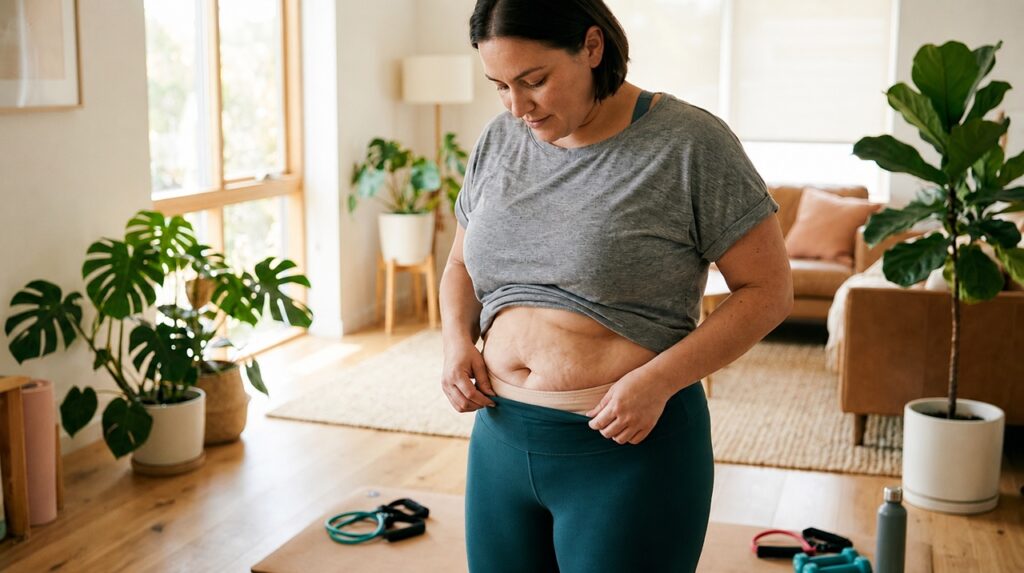
The apron belly is the right term when there is a visible, palpable fold that you can lift away from the body. If you place your hand under the lower abdominal tissue and it rests on your palm rather than being flush against the skin above the pubic area, you are most likely dealing with a pannus. This is the category where skin laxity plays the largest role, and it is the one where fat loss alone may reduce the volume but leave the drape intact.
The FUPA fits when the fullness is above the pubic bone, feels firm rather than floppy, and does not create a fold you can tuck. It is common after pregnancy because the mons pubis can accumulate fat independently of the rest of the abdomen, and it can persist even in people who have otherwise returned to a lower body weight. The fupa vs pooch distinction is mostly about position: FUPA is specific to the mons region, while pooch is a vaguer term for general lower-abdominal softness.
The belly pooch fits when the concern is mild fullness that does not hang and is not concentrated in the pubic area. It is often the earliest stage of what could become an apron belly if weight continues to increase, or it may simply be the normal lower-abdominal profile that many people have regardless of weight.
Value and tradeoffs

When it comes to what you can realistically achieve without surgery, the composition of the tissue is the deciding factor. Fat — whether subcutaneous or visceral — responds to a sustained calorie deficit. Loose skin, which is the defining component of a true apron belly in many cases, does not shrink in the same way. This is not a failure of effort; it is a structural reality. Collagen and elastin fibres that have been stretched significantly over a long period or through pregnancy may not fully retract.
For a FUPA, the tradeoff is that subcutaneous fat in the pubic region can be among the more stubborn deposits to reduce through diet and exercise alone, but it is not structurally different from fat elsewhere in the body. Patience and consistency with a calorie deficit will generally reduce it, even if it is not the first place the body draws from.
For a belly pooch, the tradeoff is mostly about expectation-setting. If the pooch is driven by visceral fat — fat around the organs rather than under the skin — it carries more metabolic significance and responds well to lifestyle changes. If it is subcutaneous and the person is already at a healthy weight, it may simply be a normal anatomical feature.
The apron belly vs fupa distinction matters most here because the interventions are different. Treating an apron belly as though it were purely a fat issue, and expecting it to resolve entirely with weight loss, often leads to frustration. Treating a FUPA as though it requires surgery when it is simply subcutaneous fat may lead to unnecessary intervention.
Limitations and deal-breakers

The main limitation of the apron belly category is that once significant skin laxity is present, non-surgical approaches have a ceiling. Exercise and diet can reduce the fat component, improve posture, and strengthen the core, but they cannot remove excess skin. For people who have lost a large amount of weight or had multiple pregnancies, this is an important caveat to hold clearly.
For the FUPA, the limitation is that spot reduction — the idea that you can target fat loss in one specific area through exercise — does not work. Exercises that engage the lower abdomen will strengthen the underlying muscles, but they will not selectively burn the fat sitting above the pubic bone. Overall fat loss through diet is the primary lever.
For the belly pooch, the deal-breaker is misidentification. If someone is treating a belly pooch with core exercises when the underlying issue is visceral fat, they are addressing the wrong layer. Visceral fat is metabolically active and responds to aerobic exercise and dietary changes, not to targeted abdominal work.
A further limitation across all three categories is that none of them are purely cosmetic concerns for everyone. An apron belly can cause skin fold dermatitis, chafing, and hygiene challenges. A FUPA can cause discomfort with certain clothing or physical activity. Knowing which one you have helps you address the practical as well as the aesthetic dimension.
Decision rule for apron belly

Use this framework to identify which category applies to you.
First, stand in front of a mirror and look at where the fullness sits. If it is above the pubic bone and does not hang, you are most likely looking at a FUPA or general lower-abdominal fat. If there is a fold that hangs below the pubic line, you are most likely dealing with an apron belly.
Second, lift the tissue gently. If it feels predominantly soft and floppy with little resistance, skin laxity is a significant component. If it feels more uniformly firm and fatty throughout, it is predominantly adipose tissue.
Third, consider your history. Significant weight loss, pregnancy, or both are the most common precursors to a true apron belly with a skin component. If neither applies, the fullness is more likely to be fat-dominant and more responsive to lifestyle changes.
Fourth, ask what is driving your concern. If it is comfort and hygiene, the approach is different from if it is purely appearance. If it is health, speaking to a GP or specialist is the right first step regardless of category.
Once you have a clearer sense of what you are dealing with, the practical next step is understanding what approaches are available. The guide on how to get rid of apron belly covers the realistic options — from lifestyle changes to surgical routes — with an honest account of what each can and cannot achieve.
FAQ about apron belly
Is it possible to get rid of apron belly?
Partially, in many cases. Fat reduction through diet and exercise can reduce the volume, but if significant skin laxity is present, surgical removal is the only way to fully eliminate the overhang.
What is the difference between an apron belly and a fupa?
An apron belly hangs below the pubic line and involves both skin and fat. A FUPA is a fat deposit above the pubic bone that does not hang and is almost entirely adipose tissue.
What tightens the apron belly?
Nothing non-surgical will tighten loose skin significantly. Core strengthening and fat loss can improve the appearance and reduce volume, but a panniculectomy or abdominoplasty is required to remove excess skin.
Does a weight-loss medication get rid of apron belly?
Weight-loss medications can reduce the fat component of an apron belly, but they cannot address loose skin. The overhang may reduce in size but is unlikely to disappear entirely if skin laxity is a significant factor.
Can you tighten up an apron belly?
You can reduce its size through fat loss and improve muscle tone underneath it, but tightening the skin itself requires surgical intervention. The degree of improvement without surgery depends on how much of the overhang is fat versus loose skin.
Which belly fat is hardest to lose?
Subcutaneous fat in the lower abdomen and pubic region tends to be among the more stubborn deposits. Visceral fat, while metabolically significant, often responds relatively well to sustained aerobic exercise and a calorie deficit.
What should readers know first about apron belly?
The most important starting point is distinguishing how much of the overhang is fat versus loose skin, because that determines which approaches are realistic and which will fall short of expectations.
How do you choose the right apron belly approach?
Identify the tissue composition first — fat responds to lifestyle changes, skin does not. Then match the approach to what you are actually dealing with rather than to what you hope is the simpler problem.
Recommended next steps
If you are still uncertain which category applies to you, start with the self-check framework in the decision rule section above and revisit it after reading more about the anatomy. The distinction between apron belly vs fupa is not always obvious at first, particularly when both features are present at the same time, which is common.
From there, the most useful move is to get clear on what you want to address and why. If comfort and skin health are the priority, the practical management strategies are different from those aimed at appearance alone. If you are considering any form of medical or surgical intervention, a conversation with a GP is the right starting point — they can refer you to the appropriate specialist and help you understand what is realistic for your specific situation.
The fupa vs pooch distinction, while less clinically significant, is still worth getting right because it shapes the expectations you bring to any plan. Treating a FUPA as a belly pooch and expecting quick results from core exercises alone, or treating a belly pooch as an apron belly and assuming surgery is necessary, both lead to frustration. Precision here is practical, not pedantic.
Rachel has spent over a decade writing about women’s health, body composition, and post-pregnancy recovery for UK-based digital publications and NHS-adjacent health platforms. She holds a postgraduate certificate in science communication and has worked closely with physiotherapists and dietitians to translate clinical research into plain, usable advice. Her approach is straightforward: lead with what the evidence actually says, flag the limitations honestly, and skip the language that makes readers feel like a problem to be solved. She writes for people who have already Googled the optimistic version and want someone to level with them.