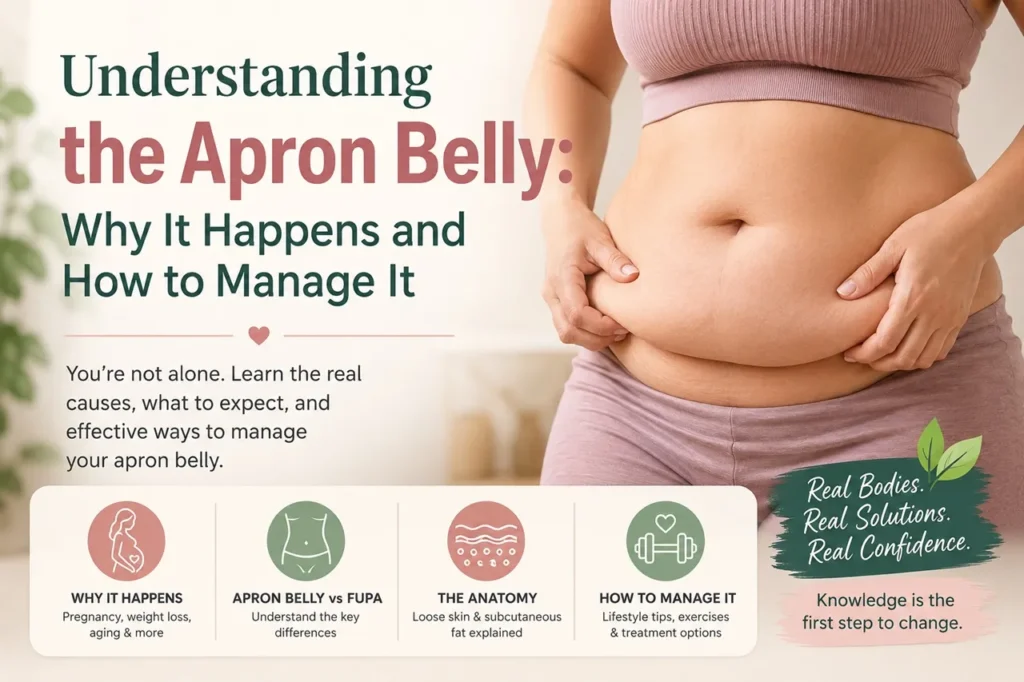
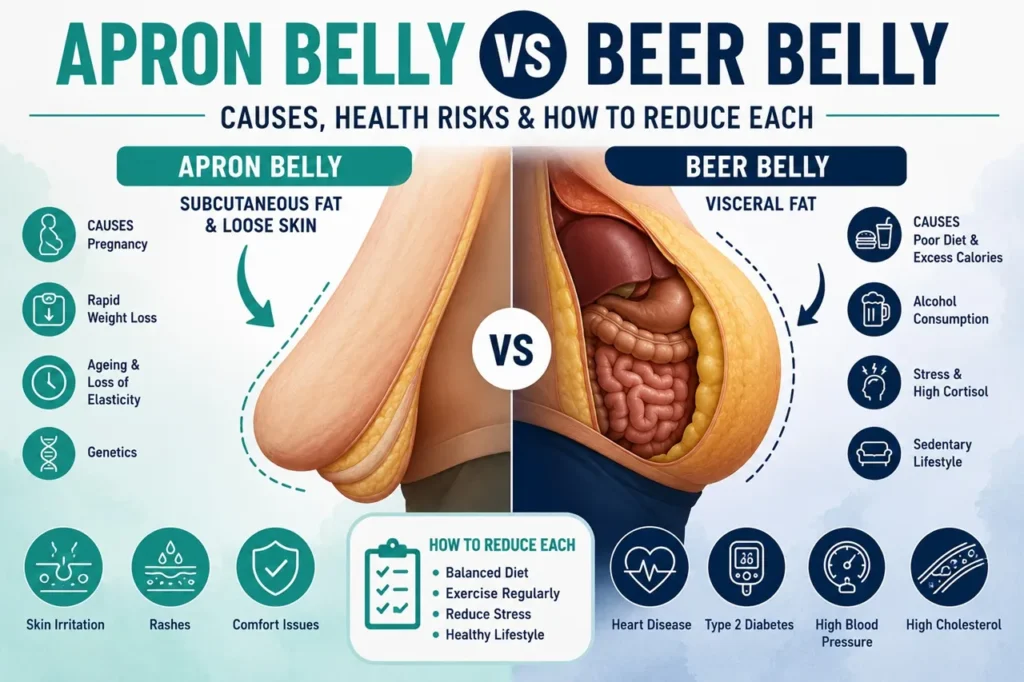
The difference between an apron belly and a beer belly comes down to fat type. An apron belly is a layer of subcutaneous fat and loose skin that hangs over the pubic area, typically caused by pregnancy or major weight loss. A beer belly is a firm, protruding midsection caused by visceral fat accumulating around internal organs. Both conditions look similar from the outside but have distinct causes, health implications, and treatment strategies.
A hanging stomach and a hard, rounded gut are not the same thing, yet the two are constantly confused. Mixing them up matters because the strategies for managing each condition differ greatly. The wrong approach wastes time and, in some cases, misses genuine health risks.
This guide breaks down the key differences between a panniculus and a beer belly: what causes each, the associated health risks, and the most effective steps to address them. By the end, you’ll have a clear picture of which condition applies to your situation and a practical roadmap for managing it.
What Is a Beer Belly? Understanding Visceral Fat

A beer belly, also called abdominal obesity, is a firm, protruding midsection caused by an accumulation of visceral fat. Unlike subcutaneous fat stored just beneath the skin, visceral fat wraps around internal organs like the liver, pancreas, and intestines. This makes it metabolically active and, importantly, more dangerous to long-term health.
What Causes Visceral Fat to Accumulate?
Several factors drive visceral fat buildup:
- Excessive calorie intake: Consistently eating more calories than the body burns leads to fat storage, with visceral fat being particularly sensitive to caloric excess.
- Alcohol consumption: Regular, heavy alcohol intake disrupts fat metabolism and promotes fat storage in the abdominal region. Beer tends to be high in calories, but the relationship between alcohol and belly fat applies across all types of alcohol.
- High cortisol levels: Chronic stress triggers elevated cortisol, a hormone that signals the body to store fat especially around the abdomen.
- Sedentary lifestyle: Physical inactivity reduces the body’s ability to burn stored fat and is one of the strongest predictors of visceral fat accumulation.
One practical measurement tool is the waist-to-hip ratio. A ratio above 0.90 for men and 0.85 for women generally indicates excess abdominal fat and heightened health risk.
What Are the Health Risks of a Beer Belly?
A beer belly is not simply a cosmetic concern; it is a clinical indicator that demands attention. Because visceral fat sits close to major organs, it releases inflammatory compounds and free fatty acids directly into the bloodstream and liver. This contributes to:
- Metabolic syndrome: A cluster of conditions, including high blood pressure, high blood sugar and abnormal cholesterol, that greatly increase the risk of cardiovascular disease.
- Type 2 diabetes: Visceral fat promotes insulin resistance, a primary driver of the condition.
- Heart disease: Elevated inflammation from visceral fat is a known contributor to arterial plaque buildup.
What Is an Apron Belly? Understanding Subcutaneous Fat and Loose Skin
Abdominal panniculus, medically referred to as a panniculus, is a layer of subcutaneous fat and loose skin that hangs downward over the pubic area and, in more pronounced cases, the thighs. Unlike a beer belly, it feels soft to the touch. The defining characteristic is the skin fold itself, which drapes rather than protrudes. Our guide to apron belly vs ordinary belly fat explains this distinction in more detail.
Read Also: Apron Belly vs FUPA: What’s the Difference & How to Get Rid of It?
What Causes an Apron Belly to Develop?
The primary causes of panniculus adiposus include:
- Pregnancy: Heavy abdominal stretching during pregnancy, particularly with diastasis recti (a separation of the abdominal muscles), can leave behind loose skin and excess subcutaneous fat that doesn’t fully retract after birth.
- Rapid or massive weight loss: When a large amount of weight is lost quickly, whether through dieting, bariatric surgery, or illness, the skin doesn’t always have enough time or elasticity to shrink accordingly.
- Age-related changes: Collagen production declines with age, reducing skin elasticity and making it harder for skin to bounce back after stretching.
- Genetics: Some individuals are predisposed to storing subcutaneous fat in the lower abdomen or to having naturally lower collagen levels.
Are There Hygiene and Comfort Concerns With an Apron Belly?
Yes. The skin fold created by a panniculus creates a warm, moist environment that can lead to chafing, skin irritation, and fungal or bacterial rashes. These are not minor inconveniences; chronic skin fold issues can seriously affect quality of life and require consistent hygiene management, including keeping the area clean and dry, using moisture-wicking fabrics, and applying barrier creams as needed.
Apron Belly vs Beer Belly: Key Differences at a Glance
The table below summarises the core hanging belly vs beer belly differences across fat type, cause, feel, and health impact:
| Feature | Beer Belly | Apron Belly |
| Fat type | Visceral (internal) | Subcutaneous (under skin) |
| Feel | Hard / firm | Soft / hanging |
| Main cause | Poor diet, stress, alcohol | Weight loss, pregnancy, age |
| Health impact | High (organ pressure, metabolic risk) | Moderate (hygiene, comfort) |
| Visible shape | Rounded, protruding outward | Drooping downward |
| Responds to diet/exercise | Yes, strongly | Partially |
The single most reliable way to distinguish the two at home: press your hand against your midsection. Visceral fat feels firm. Subcutaneous fat feels soft and moveable.
How to Reduce Each: Targeted Strategies That Actually Work

How to Manage and Reduce a Beer Belly
Because a beer belly is driven by visceral fat, it responds well to lifestyle changes, often faster than expected, since visceral fat is metabolically active and burns relatively quickly with consistent effort.
1. Establish a sustainable caloric deficit
Sustainable weight management starts with consuming fewer calories than you burn. Crash diets tend to backfire; a moderate deficit of 300 to 500 calories per day is more effective in the long term.
2. Incorporate HIIT and strength training
High-intensity interval training (HIIT) is particularly effective at reducing visceral fat. Combining HIIT with resistance training builds muscle, which increases resting metabolic rate over time.
3. Prioritize nutrient-dense foods
Reduce processed foods, refined carbohydrates, and added sugars. Focus on vegetables, lean proteins, whole grains, and healthy fats. These changes lower insulin levels and reduce visceral fat storage.
4. Limit alcohol intake
Reducing alcohol consumption or cutting it out entirely removes a key driver of abdominal fat accumulation and greatly reduces overall calorie intake.
5. Manage cortisol levels
Regular sleep (7 to 9 hours per night), stress-reduction techniques such as mindfulness, and avoiding overtraining all help keep cortisol levels in check.
One more comparison: FUPA vs Pooch: What’s the Difference? (Causes & Fixes)
How to Manage and Reduce an Apron Belly
Managing belly overhang requires a different approach. Exercise and nutrition help reduce subcutaneous fat, but loose skin, particularly after pregnancy or bariatric surgery, may not respond to lifestyle interventions alone.
1. Focus on core strengthening exercises
Targeted core exercises like pelvic tilts, dead bugs, and gentle abdominal compressions help strengthen the underlying muscles and improve posture. These are especially important for anyone managing diastasis recti, where physiotherapist-approved movements are essential. Avoid traditional crunches if diastasis recti is present, as these can worsen muscle separation.
2. Support skin elasticity through nutrition and hydration
Adequate hydration supports collagen production and overall skin health. Key nutrients that promote skin elasticity include vitamin C (which supports collagen synthesis), zinc, and protein. These won’t reverse severe skin laxity, but they support structural integrity during and after weight loss.
3. Maintain a steady, gradual weight loss pace
Rapid weight loss accelerates skin loosening. Losing weight gradually, at around 0.5 to 1 kg per week, gives skin more time to adapt.
4. Consider professional body contouring options
For individuals with large amounts of loose skin that does not respond to lifestyle changes, surgical options such as a panniculectomy (removal of excess skin and fat from the lower abdomen) or abdominoplasty (a tummy tuck that also tightens abdominal muscles) may be appropriate.
These procedures are typically considered after weight has been stable for at least 12 months. A qualified plastic or bariatric surgeon should always lead this conversation.
When Should You See a Doctor?

Self-care has limits. Consult a healthcare professional if any of the following apply:
- Your waist measurement exceeds 40 inches (men) or 35 inches (women); both are clinical thresholds for elevated risk of metabolic syndrome.
- You experience persistent skin irritation, infection, or pain in the skin fold area.
- You have recently experienced rapid, unexplained weight gain or loss.
- You are considering a surgical body-contouring procedure.
- You have a history of diastasis recti and are unsure which core exercises are safe.
A GP or registered dietitian can assist with body shape assessment, metabolic testing, and referrals to appropriate specialists.
Frequently Asked Questions
An apron belly consists of subcutaneous fat and loose skin that hangs downward over the pubic area. A beer belly is caused by visceral fat accumulating around internal organs, creating a firm, rounded protrusion. The key distinction is fat type: subcutaneous (soft, external) vs. visceral (firm, internal).
Yes. A person can simultaneously carry both visceral fat (causing a beer belly) and excess subcutaneous fat with loose skin. This is common in individuals who have experienced major weight changes or carry multiple contributing risk factors.
Alcohol contributes to beer belly formation in two main ways: it is calorie-dense (providing approximately 7 calories per gram), and it disrupts fat metabolism, encouraging the body to store more fat in the abdomen. However, abdominal fat accumulation is ultimately driven by overall calorie surplus, not alcohol alone.
Exercise can reduce the subcutaneous fat component of an apron belly. Still, loose skin caused by major weight loss, pregnancy, or age-related collagen decline may not respond to exercise alone. In these cases, surgical options like panniculectomy or abdominoplasty may be considered after other methods have been exhausted.
Diastasis recti is a separation of the rectus abdominis (the “six-pack” muscles) that commonly occurs during pregnancy. This separation can worsen the appearance of loose skin on the belly and affect which core exercises are safe to perform. A physiotherapist or women’s health specialist should assess diastasis recti before beginning any abdominal exercise program.
The Bottom Line
Both an apron belly and a beer belly take time to develop and to address. Visceral fat, despite its health risks, is often the easier of the two to reduce through diet and exercise. Subcutaneous fat and loose skin require more patience and, in some cases, professional input.
The most important takeaway: small, sustainable changes to nutrition, movement habits, and stress management will always outperform short-term interventions. Start with what you can control today, and build from there.