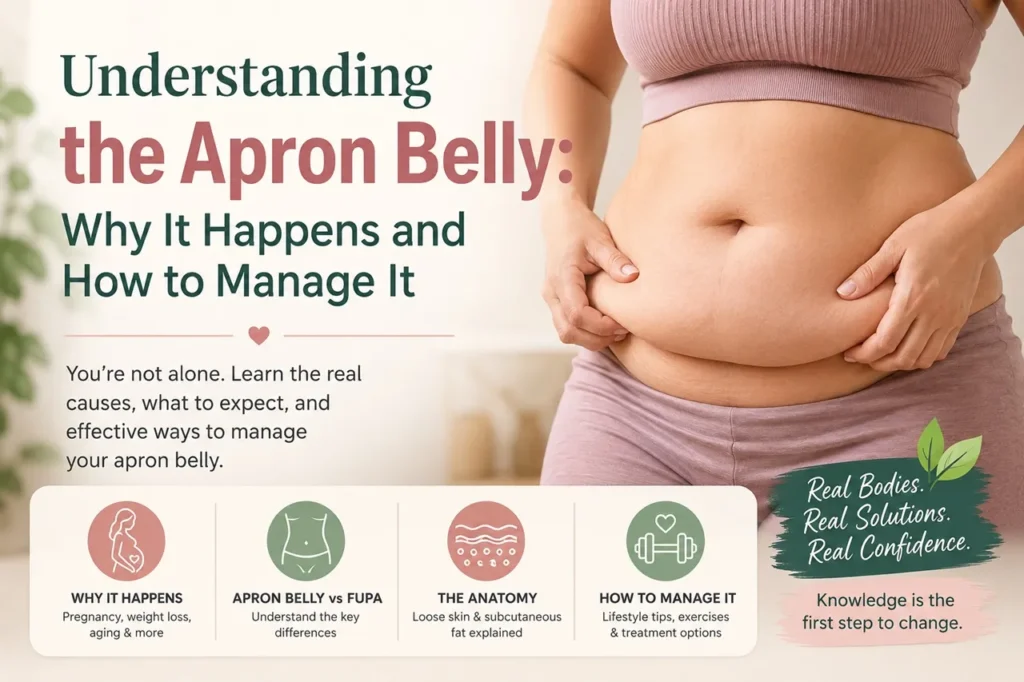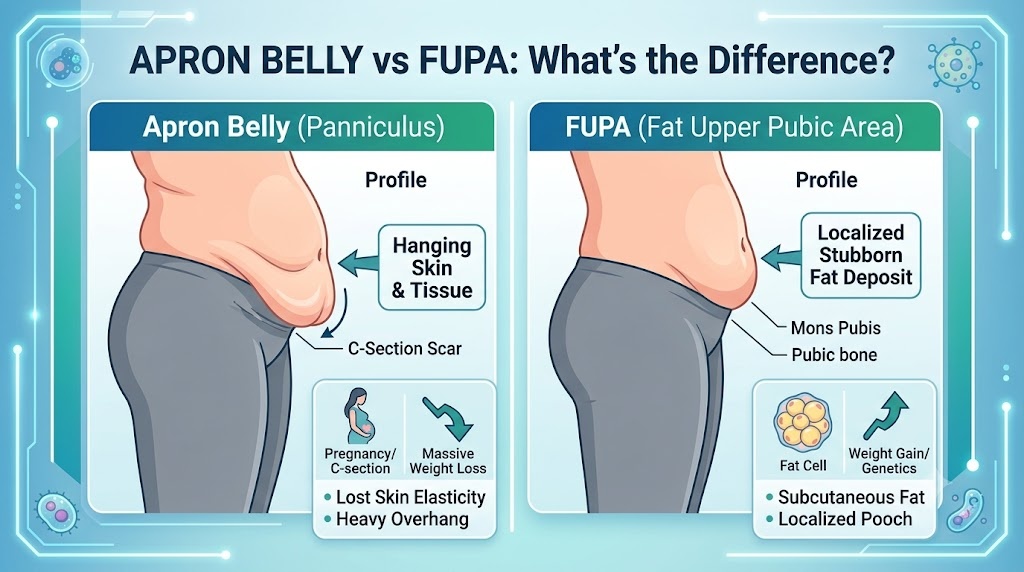

Nutrition and diet are terms that get thrown around constantly, yet they rarely come with a clear explanation. If you have ever felt lost reading about macros, calorie deficits, or clean eating, you are not alone. This article strips the jargon away and explains what nutrition and diet actually mean when your specific goal is losing fat, including the kind of stubborn lower-abdominal fat associated with an apron belly.
What nutrition and diet means
At its simplest, nutrition refers to the process by which your body takes in and uses food to sustain itself. Diet, in the clinical sense, simply means the pattern of what you eat day to day: your ongoing food habits rather than a temporary restriction plan. When people talk about diet and nutrition together, they are describing both the quality of the food you choose and the way your body processes it.
For fat loss, the two concepts become inseparable. You can eat a diet full of foods labelled healthy and still not lose fat if the total energy coming in exceeds the energy your body uses. Equally, you can cut calories aggressively and still feel exhausted, lose muscle, and stall your progress if the nutritional quality of those calories is poor.
Energy balance
The foundation of fat loss is energy balance: consuming fewer calories than your body burns over time. A calorie is simply a unit of energy. Your body needs a baseline amount just to keep organs functioning, regulate temperature, and support movement. When you consistently eat below that baseline, the body draws on stored energy, primarily body fat, to make up the shortfall.
Protein
Protein, carbohydrates, and fats are the three macronutrients that provide calories. Protein supports muscle repair and helps you feel full. Carbohydrates are the body’s preferred fuel source. Dietary fat supports hormone production and the absorption of certain vitamins. None of these is the enemy; the ratio and total amount matter far more than eliminating any single one.
Fibre
Fibre, found in vegetables, legumes, wholegrains, and fruit, is technically a carbohydrate but is not digested for energy. It slows digestion, supports gut health, and helps regulate appetite, all of which make it useful when you are trying to eat less without feeling deprived.
The Apron Belly: Understanding How to Manage resource covers the broader picture of managing this specific concern, but nutrition is consistently one of the most impactful levers available.
Related concepts and examples
Understanding what is nutrition and diet in theory is one thing; seeing how it plays out in practice is another. Several terms come up repeatedly in fat-loss conversations, and knowing what they actually mean helps you make better decisions rather than chasing trends.
Energy density refers to how many calories a food contains relative to its weight or volume. Vegetables and broth-based soups are low energy density, so you can eat a large portion for relatively few calories. Biscuits and fried foods are high energy density, so a small portion contains many calories. Shifting your diet toward lower energy-density foods is one of the most practical ways to reduce overall intake without feeling constantly hungry.
Meal quality is a broader concept that captures how well a meal supports your body beyond just its calorie count. A meal high in protein, fibre, and micronutrients (vitamins and minerals) tends to keep you fuller for longer, support muscle retention during a calorie deficit, and provide the raw materials your body needs to function well. A meal that is primarily refined carbohydrates and added sugar may hit the same calorie count but leave you hungry again quickly and lacking in essential nutrients.
If you are trying to understand what is an apron belly and why it forms, the role of long-term dietary patterns becomes clearer. Excess calorie intake over months and years, combined with hormonal and structural factors, contributes to fat accumulation in the lower abdominal area.
Plain-English example
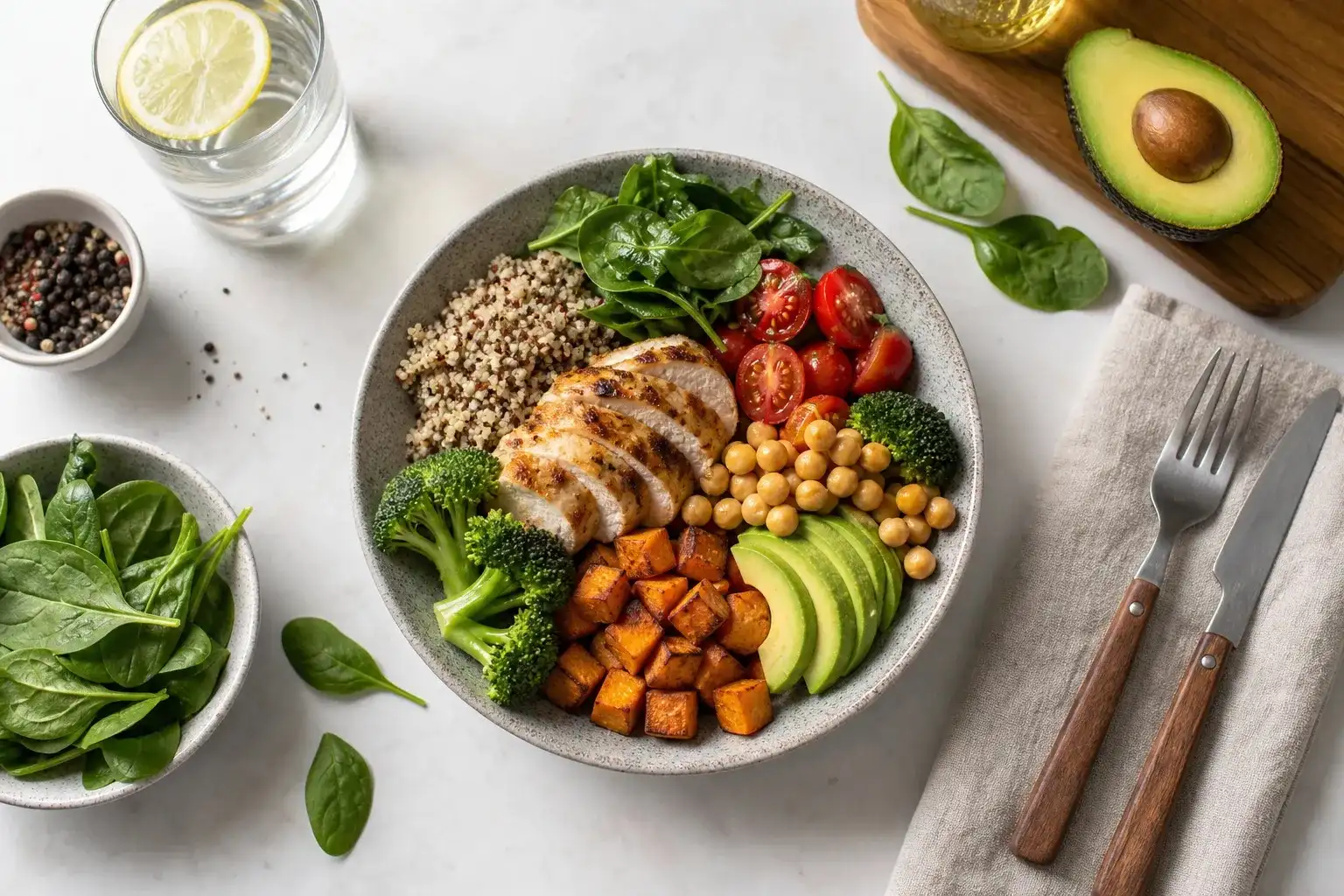
Imagine two people eating 1,800 calories a day. One person eats mostly processed foods: white bread, crisps, sugary drinks, and ready meals. The other eats lean protein, vegetables, wholegrains, and some healthy fats. Both are in the same calorie range, but the second person is likely to feel fuller, retain more muscle, and find the eating pattern easier to sustain. That difference is what diet for nutrition means in practice: not just counting calories, but choosing foods that do more work for your body.
How it connects to the broader topic
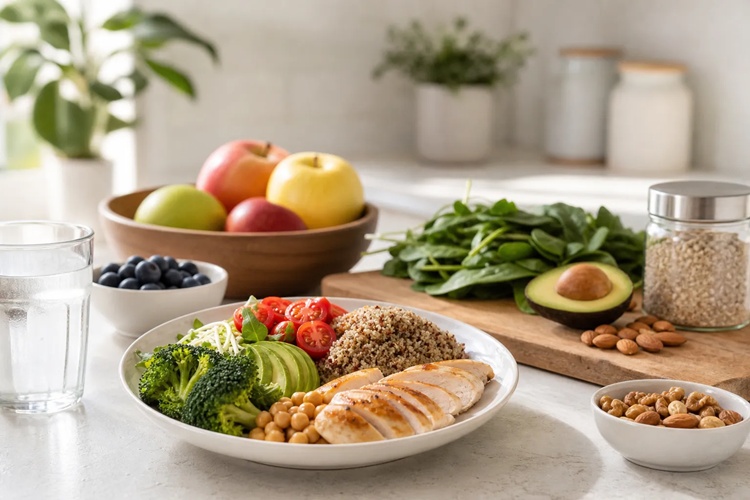
Nutrition and diet connect directly to apron belly fat loss because the lower abdominal area tends to be one of the last places the body draws from when losing fat. This is not a flaw in your approach. It is simply how fat mobilisation works. A consistent calorie deficit, supported by adequate protein and fibre, is the dietary foundation that makes any reduction possible over time. There is no specific food or meal plan that targets the apron belly directly, but a well-structured diet and nutrition approach creates the conditions for whole-body fat loss, which includes that area.
Reading about diet and nutrition in more depth can help you build a practical starting point rather than relying on restrictive plans that are difficult to maintain.
FAQ about nutrition and diet for fat loss
Why is diet and nutrition important?
Diet and nutrition determine whether your body has the fuel and building blocks it needs to function, recover, and lose fat sustainably. Poor nutritional quality makes fat loss harder even when calories are controlled.
What is the first thing to understand about eating for fat loss?
The most important starting point is understanding energy balance: calories in versus calories out. Everything else in diet and nutrition builds on that foundation.
How do you pick an eating plan that works for you?
Choose an approach you can maintain consistently. A moderate calorie deficit with adequate protein and plenty of vegetables is more effective long-term than any extreme plan.
What is the biggest mistake people make when dieting?
Cutting calories too aggressively is one of the most common mistakes. It tends to cause muscle loss, fatigue, and rebound eating, all of which slow fat loss progress.
Is it worth having a loose meal structure each day?
Yes. Having a loose structure, knowing roughly what you will eat and when, reduces decision fatigue and makes it easier to stay within a calorie range consistently.
What should you compare before choosing a diet?
Compare sustainability, protein adequacy, and how the plan fits your lifestyle. A plan that works on paper but does not suit your schedule or preferences will not produce lasting results.
Recommended next steps
If this overview of what is nutrition and diet has helped clarify the basics, the logical next step is understanding how to apply these principles specifically to your situation. Start by getting a rough sense of your daily calorie needs, then focus on building meals around protein and fibre before worrying about more detailed adjustments. Consistency over weeks and months matters far more than perfection on any single day.
The relationship between diet and nutrition and apron belly fat loss is straightforward in principle: a sustained calorie deficit, supported by nutritious food choices, is the dietary side of the equation. Pairing that with appropriate movement and realistic expectations gives you the most reliable path forward.