
Are you reading this late at night, struggling with clothing hacks? You are not alone, and you did nothing wrong. One of the most resistant and misinterpreted body changes anyone can undergo is a soft, hanging stomach.
It can appear post-pregnancy, following significant weight loss, post-menopause, or even for no lifestyle-related reason. But still, a lot of the information out there goes straight to the surgery.
This guide skips surgery. We cover anatomy, science-backed diets, effective core exercises, and non-invasive options.
So take a breath. This is not a listicle promising a flat tummy in a week. This is not a listicle promising a flat stomach in a week. Instead, this is the comprehensive, clinically sound plan you need. It is designed for real bodies, timelines, and outcomes.
Understanding the Anatomy: What Causes a Hanging Belly Button and Beyond
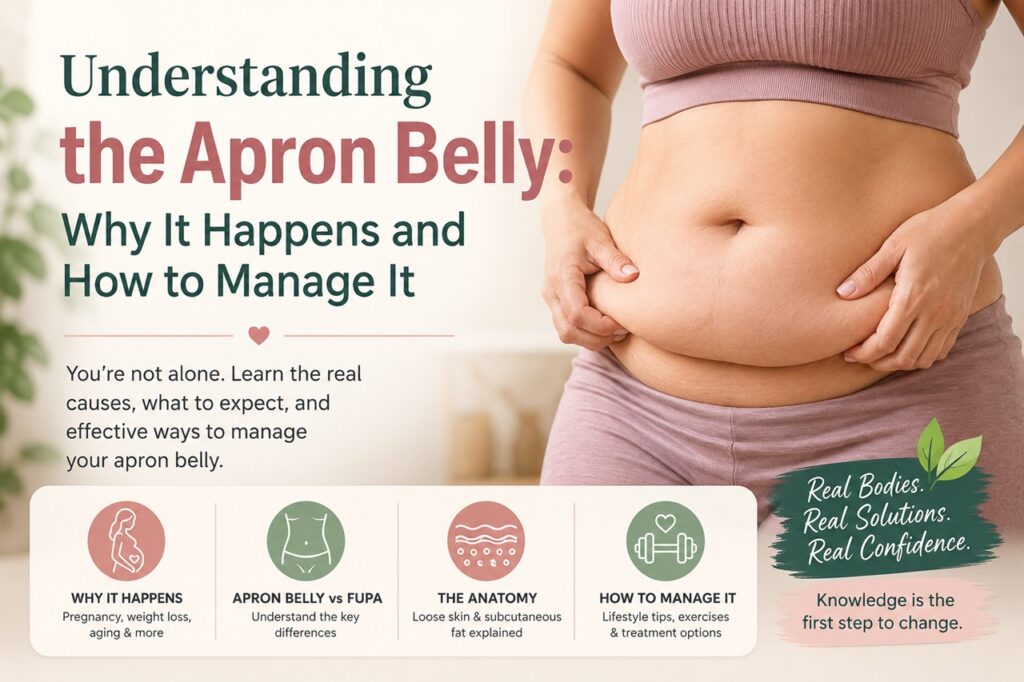
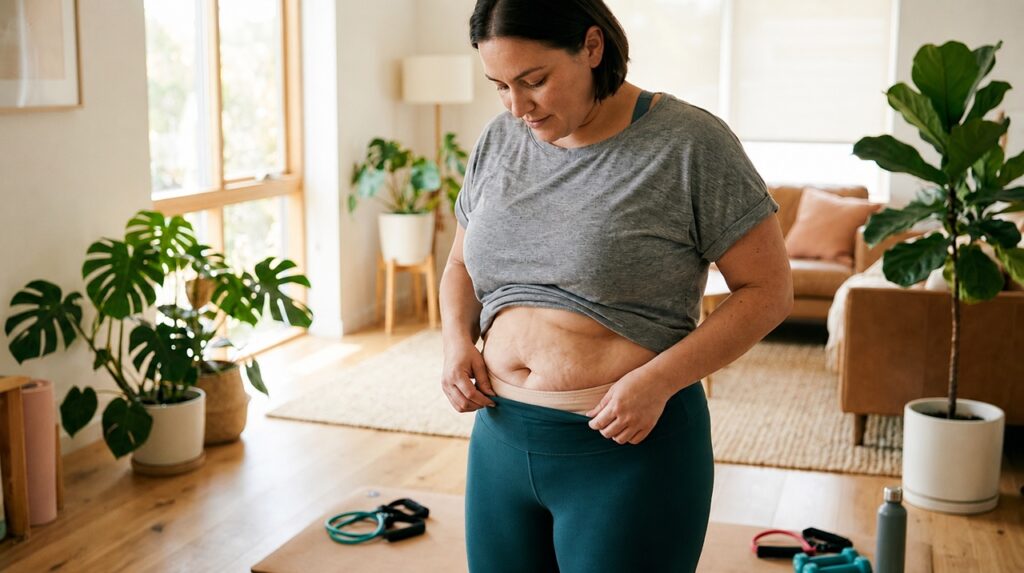
An apron belly (panniculus) is skin and fat hanging over the lower abdomen. It can sometimes reach the pubic area. Understanding this anatomy before treatment is crucial. It explains why simple ‘lose weight’ methods often fail.
The panniculus is composed of three layers of tissue: outer skin, fibrous connective tissue, and under-surface fat. Pregnancy or major weight changes heavily stretch this tissue. Elastin and collagen fibers can stretch beyond limits, causing permanent damage. This damage to collagen doesn’t simply heal, regardless of how well you eat.
What causes a hanging belly button? The growing panniculus stretches downward. This pulls, elongates, or shifts the belly button into folds.
Importantly, an apron belly isn’t solely caused by weight gain. Many develop it even when they are not overweight. Some people have less resilient connective tissue than others. Multiple pregnancies repeatedly stretch the abdominal wall. This can result in skin laxity or diastasis recti (muscle separation).
Age matters too: Collagen production decreases gradually after the mid-twenties and even more so during menopause. Some medicines, hormonal changes, and even chronic bloating from digestive problems can contribute.
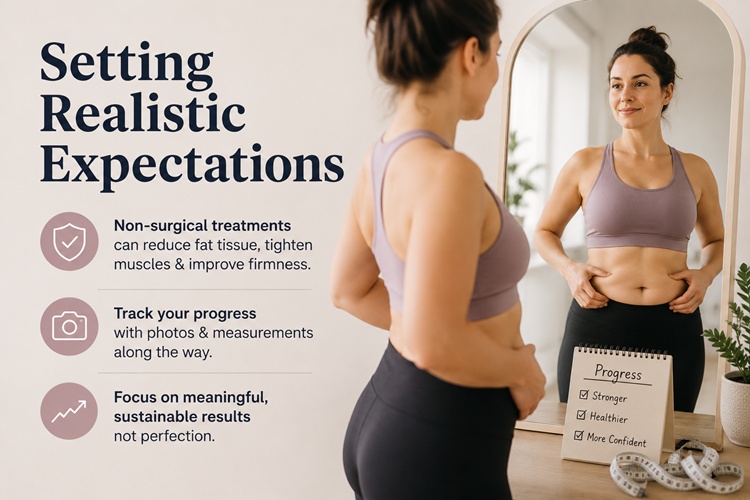
Setting Realistic Expectations
Don’t look a gift horse in the mouth, friends: there is no cream, exercise, or supplement that can completely remove an important panniculus once the skin is no longer elastic. That is just not the physics of collagen, and someone promising you otherwise is selling you something. But the good news is that realistic expectations do not mean small results. They mean meaningful and sustainable ones!
Non-surgical treatments are real and can help reduce the fat tissue in an apron belly, make it less noticeable, tighten the underlying muscle layer and improve posture, and provide a small boost of firmness to the skin through targeted collagen stimulation. This is a very effective blend that can provide a flatter, firmer, and more comfortable midsection without eliminating the fold for many individuals, particularly those with mild to moderate panniculus development.
For those who need a bit of stick-to-it-live motivation between steps, it is extremely helpful to have photos and measurements along the way. Seeing written-up apron belly before and after exercise results from others who’ve made the journey can help you set realistic expectations and understand the approximate duration it will take, without the social media-edited effects.
The Anti-Inflammatory Diet Approach
Nutrition is where most people either succeed or fail in their efforts to reduce their apron belly, and it begins with an almost too basic concept: caloric deficit for hanging stomach, and if excess fat is causing the belly fold, it is non-negotiable. Regardless of how many crunches you perform, you can’t out-exercise a calorie surplus. However, it is as important as the deficit what you do to create it.
Anti-inflammatory eating patterns are especially beneficial if the goal is to fight abdominal fat, as chronic, low-grade inflammation actively contributes to an unhealthy buildup of abdominal fat. Let’s look at what to do and what not to do:
| Food Category | Prioritize | Minimize |
| Fats | Olive oil, avocado, fatty fish (salmon, mackerel) | Fried foods, hydrogenated oils, excess processed seed oils |
| Carbohydrates | Oats, quinoa, sweet potatoes, legumes | White bread, sugary cereals, pastries |
| Protein | Eggs, chicken, wild-caught fish, tofu, Greek yogurt | Processed deli meats, breaded/fried proteins |
| Vegetables | Leafy greens, broccoli, bell peppers, berries | N/A — eat generously |
| Beverages | Water, green tea, black coffee (moderate) | Soda, excessive alcohol, sugary juices |
Fatty fish
Fatty fish is one of the best anti-inflammatory foods for lower belly fat. Omega-3 in salmon and mackerel actively fights inflammation and promotes collagen production, a rare 2-in-1 advantage for anyone trying to shed the pounds and firm up the skin. Meanwhile, leafy greens and berries are rich in antioxidants that help fight oxidative stress, another silent player in the dial-up fat-burning arena.
Fiber deserves a paragraph all on its own, truly, because it’s often overlooked. Soluble fibre in oats, beans, and flaxseed slows digestion, helps to regulate blood sugar levels, and decreases bloating, leaving the belly looking noticeably smaller within a few days, even before any fat is lost. Try to get between 25 and 35 g a day. Build up slowly to get used to it and avoid digestive discomfort.
Dehydration
Dehydration is another overlooked factor. When dehydrated, the body attempts to retain water, causing bloating and fluid retention that can give the false appearance of a bloated abdomen. Maintaining two to three liters of water per day, as per activity and climate, will help with digestion & elasticity of skin.
Last, but not least: Consistency trumps perfection every time. These anti-inflammatory changes, combined with a moderate deficit of 300-500 calories a day, result in fat loss without the accompanying loss of muscle mass or slowed metabolism that weight-loss crash diets often cause.
5 Deep Core Exercises to Tighten the Lower Abdominal Wall
The exercises to tighten lower abdominal wall muscles shape the underlying structure, while cardio and diet target the fat layer. Most people tend to gravitate towards crunches, but crunches mainly work on the superficial rectus abdominis. You really need to tone belly fat with deep core exercises – exercises that engage the transverse abdominis, which is your body’s corset muscle.
1. Transverse Abdominis Activation (Vacuum Pose)
Lying on your back with knees bent and feet on the ground. Then take a breath out completely, and pull your belly button into your spine as if it were a tight corset. Breathe shallowly for 10-15 seconds and then exhale. This is one of the most effective transverse abdominis exercises no equipment required, and it forms the foundation for every other movement on this list. Perform 3 sets of 10 daily.
2. Dead Bug
With your back on the floor, arms straight above your head and knees bent at 90 degrees, slowly lower your right arm and left leg toward the floor, maintaining a flat lower back. Go back to the beginning and take the alternate side. This helps to build core stability without overloading the lower back, particularly if there is diastasis recti. Work towards 3 sets of 12 on each side.
3. Standing Pelvic Tilts
Feet hip width, hands on hips. Lift and lower your pelvis forward and back slowly, controlling the movement, keeping your lower abdominals engaged. It’s a very gentle exercise and is great for beginners or for someone who has not exercised for a while after giving birth. Daily practice 2 minutes.
4. Bird Dog
When on all fours, reach right arm out and left leg back at the same time, with core contracted and hips flat. Hold for 2-3 seconds, then alternate sides. This exercise engages all the deep core and lower back stabilizers simultaneously to enhance posture, and an apron belly will look wonderfully smaller. Do 3 sets of 10 on each side.
5. Side Plank with Hip Dip (modification)
Place your rest on your forearm and knees (not on your full toes if you are not advanced), raise your hips into a straight line, then lower your hips towards the floor and back up. This works the obliques and transverse abdominis at the same time, which tightens the sides of the waist that typically bulge laterally outward, creating an “apron belly. Do 3 sets of 8 on each arm.
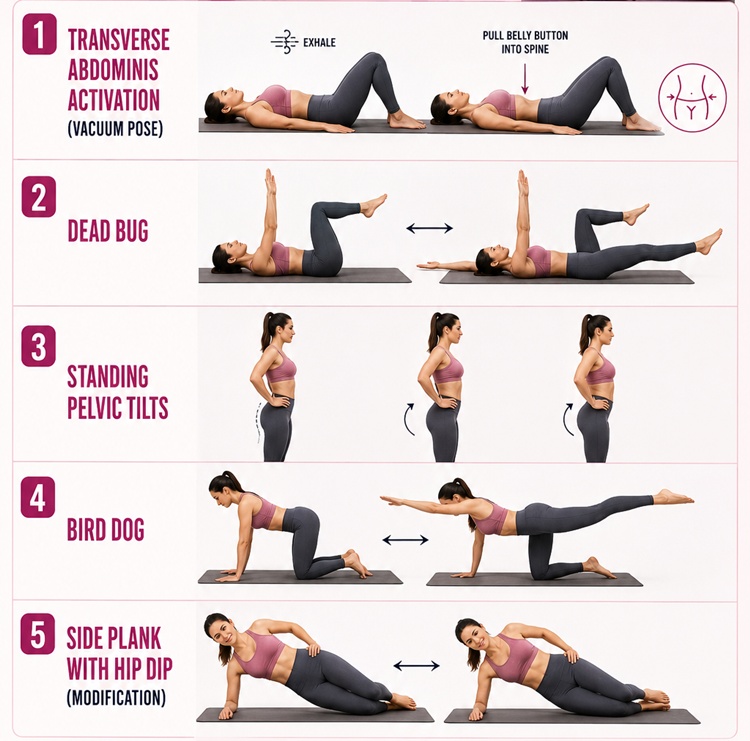
Here, consistency is more important than intensity. This, along with the diet plan outlined above, should yield noticeable core tightening effects in 6-10 weeks with three to four sessions per week. In addition, the use of high-quality compression garments for exercise and post-exercise sessions will enhance awareness of muscle engagement and will provide comfort for individuals with a more pronounced panniculus during this early phase of training.
Non-Surgical Clinical Options Worth Knowing About
Outside of diet and exercise, there’s actually a middle ground between the two: the “at-home effort” and the “surgery” categories of non surgical skin tightening for stomach treatments, which have grown in the past several years. These won’t eliminate a large panniculus, but they can help to tighten the skin and enhance its texture if the laxity is mild to moderate.
- Radiofrequency (RF) therapy stimulates collagen production in the deeper skin layers through controlled heat. Usually, there is no downtime, minimal discomfort or warmth, and research has shown that after a few treatments, there is a small but significant increase in skin firmness.
- Therapies such as Ultrasound therapy (HIFU) focus ultrasound energy below the skin’s surface, inducing collagen remodeling. It is widely used on the face but is increasingly adopted for the abdomen.
- Fat freezing, known as cryolipolysis, targets stubborn fat cells, which can be an advantage for the fat part of an apron belly; it isn’t really for loose skin.
- CoolTone or muscle-stimulation devices are electromagnetic energies that stimulate deep, involuntary muscle contractions, which provide thousands of core muscle movements in one session, but are not a substitute for your own strength training.
- Microneedling with radiofrequency combines mechanical collagen induction with heat and may often offer a greater degree of firming than either treatment alone.
All of these must be noted without being entered. Consultation with a board-certified dermatologist or plastic surgeon will help to identify which (if any) will be most suitable for your particular skin laxity and fat distribution. Also, two complementary treatments can be combined, such as fat reduction with cry lipolysis and skin tightening with RF treatment, as long as each treatment is scheduled at the appropriate time for the body to respond between sessions under a professional’s guidance.
Daily Living: Comfort, Hygiene, and Confidence
An apron belly is characterized by everyday conditions that are difficult to discuss openly but are also very important for skin comfort and health. The panniculus forms a warm, often moisture-trapping fold, so apron belly hygiene tips to prevent rashes are not nice-to-haves but necessary.
Moisture-associated skin breakdown Results
Moisture-associated skin breakdown results from moisture and skin rubbing together and decreased airflow, and is also known as intertrigo. It can become red and chafed, or even develop fungus, if not properly cared for. The great news is that prevention is very easy once you get in the habit of it.
- Rinse and pat the fold every day to remove any dirt; never rub it, as this can aggravate irritation.
- Use a zinc oxide containing barrier cream or powder that can absorb moisture and let it breathe during the day to prevent moisture accumulation.
- Wear moisture absorbing, breathable underwear and clothing materials rather than synthetic fabrics that hold heat.
- Check frequently for redness, odor, or breakdown of the skin fold, and treat early signs rather than waiting.
Think about choosing the best shapewear for apron belly support during the day, as compression, under the right circumstances, can help minimize friction, enhance airflow in breathable garments, and provide comfort, support, and confidence whenever you’re exercising, running errands, or working long hours.
Is the type of sleeping and clothing important for it?
The type of sleep and clothing are important. Pillows under the lower abdomen can help keep the body supported while sleeping, and loose garments with a high waistline during the day will not create friction that can cause discomfort at night; however, tight garments around the waist can rub against the fold and cause more pain.
Last but not least, and this is a hard one to say, but it’s true, your value is not based on the shape of your midsection. People tend to feel better as they begin to think of their belly as something they should care for, strengthen, and understand, rather than hide and feel bad about.
Frequently Asked Questions (FAQs)
Yes, for mild cases, particularly where fat loss and skin elasticity are in favor. Non-surgical treatments will help, but won’t completely disappear, if the panniculus has developed significantly and over an extended period.
Primary improvements, such as less bloating, better posture, and tighter muscle tone, are usually visible within six to eight weeks of therapy, and more significant improvements occur over four to 12 months.
Weight loss will play a major role, but it only affects the fat area. Any skin laxity and muscle weakness must be treated separately using the methods described above.
Yes, but not as intense as crunches, deep core exercises, such as the ones listed here, are easier on the body. If in any doubt, consult a physical therapist.
For many, it’s possible to attain a flat belly without surgery; it just takes patience, a natural approach to diet, exercise, and skin care treatment, and realistic goals throughout the process. It is your right to enjoy the outcome, and your right, and your right, and your right, to go there in a way that does not harm you.
Conclusion
It isn’t just a question of style: it’s about comfort, confidence and knowing a part of your body that has been altered by pregnancy, weight gain or loss, hormones, genetics, or just time. The key takeaway from all of the above is that you have real, evidence-based tools at your disposal before surgery is even a factor.
A caloric deficit and anti-inflammatory eating targets the fat layer. Deep core work, vacuum poses, dead bugs, bird dogs reconstructs the foundation of the muscles. There are clinically proven non-surgical treatments such as RF therapy or microneedling that can help tighten the skin that is already there. But everyday activities, such as good hygiene and compression garments, ensure you stay comfortable and skin intact throughout the process.
None of this is a quick process, but it’s okay. Small, steady decisions add up; progress here is measured over weeks and months, not days. The alterations you make at this time to your muscles, your skin, and your relationship with your body will benefit you either way you choose to pursue surgery or not.