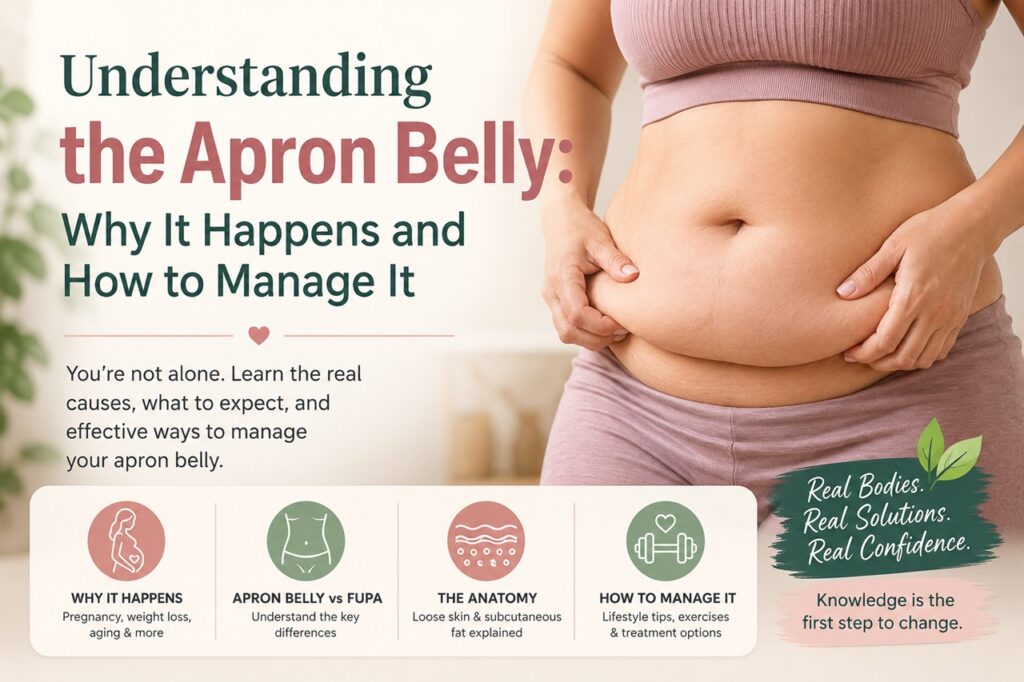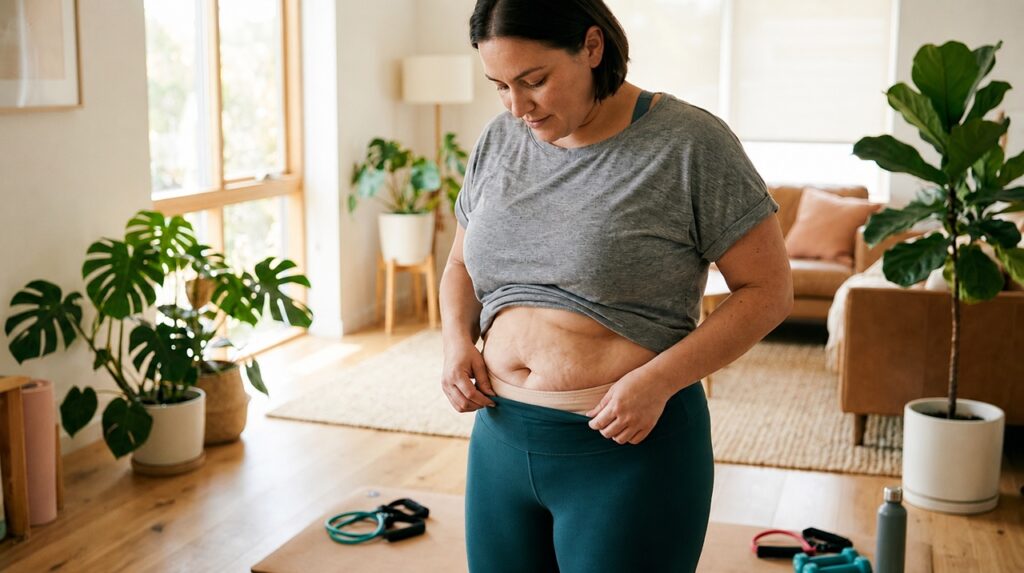

An apron belly, medically known as an abdominal pannus, is a common concern that affects people of all ages and body types. It develops when excess skin, fat, and soft tissue hang over the lower abdomen, creating an often described overhanging apron of skin. For some people, it is a cosmetic concern, while for others, it can lead to physical discomfort, skin irritation, mobility issues, and reduced confidence.
Many people across the UK wonder, can you get rid of an apron belly without surgery? The answer depends on what the apron belly consists of. If it contains excess body fat, lifestyle changes can make a significant difference. However, if it is primarily composed of loose abdominal skin and stretched connective tissue following pregnancy, major weight loss, or aging, the options become more limited. Understanding the underlying cause is the first step towards choosing the most appropriate treatment.
This guide explains what an apron belly is, why it develops, which treatments genuinely work, and how to manage symptoms safely and realistically.
What Exactly Is an Apron Belly (Abdominal Pannus)?
An abdominal pannus is excess hanging skin and tissue that drapes over the lower abdomen. Healthcare professionals sometimes call it a panniculus, while many people know it as a mother’s apron or simply an apron belly.
The size varies considerably. In mild cases, it may cover only the pubic region. In more severe cases, it can extend over the thighs and interfere with daily movement, exercise, and personal hygiene.
Although excess body fat often contributes to its appearance, an apron belly is rarely made up of fat alone. Stretched skin, weakened connective tissues, and changes in the abdominal muscles often play equally important roles.
Visceral Fat vs Subcutaneous Fat vs Loose Skin
Understanding the different types of abdominal tissue helps explain why some treatments work better than others.
Visceral fat
- Surrounds internal organs.
- Lies deep inside the abdominal cavity.
- Increases the risk of heart disease, type 2 diabetes, and metabolic disorders.
- It cannot be seen directly from outside.
Subcutaneous fat
- Sits beneath the skin.
- Creates the soft layer that can be pinched.
- Forms a significant portion of an apron belly.
- Responds to weight loss through diet and exercise.
Loose skin
- Develops after prolonged stretching.
- Contains reduced amounts of collagen and elastin.
- Does not disappear simply through exercise.
- Often remains after pregnancy or substantial weight loss.
In most people, an apron belly is a combination of subcutaneous fat, stretched skin, and weakened abdominal support structures rather than visceral fat alone.
Main Causes of a Hanging Stomach Flap
Several factors contribute to the development of an apron belly. In many cases, more than one cause is involved.
Pregnancy and C-section scars
Pregnancy places enormous strain on the abdominal wall. As the uterus expands, the skin, muscles, and connective tissues stretch significantly.
Following childbirth:
- Skin may not fully regain its previous elasticity.
- Separation of the abdominal muscles (diastasis recti) can cause the abdomen to protrude.
- C-section scars sometimes alter how tissue settles, creating a shelf-like appearance above the scar.
Multiple pregnancies increase the likelihood of developing persistent loose skin and weakened abdominal support.
Massive weight loss or post-bariatric surgery
Losing a substantial amount of weight is an impressive achievement, but it often leaves excess skin behind.
People who undergo post-bariatric surgery commonly experience:
- Significant hanging skin and tissue
- Reduced skin elasticity
- Persistent skin folds despite reaching a healthy weight
The faster and greater the weight loss, the more likely it is that loose skin will remain.
Loss of skin elasticity due to ageing and genetics
Age naturally reduces the body’s production of collagen and elastin.
As these proteins decline:
- Skin becomes thinner.
- Recovery after stretching slows.
- Loose abdominal skin becomes more noticeable.
Genetics also influences how resilient your skin remains over time, meaning some individuals develop an apron belly despite maintaining a healthy weight.
High stress levels and cortisol production
Chronic stress may contribute indirectly by increasing cortisol levels.
Persistently elevated cortisol can:
- Encourage fat storage around the abdomen.
- Increase appetite.
- Promote cravings for highly processed foods.
- Make long-term weight management more difficult.
Stress alone does not cause an apron belly, but it can contribute to increased abdominal fat accumulation.
Can You Get Rid of an Apron Belly Naturally? The Honest Truth
Many people search online asking, can you get rid of an apron belly naturally. The truthful answer is: sometimes, but not completely in every case.
If the apron belly contains a significant amount of body fat, reducing overall body fat through healthy eating and regular exercise can noticeably reduce its size.
However, there is an important distinction between losing fat and removing loose skin.
One of the biggest misconceptions is the idea of spot reduction. Despite countless advertisements suggesting otherwise, no exercise burns fat from a specific area of the body. Your body determines where fat is lost based largely on genetics, hormones, age, and sex.
What you can realistically achieve naturally includes:
- Reducing overall body fat through a calorie deficit.
- Improving muscle tone.
- Strengthening the abdominal wall.
- Improving posture.
- Reducing the amount of subcutaneous fat beneath the apron.
What natural methods cannot reliably do is remove large amounts of stretched skin. Once collagen and elastin fibers have been permanently damaged, the skin has only a limited ability to tighten on its own.
For individuals with extensive loose abdominal skin, surgery may ultimately provide the only complete solution.
Best Exercises and Workouts for Managing an Apron Belly
Exercise plays an important role in improving overall health, reducing body fat, and strengthening the abdominal muscles.
The most effective approach combines cardiovascular exercise with targeted core strengthening.
Core-Strengthening and Diastasis Recti Recovery
Traditional sit-ups and crunches are not always the best option, particularly for people with diastasis recti following pregnancy.
Instead, physiotherapists often recommend exercises that activate the deep core muscles.
Effective options include:
- Pelvic tilts
- Modified planks
- Bird-dog exercises
- Dead bugs
- Glute bridges
- Pilates-based core exercises
- Diaphragmatic breathing
These exercises strengthen the transverse abdominis, which acts as the body’s natural corset, providing better abdominal support.
If diastasis recti is suspected, seek assessment from a women’s health physiotherapist before beginning an intensive abdominal programme.
High-Intensity Cardio (HIIT) for Overall Fat Loss
High-Intensity Interval Training (HIIT) alternates short bursts of intense activity with recovery periods.
Benefits include:
- Increased calorie expenditure.
- Improved cardiovascular fitness.
- Greater insulin sensitivity.
- Efficient whole-body fat loss.
Examples include:
- Fast walking intervals
- Cycling
- Rowing
- Swimming
- Stair climbing
- Bodyweight circuits
Although HIIT cannot specifically target the apron belly, reducing total body fat helps decrease the amount of subcutaneous fat beneath the hanging tissue.
Nutritional Guidelines and Skin Elasticity Tips
Nutrition has a major influence on body composition and overall skin health.
Maintain a moderate calorie deficit
Weight loss occurs when calorie intake is consistently lower than calorie expenditure.
Aim for a sustainable deficit rather than crash dieting, which may increase muscle loss and worsen loose skin.
Prioritise lean protein
Protein supports:
- Muscle preservation
- Tissue repair
- Satiety
- Recovery after exercise
Excellent sources include:
- Chicken
- Turkey
- Fish
- Eggs
- Greek yoghurt
- Beans
- Lentils
- Tofu
Reduce ultra-processed foods
Limiting foods high in added sugar, refined carbohydrates, and unhealthy fats can make maintaining a calorie deficit considerably easier.
Choose whole foods whenever possible.
Stay well hydrated
Proper hydration supports healthy skin function and elasticity.
While drinking water cannot eliminate loose skin, dehydration may make skin appear thinner and less resilient.
Support collagen production
Collagen supplements continue to be researched, with mixed but encouraging evidence for some aspects of skin health.
Natural dietary sources that support collagen production include:
- Vitamin C-rich fruits
- Berries
- Citrus fruits
- Peppers
- Tomatoes
- Protein-rich foods
- Zinc-containing foods
Although nutrition supports healthy skin, no food or supplement can reverse severely stretched skin.
Non-Surgical and Surgical Treatment Options in the UK
For people whose apron belly causes persistent physical discomfort or emotional distress, medical treatments may be worth considering.
Non-Invasive Body Contouring
Modern body contouring procedures aim to reduce fat or improve skin tightness without surgery.
Common options include:
CoolSculpting (Cryolipolysis)
Uses controlled cooling to destroy selected fat cells, which are gradually removed by the body over several months.
Radiofrequency skin tightening
Uses heat to stimulate collagen production and may improve mild skin laxity.
Laser skin tightening
Certain laser treatments encourage collagen remodelling and can provide modest improvements in skin firmness.
These treatments work best for individuals with relatively small amounts of excess fat and mild skin laxity. They cannot remove large amounts of excess skin.
Surgical Procedures: Tummy Tuck (Abdominoplasty) vs Panniculectomy
When a significant overhanging apron of skin remains despite healthy lifestyle changes, surgery may provide the most effective solution.
Tummy tuck (abdominoplasty)
A tummy tuck is both a cosmetic and functional procedure.
It involves:
- Removing excess skin.
- Removing excess fat.
- Tightening separated abdominal muscles.
- Creating a flatter abdominal contour.
Some people with excess skin but limited excess may be suitable for a mini tummy tuck, which involves a smaller incision and focuses mainly on the lower abdomen.
Panniculectomy
A panniculectomy differs from an abdominoplasty.
It removes the excess abdominal pannus but generally does not:
- Tighten abdominal muscles.
- Reshape the waist.
- Provide extensive cosmetic contouring.
This operation is primarily performed to improve hygiene, mobility, recurrent infections, and quality of life.
Anyone considering surgery should arrange a consultation with a GMC-registered consultant plastic surgeon to discuss suitability, risks, recovery, and expected outcomes.
Daily Hygiene, Comfort, and Managing Skin Folds
An apron belly may create warm, moist skin folds that encourage irritation and infection.
Proper daily care can significantly reduce discomfort.
Helpful strategies include:
- Wash beneath the fold daily using a gentle cleanser.
- Dry the area thoroughly after bathing.
- Wear breathable cotton clothing.
- Avoid prolonged dampness after exercise.
- Use anti-chafing barrier creams where appropriate.
- Apply moisture-absorbing powders if recommended by a healthcare professional.
- Seek medical advice for persistent redness, pain, odour, or discharge.
One common condition affecting skin folds is intertrigo, an inflammatory rash caused by moisture and friction.
Typical symptoms include:
- Redness
- Burning
- Itching
- Cracked skin
- Unpleasant odour
Persistent chafing under the belly fold may also allow fungal infections such as Candida to develop, requiring antifungal treatment prescribed by a healthcare professional.
Frequently Asked Questions (FAQs)
Usually not. The NHS generally considers apron belly removal cosmetic, but surgery may be funded if the abdominal pannus causes severe recurrent infections, persistent skin problems, or significant mobility issues.
Fat loss may take several months with a consistent calorie deficit and exercise. If excess loose skin remains, it will not disappear completely without surgery.
No. Exercise can reduce body fat and strengthen your core, but it cannot remove stretched skin or repair scar-related tissue on its own.
Yes. Losing weight can reduce the amount of subcutaneous fat beneath the apron, making it smaller. However, significant loose skin may still remain after weight loss.
For moderate to severe loose skin, yes. Healthy eating and exercise improve body composition, but they cannot fully remove excess stretched skin. Surgical procedures such as a tummy tuck or panniculectomy are the most effective treatment options.
Final Thoughts
If you’ve been asking yourself, Can you get rid of an apron belly, the answer depends on what lies beneath the surface. Excess subcutaneous fat often responds well to a balanced calorie-controlled diet, regular exercise, and long-term lifestyle changes. Strengthening the core, improving nutrition, and maintaining a healthy weight can significantly improve both appearance and physical comfort.
However, when an apron belly consists primarily of loose abdominal skin and an established abdominal pannus, natural methods have limitations. While healthy habits remain essential, they cannot fully reverse permanently stretched skin. For some individuals, body contouring procedures or surgery offer the most predictable long-term results.
The most important step is choosing an approach based on evidence rather than unrealistic promises. If your apron belly causes persistent pain, recurrent skin infections, mobility problems, or affects your quality of life, speak with your GP or a qualified plastic surgeon to explore the safest and most appropriate treatment options.