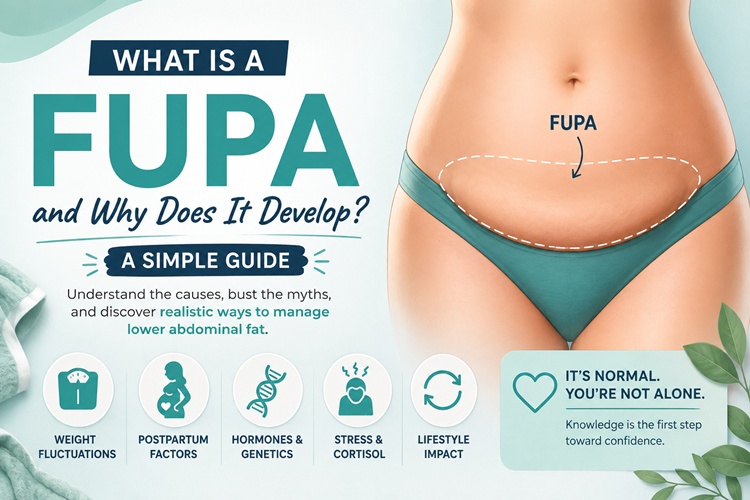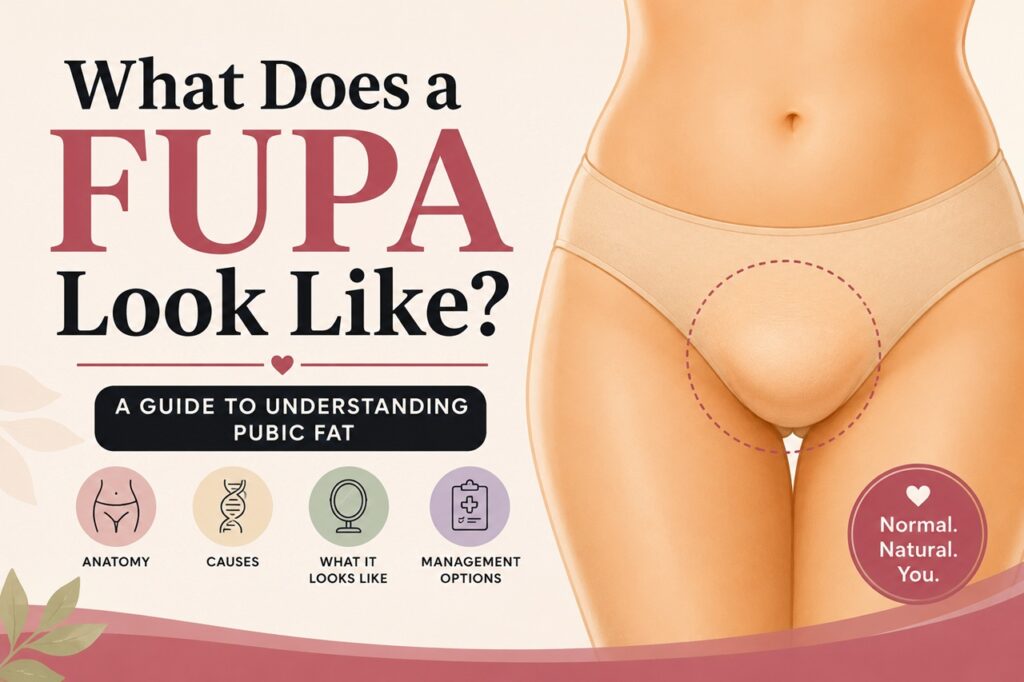

A FUPA (Fat Upper Pubic Area) can be reduced naturally through a sustained caloric deficit, targeted lower abdominal exercises, cortisol management, and posture correction. Most people see meaningful changes within 4–8 weeks of consistent effort. This 30-day plan provides a structured, progressive roadmap to get you started.
If you’ve been searching for how to get rid of FUPA, you already know how frustrating that stubborn lower belly pooch can feel. You eat well, you exercise, and yet the area just above your pubic bone refuses to budge. You’re not imagining it, and you’re definitely not alone.
By the end of this guide, you will understand the root cause of your lower belly pooch and have a clear, actionable plan to address it naturally. The plan covers what’s actually happening beneath the surface, how to dial in your diet, which exercises target the right muscles, and how lifestyle factors like stress and posture quietly sabotage your progress.
This is a health-related topic, so it’s worth stating upfront: results vary based on genetics, hormones, starting point, and consistency. There’s no shortcut. But with the right approach, 30 days of focused effort can create real, visible change.
What Is a FUPA and Why Won’t It Go Away?
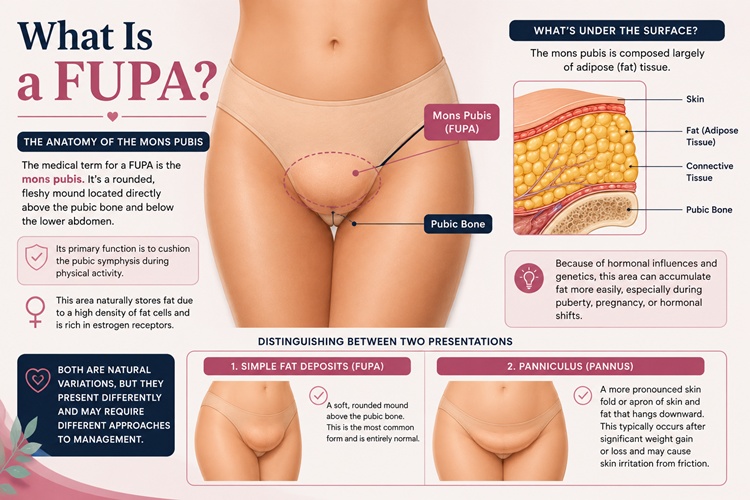
A FUPA, known as Fat Upper Pubic Area, refers to the accumulation of subcutaneous fat and, in some cases, loose skin just above the pubic region. This area is one of the most stubborn fat deposits on the body, largely because subcutaneous fat in the lower abdomen is typically the last to respond to diet and exercise.
Before you can address a FUPA effectively, it helps to understand exactly what you’re dealing with.
Visceral Fat vs Subcutaneous Fat: What’s the Difference?
Your body stores fat in two primary ways:
- Visceral fat sits deep inside the abdominal cavity, wrapping around your organs. It’s metabolically active, responds relatively well to diet and exercise, and is associated with higher health risks.
- Subcutaneous fat sits just beneath the skin. The FUPA is almost entirely subcutaneous fat: softer, more visible, and notoriously resistant to change.
Research consistently shows that fat loss follows a pattern largely determined by genetics, meaning that targeted spot reduction of a specific area isn’t physiologically possible. What you can do is reduce overall body fat percentage through a caloric deficit, build core strength to improve the appearance of the area, and support your metabolism through the right lifestyle choices.
Hormones, Genetics, and Pregnancy
Several biological factors make the FUPA particularly persistent:
- Hormonal imbalances: Elevated cortisol, the stress hormone, promotes fat storage, specifically around the midsection. Poor insulin sensitivity compounds this, making it harder for the body to use stored fat as fuel.
- Genetics: Fat distribution patterns are largely inherited. Some people naturally store more fat in the upper pubic area regardless of overall weight.
- Post-pregnancy changes: Pregnancy significantly stretches the lower abdominal muscles. After delivery, weakened pelvic floor muscles and reduced core stability can make the lower belly appear more prominent, even after fat loss.
- Skin elasticity: As the body ages, skin loses collagen and elastin. After weight loss, the skin in the lower abdomen may not fully retract, leaving a soft pooch that isn’t purely fat.
Understanding which of these factors applies to you sets realistic expectations for your 30-day plan. For most people, it’s a combination of subcutaneous fat and weak core stability, both of which are naturally addressable.
Note: If your concern involves a larger fold of hanging skin rather than localized fat, you may be dealing with an apron belly rather than a FUPA. The two are distinct conditions. See the full breakdown of apron belly vs FUPA for a detailed comparison with pictures.
How to Reduce FUPA Naturally Through Diet
No exercise plan will outwork a poor diet. To reduce fat anywhere on the body, including the upper pubic area, you need to consume fewer calories than you burn. That caloric deficit signals the body to tap into stored fat for energy.
What Caloric Deficit Is Needed to Lose Lower Belly Fat?
A 300–500-calorie deficit per day is the optimal range for sustainable fat loss. This produces roughly 0.5–1 lb of fat loss per week meaningful progress without the muscle loss and metabolic slowdown that come with aggressive restriction.
Drastic diets lower your basal metabolic rate, increase cortisol, and often backfire. A moderate, consistent deficit is the most effective long-term strategy.
Key Macronutrients for Lower Belly Fat Loss
Not all calories work the same way during body recomposition. Prioritise these three:
- Protein: Aim for 0.7–1g per pound of body weight daily. Protein preserves lean muscle mass during a caloric deficit, which is essential, since muscle keeps your metabolism elevated and shapes the midsection you’re working toward. Good sources include chicken, eggs, Greek yogurt, lentils, and fish.
- Fiber: Fiber slows digestion, stabilizes blood sugar, and directly supports gut health. Poor gut health can cause bloating, which can make the lower belly look much worse than it is. Target 25–35g of fiber per day from vegetables, legumes, oats, and fruit.
- Healthy fats: Omega-3 fatty acids from sources like salmon and walnuts actively reduce inflammation, which supports fat metabolism and improves insulin sensitivity.
Foods That Worsen Lower Belly Bloating
Some foods consistently trigger water retention and bloating in the lower abdomen, even in otherwise healthy eaters. Limit or eliminate these during your 30-day plan:
- Processed foods high in sodium
- Carbonated drinks
- Refined sugars and high-fructose corn syrup
- Alcohol
- Highly processed vegetable oils
The goal isn’t perfection; it’s removing the biggest obstacles to progress.
The Best Exercises to Get Rid of FUPA
Crunches alone will not reduce a FUPA. Abdominal exercises build muscle underneath the fat but don’t burn the fat itself that comes from the caloric deficit above. Exercise shapes, strengthens, and accelerates the overall fat-loss process.
To effectively address the lower belly area naturally, you need a two-part strategy: targeted core work that engages the rectus abdominis and pelvic floor, plus higher-intensity metabolic work that burns calories and promotes total-body fat loss.
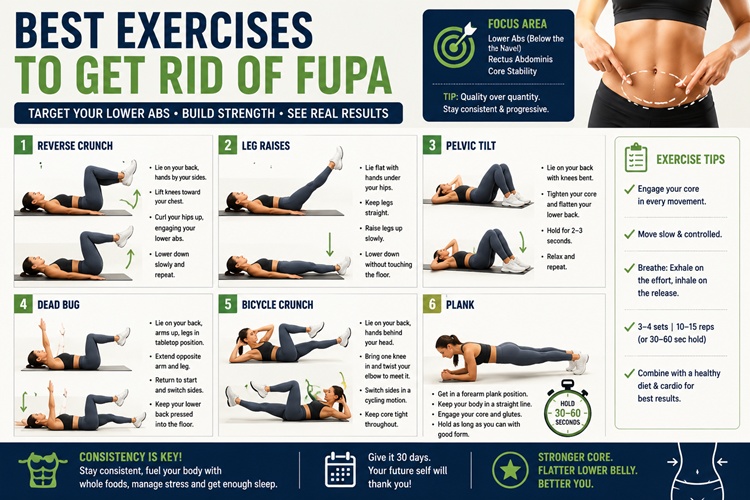
Lower Abdominal Exercises for Beginners
These movements specifically recruit the deep core muscles, including the transverse abdominis and pelvic floor, without placing excessive strain on the lower back:
- Leg raises: Lie on your back with legs straight. Keeping your lower back pressed to the floor, slowly raise both legs to 90 degrees and lower them without letting them touch the ground. This directly targets the rectus abdominis in the lower section. Start with 3 sets of 10.
- Pelvic tilts: Lie on your back with knees bent. Tighten your abdominals and gently tilt your pelvis upward, pressing your lower back into the floor. Hold for 5 seconds. This activates the pelvic floor and helps restore core stability, particularly important for post-pregnancy bodies.
- Dead bugs: Lie on your back with your arms extended toward the ceiling and your knees bent to 90 degrees. Slowly lower your right arm and left leg toward the floor simultaneously, return to start, and repeat on the opposite side. Dead bugs build core stability without straining the spine.
- Modified planks: Hold a forearm plank position for 20–30 seconds, focusing on pulling your navel toward your spine. Progress to full planks as your core strengthens.
HIIT and Metabolic Conditioning to Burn Fat
Incorporating HIIT (High-Intensity Interval Training) two to three times per week creates the caloric burn necessary to reduce subcutaneous fat throughout the body.
HIIT sessions alternate short bursts of intense effort with brief rest periods, elevating your heart rate and keeping your metabolism elevated for hours after the workout ends.
Effective HIIT formats for beginners:
- 20 seconds of work, 40 seconds of rest for 8–10 rounds
- Exercises: jumping jacks, squat jumps, high knees, burpees, mountain climbers
Combine HIIT with 3–4 days of low-impact steady-state cardio: brisk walking, cycling, or swimming to avoid overtraining and support consistent fat oxidation.
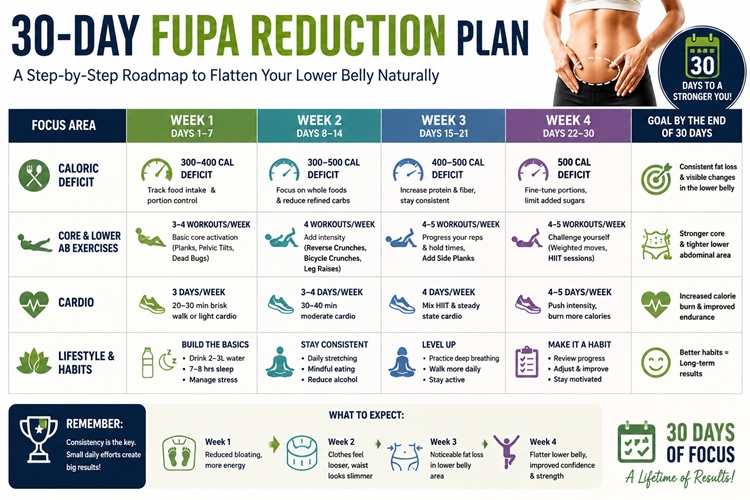
Your 30-Day FUPA-Reduction Roadmap
This plan is designed to progress gradually, starting with fundamentals in Week 1 and building to full intensity by Week 4. Each week is harder than the last; that’s what drives results.
| Week | Focus | Diet | Exercise |
| Week 1 | Habit building & clean eating | Calculate and begin a 300–500 calorie daily deficit. Remove inflammatory foods. Hit daily protein (0.7–1g/lb) and fiber (25–35g) targets. | 3x core basics (leg raises, pelvic tilts, modified planks). 2x 30-minute brisk walks. |
| Week 2 | Low-impact cardio & core stability | Maintain deficit. Introduce anti-bloat foods. Increase water intake to 8+ cups daily. | Add 2x HIIT sessions (20s on/40s off, 8 rounds). Increase core sets to 4x. Introduce dead bugs. |
| Week 3 | Intensify with compound movements | Tighten diet consistency. Begin tracking meals if progress stalls. Reduce sodium. | Increase HIIT intensity (20s on/30s off, 10 rounds). Add resistance training—squats, lunges, deadlifts—2x per week. |
| Week 4 | Full intensity & fine-tuning | Reassess caloric needs based on 3-week progress. Add prebiotic foods to support gut health and reduce bloating. | Full compound training + HIIT + daily core routine. Take measurements and progress photos on Day 30. |
Tracking tip: Progress photos and waist measurements taken at the start and end of Week 4 will give you far more accurate feedback than the scale alone. Many people notice visual changes before the scale number shifts, especially as muscle develops and water retention fluctuates.
Managing Stress and Posture to Reduce Lower Belly Fat
Two factors that are rarely mentioned in FUPA guides are two of the most important: cortisol and posture.
How Chronic Stress Causes Lower Belly Fat
Chronic stress elevates cortisol, which promotes fat storage, particularly in the abdominal region, and simultaneously breaks down muscle tissue. High cortisol also increases insulin resistance, making it harder for the body to metabolize stored fat effectively.
Managing stress is not optional if fat loss is the goal. Practical strategies include:
- 7–9 hours of sleep per night (sleep deprivation is one of the strongest cortisol triggers)
- 10–15 minutes of daily breathwork or meditation
- Reducing caffeine, especially in the afternoon
- Limiting alcohol
Even small reductions in chronic stress measurably improve body composition over time. Without addressing cortisol, you risk hitting a plateau regardless of how clean your diet is.
How Poor Posture Makes FUPA Look Worse
Anterior pelvic tilt, where the pelvis tips forward and the lower back arches excessively, makes the lower belly protrude significantly, even without excess fat. Many people mistake this common postural pattern for a FUPA entirely.
Anterior pelvic tilt is extremely common and entirely correctable. Strengthening the glutes and hip flexors, improving pelvic floor engagement, and practising neutral spine alignment during exercise and daily movement can visibly flatten the lower belly without any fat loss.
Include hip flexor stretches and glute bridges in your daily warm-up to address this directly.
Frequently Asked Questions About Getting Rid of FUPA
Can you get rid of FUPA without surgery?
Yes. In many cases, a FUPA can be reduced naturally through a combination of a targeted caloric deficit, regular lower-abdominal exercises, and lifestyle changes to manage cortisol levels. Consistent body recomposition significantly improves the appearance of the area, though skin elasticity varies by genetics. Surgery, such as a panniculectomy, is only considered when loose skin remains after significant fat loss.
Does weight loss reduce FUPA?
Yes, but not necessarily first. Fat loss follows a pattern largely governed by genetics, often described as “first in, last out.” Areas where you first notice fat gain are typically the last to slim down. The upper pubic area is a common last-loss zone for many women. This is why a long-term, consistent deficit matters more than any short-term approach.
How long does it take to see results?
Most people notice meaningful changes within 4–8 weeks of consistent effort combining caloric deficit and targeted exercise. The 30-day plan outlined here is a foundation. Visible FUPA reduction typically requires 8–16 weeks of sustained consistency, depending on starting body fat percentage, hormonal factors, and adherence.
Is FUPA the same as an apron belly?
No. A FUPA is a localized deposit of subcutaneous fat sitting just above the pubic bone. An apron belly (panniculus) involves a larger fold of loose skin and fat that hangs lower, often developing after significant weight loss or pregnancy. The two conditions require different approaches. See the full apron belly vs FUPA comparison for a detailed breakdown.
Can exercises before and after photos show real FUPA reduction?
Yes. Progress photos taken before starting and at the end of Week 4 are one of the most reliable indicators of real change. The scale often doesn’t reflect reductions in lower belly fat because muscle gain can offset fat loss on the scale. For visual proof of what regular exercise can achieve, explore the lower abdomen exercises before and after guide on apronbelly.co.uk.
Your 30 Days Start Now
A FUPA is not a permanent fixture. It’s a combination of subcutaneous fat, weakened core muscles, and often some postural habits, all of which respond to a consistent, targeted approach.
The plan works when you follow it consistently. Track your food. Show up for your workouts. Manage your stress and sleep. The results follow the habits, not the other way around.
Disclaimer: This guide is for educational purposes only. Please consult with a physician before starting any new exercise or diet program, especially if you have underlying health concerns, are postpartum, or have had abdominal surgery.