

 21 Aug 2026
 8 min read
If you have noticed a new fold of skin or fat hanging below your waistline since perimenopause began, you may be trying to work out exactly what you are looking at — and what, if anything, to do about it. The terminology around this area can be confusing: apron belly, FUPA, belly pooch, and menopause belly are all used online, sometimes interchangeably, sometimes to mean very different things. This article cuts through that confusion by comparing the terms side by side, explaining where each sits on the body, and helping you decide which label — if any — actually applies to your situation.
Quick answer: how menopause belly apron options compare
The phrase menopause belly apron is not a clinical diagnosis. It is a descriptive term that combines two ideas: the hormonal belly changes that often accompany menopause, and the apron-shaped overhang of skin or fat that can develop at the lower abdomen. Understanding what you are dealing with matters because the underlying cause — excess fat, loose skin, bloating, or posture — shapes what approaches are realistic.
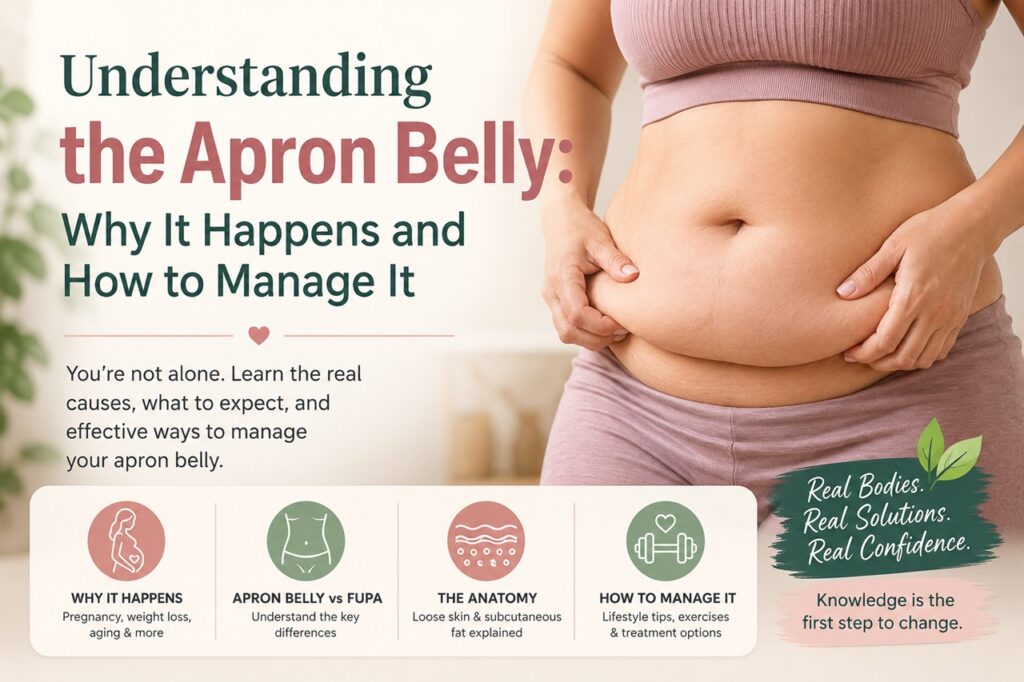
For a full grounding in the anatomy, apron belly explained covers the basics in plain terms. The short version: an apron belly (also called a pannus) is a fold of skin and subcutaneous fat that hangs below the pubic line. A FUPA (fatty upper pubic area) sits higher, in the mons pubis region, and does not hang in the same way. A belly pooch is a softer, rounder protrusion that may involve visceral fat, bloating, or weak core muscles rather than a true overhang. These distinctions matter when you are deciding whether clothing, exercise, dietary changes, or medical advice is the right starting point.
Apron belly vs FUPA is a common comparison search because the two areas are close together and both become more noticeable after hormonal changes. The key difference is location and tissue type: the apron hangs, the FUPA bulges. Fupa vs pooch is a slightly different comparison — the pooch tends to be higher and softer, often related to visceral fat or bloating rather than a skin fold.
Menopause belly apron compared at a glance
| Criterion | Apron belly | FUPA | Belly pooch |
|---|---|---|---|
| Location on body | Below the pubic line, hangs downward | Mons pubis, above the pubic bone | Lower abdomen, above the pubic area |
| Tissue involved | Skin and subcutaneous fat | Subcutaneous fat, sometimes skin | Visceral fat, subcutaneous fat, or bloating |
| Typical cause | Significant weight gain, pregnancy, or skin laxity | Hormonal fat redistribution, weight gain | Diet, posture, core weakness, or visceral fat |
| Menopause link | Can worsen as oestrogen drops and fat redistributes | Common after menopause due to hormonal shifts | Very common in perimenopause and menopause |
| Main tradeoff | Skin laxity may not respond to fat loss alone | Fat loss can reduce it but hormones complicate progress | Often responds to lifestyle changes, but visceral fat takes time |
| Best starting point | Assess whether it is skin, fat, or both | Hormonal and dietary review | Core work, dietary review, and bloating assessment |
For a deeper look at what is an apron belly and how it differs from related terms, the UK plain-English apron belly guide is a useful reference before you go further.
Compare menopause belly apron by the criteria that matter
Fit and use case

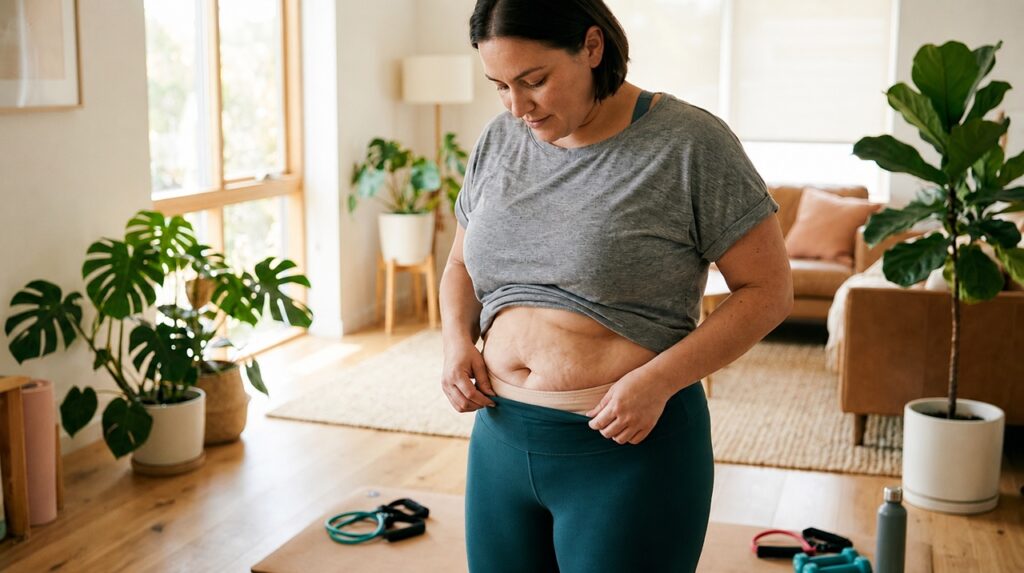
The menopause belly apron label fits best when there is a visible, hanging fold of skin or fat that sits below the pubic line and becomes more pronounced when you stand. If the area you are concerned about is higher — sitting in the pubic mound region — the FUPA description is more accurate. If it is a rounded protrusion without a true fold or overhang, belly pooch is the closer term.
For women in perimenopause or postmenopause, all three can appear at the same time, which is why the terminology feels so muddled. Oestrogen decline encourages fat to migrate from the hips and thighs toward the abdomen, and reduced muscle tone can make existing fat deposits more visible. The apron belly specifically tends to develop when there is enough tissue volume and skin laxity to create a fold — it is not simply a matter of carrying extra weight.
Knowing which area you are dealing with helps you choose the right approach. Clothing strategies differ: high-waisted shapewear addresses a pooch differently from a true apron overhang. Exercise choices differ too — core strengthening helps a pooch more than it reduces a skin-dominant apron.
Value and tradeoffs

The practical value of naming the right thing is that it sets realistic expectations. Apron belly vs FUPA is not just a labelling exercise — the two areas respond differently to the same interventions. Fat loss through diet and movement can reduce a FUPA meaningfully, because the tissue is primarily fat. An apron belly that has a significant skin component may reduce in volume with fat loss but the skin fold itself may remain, because skin laxity does not reverse through lifestyle changes alone.
A belly pooch that is driven by visceral fat or bloating can respond well to dietary changes — particularly reducing ultra-processed foods, managing fibre intake, and addressing gut health — because visceral fat is metabolically active and shifts with energy balance. However, if the pooch is partly postural or related to diastasis recti (abdominal muscle separation, which is common after pregnancy), diet alone will not resolve it.
The tradeoff in all three cases is time and expectation management. Menopause adds hormonal complexity: progesterone and oestrogen changes affect where fat is stored and how readily the body releases it, which means progress may be slower than it was before perimenopause.
Limitations and deal-breakers
The biggest limitation with the apron belly label is that it can create a false sense that the issue is purely cosmetic or purely about weight. For some women, what looks like an apron belly is predominantly loose skin after significant weight loss or multiple pregnancies — and in those cases, fat-loss strategies will have limited effect on the shape. Recognising this early saves frustration.
FUPA can be a deal-breaker term for some readers because it is often used dismissively online, but it describes a real anatomical area that responds to real interventions. The limitation here is that hormonal fat in the mons pubis region can be stubborn, and spot reduction through exercise is not supported by evidence — overall fat loss is the mechanism, not targeted abdominal work.
Fupa vs pooch confusion matters when someone is doing core exercises expecting to flatten a FUPA, or doing dietary work expecting to resolve a skin-dominant apron. Misidentifying the tissue type is the most common reason people feel their efforts are not working.
Decision rule for menopause belly apron

The simplest way to tell which situation applies to you is to assess two things: where the tissue sits, and whether it is primarily fat, skin, or a combination.
If the fold hangs below the pubic line and the skin feels loose or thin over the top of it, a skin-dominant apron belly is likely. If the area is above the pubic bone and feels soft but does not hang, FUPA is the more accurate description. If the protrusion is higher, rounder, and changes noticeably with bloating or posture, a belly pooch is the better fit.
From there, the decision rule is straightforward: fat-dominant presentations respond to energy balance and hormonal support; skin-dominant presentations may need medical assessment if the fold causes hygiene or comfort issues; pooch presentations often respond to a combination of dietary change, core rehabilitation, and bloating management.
The label matters less than the tissue type. Whether you call it a menopause belly apron, a FUPA, or a pooch, the practical question is always: what is actually there, and what is a realistic response to it? For a fuller picture of the hormonal mechanisms involved, why menopause belly apron appears explains the oestrogen and fat redistribution process in detail.
FAQ about menopause belly apron
How do I get rid of my menopausal apron belly?
Reducing overall body fat through consistent dietary changes and movement is the most evidence-supported approach. If loose skin is the primary issue rather than fat, lifestyle changes alone may not alter the shape significantly.
Why did I suddenly get an apron belly?
Rapid weight gain, pregnancy, or significant hormonal shifts — particularly the oestrogen decline of menopause — can cause fat to redistribute to the lower abdomen and skin to lose elasticity, making an apron belly appear relatively quickly.
What is the best diet for menopause belly?
No single diet is universally best, but reducing ultra-processed foods, prioritising protein to preserve muscle mass, and managing overall energy intake are practical starting points that suit most people navigating menopause-related belly changes.
Can I ever get rid of an apron belly?
Fat-dominant apron bellies can reduce substantially with fat loss. Skin-dominant apron bellies may not resolve through lifestyle changes alone, and some people choose to discuss surgical options with a medical professional.
Does menopause belly ever go away?
It can improve, particularly if the cause is visceral fat or bloating rather than loose skin. Hormonal stabilisation after menopause, combined with consistent lifestyle habits, often helps — though the timeline varies considerably between individuals.
What should readers know first about menopause belly apron?
The most important first step is identifying whether the tissue is primarily fat, skin, or bloating — because each responds to different approaches and sets different realistic expectations.
How do you choose the right menopause belly apron approach?
Start by assessing the tissue type and location, then match the approach to that assessment: dietary and movement changes for fat, core rehabilitation for a pooch, and medical advice if skin laxity or comfort is the main concern.
What mistakes should you avoid with menopause belly apron?
The most common mistake is assuming that abdominal exercises will reduce the area directly. Spot reduction is not how fat loss works, and core work alone will not address a skin-dominant apron or a hormonally driven FUPA.
Recommended next steps
If you are still unsure which term applies to your situation, start with a clear-eyed assessment of where the tissue sits and how it behaves — whether it changes with bloating, posture, or weight fluctuation. That single observation will tell you more than any label.
From there, the UK plain-English apron belly guide gives a thorough grounding in what an apron belly actually is, how it differs from related terms, and what realistic management looks like. If you want to understand the hormonal side more deeply — particularly why menopause specifically tends to shift fat toward the lower abdomen — that context shapes everything else about how you approach the issue.
The terminology around apron belly vs FUPA, fupa vs pooch, and menopause belly is genuinely confusing, and the overlap between these terms is real. What matters most is not the label but the practical question: what is the tissue, where does it sit, and what is a grounded, realistic response to it?
Rachel has spent over a decade writing about women’s health, body composition, and post-pregnancy recovery for UK-based digital publications and NHS-adjacent health platforms. She holds a postgraduate certificate in science communication and has worked closely with physiotherapists and dietitians to translate clinical research into plain, usable advice. Her approach is straightforward: lead with what the evidence actually says, flag the limitations honestly, and skip the language that makes readers feel like a problem to be solved. She writes for people who have already Googled the optimistic version and want someone to level with them.