

 24 Aug 2026
 7 min read
1. Your waist circumference can shrink even when the overhang looks the same
Situation: Many people start an exercise programme expecting the visible fold of skin and fat to lift away. When it does not, they assume nothing is working.
Approach: What exercise actually reduces first is visceral fat — the metabolically active fat stored deeper in the abdomen around the organs. This fat responds well to sustained aerobic activity and resistance training combined.
Observed lesson: Waist measurements often decrease meaningfully before any change appears in the apron itself. The overhang may soften and feel less firm, but the skin fold remains because subcutaneous fat and loose skin are the last to respond, and loose skin may not respond at all.
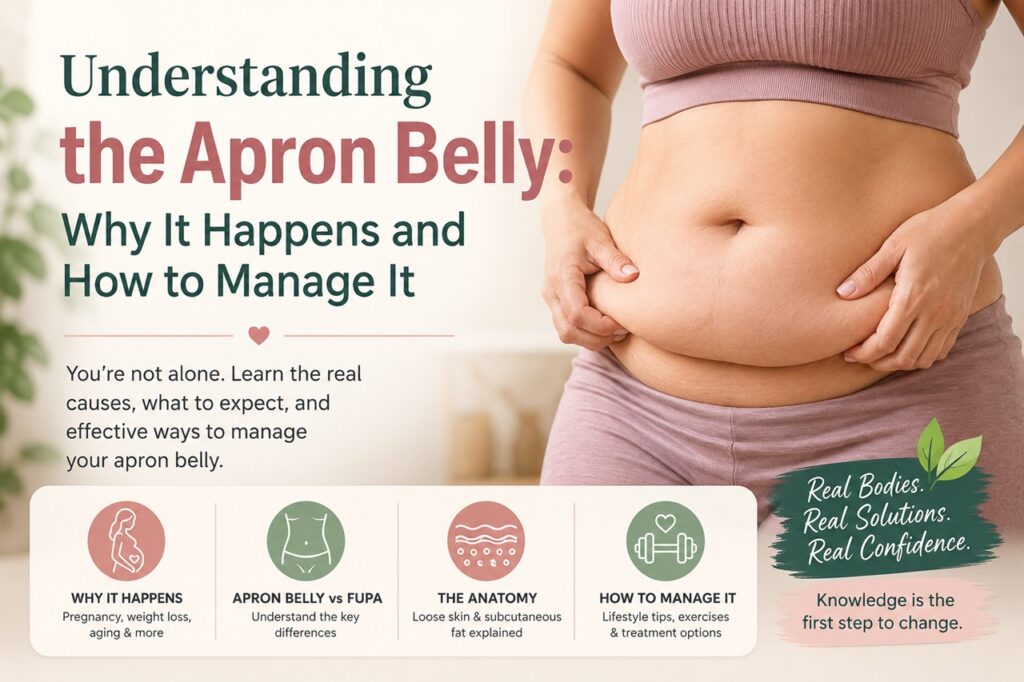
Practical takeaway: Track waist circumference alongside how your clothes fit, not just how the apron looks in the mirror. Progress is happening even when it is not visible in the fold. For a grounding overview of what an apron belly actually is and why it behaves this way, the apron belly overview is a useful starting point.

2. Core strength improves noticeably, and that matters more than it sounds
Situation: People focused on how to get rid of apron belly often dismiss core work because they cannot see it changing the skin fold.
Approach: Exercises that engage the transverse abdominis and pelvic floor — such as dead bugs, bird dogs, and diaphragmatic breathing drills — rebuild the internal support structure beneath the apron. This is not cosmetic work; it is functional.
Observed lesson: After several weeks of consistent core training, people commonly report reduced lower back ache, better posture, and less discomfort when standing for long periods. The apron belly before and after difference here is felt rather than seen.
Practical takeaway: Do not skip core work because it does not produce visible results quickly. Improved core control reduces the strain the apron places on your lower back and hips, which is a meaningful quality-of-life outcome. If you want to understand what is an apron belly at a structural level, that background helps explain why core engagement matters so much here.

3. Exercise alone cannot remove loose skin — and this is the must-know truth
Situation: After significant weight loss or pregnancy, the skin itself has been stretched. Exercise burns fat but cannot regenerate the collagen and elastin fibres that give skin its ability to retract.
Approach: This is the point where separating must-have knowledge from nice-to-have motivation matters most. Apron belly exercises that target fat reduction will change the volume of tissue beneath the skin, but the skin envelope itself does not tighten in response to exercise alone.
Observed lesson: People who lose a substantial amount of weight through exercise often find the apron becomes less heavy and less uncomfortable, but the skin fold persists. This is not a failure of effort; it is a biological limit.
Practical takeaway: If loose skin is the primary concern, exercise is still worth doing for every other benefit it delivers — but managing expectations honestly prevents disappointment. The apron belly exercises that make sense guide focuses on what exercise can realistically achieve so you can build a programme around honest outcomes.

4. Back pain and posture often improve before anything visible changes
Situation: The weight of an apron belly pulls the pelvis forward and compresses the lumbar spine. This is one of the most common physical complaints associated with the condition.
Approach: Strengthening the glutes, hip flexors, and lower back through exercises such as glute bridges, modified squats, and gentle hip hinging redistributes load away from the lumbar region. This is a tradeoff worth understanding before you commit to any programme: the visible apron belly before and after difference may be modest, but the structural relief can be significant.
Observed lesson: People who stick with a consistent routine often notice reduced back fatigue within weeks, even when the apron itself has not visibly changed. This is a real, measurable improvement that photographs do not capture.
Practical takeaway: If back pain is part of your daily experience, frame exercise as pain management first and body composition change second. That framing makes it easier to stay consistent when visible results are slow.

5. Consistency over months matters far more than intensity over weeks
Situation: Short bursts of intense exercise followed by long gaps produce minimal change in apron belly appearance or function. This is the pattern most people fall into when motivation is high at the start.
Approach: A simple decision rule: choose the exercise type you can do three or four times per week for six months, not the one that promises the fastest results. Walking, swimming, and low-impact resistance training are all effective apron belly exercises when performed consistently over time.
Observed lesson: The apron belly before and after difference at six months of moderate, consistent effort tends to outperform the results from two intense weeks followed by a long break. The body adapts to sustained stimulus, not occasional shock.
Practical takeaway: Build your programme around sustainability. If a particular exercise causes joint pain, boredom, or scheduling problems, it will not produce results because you will not do it long enough. Consistency is the variable that matters most.

6. What you eat alongside exercise determines how much fat actually shifts
Situation: Exercise increases energy expenditure, but it also increases appetite. Without some attention to diet, the calorie deficit needed to reduce subcutaneous fat may not materialise.
Observed lesson: People who combine moderate exercise with a modest, sustainable reduction in calorie intake tend to see more change in apron belly appearance than those who exercise without any dietary adjustment. This is not about extreme restriction; it is about not inadvertently eating back the deficit.
Practical takeaway: Think of diet and exercise as working together rather than as alternatives. You do not need a rigid plan, but being broadly aware of portion sizes and food quality makes the exercise effort more likely to produce visible change. For a fuller picture of what actually changes with apron belly over time, that companion article covers the combined effect of lifestyle factors in more detail.
FAQ about apron belly before and after exercise
Do apron bellies go away with exercise?
Exercise can reduce the fat volume within the apron and improve its appearance, but it cannot remove loose skin. A full resolution through exercise alone is unlikely.
What is the best exercise for overhang belly?
A combination of sustained aerobic activity and core-strengthening work tends to produce the most useful results for reducing fat and improving posture around an overhang belly.
What tightens the apron belly?
Fat loss through consistent exercise and a moderate calorie deficit can reduce the volume of the apron. Loose skin, however, does not tighten through exercise and may require medical intervention if that is a goal.
Can you fully flatten an apron belly?
Not through exercise alone. Where significant loose skin is present, full flattening typically requires a surgical procedure such as a panniculectomy, which is outside the scope of exercise.
What should readers know first about apron belly before and after exercise?
The most important thing to understand is that exercise changes body composition and function, but it cannot directly address loose skin, which is the visible fold in most apron bellies.
How do you choose the right apron belly before and after exercise approach?
Choose apron belly exercises you can sustain for months, not weeks. Consistency and a modest dietary adjustment matter more than the specific exercise type.
What mistakes should you avoid with apron belly before and after exercise?
The most common mistake is expecting rapid visible change and stopping when it does not appear. Progress in core strength, back comfort, and waist measurement often comes before any visible change in the apron fold.
Is a consistent exercise routine worth it for apron belly, even without dramatic visible results?
Yes. Reduced back pain, better posture, improved core control, and lower visceral fat are all meaningful outcomes even when the skin fold itself does not disappear. —
Recommended next steps
If you are starting out, the most useful next step is to build a clear picture of what you are working with. Understanding the structure of an apron belly — what is fat, what is skin, and what exercise can and cannot change — prevents the frustration that comes from chasing the wrong outcome.
From there, focus on apron belly exercises that suit your current fitness level and that you can repeat consistently over several months. Pair that with modest dietary awareness rather than restriction, and track progress through waist measurement and how your body feels rather than through photographs of the fold alone.
The apron belly before and after exercise journey is slower and more nuanced than transformation photos suggest, but the functional improvements — less back pain, stronger core, better posture — are real and worth pursuing on their own terms.
Rachel has spent over a decade writing about women’s health, body composition, and post-pregnancy recovery for UK-based digital publications and NHS-adjacent health platforms. She holds a postgraduate certificate in science communication and has worked closely with physiotherapists and dietitians to translate clinical research into plain, usable advice. Her approach is straightforward: lead with what the evidence actually says, flag the limitations honestly, and skip the language that makes readers feel like a problem to be solved. She writes for people who have already Googled the optimistic version and want someone to level with them.