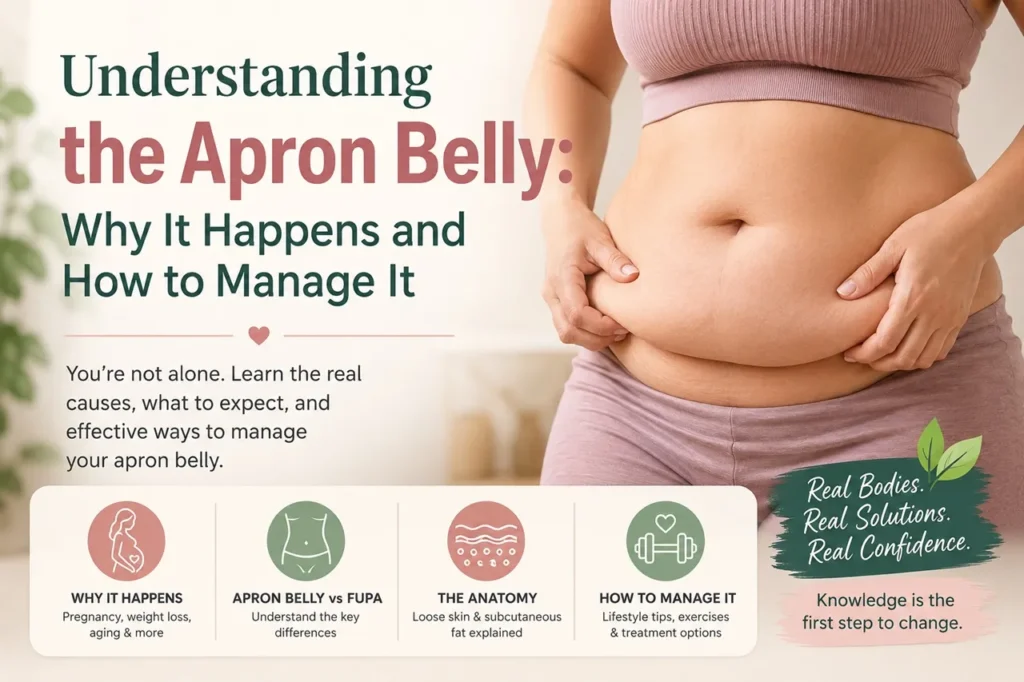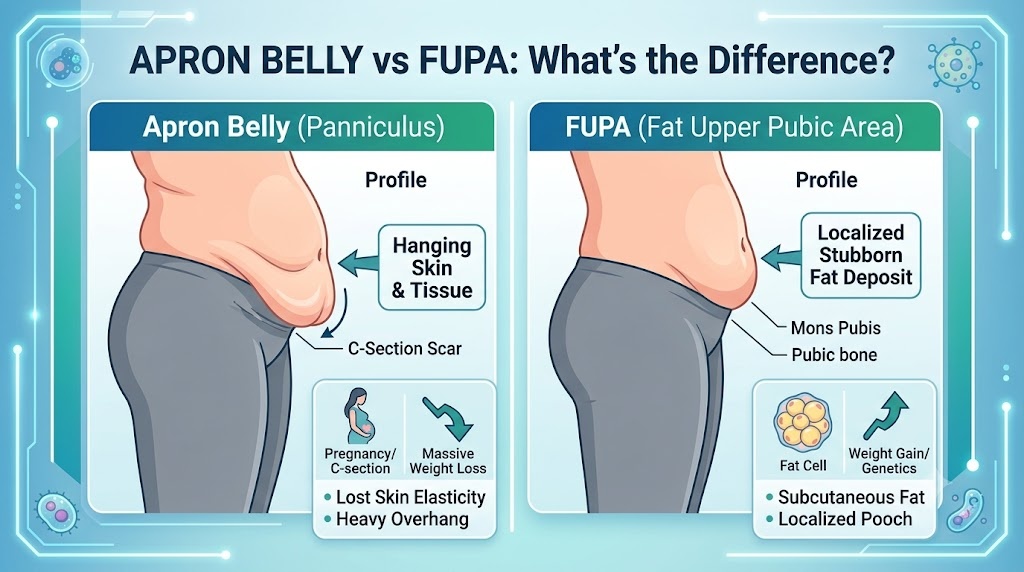


If you want less lower-belly fat, the kind that forms an apron or a pronounced pooch, you will eventually run into the question of diet or nutrition: are these the same thing, do they overlap, and which one should you actually focus on? The confusion is understandable because the words are used interchangeably in everyday conversation, yet they describe meaningfully different levers. Getting clear on the distinction helps you stop chasing the wrong target and start making changes that actually shift stubborn lower-belly fat over time.
What diet or nutrition means in practice
In everyday speech, “diet” usually refers to what and how much you eat, often with an implied goal of reducing calories. “Nutrition” is broader: it describes the quality, composition, and function of the food you consume, including the vitamins, minerals, fibre, protein, and other compounds that keep your body working properly.
The distinction matters because you can be on a calorie-controlled diet and still have poor nutrition, and you can eat nutritiously without being in a calorie deficit. Both scenarios produce different outcomes for your body, your hormones, and your lower-belly fat specifically.
Diet and nutrition are not competing priorities. They are two dimensions of the same eating pattern. Thinking about diet or nutrition as an either/or question is a bit like asking whether a car needs an engine or fuel. You need both, but they do different jobs.
For anyone trying to understand how to get rid of apron belly, this distinction is particularly relevant. Lower-belly fat, including the apron belly that hangs below the navel, is influenced by overall body fat levels (a calorie question) and by hormonal and inflammatory factors (a nutrition quality question). Addressing only one side rarely produces lasting results.
How to think about diet or nutrition
The core problem to understand

The core problem is that most people default to one extreme or the other. Either they focus entirely on calories (cutting portions, tracking macros, following a structured plan) without thinking about what those calories are made of. Or they focus entirely on eating “clean” or “healthy” without ever addressing the energy surplus that is preventing fat loss.
Both approaches have a ceiling. A calorie deficit without adequate protein, fibre, and micronutrients tends to result in muscle loss, poor satiety, and rebound eating. Good nutrition without a calorie deficit means your body has no reason to draw on stored fat for energy. Lower-belly fat, which is often the last to shift, requires both levers to be working together.
There is also a hormonal dimension worth understanding. Chronic stress, poor sleep, and diets high in ultra-processed foods can elevate cortisol, which is associated with preferential fat storage around the abdomen. This is not purely a calorie problem. It is a nutrition and lifestyle quality problem. So when people ask how to get rid of apron belly, the honest answer involves both the quantity and the quality of what they eat.
The practical decision criteria

When deciding where to start with diet and nutrition, it helps to ask a simple diagnostic question: is your current eating pattern producing a calorie surplus, or is it producing poor nutritional quality, or both?
If you are eating large portions of high-calorie foods regularly and your weight has been creeping up, the calorie dimension of your diet needs attention first. A modest, sustainable deficit, typically achieved by reducing portion sizes, cutting liquid calories or eating high-calorie meals less often, will begin to shift overall body fat, including in the lower-belly region over time.
If you are already eating roughly maintenance calories but your diet is dominated by ultra-processed foods, refined carbohydrates, and very little protein or fibre, the nutrition quality dimension is where you will get the most return. Improving nutrition quality tends to naturally regulate appetite, reduce inflammation, and support the hormonal environment that makes fat loss easier.
In practice, most people benefit from working on both simultaneously, but in small, manageable steps rather than a complete overhaul. A useful UK-specific example: swapping a supermarket meal deal that includes a white-bread sandwich, crisps, and a sugary drink for a wholegrain wrap with chicken or eggs, a piece of fruit, and water addresses both calorie density and nutritional quality in one change. It is not dramatic, but it is the kind of shift that compounds over weeks and months.
Protein deserves particular mention. Adequate protein intake, roughly 1.2 to 1.6 grams per kilogram of body weight per day for most active adults, supports muscle retention during a calorie deficit, improves satiety, and has a higher thermic effect than fat or carbohydrate. In practical terms, this means including a protein source at every meal: eggs, Greek yoghurt, tinned fish, chicken, legumes, or tofu are all widely available in UK supermarkets at reasonable cost.
Fibre is similarly underrated. Most UK adults consume well below the recommended 30 grams per day. Fibre slows digestion, supports gut health, and helps regulate blood sugar, all of which influence appetite and fat storage patterns. Oats, lentils, chickpeas, broccoli, and mixed seeds are straightforward additions to a standard weekly shop.
Common mistakes to avoid

The most common mistake is treating diet and nutrition as a short-term project rather than a long-term pattern. Aggressive calorie restriction for a few weeks followed by a return to previous habits does not produce lasting change in lower-belly fat. The body adapts quickly to severe restriction, and the rebound effect often leaves people in a worse position than before.
A second mistake is conflating “healthy” with “low calorie.” Avocados, nuts, olive oil, and wholegrain bread are nutritionally excellent, but they are also calorie-dense. Eating large quantities of nutritious food can still maintain or increase a calorie surplus. Nutrition quality and calorie awareness need to coexist.
A third mistake is ignoring the role of drinks. Fruit juices, flavoured coffees, alcohol, and even some “healthy” smoothies from supermarket shelves can contribute several hundred calories per day without registering as food in most people’s awareness. These liquid calories are often the easiest place to make a meaningful reduction without feeling deprived.
Finally, many people underestimate how much sleep and stress management interact with diet and nutrition outcomes. Poor sleep increases hunger hormones and reduces the body’s ability to use stored fat efficiently. This is not a reason to ignore diet or nutrition. It is a reason to treat them as part of a wider picture that includes recovery and stress. For a fuller view of what drives lower-belly fat, the causes of apron belly are worth understanding alongside your eating habits.
How to apply this to diet or nutrition
Applying the diet and nutrition distinction in real life means building a framework rather than following a rigid plan. Here is a practical structure that works for most people trying to reduce lower-belly fat:
Start by establishing a rough sense of your current calorie intake. You do not need to track every gram indefinitely, but a week or two of honest logging using a free app gives you a baseline. Most people are surprised by how much they underestimate portion sizes and liquid calories.
Next, audit nutritional quality. Look at your average day and ask: where is the protein coming from? How much fibre am I getting? How many meals are based on ultra-processed foods? The goal is not perfection. It is identifying the two or three changes that will have the most impact.
Then make one or two specific swaps rather than a wholesale overhaul. Replace one ultra-processed snack with something higher in protein and fibre. Add vegetables to one meal where they are currently absent. Reduce the portion size of one high-calorie item by a quarter. These are not dramatic changes, but they shift both the calorie and nutrition dimensions simultaneously.
Revisit and adjust every two to four weeks. Fat loss, particularly from the lower belly, is slow and non-linear. Expecting visible results in days leads to abandonment. Expecting gradual, consistent progress over months leads to actual change.
For those dealing with an apron belly after pregnancy, the same principles apply, though the timeline and starting point will differ. Nutritional quality is especially important during postpartum recovery, and aggressive calorie restriction is generally not appropriate in the early months.
FAQ about diet or nutrition
Are nutrition and diet the same thing?
No. Diet refers to what and how much you eat, often in the context of calorie control. Nutrition describes the quality and composition of those calories: the vitamins, minerals, protein, and fibre your body actually needs.
Which matters more for fat loss, calories or food quality?
Both matter and they work together. A calorie deficit drives fat loss; good nutrition quality makes that deficit sustainable and protects muscle, hormonal health, and long-term appetite regulation.
Where should you start if you want to change how you eat?
Identify your biggest gap first. If you are in a calorie surplus, address portion and calorie density; if your diet is nutritionally poor, improve food quality. Most people need to work on both gradually.
What are the most common diet and nutrition mistakes?
Avoid treating either as a short-term fix, confusing nutritious with low-calorie, ignoring liquid calories, and overlooking how sleep and stress interact with diet and nutrition outcomes.
Does paying attention to food every day make a difference?
Yes. Consistent daily attention to both calorie balance and food quality is far more effective than periodic intense efforts followed by reverting to previous habits.
How do you know which area to work on first?
Compare your current calorie intake against your estimated needs, and compare your food quality against basic benchmarks: protein per meal, daily fibre intake, and proportion of ultra-processed versus whole foods.
Recommended next steps
The most useful next step is to stop treating diet or nutrition as a binary choice and start treating them as two dials you adjust together. Shift your calorie intake toward a modest deficit and shift your food quality toward more protein, fibre, and whole foods, not all at once, but incrementally over weeks.
If you are working specifically on lower-belly fat, understanding the full picture of what drives it will help you prioritise. Read the broader guidance on apron belly to see how exercise, clothing choices, and lifestyle factors sit alongside diet and nutrition in a realistic, sustainable approach.
The goal is not a perfect diet. It is a consistent pattern of eating that supports your body’s ability to reduce stored fat over time, without the cycle of restriction and rebound that keeps most people stuck.
Rachel has spent over a decade writing about women’s health, body composition, and post-pregnancy recovery for UK-based digital publications and NHS-adjacent health platforms. She holds a postgraduate certificate in science communication and has worked closely with physiotherapists and dietitians to translate clinical research into plain, usable advice. Her approach is straightforward: lead with what the evidence actually says, flag the limitations honestly, and skip the language that makes readers feel like a problem to be solved. She writes for people who have already Googled the optimistic version and want someone to level with them.