
Quick Answer
Apron belly and intimacy worries are common, and they rarely reflect how a partner actually sees you. Feeling self-conscious responds well to honest conversation, small comfort changes and patience with yourself.
- Start with one open, honest talk with your partner
- Set a relaxed scene with soft lighting and no rush
- See your GP if anything hurts or changes
For many people, the hardest part of living with an apron belly isn’t the clothes or the mirror. It’s the moment the lights go low and someone you care about is close. Your mind starts to wander. You find yourself angling your body, pulling the sheet up, or wishing you could turn the whole thing off. The closeness you wanted becomes something you’re managing instead of enjoying.
If that sounds familiar, you’re far from alone, and nothing about it means you’re broken or unlovable. This guide looks at apron belly and intimacy honestly and kindly: why the worry shows up, what the research says about body image and closeness, and practical ways to feel more comfortable with your partner. It’s written to be tasteful and useful, not graphic.
If you’re still getting to grips with what an apron belly is, our apron belly overview explains it in plain English. And if yours appeared after a caesarean, our guide on apron belly after a C-section covers the physical side of recovery.
Why an Apron Belly Can Make Closeness Feel Hard
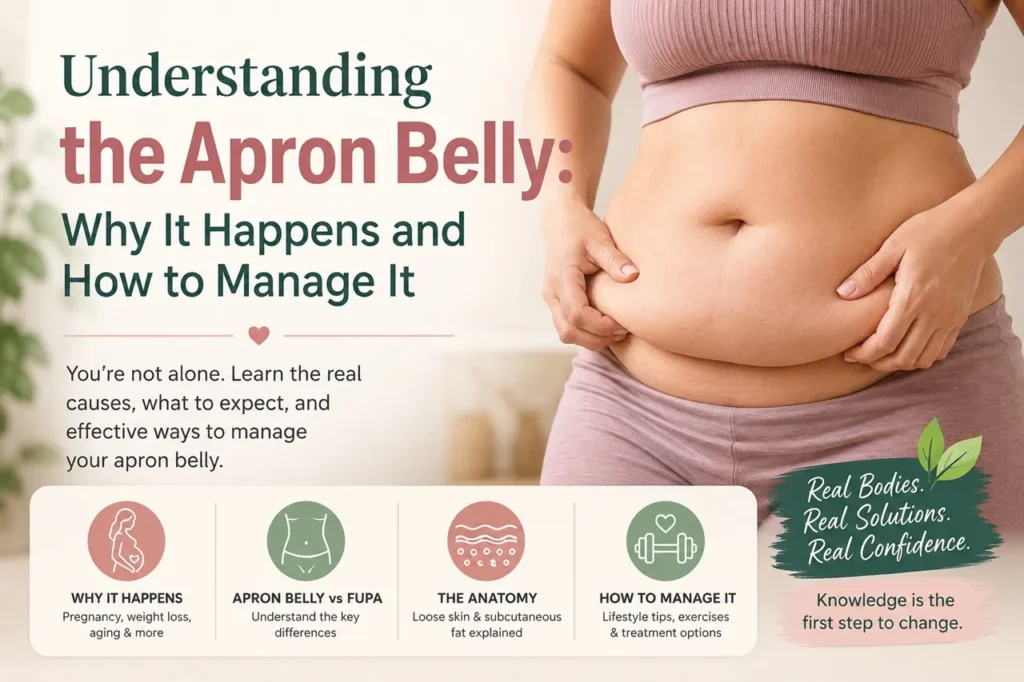
An apron belly, a fold of loose skin and soft tissue hanging over the lower abdomen, doesn’t change how much you’re loved. But it can change how safe you feel being seen.
Many people describe the same pattern. You’re present in the room, yet part of you is watching yourself from the outside, checking how you look, how you’re positioned, and what your partner might be thinking. That inner commentary is exhausting, and it pulls you away from the person in front of you.
The worry also has practical sides. Skin folds can feel sweaty or sore. A caesarean scar may be tender. Back pain or tiredness can make certain positions uncomfortable. And if the apron belly arrived after pregnancy, you may be dealing with broken sleep and a body that still feels unfamiliar. These are real, and they’re worth acknowledging alongside the emotional side.
What the Research Says About Body Image and Intimacy
You may find it reassuring to know that this is a well-studied experience. The Sexual Medicine Society of North America explains that body image shapes sexual confidence and satisfaction. It says people with a positive body image tend to have higher sexual confidence, while a negative body image can lead to heightened self-consciousness and anxiety during intimate moments. It also describes distracting negative thoughts as something that can interfere with connection with a partner.
A study reported by the International Society for Sexual Medicine surveyed 510 women in China and found that women who appreciated their bodies tended to have better sexual function and higher sexual self-esteem. They were also more likely to talk about sex with their partner. The authors cautioned that the link could run in both directions, so better intimacy might also improve body image. The study involved a specific group of women, so it can’t speak for everyone.
What does that mean in practice? Feeling anxious about your body isn’t a personality flaw. It’s a common response, and it responds to support. The same society notes that cognitive behavioural therapy has been shown to help with body image and sexual functioning, and that open communication with partners is crucial.
Apron Belly Confidence With Your Partner: Start With the Conversation
Apron belly confidence with partner support starts with honesty, because silence is where body shame grows. Many people assume their partner is judging them, when the partner is often too busy worrying about their own appearance, or simply wanting to be close.
You don’t need a big, dramatic talk. A few honest sentences can change the atmosphere.
Choose the right moment. Pick a calm, private time when you’re both relaxed. Don’t raise it in bed, mid-moment, or during an argument.
Say what you feel, not what’s wrong with you. For example: “I’ve been feeling self-conscious about my stomach lately, and it’s made me pull away. It isn’t about you. I’d love to feel more relaxed with you.”
Say what would help. Maybe you’d like dimmer lighting, a bit more time, or reassurance that your partner enjoys being close to you. People can’t help if they have to guess.
Listen to their side. Your partner may have worries of their own, or may simply need to hear that they didn’t cause the distance. Listening makes it a shared project rather than a private burden.
If words feel too hard face to face, a handwritten note or a message can open the door.
Body Image in Relationships: What Your Partner Is Probably Thinking
One of the most freeing realisations is that your partner usually isn’t seeing what you see. You’re focused on one fold of skin. They’re usually focused on you: your warmth, your laugh, the way you feel in their arms.
That doesn’t mean you can talk yourself out of your feelings. But it can help to notice the gap between your critical inner voice and what your partner actually says and does. If your partner has told you they find you attractive, try taking it at face value, even if it feels strange at first. Brushing off compliments can quietly reinforce the shame.
If your partner has made hurtful comments about your body, that’s a different matter. A relationship should be a place you feel safe in. If comments leave you feeling small or afraid, a counsellor or a trusted friend can help you work out what to do next.
Small Comfort Changes That Make a Big Difference
Confidence rarely arrives all at once. These small, practical steps can lower the pressure and help you feel at ease.
Set the scene. Soft lighting, a comfortable room temperature, and a warm, unhurried mood help many people relax. Choose what feels good to you, not what you think you “should” want.
Wear something you feel good in. Some people feel more comfortable in a soft slip, a loose shirt, or lingerie that supports and covers the lower belly. Our lingerie for an apron belly guide explores styles that feel good and stay put. Comfort matters far more than looking a particular way.
Find positions that feel supportive. Positions where your belly is supported by pillows, or where you feel in control of the pace, can ease both physical and emotional pressure. There’s no right answer. Experiment together, with humour where you can, and let go of anything that feels awkward or uncomfortable.
Look after your skin. Sweat and friction can irritate a skin fold. Keep the area clean and thoroughly dry, choose breathable fabrics, and shower afterwards if that helps you feel fresh. If you get redness, soreness, or a rash that won’t settle, speak to your GP or pharmacist. Our belly skin guide covers skin care for the fold in more detail.
Take it slowly. There’s no timetable. Cuddling, kissing, massage, and simply lying together all count as intimacy. Starting with closeness that feels easy can rebuild trust in your body, and in the moment, before anything else.
When Pain, Leaks or Other Symptoms Get in the Way
Sometimes the barrier isn’t confidence alone. If something hurts or feels wrong, it deserves attention rather than endurance.
Speak to your GP if intimacy is painful, if you notice a new lump or bulge that appears when you strain, if you leak urine, or if you have ongoing pain from a scar or your back. These are common, and treatable causes are often found. Don’t push through pain to avoid disappointing someone.
After childbirth, many people feel their bodies need time. Hormones, tiredness, healing tissue, and the demands of a new baby all play a part. Wait until you feel physically and emotionally ready, and ask your GP or midwife if you have concerns.
In midlife, hormonal changes can affect comfort and desire, and they can also shift where your body stores fat. Our menopause belly page explains what’s happening. Your GP can discuss options that may help if you notice changes that bother you.
Quiet Habits That Build Confidence Over Time
Confidence outside the bedroom feeds confidence inside it. These everyday habits help.
Talk to yourself kindly. Notice the harsh comments in your head, and swap them for something neutral. “My stomach looks different from how it used to” is closer to the truth than “I’m disgusting”.
Thank your body for what it does. Shifting attention from how your body looks to what it does, such as hugging, carrying, walking, or feeling pleasure, loosens the habit of monitoring.
Spend less time comparing. Edited images and heavily posed photos set an unrealistic standard. Follow accounts that show ordinary bodies, and unfollow those that leave you feeling worse.
Stay active in ways you enjoy. Movement can lift your mood and help you feel more at home in your body. It isn’t punishment.
Seek support when you need it. If body shame is affecting your relationship or your daily life, a GP can point you towards counselling or talking therapy. The Sexual Medicine Society of North America notes that cognitive behavioural therapy can help with body image and sexual functioning. A relationship counsellor can also help the two of you talk, particularly if the subject feels too tender to raise alone. If you ever feel unable to cope or have thoughts of harming yourself, contact NHS 111, your GP, or call Samaritans free on 116 123.
What About Surgery?
Some people consider surgery because the overhang affects their confidence. That’s a personal decision, and it’s a legitimate one. If you’d like to understand what the operations involve, our tummy tuck guide explains the options.
One piece of honest advice: surgery can change your skin, but it can’t promise to change how you feel about yourself or how close you feel to someone. If shame is the main problem, it deserves attention first, ideally with a GP or counsellor, so that any decision comes from wanting something, not from running away from a feeling.
Conclusion
Apron belly and intimacy often feel tangled together, but the tangle is mostly in the head. Your partner almost certainly cares far more about you than about your stomach. Feeling self-conscious is common, well-studied, and responsive to support.
Start with one honest conversation. Add small comforts, look after your skin, and take things at your own pace. See your GP if something hurts or changes. And be patient with yourself. Feeling at ease in your body is a skill that grows with kindness, not pressure.
Frequently Asked Questions
Is it normal to feel self-conscious about an apron belly during intimacy?
Yes, it’s very common. The Sexual Medicine Society of North America says negative body image can lead to heightened self-consciousness and anxiety during intimate moments. Feeling this way doesn’t mean something is wrong with you or your relationship.
How do I talk to my partner about my apron belly?
Choose a calm, private moment, not the middle of intimacy. Say how you feel and what would help, for example dimmer lighting or reassurance, and listen to your partner’s side. A short, honest conversation usually works better than a long, anxious one.
How can I feel more confident with my partner?
Start small. Wear something comfortable, set a relaxed scene, take things slowly, and speak to yourself kindly. Confidence usually builds through repeated, low-pressure experiences, not one big leap.
Can an apron belly cause discomfort during intimacy?
It can, mainly through skin irritation in the fold, a tender scar, or back strain. Keep the area clean and dry, find supportive positions, and speak to your GP if anything is painful, new, or worrying. Never push through pain.
Should I see a professional about body image in relationships?
If body shame is affecting your relationship, mood, or daily life, it’s worth speaking to your GP, a counsellor, or a relationship therapist. The Sexual Medicine Society of North America says cognitive behavioural therapy can help with body image and sexual functioning.