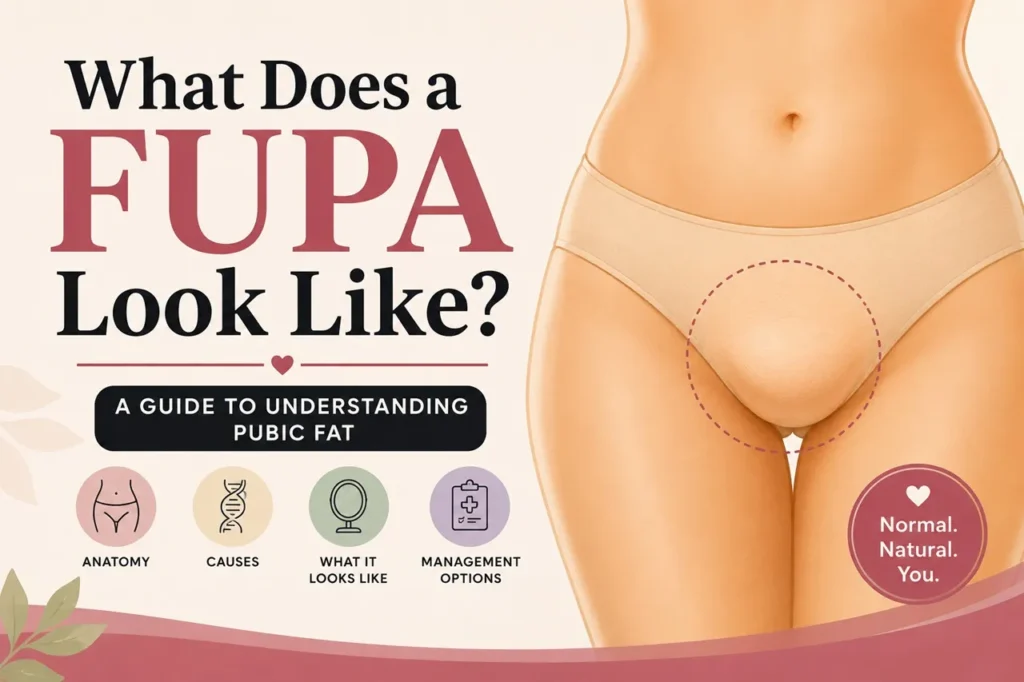
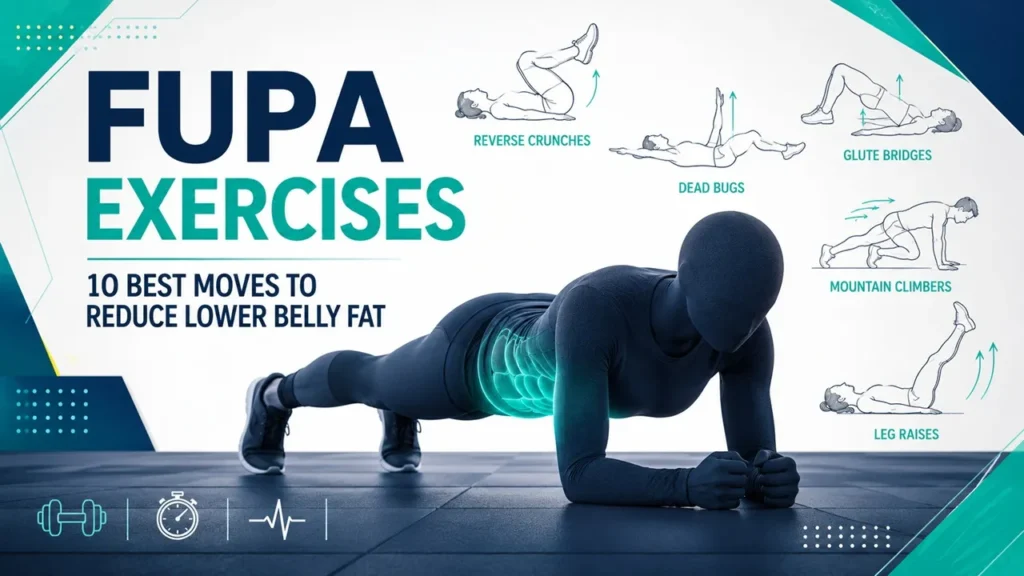
FUPA exercises are targeted lower-abdominal and pelvic-floor movements, including reverse crunches, dead bugs, leg raises, and glute bridges, designed to strengthen the deep core beneath the Fat Upper Pubic Area (FUPA). At apronbelly.co.uk, this guide breaks down the 10 most effective moves, backed by an anatomy-first approach that targets the transverse abdominis and pelvic floor rather than surface muscles alone.
Key takeaways
- Good FUPA exercises include reverse crunches, dead bugs, leg raises and glute bridges.
- Spot reduction is a myth. Fat loss needs an overall calorie deficit.
- Do the routine 3 to 4 times a week, with 2 to 3 sets of each move.
- Aim for 7 to 9 hours of sleep and 2 to 2.5 litres of water a day.
- Visible changes usually take 8 to 12 weeks of steady effort.
That stubborn pouch sitting just above your pubic area has a name: FUPA, or Fat Upper Pubic Area. It’s one of the most common lower belly concerns, often linked to pregnancy, hormonal changes, weight fluctuations, or simply ageing, and it’s largely made up of subcutaneous fat sitting above weakened lower abdominal and pelvic floor muscles.
Before you start, one myth needs clearing up: spot reduction, burning fat from one specific area through targeted exercise alone, isn’t how the body works. Fat loss is governed by genetics, hormones, and overall calorie balance. Targeted core exercises can strengthen and tone the transverse abdominis and pelvic floor, tightening the area as you lose fat through a broader calorie deficit.
This guide is structured around the Apron Belly 3-Pillar FUPA Method: Deep Core Activation, Calorie Deficit, and Recovery. Below are the 10 most effective FUPA exercises, along with the nutrition, hydration, and sleep habits that make each pillar work together.
Why Is FUPA So Stubborn? Understanding the Anatomy
FUPA is stubborn because it is hormonally sensitive fat sitting over weak deep core muscles. Before you start training, it helps to understand what you’re actually working with.
What Makes the Lower Abdomen Different from Other Fat Areas?
The fat that makes up a FUPA is largely subcutaneous fat, the soft, pinchable layer that sits directly beneath the skin, distinct from visceral fat, which surrounds the internal organs. Subcutaneous fat in the lower belly is hormonally sensitive, meaning it responds to fluctuations in oestrogen, cortisol, and insulin. That’s why FUPA often becomes more pronounced after pregnancy, during menopause, or during periods of chronic stress. Men can develop one too, and our guide on how FUPA develops in men covers the hormonal and lifestyle factors involved.
Beneath that fat layer sit your lower abdominal muscles, specifically the transverse abdominis, the rectus abdominis (lower fibres), and the pelvic floor muscles. These muscles provide the structural support that keeps your lower belly firm and lifted. When they’re weak or underengaged, the midsection can appear softer and more pronounced, even at a healthy weight.
The NHS and the American College of Sports Medicine (ACSM) both recommend combining core-strengthening resistance work with regular aerobic activity for reducing abdominal fat and improving core function, the same principle behind the apronbelly.co.uk 3-Pillar FUPA Method used in this guide.
Why Sit-Ups Won’t Solve It
Here’s a myth worth addressing head-on: traditional sit-ups are not the answer for FUPA exercises targeting lower belly fat.
Sit-ups primarily work the hip flexors and the upper portion of the rectus abdominis. They do very little for the deep core muscles, specifically the transverse abdominis and pelvic floor, that actually support and define the lower belly. Worse, performed incorrectly, sit-ups can create lower back strain and neck tension.
The exercises in this guide specifically target the lower abdominals, deep core engagement, and pelvic floor stability. That’s what makes them far more effective at reducing lower-belly fat than a hundred sit-ups ever could be.
The 10 Best FUPA Exercises to Reduce Lower Belly Fat
These 10 moves form the Deep Core Activation pillar of the apronbelly.co.uk 3-Pillar FUPA Method. Work through them 3 to 4 times per week. Aim for 2 to 3 sets of each movement, resting 30 to 60 seconds between sets.
| NO. | Exercise | Primary Muscle Target | Reps/Duration | Difficulty |
|---|---|---|---|---|
| 1 | Reverse Crunches | Lower rectus abdominis | 12 to 15 reps | Beginner |
| 2 | Dead Bugs | Transverse abdominis | 8 to 10 reps/side | Beginner |
| 3 | Mountain Climbers | Lower abs + cardio | 30 to 45 sec | Intermediate |
| 4 | Forearm Planks | Transverse abdominis, deep core | 20 to 45 sec | Beginner |
| 5 | Leg Raises | Lower abs, hip flexors | 10 to 12 reps | Intermediate |
| 6 | Glute Bridges | Glutes, pelvic floor | 15 reps | Beginner |
| 7 | Bicycle Crunches | Obliques, rectus abdominis | 12 to 15 reps/side | Intermediate |
| 8 | Flutter Kicks | Deep lower abs | 20 to 30 sec | Intermediate |
| 9 | Scissor Kicks | Lower abs, hip flexors | 20 to 30 sec | Intermediate |
| 10 | Plank Jacks | Core, metabolism | 30 sec | Advanced |
1. Reverse Crunches: The Ultimate Lower Ab Sculptor

Reverse Crunches are among the most direct FUPA exercises for targeting lower belly fat. Instead of lifting your upper body, you curl your hips upward, directly engaging the lower fibres of the rectus abdominis, where the FUPA sits.
How to do it:
- Lie flat on your back with your arms at your sides, palms facing down
- Bend your knees and lift your feet so your thighs are perpendicular to the floor
- Exhale and use your lower abs to curl your hips off the floor, drawing your knees toward your chest
- Pause at the top for one second, then slowly lower back down
- Complete 12 to 15 reps
Pro Tip: The power should come from your abs, not from swinging your legs. Think about pressing your navel into your spine at the top of the movement.
2. Dead Bugs: The Core Stability Foundation

The Dead Bug is one of the most underrated core strengthening exercises available. It trains your deep core muscles to stabilise your spine while your limbs move, which is exactly the kind of functional abdominal strength that tightens the lower belly and protects your lower back simultaneously.
How to do it:
- Lie on your back with arms extended straight up toward the ceiling
- Lift your legs so your knees are bent at 90 degrees (tabletop position)
- Slowly lower your right arm behind your head and extend your left leg forward simultaneously
- Keep your lower back pressed firmly into the floor throughout
- Return to the starting position, then repeat on the opposite side
- Complete 8 to 10 reps per side
Pro Tip: If your lower back lifts off the floor, you’ve gone too far. Shorten your range of motion until your core is strong enough to maintain contact.
3. Mountain Climbers: Cardio Meets Core Engagement

Mountain Climbers deliver two benefits in one: direct abdominal engagement and a cardiovascular boost that contributes to the calorie deficit needed to lose body fat. They’re a cornerstone of any HIIT-style full-body workout targeting lower belly fat.
How to do it:
- Start in a high plank position with your hands under your shoulders and body in a straight line
- Drive your right knee toward your chest, then quickly switch legs in a running motion
- Keep your hips level; don’t let them rise or drop
- Continue alternating for 30 to 45 seconds
Pro Tip: Slow them down if you’re a beginner. Control beats speed. Focus on pulling each knee fully toward your chest rather than rushing through the motion.
4. Forearm Planks: Full Core Strength Without Strain

The Forearm Plank is a static hold that builds abdominal strength throughout your entire core, including the deep stabilising muscles that regular crunches never target.
Consistent plank training improves abdominal definition, lower back stability, and overall posture, making it one of the most efficient flat-stomach exercises available.
How to do it:
- Rest on your forearms with your elbows directly under your shoulders
- Extend your legs behind you, resting on your toes
- Keep your body in one straight line from head to heels
- Engage your core, squeeze your glutes, and hold for 20 to 45 seconds
Pro Tip: Breathe steadily. Many people hold their breath during planks, which actually reduces core engagement. Inhale through your nose, exhale through your mouth.
5. Leg Raises: Direct Lower Ab Muscle Activation

Leg Raises are one of the most direct lower abdominal workout exercises you can perform. When done correctly, they create strong tension in the area just above the pubic bone, precisely where FUPA fat tends to accumulate.
How to do it:
- Lie flat on your back with your legs straight and arms at your sides
- Press your lower back firmly into the floor
- Slowly raise both legs to a 90-degree angle
- Lower them back down with control, stopping just before your heels touch the ground
- Complete 10 to 12 reps
Pro Tip: Pressing your lower back into the floor is non-negotiable. If it arches, you’re shifting the work to your hip flexors rather than your abs, increasing your risk of lower back strain.
6. Glute Bridges: Pelvic Floor Power

Glute Bridges are often thought of purely as a glute exercise, but they’re also one of the most effective ways to activate the pelvic floor. A strong pelvic floor provides the structural foundation for a firmer, flatter lower abdomen and is especially important for anyone who has experienced pregnancy or pelvic floor dysfunction.
How to do it:
- Lie on your back with knees bent, feet flat on the floor hip-width apart
- Press through your heels and lift your hips toward the ceiling
- Squeeze your glutes and engage your pelvic floor at the top
- Hold for two seconds, then lower back down with control
- Complete 15 reps
Pro Tip: To increase pelvic floor activation, gently imagine “lifting” the muscles in your pelvis as you reach the top of the bridge. This subtle internal cue makes a clear difference.
7. Bicycle Crunches: Oblique and Midsection Activation

Bicycle Crunches work your obliques, the muscles along the sides of your abdomen, as well as your lower abs, making them highly effective for improving overall abdominal definition. A stronger, more defined midsection directly improves the appearance of the lower belly and contributes to better posture.
How to do it:
- Lie on your back with hands lightly behind your head and legs lifted to tabletop position
- Bring your right elbow toward your left knee while extending your right leg
- Rotate through your torso, not just your elbow
- Switch sides in a smooth, controlled pedalling motion
- Complete 12 to 15 reps per side
Pro Tip: Slow down. Bicycle crunches performed too fast become a neck exercise. Control the rotation, and you’ll feel a much deeper abdominal contraction.
8. Flutter Kicks: Deep Lower Ab Endurance

Flutter Kicks keep your lower abs under continuous tension throughout each set, building muscular endurance in the deeper core layers. This sustained engagement is particularly effective at targeting subcutaneous fat in the lower belly.
How to do it:
- Lie on your back with legs extended and hands tucked under your glutes for support
- Lift both legs a few inches off the ground.
- Alternate kicking your legs up and down in small, controlled movements
- Keep your lower back pressed into the floor and core engaged throughout
- Continue for 20 to 30 seconds
Pro Tip: The smaller and more controlled the kicks, the harder your lower abs have to work. Big, sloppy kicks shift the effort to your hip flexors.
9. Scissor Kicks: Lower Abdominal Tone and Definition

Scissor Kicks are similar to flutter kicks but use a wider, crossing motion that targets slightly different fibres of the lower abs. Adding both variations to your lower abdominal workout ensures more complete core development.
How to do it:
- Lie on your back, hands under your glutes, legs extended and lifted off the floor
- Cross your right leg over your left, then switch so your left crosses over your right
- Keep the movement controlled and deliberate
- Maintain a flat lower back throughout
- Continue for 20 to 30 seconds
Pro Tip: Breathe out with each cross to reinforce core engagement and prevent breath-holding.
10. Plank Jacks: Metabolism and Core Intensity

Plank Jacks combine the core stability of a plank variation with the calorie-burning intensity of a jumping jack. They raise your heart rate, boost metabolism, and keep your core engaged throughout, making them a highly efficient finisher for any FUPA-focused workout and a natural component of cardio interval training.
How to do it:
- Start in a high plank position with hands under shoulders and body straight
- Jump both feet out wide simultaneously, then jump them back together
- Keep your hips level and core tight throughout
- Continue for 30 seconds
Pro Tip: If jumping feels uncomfortable on your joints, step your feet out and back one at a time. You’ll still get the core engagement with much less impact.
Beyond Exercises: The Lifestyle Pillars That Make It All Work
No exercise routine will outperform a poor lifestyle. The Calorie Deficit and Recovery pillars of the apronbelly.co.uk 3-Pillar FUPA Method cover exactly that: the nutrition, hydration, and sleep habits that determine how quickly and effectively your efforts pay off.
Dietary Adjustments: Fuel the Process
You cannot out-exercise a calorie surplus. Reducing FUPA requires a modest calorie deficit, but the quality of what you eat matters just as much as the quantity.
Prioritise protein. High-protein whole foods like chicken, eggs, fish, legumes, and Greek yoghurt help preserve muscle as your body loses fat and keep you fuller for longer. Pair protein with high-fibre foods (vegetables, fruits, whole grains, and legumes) to support digestive health, regulate blood sugar, and maintain satiety.

Reducing refined carbohydrates and added sugars also helps reduce water retention and bloating in the lower abdomen, making your healthy diet even more effective.
For related guidance on eating for a leaner midsection, see our diet and nutrition guide.
Hydration: The Underrated Metabolism Booster
Water plays a direct role in fat metabolism. When you’re dehydrated, your body’s ability to break down and use fat for energy slows. Aim for 2 to 2.5 litres of water per day, more if you’re exercising regularly.
Staying well-hydrated also reduces water retention, which can make the lower belly appear softer and more bloated than it actually is. Proper hydration supports overall metabolism and is one of the simplest performance habits to maintain.

Stress and Sleep: The Hormonal Connection
Chronic stress elevates cortisol, a hormone that, over time, promotes fat storage in the abdominal region, including the lower belly. Poor sleep quality compounds this effect, impairing the hormones that regulate hunger and metabolism.
Aim for 7 to 9 hours of quality sleep per night. Managing stress through walking, meditation, or simply spending time away from screens can meaningfully reduce cortisol levels over time. These aren’t optional extras; they’re essential parts of the process.

Sample Weekly Routine: How to Get Started
You don’t need to exercise every day to see results. The apronbelly.co.uk-recommended schedule below follows a structured 3 to 4 days-per-week routine, which is more sustainable and just as effective for building consistent lower abdominal strength.
Beginners: Start with 2 sets instead of 3, and rest for 60 seconds between exercises rather than 30. Focus on form over speed. Controlled, accurate movement builds results faster than rushing through poor reps.

Keep Going: The Only Shortcut That Works
There is no quick fix for FUPA, but there is a reliable path. Targeted core strengthening exercises, consistent strength training, a protein-rich healthy diet, proper hydration, and adequate sleep work together to reduce lower belly fat and build abdominal definition over time.
Progress won’t happen in a week. But if you follow this routine consistently for 8 to 12 weeks while maintaining a modest calorie deficit, you will see measurable changes in strength, tone, and the way your clothes fit.
Save this guide, bookmark the weekly schedule, and take progress photos every two weeks to track your results. Small wins keep motivation alive. Celebrate them.
For more home workout guides and healthy eating tips, browse the full resource library at apronbelly.co.uk.
Frequently Asked Questions
Most people notice improved core strength within 3 to 4 weeks. Visible fat reduction usually takes 8 to 12 weeks, depending on diet and consistency.
Not effectively. Fat loss requires a calorie deficit, and diet plays a bigger role than exercise alone. Pair these exercises with higher protein, more fibre, and less refined sugar.
Usually, it’s subcutaneous fat from weight gain, pregnancy, or hormonal changes. It can be confused with an apron belly (panniculus), which involves loose skin rather than fat. See your GP if you notice pain or discomfort.
Most are safe, but wait 6 to 8 weeks postpartum (longer after C-section). If you have diastasis recti, consult a pelvic floor physiotherapist first.
No, 3 to 4 sessions per week are ideal. Rest days with light walking or stretching support recovery.
FUPA is subcutaneous fat under the skin. Visceral fat sits deeper around organs and carries higher health risks. Both respond to a calorie deficit.
Yes, indirectly. Squats boost overall calorie burn and metabolism, supporting body-wide fat loss, including the FUPA area.