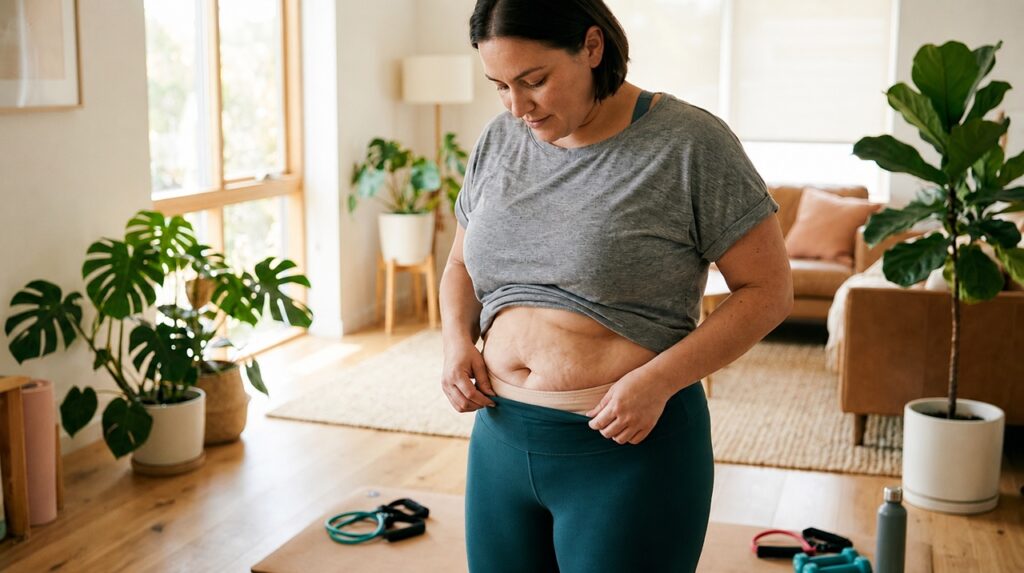

Millions of people have changed their bodies with GLP-1 receptor agonists like Ozempic, Wegovy, and Mounjaro. The results are often dramatic. But rapid change brings a side effect that gets less attention: loose, sagging skin around the midsection.
This condition has earned a nickname, Ozempic Apron Belly, or more clinically, an apron belly. It happens because the side effects of rapid weight loss don’t stop at the scale. They show up on your skin too. When fat disappears quickly, skin elasticity often can’t keep pace.
You are not stuck with this outcome forever. Your skin is a living organ, and it can adapt. With the right nutrition, movement, and patience, many people see real improvement in firmness. This guide explains why subcutaneous fat loss causes this problem and offers a natural, sustainable path to tighter, healthier-looking skin through smart body-contouring habits.
What is an Ozempic Belly?
The Science Behind Rapid Fat Loss
Semaglutide and similar medications work by mimicking a natural gut hormone. This hormone slows digestion, curbs appetite, and helps regulate blood sugar. As a result, people eat less and lose weight quickly, sometimes 15% to 20% of their body weight within months.
That speed is the issue. Traditional weight loss, achieved gradually over years, gives skin time to shrink alongside fat loss. Rapid weight loss doesn’t offer that grace period. Your skin cannot retract fast enough.
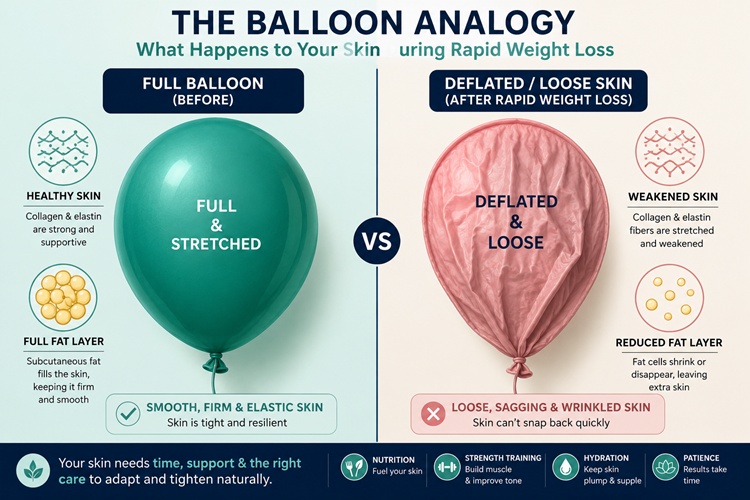
The Deflated Balloon Analogy
Picture a balloon that’s been stretched for months. Once you let the air out quickly, it doesn’t snap back to its original shape. Instead, it hangs loose and wrinkled. Menopause Belly Apron behaves the same way.
Two layers matter here: the dermis, which contains collagen and elastin fibers, and the underlying subcutaneous tissue, where fat is stored. When fat cells shrink dramatically, the dermis is left stretched out. If collagen depletion has already occurred, often due to aging, sun exposure, or genetics, the skin has even less capacity to bounce back.
This mismatch between the speed of fat loss and skin adaptation is the root cause of skin laxity. It’s not a personal failure. It’s biology.
Why Natural Tightening Matters
Surgery isn’t your only option, and for many people, it shouldn’t be the first one. A panniculectomy alternative or a tummy tuck may sound like a quick fix, but these procedures carry real risks, recovery time, and cost. Apron Surgery also doesn’t address the underlying skin health factors that caused the laxity in the first place.
Natural methods work differently. They support your body’s own repair systems rather than cutting away tissue. This approach takes longer, but it also builds lasting habits that improve overall body composition, not just appearance.
Patience matters here. Skin remodeling is a biological process that unfolds over months, not days. Setting realistic expectations from the start will save you frustration later. Most experts recommend giving your body at least 6 to 12 months before considering non-invasive skin-tightening options, let alone surgery.
Natural Methods to Tighten Loose Skin
Nutrition for Skin Health
What you eat directly shapes what your skin can do. Collagen synthesis requires specific building blocks, and without them, your skin cannot rebuild its structural framework.
Prioritize these nutrients:
- Protein intake: Aim for lean sources like chicken, fish, eggs, and legumes. Protein supplies amino acids that form new collagen fibers.
- Vitamin C: Found in citrus fruits, bell peppers, and strawberries, this vitamin is essential for collagen production. Without it, your body cannot properly synthesize new collagen strands.
- Zinc: Present in nuts, seeds, and shellfish, zinc supports tissue repair and wound healing.
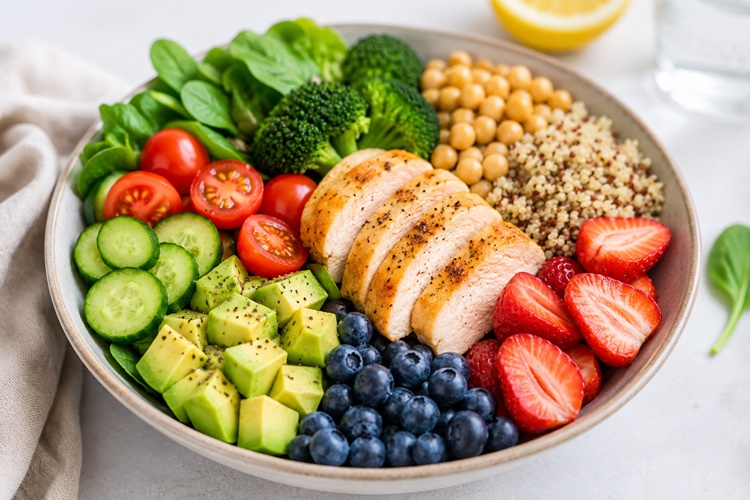
Also consider bone broth or collagen peptide supplements. While research is still developing, some studies suggest they may support skin elasticity when combined with adequate protein intake overall.
Hydration and Skin Suppleness
Dehydrated skin looks thinner, duller, and less elastic. Water fills your skin cells, giving them plumpness and structure. Aim for at least half your body weight in ounces of water daily. But don’t stop at plain water alone.
Hyaluronic acid, both in supplement form and as a topical ingredient, boosts skin hydration significantly. This molecule can hold up to 1,000 times its weight in water, making it a powerful ally for suppleness. Many dermatologists recommend it specifically for post-weight-loss skin care.
Targeted Resistance Training
This is one of the most powerful natural tools available. Strength training builds muscle mass underneath the skin, and this new muscle can partially fill the space left behind by lost fat.
Think of it this way: if fat loss deflates the balloon, hypertrophy (the technical term for muscle growth) helps re-inflate it, just with lean tissue instead of fat.
Focus on:
- Core-specific exercises: planks, dead bugs, and cable crunches
- Full-body compound lifts: squats, deadlifts, and rows
- Progressive overload: gradually increasing weight or resistance over time
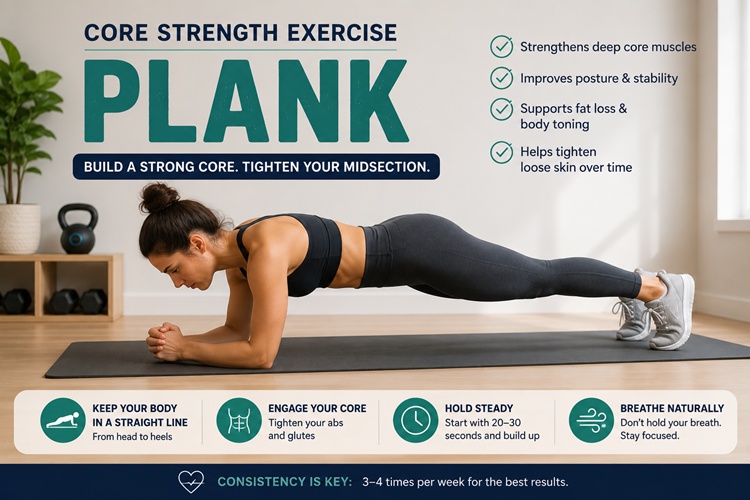
Consistency matters more than intensity here. Three to four sessions weekly, sustained over months, will outperform sporadic intense workouts every time.
Skincare and Topical Treatments
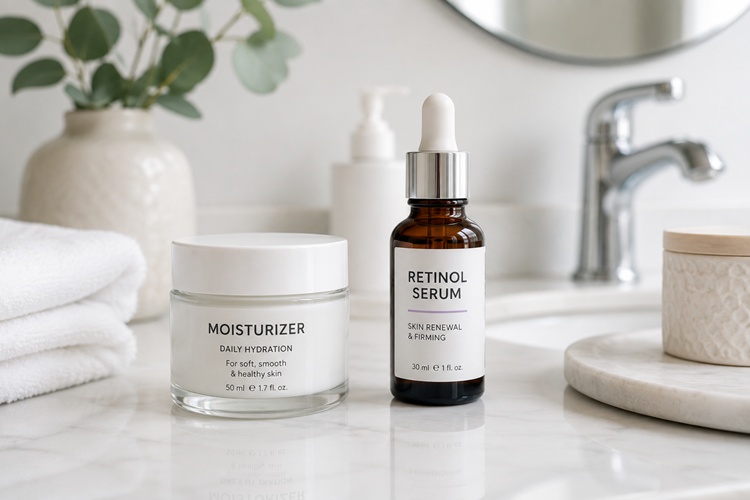
Topical products can’t replace internal repair processes, but they do support the skin’s outer barrier. Retinol, a vitamin A derivative, stimulates collagen production and speeds up cell turnover. Start with a low concentration two to three times weekly to avoid irritation.
Firming creams containing peptides, caffeine, or niacinamide can also temporarily improve skin texture. Daily moisturizing helps keep the skin barrier intact, which supports hydration from the outside in.
Don’t expect miracles from creams alone, though. They work best alongside nutrition and exercise, not as a replacement for either.
Lifestyle Habits to Support Recovery
Sleep and Recovery
Your body does most of its repair work while you sleep. During deep sleep stages, your pituitary gland releases Human Growth Hormone, which plays a direct role in tissue regeneration and collagen production. Poor sleep quality disrupts this cycle significantly.
Aim for seven to nine hours nightly. Prioritize a consistent sleep schedule, a dark room, and limited screen time before bed to maximize this hormone’s release.
Stress Management
Chronic stress raises cortisol levels, and elevated cortisol actively breaks down collagen over time. This creates a frustrating cycle: stress about loose skin can actually worsen the very problem you’re trying to fix.
Simple practices help here. Daily walks, meditation, or even ten minutes of deep breathing can lower cortisol. Keeping up social connections and hobbies supports overall hormonal balance, which benefits skin repair indirectly.
Avoiding Yo-Yo Dieting
Weight fluctuations repeatedly stretch and shrink your skin, making it harder for elastin fibers to recover. Sustainable weight loss, meaning a stable, maintained weight, gives your skin the best chance to retract naturally over time.
If you’re on a GLP-1 receptor agonist, work with your doctor to plan a gradual, monitored approach rather than rapid cycling on and off medication. This strategy reduces inflammation and gives your body’s repair systems a stable target to work toward.
When to Consult a Professional
Sometimes natural methods reach their limit. There’s an important difference between “loose skin,” which retains some elasticity and may improve with time, and “excess skin,” which hangs with little to no elasticity remaining.
If you’ve maintained a stable weight for over a year and your skin still sags significantly, it’s time to consult a dermatologist or cosmetic surgeon. They can evaluate your specific situation and discuss options like radiofrequency skin tightening, laser therapy, or ultrasound treatments, all forms of post-weight-loss care that sit between doing nothing and full surgery.
These procedures use heat or energy to stimulate collagen production beneath the skin’s surface. They’re less invasive than surgery, though results vary from person to person. A qualified professional can help you set realistic expectations based on your skin condition and weight-loss history.

Conclusion
Loose skin after significant weight loss is common, and it’s not a sign that you’ve done anything wrong. Your body needs time to adjust to its new shape. Through consistent nutrition, strength training, hydration, and stress management, many people see real improvement in skin retraction over months.
This is a health journey, not a race. Stay patient, stay consistent, and set realistic expectations for what natural methods can achieve. If you’ve given your body ample time and still feel unhappy with the results, a professional consultation can help you explore further options safely.
Frequently Asked Questions (FAQs)
Most people notice gradual improvement over six to twelve months, provided their weight stabilizes and they support the process with proper nutrition and exercise. Full results, if they occur, can take up to two years depending on age, genetics, and how much weight was lost.
Weight lifting won’t eliminate excess skin entirely, but it helps significantly. Building muscle through strength training fills space beneath the skin, creating a firmer, more toned appearance. Combined with proper nutrition, it’s one of the most effective natural tools available.
Not necessarily. Skin has some capacity to remodel itself, especially in younger patients with good baseline collagen levels. Older patients or those with significant sun damage may see less natural improvement and might eventually consider medical intervention.
Compression garments after weight loss can offer temporary support and may reduce the sagging appearance during the day. They don’t create permanent tightening, but many people find them helpful for comfort and confidence while their skin continues to adapt naturally.
Disclaimer: This article is for informational purposes only and does not substitute for professional medical advice. Always consult a doctor or dermatologist before starting any new treatment, supplement, or exercise routine, especially while using GLP-1 receptor agonists.