
Quick Answer
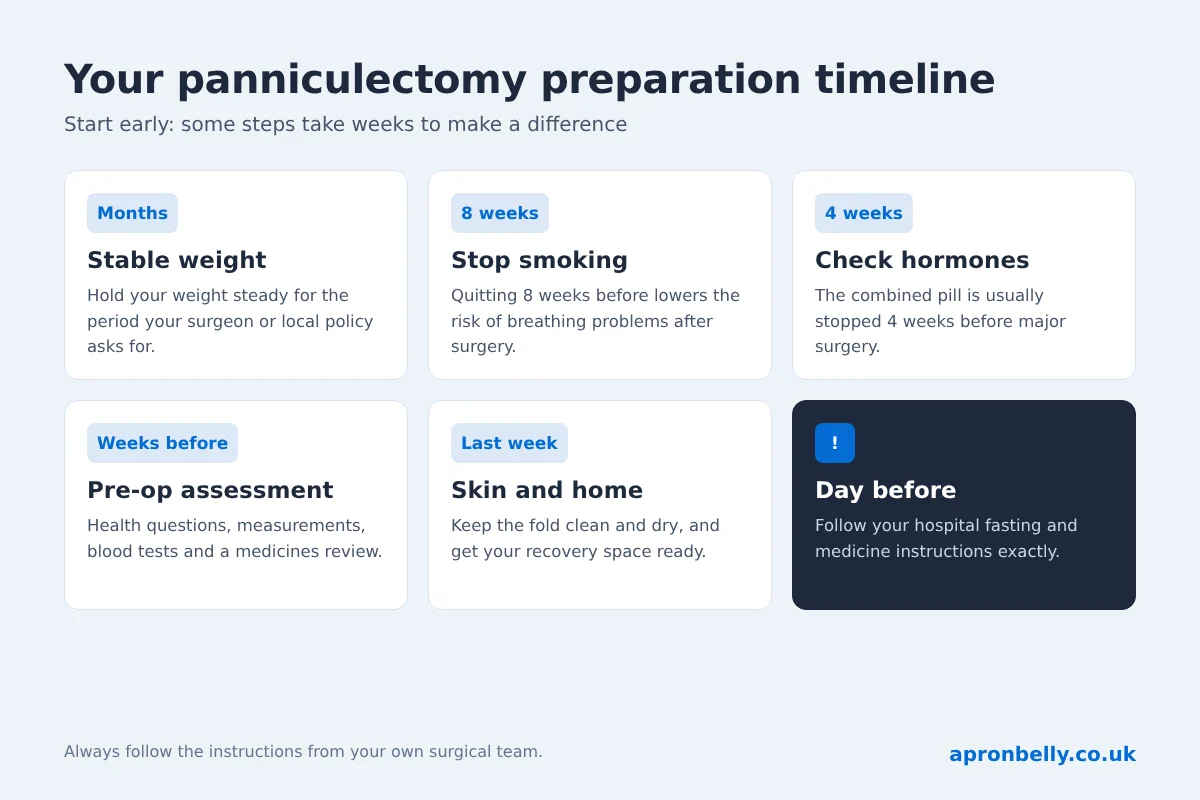
Preparing for a panniculectomy means getting your body as ready as possible for surgery and healing. The main steps are reaching a stable weight, stopping smoking and nicotine well before the operation, getting long term conditions under control, settling any skin problems in the fold, and attending your pre-op assessment with a full list of your medicines.
- Stop smoking at least 8 weeks before surgery if you can
- Hold your weight steady for the period your surgeon asks for
- Tell the pre-op team about every medicine, including weight loss injections
A panniculectomy removes the hanging fold of skin and fat from the lower tummy. It is a large operation with a long wound, so how well you heal depends a lot on your health going in. Preparing for a panniculectomy well can lower your risk of wound problems, infection and blood clots, and it may also decide whether your operation goes ahead on the planned date.
This guide focuses on the health side: weight, smoking, medicines and the checks you can expect. For the practical side, such as setting up your home and packing a hospital bag, read our practical checklist for apron belly surgery. Both sit within our apron belly surgery hub.
Why Preparing for Panniculectomy Matters
Healing a large wound
The scar from a panniculectomy usually runs across the lower tummy, often from hip to hip. Wounds in this area are under pressure when you sit and bend, and they sit close to skin folds that can stay warm and damp. Anything that slows healing, such as smoking, high blood sugar or a very high body weight, makes problems with the lower edge of the wound more likely.
Getting through the NHS criteria
If you are being considered for NHS surgery, your local policy will usually set conditions such as a BMI limit and a period of stable weight. Being ready on paper and in practice helps your referral move forward. Our guide to panniculectomy NHS criteria explains what these policies often ask for, and our guide on asking your GP for a referral covers the first step.
Avoiding a late cancellation
Planned operations can be postponed if a health problem is found close to the date, for example very high blood pressure, poorly controlled diabetes or an active skin infection. Starting early gives you time to sort these out without losing your slot.
Weight Before Surgery
Why surgeons look for a stable weight
Surgeons prefer your weight to be steady before a panniculectomy. If you lose a lot of weight after the operation, new loose skin can form. If you gain weight, the result can stretch and the scar can widen. A stable weight also makes it easier for the surgeon to plan how much tissue to remove.
BMI limits
Many NHS commissioning policies only fund a panniculectomy below a set BMI and after a period of stable weight, and private surgeons also look closely at BMI because healing tends to be harder at a very high weight. The exact figures vary between areas, so ask your GP or surgeon which ones apply to you rather than relying on general advice.
If you are still losing weight
If you are partway through losing weight, through diet, medicines or weight loss surgery, talk to your surgeon about timing. It is usually better to finish losing weight and hold steady first. Our guide to NHS weight management services explains the support you can ask for.
Smoking, Vaping and Nicotine
How smoking affects healing
Carbon monoxide in tobacco smoke lowers the amount of oxygen your blood can carry, and nicotine narrows blood vessels. Together they reduce the oxygen reaching the edges of a wound, which slows healing and raises the risk of infection and wound breakdown. Smoking also increases chest problems after a general anaesthetic.
When to stop
NHS hospital leaflets say that stopping at least 8 weeks before surgery lowers the risk of breathing problems after an operation from around 1 in 3 to 1 in 10. Stopping for 3 to 4 weeks already helps wound healing. Any time without smoking helps, so if your date is sooner, stop now rather than waiting.
Nicotine tests and vapes
Some plastic surgery units ask you to be completely nicotine free, including cigarettes, vapes, patches and gum, for 4 weeks before and at least 2 weeks after surgery. They may test your urine for nicotine shortly before the operation and postpone it if the test is positive. Ask your surgical team what their rule is.
Free help is available. The NHS Better Health quit smoking service can point you to local stop smoking support, which combined with medicines gives you the best chance of quitting.
Your Pre-op Assessment
What it is
Before a planned operation you will be asked to a pre-operative assessment. The NHS describes this as an appointment with a nurse, either in person or by video or phone. Its aim is to check you are fit for the anaesthetic and the surgery, and to spot anything that needs sorting out first.
Tests you may have
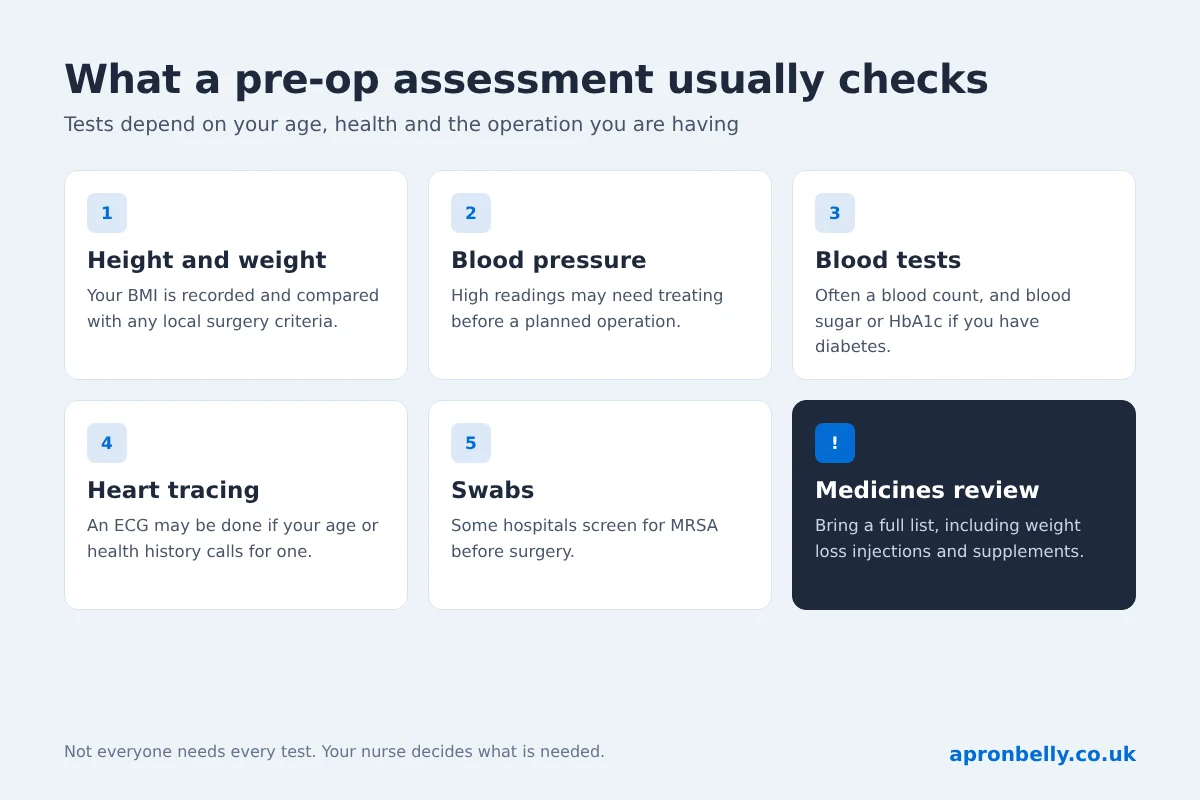
NICE guidance says the tests you are offered depend on your age, your health and the type of operation. Common checks include:
- Height and weight, so your BMI can be recorded
- Blood pressure and pulse
- Blood tests, such as a full blood count, and blood sugar or HbA1c if you have diabetes
- An ECG (heart tracing) if your age or history suggests you need one
- Swabs to screen for MRSA in some hospitals
- Questions about snoring and sleep apnoea, which can affect anaesthesia
Bring a full medicines list
Take a written list of everything you use: prescribed medicines, inhalers, injections, medicines bought from a pharmacy, vitamins and herbal remedies. Include doses and when you take them. Weight loss injections bought online count too.
Medicines to Discuss
Weight loss injections
Medicines such as semaglutide (Wegovy, Ozempic) and tirzepatide (Mounjaro) slow down how quickly the stomach empties. The MHRA has warned that this may raise the risk of stomach contents entering the lungs during a general anaesthetic. Current UK guidance generally advises continuing these medicines but making sure the anaesthetist knows. Do not stop them yourself: tell your pre-op team and follow their plan. Our guide to Wegovy and apron belly covers what these medicines do to the fold itself.
The contraceptive pill and HRT
Oestrogen raises the risk of blood clots, and so does major surgery. For this reason the combined pill is usually stopped 4 weeks before major surgery, and you will need another form of contraception. NHS hospital guidance says the progestogen only pill can normally be continued. Ask your team about oral HRT, as advice varies.
Blood thinners and supplements
If you take anticoagulants or antiplatelet medicines, you will be given a personal plan for when to pause and restart them. Never stop them without that plan. Some hospitals also ask you to stop certain herbal remedies, such as ginkgo, garlic supplements and St John’s wort, up to 2 weeks before surgery.
Diabetes medicines
If you have diabetes, good blood sugar control before surgery helps healing and lowers infection risk. Your HbA1c is likely to be checked, and you will get instructions on adjusting insulin or tablets around the fasting period.
Skin, Fitness and Nutrition
Settle any rash or infection
Surgeons usually want the skin under the fold healthy before they operate, as broken or infected skin raises the risk of wound infection. Keep the crease clean and fully dry each day, and get any soreness treated early. Our guides to an apron belly rash and pannus cellulitis explain what to look out for.
Build some fitness
Being as active as you can before surgery helps your heart and lungs cope and makes it easier to get moving afterwards. The NHS recommends adults aim for at least 150 minutes of moderate activity a week, such as brisk walking. Even short daily walks count if that is where you are starting from.
Eat for healing
Your body needs protein, energy and vitamins to repair tissue. Aim for regular balanced meals with protein at each one, plenty of vegetables and fruit, and enough fluids. Avoid crash diets just before surgery, as they can leave you short of what your body needs to heal.
The Week Before and the Day Before
Final checks
- Confirm your admission time and where to go
- Arrange for an adult to take you home and stay with you at first
- Check you have the compression garment or binder your surgeon recommends
- Tell the hospital straight away if you get a cough, cold, rash or infection
Fasting before the anaesthetic
Fasting lowers the risk of stomach contents being breathed in during anaesthesia. Many UK hospitals ask you to stop eating 6 hours before surgery and allow clear fluids, such as water, until a set time closer to the operation. Your hospital will give you exact times. Follow them precisely, as rules differ between hospitals and can be stricter if you take weight loss injections.
Preparation Checklist at a Glance
| When | What to do | Who can help |
|---|---|---|
| As soon as surgery is discussed | Work towards and hold a stable weight | GP, weight management service |
| At least 8 weeks before | Stop smoking and, if asked, all nicotine | NHS stop smoking service |
| Around 4 weeks before | Stop the combined pill if advised, use other contraception | GP, pre-op team |
| Weeks before | Attend pre-op assessment with a full medicines list | Pre-op nurse, anaesthetist |
| Ongoing | Keep the skin fold clean, dry and free from rash | Pharmacist, GP |
| Day before | Follow fasting and medicine instructions exactly | Surgical team |
Once you are through surgery, our week by week panniculectomy recovery guide takes you through healing, and our list of questions to ask at your consultation helps you check the details with your surgeon.
Frequently Asked Questions
How long before a panniculectomy should I stop smoking?
Stop as early as you can. NHS hospital leaflets say stopping at least 8 weeks before surgery lowers the risk of breathing problems afterwards from around 1 in 3 to 1 in 10. Some plastic surgery units also ask you to be completely nicotine free, including vapes and nicotine replacement, for 4 weeks before and 2 weeks after, and may test for it.
Do I need to lose weight before a panniculectomy?
Many NHS policies set a BMI limit and ask for your weight to be stable for a set period before surgery. Private surgeons also prefer a stable weight. Your surgeon or GP can tell you the target that applies to you.
Can I keep taking Wegovy or Mounjaro before surgery?
Do not stop or change them on your own. The MHRA warns that these medicines slow stomach emptying, which matters during anaesthesia. Tell your pre-op assessment team you take them, and follow the plan they give you.
Should I stop the contraceptive pill before a panniculectomy?
The combined pill is usually stopped 4 weeks before major surgery because it raises the risk of blood clots. The progestogen only pill is normally continued. Use another method of contraception and ask your team before making any change.
What happens at a pre-op assessment?
A nurse asks about your health and medicines, checks your height, weight and blood pressure, and arranges any tests you need, such as blood tests, an ECG or swabs. It may be in person, by phone or by video.
The Bottom Line
Preparing for a panniculectomy starts weeks or months before the operation. A stable weight, stopping smoking and nicotine, controlling conditions such as diabetes, healthy skin in the fold and an honest pre-op assessment all help you heal well and keep your date. Follow your own surgical team’s instructions, as they know your health and their hospital rules. For more on your options, visit our apron belly surgery hub.
Your next step
Write down every medicine and supplement you take this week, and if you smoke, contact your local stop smoking service today so you have the most time possible before surgery.
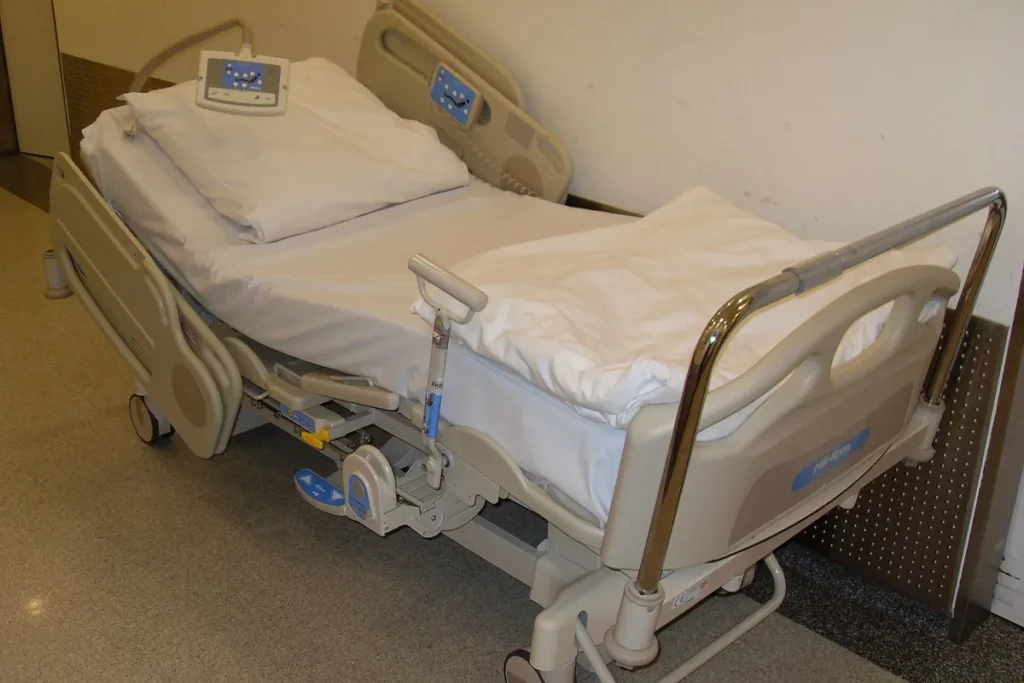
Featured image: hospital bed by Blogotron, Wikimedia Commons, CC0, cropped. This article is for general information and is not medical advice. Speak to your GP or surgical team about your own health.