
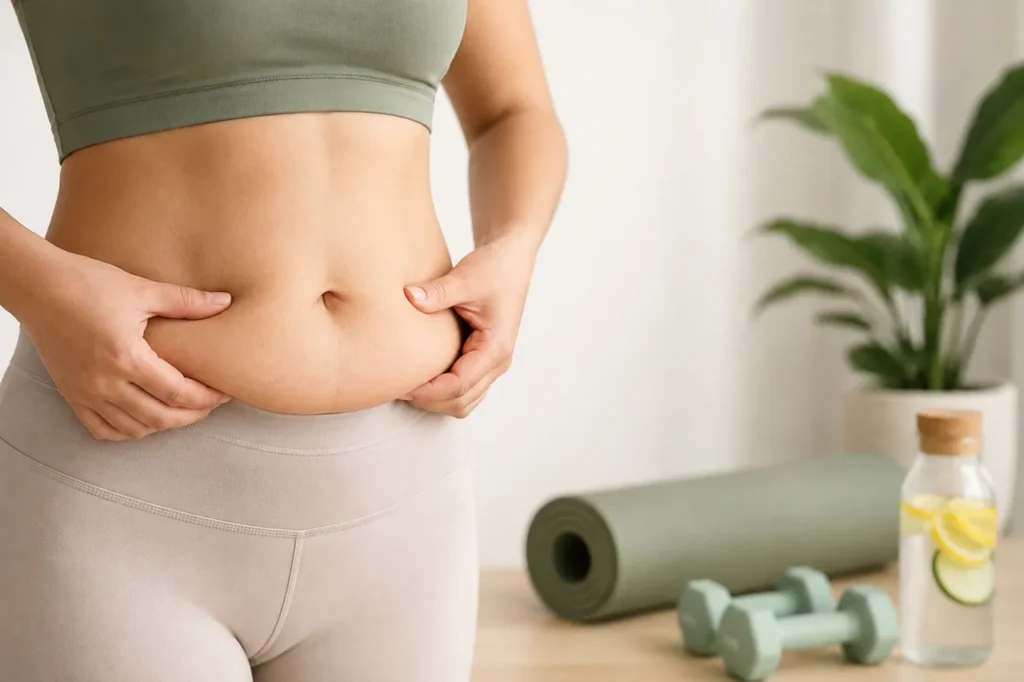
You can improve mild apron belly skin without surgery. Combine strength training, gradual weight loss and a protein-rich diet. Clinic treatments such as radiofrequency, microneedling and HIFU may also boost collagen. Results build slowly over several months. Severely stretched skin may not fully retract without a panniculectomy or tummy tuck.
Key takeaways
- Spot reduction does not work, so aim for two to three strength sessions a week.
- Vitamin C is essential for collagen, and zinc supports wound healing.
- Radiofrequency, microneedling and HIFU stimulate new collagen but usually need several sessions.
- Most people notice gradual improvement after three to six months of consistent effort.
- If six months of combined methods brings no real change, ask your GP about surgery.
If you’ve been searching for how to tighten apron belly skin without surgery, you’re not alone. An apron belly, medically referred to as a pannus, is the pocket of skin and tissue that hangs over the lower abdomen. It often develops after pregnancy, major weight loss, or simply as skin loses elasticity over time.
It helps to separate the three factors that create this look: deep visceral fat, subcutaneous fat just beneath the surface, and loose, sagging skin left behind once the underlying tissue has changed. Each one responds differently to treatment, which is why a single quick fix rarely works.
Surgical options such as a tummy tuck do exist for severe cases. However, many people would rather try non-invasive, at-home approaches first, whether for cost reasons, recovery time, or simply a preference to work with their body gradually.
The encouraging news is that skin laxity can genuinely improve with the right combination of habits and treatments, provided you’re consistent and patient with the process. This guide walks through ten evidence-based methods, ranging from strength training and nutrition to professional treatments like radiofrequency and microneedling, so you can build an approach that fits your lifestyle and budget.
Understanding the Causes of an Apron Belly
Before tackling solutions, it’s worth understanding why the lower abdomen hangs in the first place. As we age, collagen breakdown accelerates, and the structural proteins that keep skin firm and elastic gradually decline.
Rapid weight fluctuation is another major contributor. When the body gains weight quickly, skin stretches to accommodate it. If weight is then lost quickly, especially without strength training, the skin doesn’t always have time to retract.
Pregnancy places similar demands on abdominal skin. As a result, skin elasticity is often reduced afterwards, particularly across multiple pregnancies or with larger babies. Genetics, sun exposure, and smoking history also play a part in how well skin bounces back.
Understanding which of these factors applies to you can help set realistic expectations. Someone dealing primarily with excess subcutaneous fat, for instance, may see faster visible change than someone whose skin has stretched a great deal over several years. Neither situation reflects effort or willpower; it’s simply how skin biology works. Our guide to telling apron belly fat from loose skin explains how to judge which one is more likely in your case.
The 10 Evidence-Based Methods to Tighten Apron Belly Skin
1. Incorporate Resistance and Strength Training
Building muscle underneath loose skin is one of the most effective long-term strategies. As muscle fills out the area, the overhang appears less pronounced, even before the skin itself has fully tightened.
Focus on compound movements such as squats, deadlifts, and planks rather than chasing spot reduction, which doesn’t actually work on a physiological level. Core workouts that engage the transverse abdominis, the deep corset-like muscle wrapping around your midsection, are particularly useful because they help pull the abdominal wall inward.
Aim for two to three strength sessions per week. Consequently, you’ll notice improved posture and core stability, along with changes in appearance.

2. Boost Collagen and Elastin Production Internally
Because skin elasticity depends heavily on collagen and elastin fibres, supporting their production from within matters just as much as anything applied topically. Hydrolysed collagen supplements have shown promise in some studies for improving skin hydration and elasticity, though results vary between individuals.
Hydration also plays an underrated role. Well-hydrated skin cells behave more elastically than dehydrated ones. Therefore, pairing adequate water intake with a protein-rich diet gives your body the raw materials it needs to repair and rebuild skin structure.
According to the NHS guidance on healthy eating, a balanced diet rich in protein, vitamins, and minerals supports overall tissue repair, which includes skin health.
3. Use Firming Creams with Retinoids and Caffeine
Topical treatments can offer a visible, if modest, improvement. Retinoid creams work by increasing cell turnover, which encourages fresher, firmer-looking skin over several weeks of consistent use.
Caffeine-based firming creams, meanwhile, temporarily dehydrate fat cells near the surface, creating a tighter appearance almost immediately. This effect is short-lived, so it works best as a complement to longer-term strategies rather than a standalone fix.
As with any active ingredient, introduce retinoids gradually and always use sun protection during the day, since they can increase skin sensitivity.
4. Try Radiofrequency (RF) Skin Tightening
Radiofrequency skin tightening is a professional, non-invasive treatment that uses controlled thermal energy to heat the deeper layers of the dermis. This heat stimulates new collagen production without breaking the skin’s surface.
Sessions are typically quick, with minimal downtime, making RF treatment appealing to people who want visible results without the recovery period associated with surgery. Multiple sessions are usually needed, and results tend to build gradually rather than appear overnight.
If you’re considering this route, it’s worth consulting a qualified dermatologist to discuss whether it suits your specific skin type and degree of laxity.

5. Integrate High-Intensity Interval Training (HIIT) for Fat Loss
Reducing the fat layer sitting above or within the apron belly can make a noticeable difference to its overall size. High-intensity interval training burns calories efficiently within a short timeframe, making it a practical option for busy schedules.
Alternating bursts of intense effort with recovery periods also raises your metabolic rate for hours after the workout ends. As fat volume decreases, the skin has less to stretch over, which can reduce the pronounced overhang.
That said, combine HIIT with strength training rather than relying on HIIT exclusively, since muscle tone ultimately fills the space left behind.
6. Try Microneedling (Collagen Induction Therapy)
Microneedling involves creating controlled micro-injuries in the skin using fine needles. This triggers the body’s natural wound-healing response, prompting new collagen and elastin fibres to form in the treated area.
Because the abdominal region has thicker skin than the face, results often require more sessions than facial microneedling to become noticeable. Nonetheless, many people report a firmer, smoother texture after a course of treatments spaced several weeks apart.
Professional microneedling tends to produce more consistent results than at-home rollers, largely due to needle depth and hygiene standards.
7. Support Skin Health Through Targeted Diets and Antioxidants
What you eat directly influences how well your skin repairs itself. Vitamin C is essential for collagen synthesis, while zinc supports wound healing and cell regeneration.
Protein-rich foods such as eggs, fish, and legumes supply the amino acids your body needs to rebuild skin structure. Meanwhile, antioxidant-rich fruits and vegetables help protect existing collagen from oxidative damage caused by everyday environmental stress.
Consequently, a nutrient-dense diet works hand in hand with hydration and supplementation, rather than replacing them.
8. Utilise Lymphatic Drainage Massages
Lymphatic drainage massage uses gentle, rhythmic strokes to promote fluid movement and improve circulation in the midsection. This can reduce localised fluid retention, giving the area a smoother, less puffy appearance.
While this technique won’t dramatically tighten loose skin on its own, it often complements other methods well, particularly after childbirth when fluid retention is common. Many people also find it relaxing, which is a welcome bonus during a stressful postpartum period.
For best results, seek a therapist trained specifically in abdominal lymphatic drainage.
9. Consider Ultrasound Therapy (HIFU)
High-Intensity Focused Ultrasound, commonly known as HIFU, is a more advanced non-surgical option for lifting and tightening lax skin layers. It works by delivering focused ultrasound energy beneath the skin’s surface, triggering a natural collagen-rebuilding response over the following months.
Clinical studies have shown measurable improvements in skin tightness following HIFU treatment, particularly for mild to moderate laxity. Because it targets deeper tissue layers than RF treatment, some clinics offer it as a step up for people who haven’t seen sufficient results with other treatments.
As with any clinical procedure, results depend on the practitioner’s skill and your individual skin condition.

10. Practise Patience and Gradual Weight Management
Skin doesn’t snap back overnight, especially after major weight loss or multiple pregnancies. Rapid weight swings put additional strain on already-stretched skin, so losing weight gradually gives your body a better chance to adapt naturally.
Aim for slow, sustainable weight loss rather than crash dieting. Additionally, maintaining a stable weight for a period before attempting further loss allows skin to catch up, particularly when paired with the strength training and nutrition strategies covered above.
Realistically, visible improvement often takes several months of consistent effort across multiple methods rather than any single approach alone.
Managing Expectations: When Non-Invasive Methods Have Limits
It’s important to be honest here. If skin laxity is severe, perhaps due to massive weight loss or heavy stretching from multiple pregnancies, non-invasive methods can improve texture, firmness, and overall appearance, but they may not fully resolve sagging pannus.
In these cases, the skin has often lost so much elastic capacity that no amount of exercise, topical treatment, or clinical non-surgical procedure can fully retract it. If you’ve tried a combination of the methods above for six months or more without meaningful change, it may be time to speak with your GP about surgical options such as a panniculectomy or tummy tuck.
There’s no shame in reaching this point. Bodies change for entirely valid reasons, and seeking further medical evaluation is simply the next sensible step, not a failure of effort.
A GP or dermatologist can assess the degree of skin laxity and advise whether a panniculectomy, which removes excess overhanging skin, or a full tummy tuck, which also tightens underlying muscle, would be more appropriate for your situation. Either way, trying non-invasive methods first often leads to a smoother recovery, since you’ll typically be fitter and in better overall health going into any procedure.
Frequently Asked Questions (FAQs)
Yes, in many cases. Combining strength training, collagen-supporting nutrition, and treatments such as radiofrequency or microneedling can noticeably improve skin firmness, though results vary depending on the degree of skin laxity.
Most people notice gradual improvement after three to six months of consistent effort across diet, exercise, and skincare. Skin remodelling is slow, so patience is essential.
It can. Rapid weight loss doesn’t give skin enough time to retract, often leaving more visible sagging. Gradual, steady weight loss tends to produce better skin results.
Yes, when performed by a qualified practitioner. RF treatment is non-invasive, requires minimal downtime, and stimulates collagen production beneath the skin’s surface.
Exercise helps by building muscle and reducing fat, but it can’t fully tighten severely stretched skin on its own. Combining strength training with skincare or clinical treatments gives more complete results.
If skin laxity is severe, often after major weight loss or multiple pregnancies, non-invasive methods may only improve texture rather than fully resolve the overhang. In these cases, a panniculectomy or tummy tuck may be recommended.
Conclusion
Learning how to tighten apron belly skin without surgery comes down to consistency across several fronts at once: strength training, nutrition, hydration, targeted skincare, and, where appropriate, professional non-invasive treatments like radiofrequency or HIFU.
No single method works in isolation, but combined and sustained over time, they can meaningfully improve skin firmness and confidence in how your body looks and feels. If you’re building a wardrobe that works with your body in the meantime, our guide to shapewear for an apron belly and our post-pregnancy diet guide are good next steps to help you find what works best for you.