Quick Answer
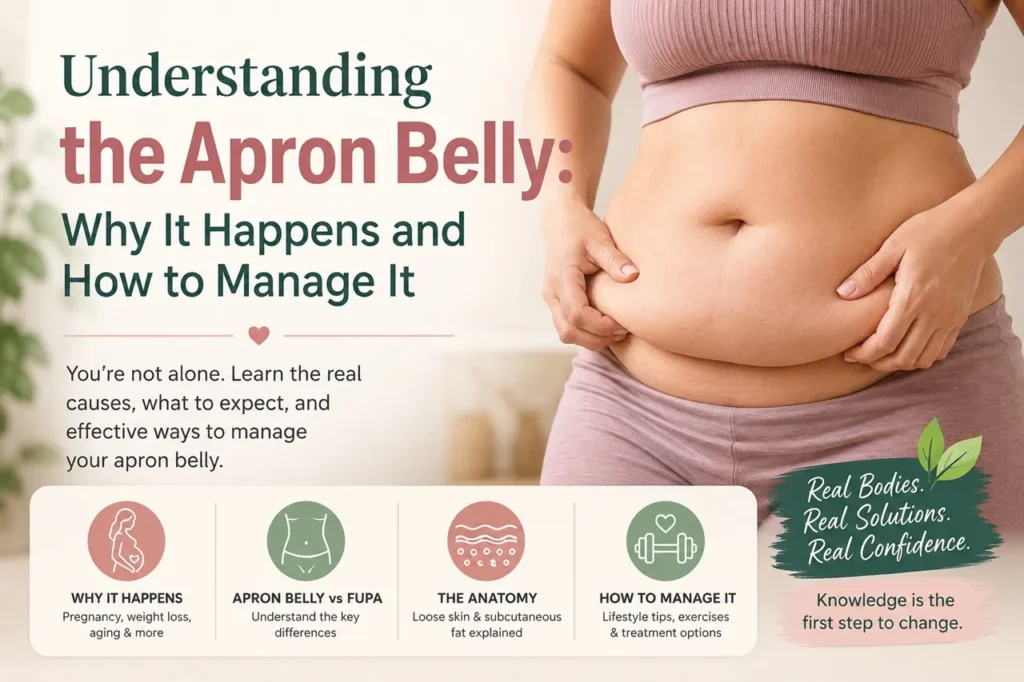
An apron belly after twins is often bigger because the womb grows larger and faster, stretching the skin and tummy muscles further than in a single pregnancy. It is a normal result of carrying two babies, not a failure.
- Allow 6 to 12 months, or longer, before judging
- Rebuild your core gently, starting with breathing and pelvic floor work
- Ask your GP to check your tummy muscles
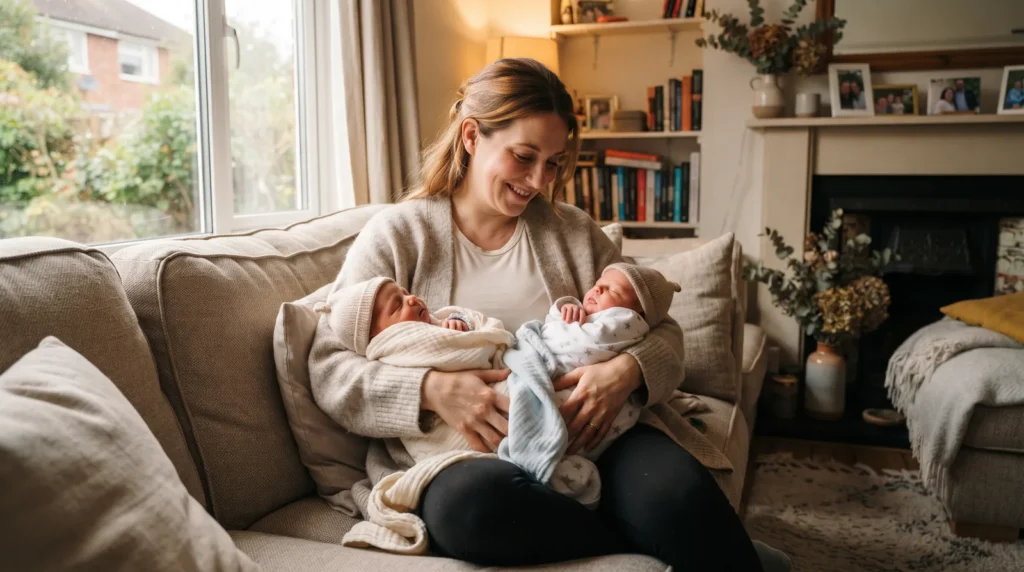
If you have had twins, you may have noticed that your tummy changed more than friends’ did after one baby. The skin may feel looser, the lower belly may hang further, and the overhang may take longer to settle. That is not in your head. A twin pregnancy places far more stretch on the abdomen than a single pregnancy.
This guide explains why an apron belly after twins is often bigger, what happens to your skin and muscles, and what genuinely helps. It focuses on the physical reasons behind the change. For a broader look at recovery and core work after a multiple birth, our guide to the apron belly after twins or a multiple pregnancy is a helpful companion.
Why an Apron Belly After Twins Is Often Bigger
An apron belly after twins is often bigger because the womb grows larger and faster, stretching the skin and abdominal muscles further than in a single pregnancy. More stretch usually means more loose skin and a wider gap between the tummy muscles afterwards.
A larger womb, sooner
With twins, the womb holds two babies, two sets of fluid and often two placentas. It grows bigger than in a single pregnancy and reaches a larger size earlier. The NHS guide to being pregnant with twins explains that multiple pregnancies are monitored more closely because of these extra demands.
More weight gain during pregnancy
Carrying twins usually means gaining more weight overall. Some of this is the babies, fluid and placenta. Some is extra fat the body stores to support two growing babies. After birth, that fat often settles around the lower belly first.
More stretch on the skin
Skin can only stretch so far before its collagen and elastin fibres are damaged. A larger bump pushes the skin closer to that limit. Stretch marks are often more widespread after twins, and the skin may stay softer and looser for longer.
What Happens to Your Muscles After Twins
The skin is only part of the story. The muscles under it are also stretched, and this affects how the belly looks and feels.
Diastasis recti is more common
The two long tummy muscles that run down the front are joined by a band of tissue called the linea alba. In pregnancy, this band stretches to make room for the bump. With twins, it stretches further, so a gap between the muscles, known as diastasis recti, is more likely and can be wider. A gap lets the belly push forward, which can make an overhang look bigger.
A weaker core for longer
Stretched muscles take time to regain strength. Many twin mums also have less time and energy to rebuild their core in the early months. Our guide to apron belly and diastasis recti explains how to check for a gap and how to treat both safely.
Pelvic floor strain
The pelvic floor supports the extra weight of two babies for months. Leaks, heaviness and a weaker pelvic floor are common afterwards. Pelvic floor exercises help, and a pelvic health physiotherapist can assess you if problems carry on.
Other Reasons the Overhang Can Be Larger
Several other factors often come with twin pregnancies and can add to the change in shape.
Caesarean birth
Twins are more likely to be born by caesarean than single babies. A caesarean scar can tether the skin just above the pubic area. The skin and fat above it may then fold over the scar, creating a shelf. Our guide to the apron belly hanging over a C-section scar explains why this happens.
Age and previous pregnancies
Twin pregnancies are more common in women over 35 and after fertility treatment. Skin is often less elastic with age. If you have had babies before, your skin and muscles have already been stretched once. Both can make the change after twins more noticeable.
Less recovery time
Caring for two babies leaves little time for sleep, meals or exercise. Broken sleep affects appetite and energy. This is completely understandable, and it simply means recovery may take longer.
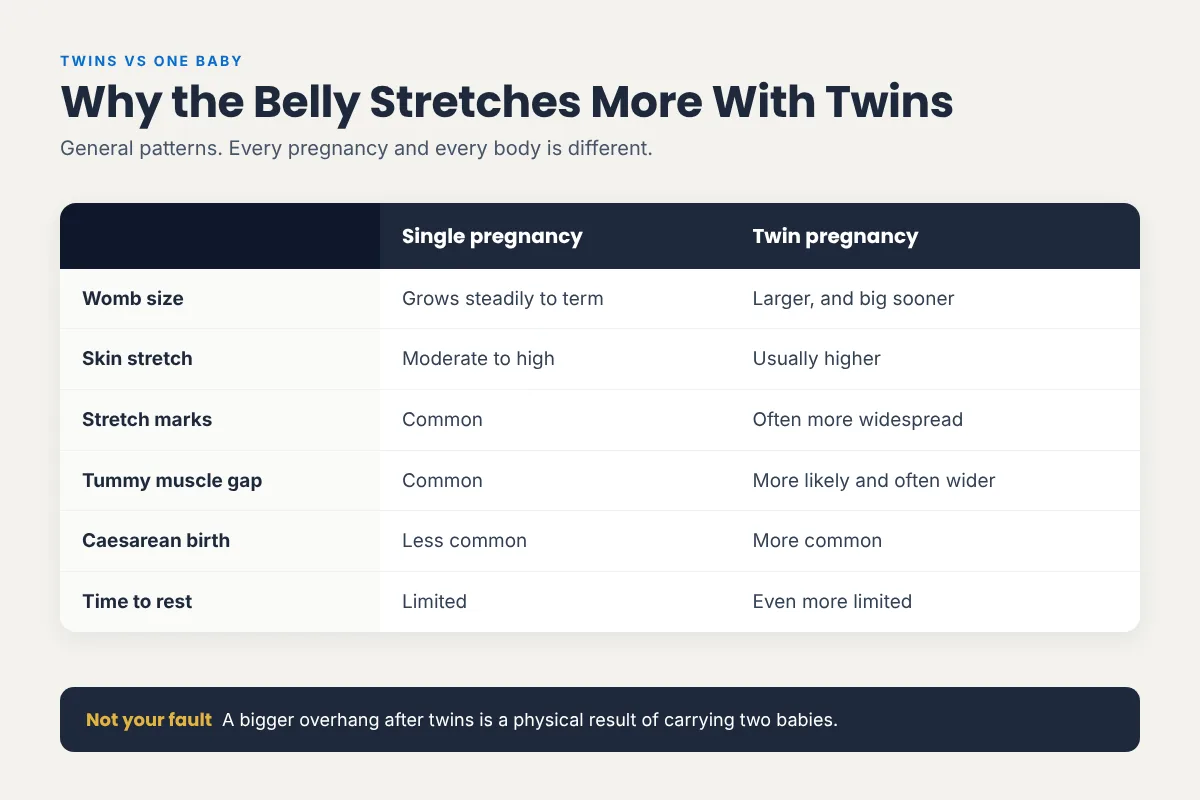
Twin vs Single Pregnancy: Key Differences
The table below sums up why the belly often changes more after twins. These are general patterns, and every pregnancy is different.
| Factor | Single pregnancy | Twin pregnancy |
|---|---|---|
| Size of the womb | Grows steadily to term | Grows larger and reaches a big size earlier |
| Skin stretch | Moderate to high | Usually higher, often with more stretch marks |
| Tummy muscle gap | Common | More likely and often wider |
| Weight gain | Lower overall | Usually higher overall |
| Caesarean birth | Less common | More common |
| Recovery time | Often a few months | Often longer, with less time to rest |
Myth: it means you did something wrong
The extra stretch is a physical result of carrying two babies. It is not caused by eating the wrong foods, skipping exercise or not using the right cream.
Myth: crunches will flatten it
Crunches and sit-ups can push the belly outwards if you have a muscle gap. Deep core work, done gradually, is safer and more effective in the early months.
Myth: it will never improve
Most people see real changes over the first year, especially in muscle strength and fat. Skin may stay softer, but comfort and shape often improve a great deal.
How Long Should You Wait Before Judging?
After twins, patience matters even more than usual. Your body has done something remarkable.
The first year
The womb shrinks back over about six weeks, but skin and muscles take much longer. Many people see gradual changes over the first 6 to 12 months, and sometimes longer. Swelling and fluid also take time to clear, especially after a caesarean.
After breastfeeding
If you breastfeed, your body may hold on to some fat stores until you stop. Hormones also affect skin and ligaments. Many people judge their final shape a few months after they finish breastfeeding.

What Helps an Apron Belly After Twins
You cannot fully undo stretched skin, but you can improve strength, comfort and shape. The key is a steady, realistic approach.
Start with breathing and pelvic floor work
In the early weeks, gentle breathing exercises and pelvic floor squeezes are safe for most people. Breathe in, then gently draw your lower belly in and lift your pelvic floor as you breathe out. These rebuild the deep core from the inside.
Rebuild your core gradually
Once your GP or midwife says you are ready, add moves like heel slides, glute bridges and side-lying leg lifts. Avoid crunches and sit-ups until you know how your diastasis is healing. Our guide to breastfeeding-safe core workouts has gentle options that fit around feeds.
Walk with the pram
Walking with a double buggy is a brilliant early exercise. It builds fitness, gets you outside and fits into family life. Increase your pace and distance slowly.
Eat to fuel recovery
Breastfeeding twins uses a lot of energy, so this is not the time for strict dieting. Focus on regular meals with protein, fruit, vegetables and wholegrains. Keep easy snacks within reach for long feeding sessions.
Care for the skin
Keep the skin under any fold clean and dry to avoid rashes. Moisturisers can make stretched skin feel more comfortable, although no cream can make loose skin tight again.
Getting Professional Support
You do not have to work this out alone. Support exists, and asking for it is a sign of good sense.
Your 6 to 8 week check
At your postnatal check, mention any gap down your tummy, leaks or heaviness. Ask your GP to check your tummy muscles. You can ask for a referral to a pelvic health physiotherapist if needed.
Twin charities
The UK charity Twins Trust offers information and support for families with twins and triplets, including peer support from other parents. Connecting with others who understand can make a real difference.
Mental wellbeing
Feeling low or anxious after having twins is common. Speak to your health visitor or GP if feelings last more than a couple of weeks or feel overwhelming.
Is Surgery an Option After Twins?
For some people, the skin and muscles do not recover enough with time and exercise. Surgery may then be worth considering.
When surgery makes sense
Surgeons usually advise waiting until you have finished having children, your weight has been stable for several months, and you have stopped breastfeeding. Many suggest waiting at least 6 to 12 months after birth.
Tummy tuck or panniculectomy
A tummy tuck can remove loose skin and repair a wide muscle gap at the same time. A panniculectomy removes the hanging skin but does not usually repair muscles. Our guide to panniculectomy vs tummy tuck explains which may suit you. Cosmetic tummy tucks are rarely funded by the NHS.
Frequently Asked Questions
Why is my apron belly bigger after twins?
A twin pregnancy stretches the skin and tummy muscles further than a single pregnancy. More stretch often leads to looser skin, a wider muscle gap and more fat stored around the lower belly.
Will my belly go back to normal after twins?
Many people see real improvement over the first year. However, very stretched skin may not fully return to how it was. Strength work, a healthy routine and patience make the biggest difference.
Is diastasis recti more common after twins?
Yes. The extra stretch of a twin pregnancy makes a gap between the tummy muscles more likely, and it can be wider. A GP or pelvic health physiotherapist can check it for you.
When can I exercise after having twins?
Gentle walking, breathing and pelvic floor exercises can usually start soon after birth if you feel well. Wait for your postnatal check before more demanding exercise, and longer after a caesarean.
How long after twins can I have a tummy tuck?
Most surgeons suggest waiting at least 6 to 12 months after birth, after you have stopped breastfeeding and when your weight is stable. You should also have finished having children.
Can I lose my twin belly while breastfeeding?
Gradual changes are possible while breastfeeding, but this is not the time for strict diets. Focus on nourishing meals, walking and gentle core work. Bigger changes often come after you stop.
The Bottom Line
An apron belly after twins is often bigger because your skin, muscles and pelvic floor were stretched more than in a single pregnancy. It is a normal result of carrying two babies, not a failure. Give yourself time, rebuild your core gently, ask for a muscle check and lean on support. If skin and muscles do not recover, surgery is an option once your family is complete.
Your next step
Ask your GP or a pelvic health physiotherapist to check your tummy muscles for a gap at your next appointment. Add a daily walk with the buggy, and take it one week at a time.