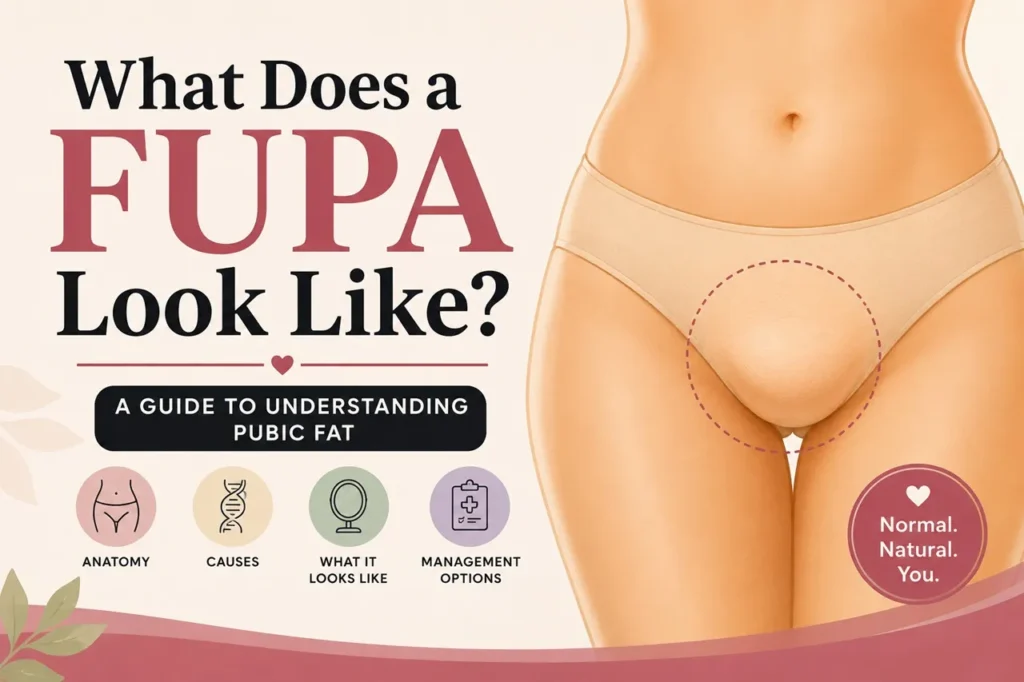

A FUPA is a concentration of fat or loose skin just above the pubic bone. At the same time, a belly pooch is a wider bulge in the lower abdomen. It can come from visceral fat, bloating, diastasis recti, or poor posture. These two conditions look similar but have distinct causes and require different approaches to treat.
That stubborn lower belly is one of the most frustrating things to deal with. It can feel stuck, no matter what you try. But here’s something most people don’t realise: not all lower belly bulges are the same. A FUPA vs pooch might look similar on the surface, but the underlying causes are often vastly different.
Understanding which one you’re dealing with matters a lot. The fix for excess subcutaneous fat and loose skin is not the same as the fix for abdominal distension or weak core muscles. Treating the wrong problem means spinning your wheels and getting nowhere.
This guide breaks down both conditions. It helps you tell which one you have. It gives clear steps to manage your lower midsection better.
What Is a FUPA?
A FUPA (Fat Upper Pubic Area) is a buildup of body fat just above the pubic bone. The result is a soft, rounded mound that sits low on the abdomen, often below the belly button. If you have only heard the term online, our guide explains what FUPA means in slang.
Common causes of a FUPA include:
- Weight gain: Excess caloric intake leads to fat storage across the body, often concentrated in the lower abdomen
- Genetics: Your body’s fat distribution patterns are partly inherited
- Post-pregnancy: Hormone changes and stretched skin after childbirth can cause loose skin. It can also leave some extra fat in the pubic area.
- Rapid weight loss: Losing weight fast can leave extra skin. This can make a FUPA look more visible. This can happen even when overall body fat is lower.
One key characteristic of a FUPA is its texture. It tends to feel soft and pliable; you can usually pinch it and lift it away from the body. In some cases, especially after pregnancy or major weight loss, loose skin is the main issue, not fat.
What Is a Belly Pooch?
A belly pooch (sometimes called a tummy bulge) is a protrusion in the lower abdominal area. Unlike a FUPA, a pooch doesn’t always involve excess fat. Several distinct causes exist:
- Visceral fat: Fat stored around your internal organs, which pushes the abdominal wall outward. Unlike subcutaneous fat, visceral fat sits deeper and feels firmer to the touch.
- Digestive bloating: Gas, fluid retention, or food sensitivities can cause short-term belly swelling. This can make your belly look bigger after meals.
- Diastasis recti: A gap between the abdominal muscles. After pregnancy, this is common. It can cause the belly to bulge, even in lean people. This is a structural issue, not a fat issue.
- Poor posture: An anterior pelvic tilt causes the lower belly to push forward, creating the illusion of a pooch
Unlike a FUPA, a belly pooch is often caused by bloating, muscle separation, or poor posture. It is not usually caused by excess fat. This distinction is key when deciding how to address it.
FUPA vs Pooch: The Key Differences
Understanding the differences between a FUPA and a belly pooch comes down to location, texture, consistency, and root cause. The table below summarises the most important distinctions.

The most telling sign? A pooch that changes size throughout the day is more likely related to bloating or posture. A fatty upper pubic area tends to remain consistent in size and feel.
How to Tell Whether You Have a FUPA or a Pooch
You don’t need a doctor to do a basic self-assessment. Here are a few simple checks:
The Pinch Test
Gently pinch the tissue in your lower abdominal area. If you can grab a lot of soft tissue and lift it away from your body, it is likely subcutaneous fat. It could also be loose skin, like a FUPA.
The Bloating Check
Take note of how your belly looks first thing in the morning versus after meals. If your lower belly is flatter in the morning, bloating may be the cause. After you eat, your belly may swell. This can be a sign of digestive bloating. That points more toward a pooch.
The Posture Test
Stand against a wall with your heels, shoulders, and head touching the surface. Does your lower belly pull inward slightly? If standing tall dramatically reduces the appearance of your belly, then posture correction and core stability should be priorities.
How to Check for Diastasis Recti
Lie on your back with knees bent. Lift your head slightly and feel along the midline of your abdomen. If you notice a gap or your fingers sink in between the muscles, you may have diastasis recti. Consulting a physiotherapist or doctor is advisable for a proper diagnosis.
If you’re still unsure, a GP or women’s health physiotherapist can help. This is especially true if you’ve recently had a baby.
Effective Ways to Manage a FUPA and Belly Pooch
Nutrition and Weight Management

For a FUPA driven by excess fat, a sustainable calorie deficit is the foundation. No exercise can “spot reduce” fat in one area. But overall fat loss will slowly reduce body fat everywhere, including the pubic area.
Focus on:
- Whole, anti-inflammatory foods: leafy greens, lean proteins, healthy fats, and complex carbohydrates
- Reducing ultra-processed foods and added sugars, which contribute to both fat storage and bloating
- Adequate hydration: paradoxically, drinking more water can reduce water retention and bloating
According to the British Nutrition Foundation, a balanced diet can support a 500-calorie daily deficit. This can lead to steady fat loss of about 0.5 kg per week.
Core Strengthening Exercises
For both a FUPA and a belly pooch, core stability is essential.
But the best approach depends on the underlying cause.
For a FUPA, effective core exercises include:
- Planks and side planks
- Pelvic tilts
- Dead bugs (great for deep core activation)
For a belly pooch (especially with diastasis recti):
Avoid heavy crunches and sit-ups initially, as these can worsen muscle separation. Instead, focus on:
- Diaphragmatic breathing exercises
- Heel slides
- Gentle Pilates-based movements
If diastasis recti is confirmed, working with a women’s health physiotherapist is strongly recommended before starting any abdominal exercises.
Posture Correction
Improving posture won’t eliminate fat, but it can immediately reduce the visible appearance of a lower belly pooch. Effective strategies include:
- Strengthening the glutes to correct anterior pelvic tilt
- Stretching hip flexors regularly
- Being mindful of sitting and standing alignment throughout the day
A small alignment correction can create a visible change. This makes posture one of the most underrated tools for managing the lower belly.
Managing Bloating
If digestive bloating is contributing to your belly pooch, consider:
- Identifying and reducing trigger foods (common culprits: cruciferous vegetables, dairy, gluten, and legumes)
- Eating more slowly to reduce swallowed air
- Discussing probiotics or a gut health assessment with a GP if symptoms are persistent
When to Consider Professional Help
Sometimes, lower belly fat can point to something beyond lifestyle factors. Speak to a healthcare professional if:
- You have a lot of loose skin following major weight loss or multiple pregnancies, and lifestyle changes aren’t producing results
- You suspect diastasis recti is severe and affecting day-to-day function
- Your bloating is persistent, painful, or accompanied by other symptoms; this could indicate an underlying medical condition
A tummy tuck (abdominoplasty) may be worth considering when excess skin is the primary concern. This surgical procedure removes loose skin and tightens the abdominal wall. Not a first-line solution and carrying surgical risks, it can be appropriate in specific cases. Always consult a qualified surgeon and exhaust non-surgical options first.
FUPA vs Pooch vs Apron Belly: What’s the Difference?
While a FUPA and belly pooch both cause lower belly bulging, an apron belly is different.
People also call it a pannus stomach. It happens when extra skin and fat hang over the pubic area. It often follows major weight loss, multiple pregnancies, or bariatric surgery.
Unlike a FUPA, which sits just above the pubic bone, an apron belly is more pronounced.
It may cause discomfort, including skin irritation or hygiene concerns under the fold. For more detailed guidance, see the guide on managing apron belly. It covers causes, complications, and lifestyle strategies. It explains one of the most misunderstood types of lower belly fat.
Build Consistency, See Results
No single fix exists for a FUPA or belly pooch, but the right approach does for each specific situation. Start with an honest self-assessment, focus on sustainable nutrition and movement, and be patient. Fat loss, muscle building, and posture improvements all take time. Consistency over weeks and months is what produces lasting change.

Frequently Asked Questions
What is the main difference between a FUPA and a belly pooch?
A FUPA is fat or loose skin just above the pubic bone. Weight gain, genetics, or changes after pregnancy often cause it.
A belly pooch is a wider lower belly bulge. It can come from visceral fat, bloating, diastasis recti, or poor posture. Extra fat is not always the cause.
Can exercise alone get rid of a FUPA?
Exercise helps you lose fat and improve body shape.
But you cannot lose fat from only one specific area. A calorie deficit, strength training, and core exercises are the best way to reduce a FUPA over time.
Why does my belly pooch get worse throughout the day?
If the lower belly expands noticeably after meals or by evening, digestive bloating is likely a contributing factor. This differs from fat accumulation, which remains consistent in size. Tracking symptoms after eating can help identify food triggers.
What is diastasis recti, and how does it affect the belly?
Diastasis recti is when the two sides of the rectus abdominis separate.
These are the “six-pack” muscles.
The separation happens along the midline of the abdomen. After pregnancy, this is common and can cause a persistent belly pooch even in people with low body fat. A women’s health physiotherapist can diagnose and treat it effectively.
Is a tummy tuck the right solution for a FUPA?
A tummy tuck (abdominoplasty) may be right if loose skin is the main issue. It can help after you try lifestyle changes. A surgical procedure has recovery time and risks. Get professional medical advice before considering this option.
How long does it take to see results from lifestyle changes?
With steady effort, most people see changes in 8 to 12 weeks.
This can include a small calorie deficit.
It can also include regular exercise.
It can also include posture work. Sustainable fat loss takes time, and results will vary depending on starting point, genetics, and adherence.
Is a belly pooch the same as visceral fat?
Not necessarily. Visceral fat can cause a belly pooch, but bloating, diastasis recti, or poor posture can also cause it.
Visceral fat is fat stored around internal organs. It tends to feel firm. It usually does not change during the day. This differs from bloating, which can cause a soft, puffy belly.
Can you have both a FUPA and a belly pooch at the same time?
Yes. Having both at the same time is possible. For example, you may have a FUPA and a pooch from bloating or diastasis recti.
A detailed self-check or a professional review can show which conditions are present. It can also guide the right treatment plan.