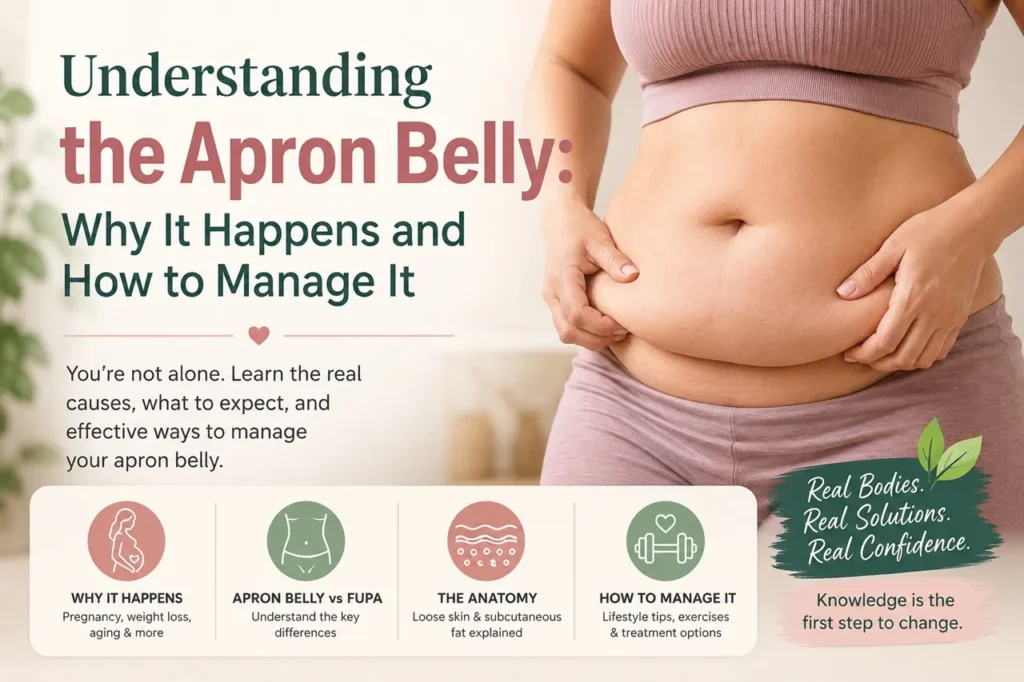
If you’ve ever stood in front of the mirror in a pair of trousers that just won’t sit right, you’ve probably wondered whether there’s a garment out there that could fix it. Type apron belly into a search bar and you’ll be bombarded with belly bands, tummy-control briefs, waist trainers and high-waisted shapewear, all promising to hold everything in, smooth everything out and make you feel like yourself again.
So do they actually work? The honest answer is yes, for some things, and no, for others. Support garments for an apron belly can make you more comfortable, help your clothes fit and give your back a bit of relief. They can’t remove fat, tighten loose skin or fix anything underneath. And if you choose badly, or wear the wrong thing for too long, they can cause problems of their own.
This guide explains what each type of garment does, what to expect, what to watch out for, how to choose and wear one safely, and when you’re better off skipping them altogether. It’s general information, not personal medical advice.
What Are Support Garments for an Apron Belly?
The term covers a handful of different products, and they aren’t all the same.
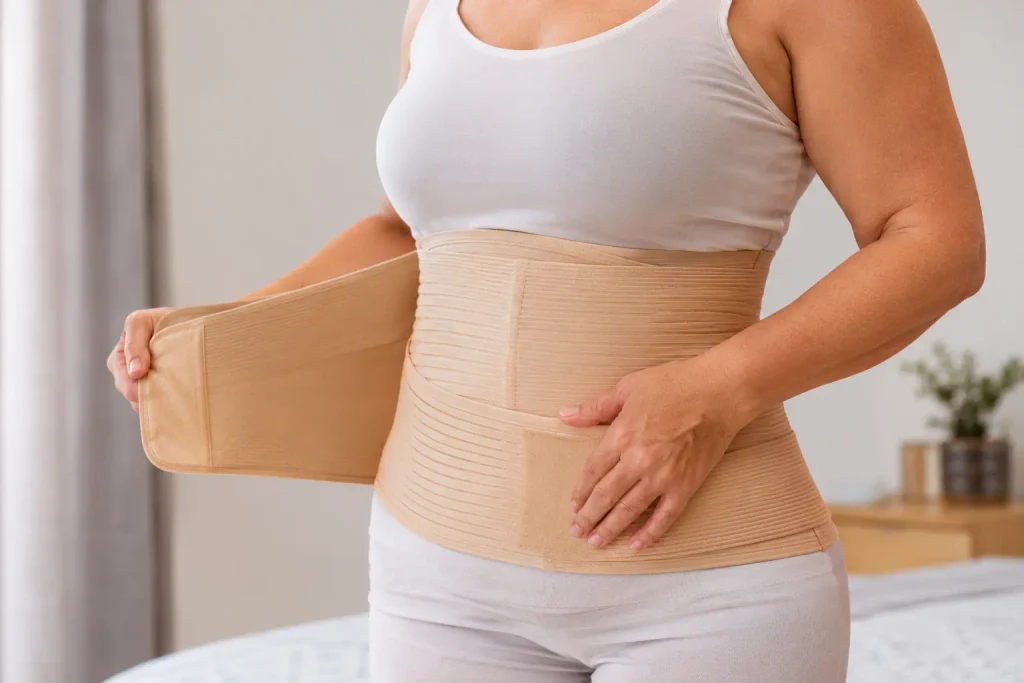
- Belly bands and abdominal binders: wide elasticated bands that wrap around the middle and fasten with Velcro or hooks. They give broad, adjustable support.
- Shapewear: high-waisted briefs, shorts, bodysuits and leggings made from compressive fabric to smooth and hold the stomach in.
- Support leggings and shorts: workout or everyday bottoms with a firm, wide waistband or built-in panel.
- Maternity support bands: designed to carry the weight of a pregnant bump and ease back strain.
- Medical compression garments: the kind prescribed or recommended after surgery, or for specific conditions such as hernia or lymphoedema.
- Waist trainers and corsets: very rigid, tight garments marketed for shrinking the waist. These carry the most risk and the least evidence.
Knowing which category you’re looking at matters, because a soft belly band for gardening is a very different thing from a tight waist trainer worn for hours.
What Support Garments Can Do
When the fit and the fabric are right, there are genuine everyday benefits.
Comfort when moving. Many people with an apron belly find the fold swings, bounces or drags when they walk, run or lift. A snug band or a pair of supportive shorts holds it close to the body, which can ease that pulling feeling and make activity more pleasant.
Smoother lines under clothes. A well-chosen garment can reduce visible bulges and help trousers, skirts and dresses sit more neatly. For some people this is about confidence more than anything else, and that’s a perfectly good reason to wear one.
A feeling of support for your back. Some people feel their lower back is less tired when the belly is gently held up. The scientific evidence for abdominal supports easing back pain is mixed, so it’s not a guaranteed fix, but if it helps you, there’s no harm in using one sensibly.
Less friction in some cases. A garment that keeps the fold from rubbing against the thighs or waistband can cut down chafing, provided the fabric is breathable and the skin stays dry.
Help with daily tasks. A light support can make long days on your feet, shopping trips or sightseeing easier.
What Support Garments Can’t Do
It’s important to be realistic, because plenty of marketing isn’t.
- They don’t remove fat. There’s no garment that melts or permanently shrinks abdominal fat. When you take it off, your body is the same as before.
- They don’t tighten loose skin. Skin that has stretched through pregnancy or weight loss won’t recover because you wore a band.
- They don’t close a gap in your stomach muscles. If you have diastasis recti, a band may feel supportive, but it isn’t a treatment. Our guide on apron belly and diastasis recti explains what actually helps, and why it’s worth checking with a physiotherapist.
- They don’t replace a healthy routine. Waist trainers in particular are heavily marketed, but there’s no good evidence that they create lasting changes to your body.
The benefits of any garment last only as long as you’re wearing it.
The Risks: When Support Becomes a Problem
Most problems come from garments that are too tight, worn for too long or made from the wrong fabric.
Heat, sweat and skin problems. Compressive fabric can trap warmth and moisture against skin that’s already prone to rubbing. That’s the perfect setting for rashes, soreness and yeast infections. NICE describes intertrigo as an inflammatory skin condition caused by moisture, heat and friction from skin-to-skin contact, and you can read more in the NICE briefing on intertrigo. If you’re noticing redness, itching or a sour smell, our guide on apron belly rash and skin irritation explains what to look for and when to get help.
Restricted breathing and digestion. A garment that’s too tight can make it hard to take a deep breath or eat comfortably, and can aggravate heartburn or reflux. If you feel breathless, light-headed or nauseous, loosen or remove it.
Pressure on the pelvic floor and abdomen. Very tight support can push pressure downwards. Women’s health physiotherapists often advise caution, especially after childbirth or if you have bladder leakage or prolapse symptoms.
Marks, numbness and circulation. Deep red lines, tingling or numb patches are signs of too much pressure, particularly from tight edges that dig in around the waist or thighs.
Hernia concerns. If you’ve noticed a bulge near your belly button or groin, don’t squeeze it with a tight garment without getting it checked. Our post on apron belly or hernia explains how a hernia can feel different from a fold of skin.
Who Should Check With a Professional First?
Speak to your GP, midwife, physiotherapist or surgeon before using a compression garment if you:
- Are pregnant, or have recently given birth.
- Have recently had surgery, especially on the abdomen. Follow your surgeon’s instructions about garments exactly.
- Have a hernia, a gap in your stomach muscles or any unexplained lump.
- Have swelling in your belly or legs, or a lymphatic condition. Compression applied in the wrong way can make some problems worse, so read our post on apron belly and lymphoedema and get specialist advice.
- Have diabetes, poor circulation, a skin infection or fragile skin.
- Have a breathing condition such as asthma or COPD, or a digestive problem like severe reflux.
If you’re preparing for or recovering from an operation, a surgeon-recommended garment is a different matter from a shop-bought one. Our tummy tuck recovery timeline explains how post-operative compression fits into the stages of healing.
How to Choose the Right Support Garment
A few simple rules will save you money, discomfort and returns.
Get the size right
Measure yourself carefully, including your waist, your hips and the fullest part of your stomach, and follow the brand’s size guide. Don’t buy a size down to get a tighter hold. You want snug and supportive, not squeezed.
Pick breathable, skin-friendly fabric
Look for cotton blends, bamboo or moisture-wicking fabrics, and flat or seamless construction that won’t rub the skin. Avoid heavy, non-breathable synthetics if you tend to sweat.
Check the edges
Wide, soft, flat edges spread pressure far better than narrow elastic that digs in. Edges that roll or curl are a sign the garment isn’t right for you.
Choose the style for the situation
- Everyday wear: a light, seamless high-waisted brief or soft belly band.
- Exercise: supportive shorts or leggings with a wide waistband and moisture-wicking fabric.
- Sitting at a desk or travelling: something loose enough that you can sit comfortably, with no tight band across the middle.
- Hot weather: the lightest option you can find, or a soft cotton liner, rather than a heavy compressive layer.
- Practical features: a gusset or fastenings that make using the toilet easy, and adjustable closures so you can loosen the garment through the day.
Try before you commit
If you can, try garments on in a shop or buy from somewhere with an easy returns policy. Sit, bend, walk and breathe deeply in it before you decide.
How to Wear Support Garments Safely
- Start slowly. Wear a new garment for an hour or two, then build up gradually.
- Take regular breaks. Taking it off for part of the day gives your skin a chance to breathe.
- Never sleep in it, unless a surgeon has told you to.
- Keep the skin clean and dry. Wash and thoroughly dry the fold before putting anything on, and let it air for a few minutes first. A light barrier balm or cornstarch-based powder can reduce rubbing, but avoid piling on products under tight fabric.
- Wash garments often. Sweat, skin oils and creams build up in the fabric. Follow the care label, and keep a spare so you can rotate them.
- Check your skin daily. Look for redness, marks, rashes or broken skin, and stop wearing the garment until it’s settled.
- Stop if something feels wrong. Pain, numbness, breathlessness, dizziness or nausea mean the garment is too tight or not suitable.
Gentle Alternatives and Extras
Support garments are just one tool, and often not the most important one.
Well-fitting everyday clothes. Stretchy waistbands that sit above or below the fold, longer tops and softer, structured fabrics can give you most of the comfort without compression.
Gentle core work. Appropriate exercises, ideally guided by a physiotherapist if you have a stomach muscle gap, can support your posture and back.
Skin care in the fold. Staying clean and dry makes a bigger difference to comfort than any garment.
Healthy habits. If you’re carrying extra weight, steady changes to activity and food can reduce the load on your back and the size of the fold. Your GP can point you to support if you’d like it.
Medical or surgical options. If the fold is causing ongoing problems, such as recurrent rashes or pain, speak to your GP about the choices, which may include surgery in some cases.
When to Speak to Your GP
See your GP or pharmacist if you notice a rash that isn’t clearing, broken or weeping skin, pain that’s worse after wearing a garment, a new bulge or lump, swelling that’s increasing or any breathing difficulty. Call 111 or seek urgent help for severe abdominal pain, a painful bulge you can’t push back, or a hot, red, spreading patch of skin with a fever.
Frequently Asked Questions
Does shapewear help an apron belly?
It can smooth the outline and make clothes sit better while you’re wearing it, but it doesn’t change the apron belly itself.
Are belly bands good for an apron belly?
A soft, well-fitted belly band can give comfortable support during activity or long days on your feet. Avoid tight bands worn for many hours.
Can I wear shapewear every day?
Some people do, but it’s best to limit tight garments, take breaks and choose breathable fabrics. If you get skin irritation or discomfort, wear them less.
Do waist trainers work?
There’s no good evidence they create lasting changes, and they can restrict breathing and irritate the skin. Most health professionals advise against them.
Is it okay to wear a support garment while exercising?
A supportive, breathable garment can help with comfort, but avoid anything that restricts your breathing or movement. Stop if you feel dizzy, breathless or sore.
Final Thoughts
Support garments for an apron belly can be a useful, comfortable part of your wardrobe, as long as you treat them as a tool rather than a cure. Choose a size that fits, a fabric that breathes and a style that suits what you’re doing. Give your skin plenty of breaks, and listen if your body tells you something’s too tight.
If you’re unsure whether a garment is right for you, particularly after pregnancy, surgery or if you have a health condition, a quick chat with your GP, physiotherapist or surgeon is always worth it. Comfort and confidence matter, and you don’t need to squeeze into anything to have either.
This article is for general information and isn’t a substitute for personal medical advice.