

Quick Answer
Apron belly removal recovery moves in stages: a tough first week, drains out around week two, a light routine by week four, the binder off around week six and full activity by about three months.
- Most people return to desk work within four to six weeks
- Swelling, numbness and scar changes improve for up to a year
- Report wound changes to your surgical team early
Apron belly removal recovery takes longer than most people expect, and it rarely follows a straight line. A panniculectomy removes the hanging fold of skin and fat from the lower abdomen. It leaves a long wound across the belly that needs weeks of care. Most people return to desk work within four to six weeks, but swelling, numbness and scar changes carry on for months.
This guide sets out each stage, from the first night in hospital to the final scar. It covers drains, the binder, wound care, driving, lifting and exercise. It also lists the warning signs that mean you should call for help. Your own surgeon’s instructions always come first, because every operation and every body is different.
How Long Apron Belly Removal Recovery Takes
Most people feel ready for light daily life after two to three weeks, return to office work at four to six weeks, and resume full exercise at around eight to twelve weeks. The scar keeps changing for twelve months or more. These are typical ranges, not promises.
Why a panniculectomy heals differently
A panniculectomy is usually a skin and fat operation. Unlike a full tummy tuck, it does not normally tighten the abdominal muscles or move the belly button. That often makes the early weeks a little easier on the core. However, the wound is long and sits where the old fold trapped moisture. Wound healing is therefore the main focus. Our comparison of panniculectomy vs tummy tuck explains the surgical differences in detail.
What changes your personal timeline
The size of the apron, your weight, your general health and your job all shape recovery. Smoking, diabetes and a higher BMI raise the chance of slow healing. People who had large weight loss, such as after bariatric surgery, may also have lower protein stores. If the surgeon combined your operation with muscle repair or liposuction, expect the slower end of each range.
Before Surgery: Set Up an Easier Recovery
Good recovery starts weeks before the operation. A little planning means fewer problems when you come home sore and tired.
Stop smoking and steady your weight
Nicotine narrows blood vessels and slows wound healing. Most surgeons ask you to stop smoking and vaping nicotine for at least six weeks before and after surgery. Many also want your weight stable for six to twelve months first, as NHS commissioning policies for apronectomy usually require. Our guide to getting an apron belly operation on the NHS covers those rules.
Prepare your home and your help
Arrange an adult to drive you home and stay with you for at least the first 24 hours. Ideally, have help with shopping, children and pets for two weeks. Place daily items at waist height so you avoid bending. Stock loose cotton clothing, a wedge pillow, a shower stool and simple ready meals.
Days 1 to 3: Hospital and Coming Home
The operation is done under general anaesthetic and usually takes two to four hours. Most people stay in hospital for one to three nights. The exact stay depends on the size of the apron and how quickly you can walk.

Pain relief and the first walk
Expect tightness and a deep ache across the lower belly. Take regular pain relief as prescribed rather than waiting for pain to build. Nurses will help you out of bed on the day of surgery or the next morning. You will stand slightly bent at the waist, which protects the stitches.
Drains and the compression binder
Many surgeons place one to three thin drains to remove fluid from under the skin. You may go home with them, so the ward team will show you how to empty them and record the amount. A compression binder or support garment goes on straight after surgery. It reduces swelling, supports the wound and helps the skin settle onto the tissue below.
Blood clot prevention
Abdominal surgery raises the risk of a deep vein thrombosis (DVT), a clot in the leg. You will usually wear compression stockings and may be given blood-thinning injections to use at home for a set period. Short walks every hour or two while awake keep blood moving in your legs.
Week 1: Rest, and Walk Little and Often
The first week is usually the hardest. Your body is putting energy into healing, so tiredness is normal even if you rest all day.
How you will probably feel
Swelling, bruising and a tight, pulling feeling are common. The skin above the scar often feels numb. Sleep with your back raised and your knees bent over a pillow, sometimes called the beach chair position. This takes tension off the wound. Hold a pillow against your belly when you cough, sneeze or laugh.
Showering and wound care
Many units allow a quick shower after 48 hours, but follow your own discharge sheet. Wash the wound gently with plain water or mild soap, then pat it dry with a clean towel. Keep the binder on except to wash. Avoid baths, hot tubs and swimming until the wound has fully closed, which often takes four to six weeks. Do not use heat pads on numb skin, because you may not feel a burn.
Eating and bowels
Painkillers and less movement both cause constipation, and straining hurts. Drink plenty of water and ask your pharmacist about a gentle laxative. Include protein at every meal, because skin repair needs it.
Week 2: Drains Out and First Clinic Check
Most people have their first wound check between seven and fourteen days after surgery. This is often when drains come out, once the fluid drops below the level your surgeon sets.
Stitches, dressings and tape
Many surgeons use dissolvable stitches under the skin with tape strips on top. Leave the strips until they fall off or the nurse removes them. If you have clips or non-dissolvable stitches, they usually come out at this visit. The nurse will also check for redness, fluid or gaps.
Watch the lower edge of the wound
Small areas of slow healing are fairly common after a panniculectomy. They tend to appear where tension is highest, often in the middle of the scar or where vertical and horizontal cuts meet. A small gap is usually managed with dressings in clinic. Report any opening early, because early treatment heals faster.
Weeks 3 to 4: Back to a Light Routine
Energy returns slowly at this stage. Many people feel almost normal for an hour, then suddenly need to sit down. That pattern is expected and improves week by week.
Returning to desk work
The NHS guide to tummy tuck surgery, a closely related operation, advises about four to six weeks off work and exercise. Some people with seated jobs return part time at three weeks if they feel well. Jobs that involve lifting, caring or long shifts on your feet usually need six to eight weeks. Ask your surgeon for a fit note if you need one.
When you can drive
There is no fixed legal date for driving after surgery. You must be off strong painkillers, able to wear a seatbelt comfortably, and able to do an emergency stop without hesitation. For many people that is somewhere between three and six weeks. Check your insurance policy, because some insurers set their own rules. Our guide on wearing a seatbelt with an apron belly has tips on padding the belt across a healing scar.
Weeks 5 to 6: Binder Off and Strength Returning
Most surgeons ask you to wear the binder day and night for about six weeks. At your six-week review, many people are cleared to stop wearing it and to start more activity.

Lifting rules
For the first six weeks, avoid lifting anything heavier than a full kettle. That includes toddlers, shopping bags, laundry baskets and pets. Pushing a hoover or a heavy door counts too. After six weeks, build up gradually and stop if the scar pulls or aches.
Starting gentle exercise
Brisk walking is usually the first proper exercise, often from week four to six. A static bike and gentle swimming usually follow once the wound has fully healed. Our guide to walking for apron belly has a simple plan you can adapt for recovery.
Months 2 to 3: Swelling Settles
By now most daily life is back to normal. The belly may still swell by evening, especially after a busy day or a long time standing.
Core work and the gym
Planks, sit-ups, heavy weights and running usually wait until eight to twelve weeks. Start with breathing and gentle deep core work, then progress slowly. Our beginner strength training programme is a sensible next step once you have clearance.
Numbness and odd sensations
The skin above the scar is often numb, tingly or itchy for months. Feeling usually returns slowly over six to twelve months as small nerves recover. A small patch may stay numb for good, which is a known effect of the surgery.
Fluid swelling and seroma
A seroma is a pocket of fluid under the skin. It can feel like a soft, sloshing swelling above the scar. Small ones often settle by themselves, while larger ones may be drained with a needle in clinic. Contact your surgical team if a soft swelling appears or grows.
Months 6 to 12: Your Final Result
Most swelling has gone by six months, and the shape of the lower belly is close to final. The scar takes longer.
How the scar changes
Scars usually look pink, red or raised for the first few months. Over twelve to eighteen months they tend to flatten and fade to a paler line. Massage with a plain moisturiser once the wound has healed, and ask your surgeon about silicone gel or sheets. Protect the scar from strong sun with clothing or high factor sun cream.
Keep your weight steady
The operation removes the apron, but it does not stop future weight gain. A stable weight helps protect the result. Large weight changes can stretch the remaining skin again. After years with a hanging belly, our guide on building body confidence may help as you adjust to the new shape.
Wound Problems and Warning Signs
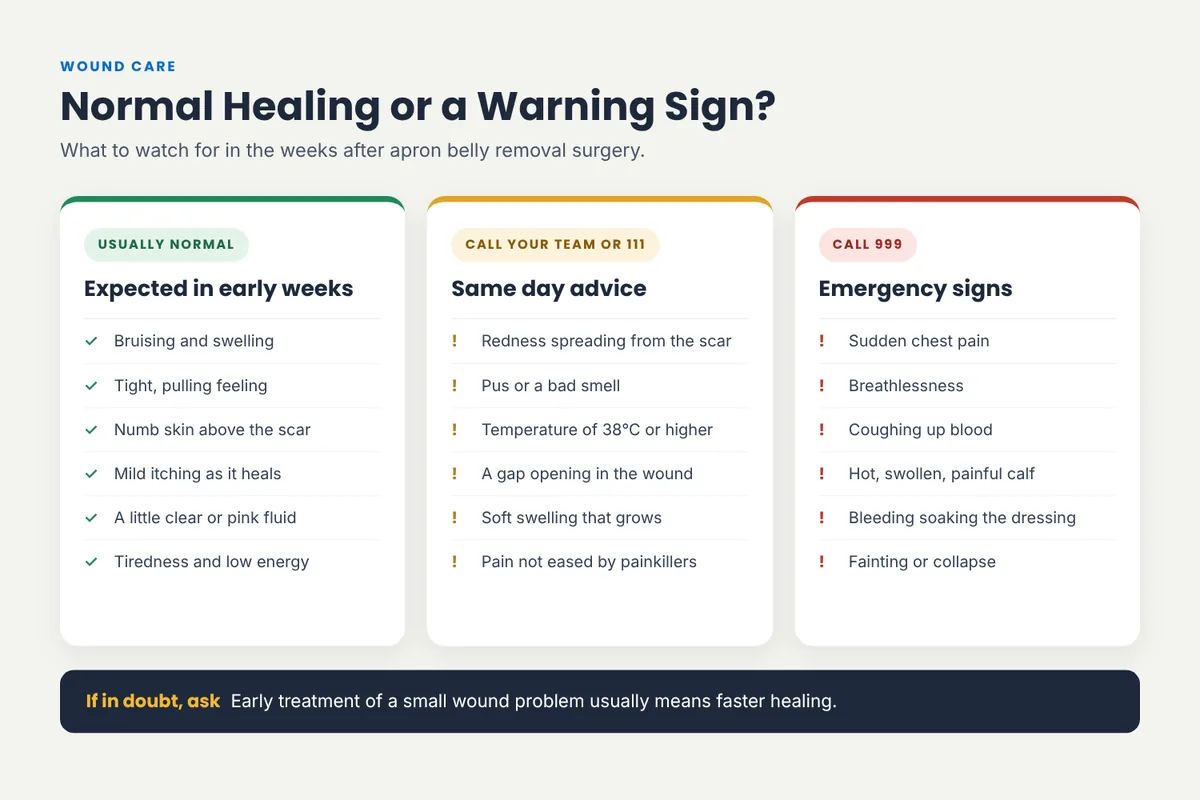
Most people recover without serious problems, but complications do happen. Knowing the difference between normal healing and a warning sign helps you act quickly.
What is usually normal
Bruising, swelling, tightness, numbness and mild itching are all common in the early weeks. So is a little clear or pink fluid on the dressing. Tiredness and low mood can also follow major surgery and usually lift as you heal.
Contact your surgical team or NHS 111
Call for advice if redness spreads from the scar, or you notice warmth, pus or a bad smell. The same applies to a temperature of 38°C or higher, a gap in the wound, a growing swelling, or pain your painkillers do not control. These can be signs of infection, a seroma or a haematoma.
Call 999 straight away
Sudden chest pain, breathlessness, coughing up blood, or a hot, swollen and painful calf can signal a blood clot. The NHS guidance on DVT lists the symptoms in full. Heavy bleeding that soaks through the dressing also needs urgent help.
Panniculectomy Recovery vs Tummy Tuck Recovery
People often confuse the two operations. The table compares typical recovery points, though your own surgeon’s plan comes first.
| Recovery point | Panniculectomy (apron removal) | Full tummy tuck |
|---|---|---|
| Main aim | Removes the hanging fold of skin and fat | Removes skin and fat, often tightens muscles |
| Hospital stay | Usually 1 to 3 nights | Usually 1 to 3 nights |
| Standing straight | Often within 1 to 2 weeks | Often 2 to 4 weeks with muscle repair |
| Desk work | About 3 to 6 weeks | About 4 to 6 weeks |
| Core exercise | Around 8 weeks | Around 8 to 12 weeks |
| Main concern | Wound healing along a long scar | Wound healing plus muscle repair |
Which guide fits your operation
If your surgeon also repaired the muscles, your plan will look more like our tummy tuck recovery timeline. For costs and private options, see our guide to apron belly surgery cost in the UK.
Tips for a Smoother Recovery
Small daily habits add up over six weeks.
Protect the wound
Keep the scar clean and dry, and change damp dressings promptly. Wear soft, high-waisted cotton knickers that sit above or well below the wound, not on it. Our guide to comfortable underwear for a sensitive lower belly has fabric tips that also suit a healing scar.
Look after your mood
Feeling flat or tearful in the first fortnight is common after major surgery. Pain, poor sleep and being stuck at home all play a part. Talk to someone you trust, and speak to your GP if low mood lasts beyond a few weeks.
Frequently Asked Questions
How long is recovery after apron belly removal?
Most people manage light daily tasks after two to three weeks and return to desk work at four to six weeks. Full exercise usually resumes at eight to twelve weeks. Swelling settles over three to six months, and the scar keeps fading for a year or more.
How long do I wear a binder after a panniculectomy?
Most surgeons advise wearing the binder or support garment day and night for about six weeks, taking it off only to wash. Some recommend daytime wear for a few more weeks. Follow the plan your own surgeon gives you.
When can I sleep on my side after apron belly removal?
Many people sleep on their back, propped up with knees bent, for the first two to four weeks. Side sleeping with a pillow between the knees is often comfortable after that. Lying on your front usually waits until the wound has fully healed.
Is a panniculectomy recovery painful?
Most people describe a tight, deep ache rather than sharp pain, and it is worst in the first week. Regular prescribed pain relief keeps it manageable. Because the muscles are not usually tightened, many find it easier than a full tummy tuck.
Why is my wound opening after a panniculectomy?
Small areas of slow healing are a known complication, often where tension on the wound is highest. Smoking, diabetes and a higher BMI raise the risk. Contact your surgical team the same day, because most small openings heal well with dressings.
When can I go swimming after apron belly surgery?
Wait until the wound has fully closed with no scabs or open areas, which is often four to six weeks after surgery. Your surgeon will check this at clinic. Start with gentle lengths and build up slowly.
The Bottom Line
Apron belly removal recovery moves in clear stages: a tough first week, drains out around week two, light routine by week four, binder off around week six, and full activity by about three months. The scar and sensation keep improving for a year. Wound care is the main task, so keep the area clean, stop smoking, eat enough protein and report any change early.
Your next step
Before surgery, take written questions to your consultation about drains, binder time, stitches and follow-up. If you are still deciding whether surgery is right for you, our guide on whether an apron belly is permanent explains what can change without an operation.