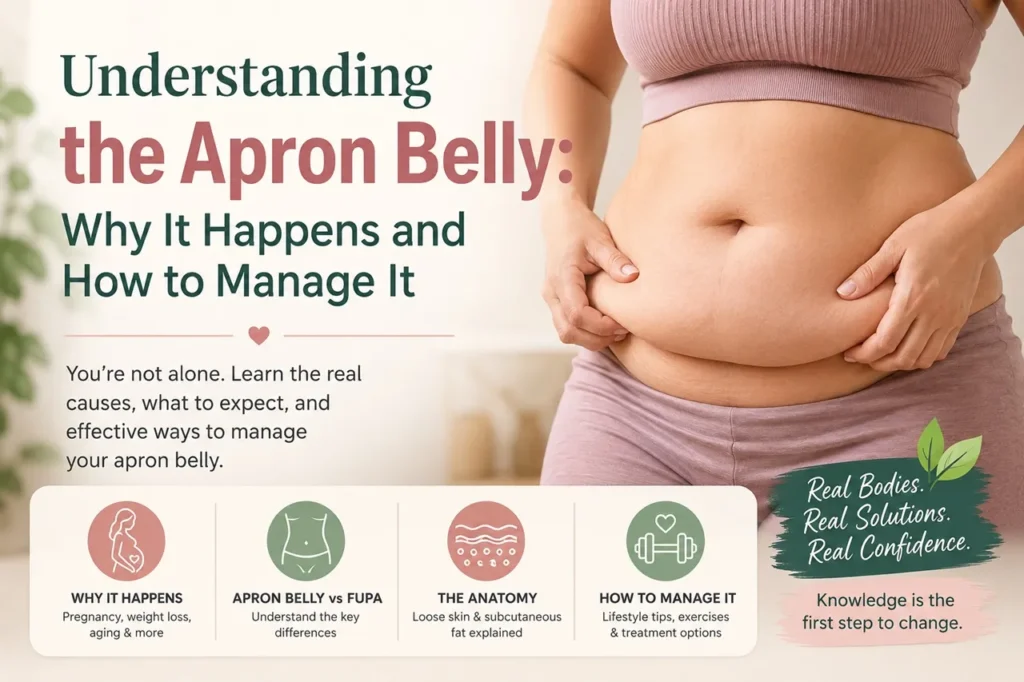

Most guides about apron belly stop at the surface. They describe what it looks like, suggest a few core exercises, and move on. What they rarely do is address the question that actually determines whether any of that advice will work: is the tissue in question fat, loose skin, or a combination of both? That distinction matters more than almost anything else when someone is trying to understand what is an apron belly, what can realistically change, and what cannot.
What apron belly means in practice
An apron belly, sometimes called a pannus or abdominal pannus, is the fold of skin and fatty tissue that hangs over the pubic area and upper thighs. It develops most commonly after substantial weight gain, pregnancy, or major weight loss, and it sits below the navel rather than around the waist. Understanding what is an apron belly at a tissue level, rather than just a visual one, is where most mainstream guidance falls short.
The fold can contain subcutaneous fat, excess skin with little remaining fat, or both in varying proportions. Each of those compositions responds differently to diet, exercise, and time. A person who has recently gained weight and carries a dense, firm fold is dealing with a different physiological situation than someone who has lost 30 kilograms and is left with a soft, deflated overhang. Treating them identically, with the same exercise plan and the same expectations, is where a lot of frustration begins.
For a grounded starting point, Apron Belly: Understanding How to Manage covers the foundational anatomy and the range of factors that contribute to the condition, which is worth reading before jumping to any specific intervention.
How to think about apron belly
The editorial gap in most apron belly coverage is not a lack of exercise lists or diet tips. It is the absence of a clear framework for deciding which type of problem you are actually dealing with before you choose a course of action.
The core problem to understand
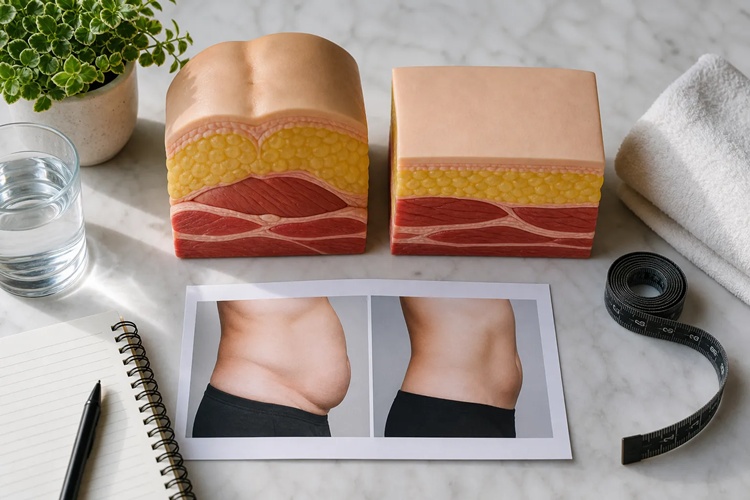
The central issue is that fat and loose skin are not interchangeable problems. Subcutaneous fat, the kind stored beneath the skin in the lower abdomen, can be reduced through a sustained calorie deficit, progressive exercise, and lifestyle changes. Loose skin, by contrast, is structural. Once the dermis has been heavily stretched and the collagen and elastin fibres have lost their integrity, no amount of calorie restriction will restore that tissue to its previous state.
This is not a pessimistic view; it is a practical one. Someone whose apron belly is predominantly fat-based has a meaningful pathway through diet and movement. Someone whose fold is primarily loose skin after major weight loss needs different information: realistic expectations, comfort management strategies, and, if appropriate, a conversation with a medical professional about surgical options such as a panniculectomy or abdominoplasty. Conflating the two pathways does a disservice to both groups.
The practical decision criteria
Distinguishing between fat and loose skin is not always straightforward, but there are practical indicators. A fold that feels firm and dense when pressed is more likely to contain a large proportion of fat. A fold that is soft, thin, and easily pinched into a large amount of excess tissue is more likely to be predominantly loose skin. Many people have a mixture, particularly those who have lost weight but not reached a stable endpoint.
Body weight trajectory matters too. If someone is still in the process of losing weight, the fold may continue to change in both volume and texture. If weight has been stable for a year or more and the fold persists, the remaining tissue is more likely to be structural rather than metabolic. This is the kind of practical decision framework that rarely appears in generic apron belly content, yet it is the first question anyone should answer before deciding how to get rid of apron belly tissue.
Common mistakes to avoid
The most common mistake is applying fat-loss logic to a loose-skin problem. This leads people to pursue increasingly aggressive calorie deficits or high-intensity exercise programmes in the hope that the fold will eventually disappear, when the tissue composition means it cannot respond in that way.
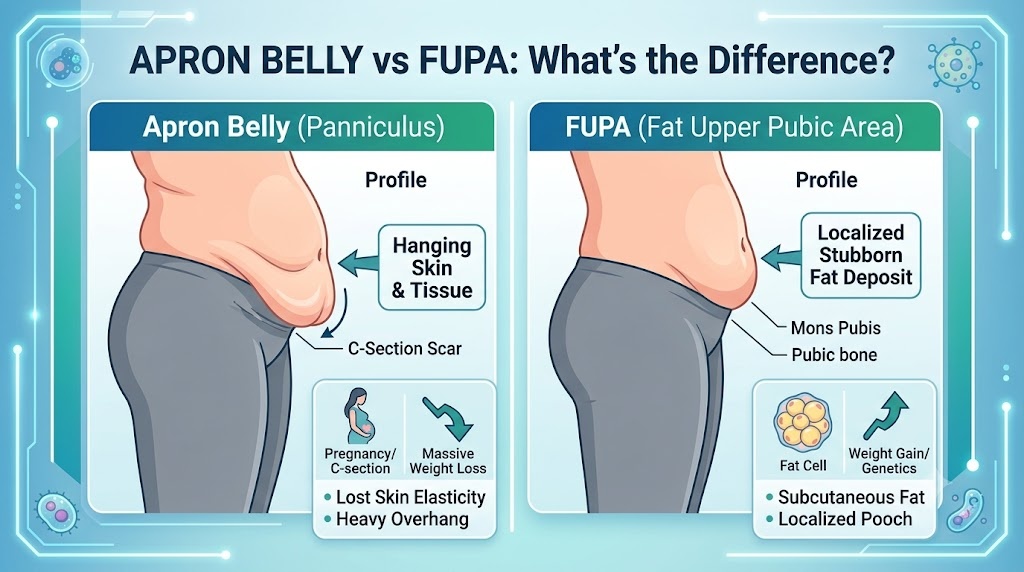
A related error is conflating apron belly with FUPA. The apron belly vs FUPA distinction is useful here: a FUPA (fatty upper pubic area) refers specifically to fat accumulation in the mons pubis region, sitting higher and without the hanging fold characteristic of a pannus. The two can coexist, but they are anatomically distinct, and interventions that address one may not address the other. Misidentifying the problem leads to mismatched solutions.
A third mistake is ignoring daily comfort in favour of aesthetic goals. Skin-on-skin friction, hygiene challenges, and clothing fit are real, daily concerns for many people with an apron belly. Addressing those practical issues through appropriate garments, moisture management and positioning is a legitimate and important part of managing the condition, not a consolation prize.
How to apply this to apron belly
Once the tissue composition question is addressed honestly, the path forward becomes clearer. For those whose apron belly is predominantly fat, a consistent calorie deficit combined with resistance training and cardiovascular exercise remains the evidence-based approach. Progress will be gradual, and the lower abdomen tends to be one of the last areas to respond to fat loss, but change is possible over time.
For those whose fold is primarily loose skin, the focus shifts. Strength training can improve the muscular foundation beneath the skin, which may improve the appearance and functional stability of the area, but it will not remove excess skin. Compression garments can provide meaningful comfort and support during daily activity. And for those severely affected, a referral to a plastic or reconstructive surgeon is a reasonable step to consider, particularly where the fold causes recurrent skin infections or serious functional impairment.
For those in the mixed category, which includes many people, a phased approach makes sense: continue with fat loss if weight is not yet stable, then reassess the remaining tissue once weight has been stable for several months. Looking at apron belly before and after pictures from people at different stages can help calibrate realistic expectations, though individual variation is considerable.
The apron belly vs FUPA distinction also becomes practically relevant at this stage. If the primary concern is the pubic fat pad rather than the hanging fold, targeted fat loss (which cannot be spot-reduced but responds to overall calorie deficit) and specific clothing choices will be more relevant than skin-tightening strategies.
FAQ about apron belly
Is it possible to get rid of apron belly?
It depends on tissue composition. Fat-based apron belly can reduce considerably through diet and exercise; loose skin generally requires surgical intervention to remove fully.
What is the difference between an apron belly and a fupa?
An apron belly is a hanging fold of skin and fat below the navel. A FUPA is a fat deposit in the upper pubic area, sitting higher without the characteristic overhang.
What tightens the apron belly?
Resistance training can strengthen the underlying muscles and improve the area’s appearance. Loose skin, however, does not tighten through exercise alone; surgical options are the only reliable method for removing excess skin.
Does a GLP-1 weight-loss medication get rid of apron belly?
Weight-loss medications can reduce the fat component of an apron belly if a meaningful amount of fat is present. They do not address loose skin, which may become more prominent as fat reduces.
Can you tighten up an apron belly?
Partially. Fat reduction and muscle strengthening can improve the area, but if excess skin is the primary issue, non-surgical tightening methods have limited effect.
Which belly fat is hardest to lose?
Subcutaneous fat in the lower abdomen, the kind associated with an apron belly, is typically among the last to respond to a calorie deficit, partly due to the distribution of fat-cell receptors in that region.
What is the first thing to work out about your apron belly?
The most important first step is identifying whether the fold is primarily fat, loose skin, or both, because the appropriate response differs substantially between those three situations.
How do you choose between fat loss, skin care and medical options?
Assess tissue composition, weight trajectory, and daily comfort needs. Fat-focused strategies apply when weight is still changing; skin management and medical options become more relevant once weight is stable.
Recommended next steps
The most useful thing anyone dealing with an apron belly can do is resist the urge to jump straight to a generic exercise plan or diet protocol. The question of what the tissue actually consists of (fat, loose skin or a mixture) should come first, because it determines which interventions are realistic and which are not.
From there, the practical path is straightforward: if fat loss is appropriate, pursue it consistently and with patience. If loose skin is the primary issue, shift focus to comfort, support, and a conversation with a medical professional if the condition is causing functional problems. If both are present, address them in sequence rather than simultaneously, and adjust expectations at each stage.
Understanding what is an apron belly at a tissue level, rather than simply as a visual concern, is what separates useful guidance from the kind that leaves people frustrated after months of effort. That distinction, between what diet and exercise can change and what they cannot, is the foundation of any honest, practical approach to this condition.