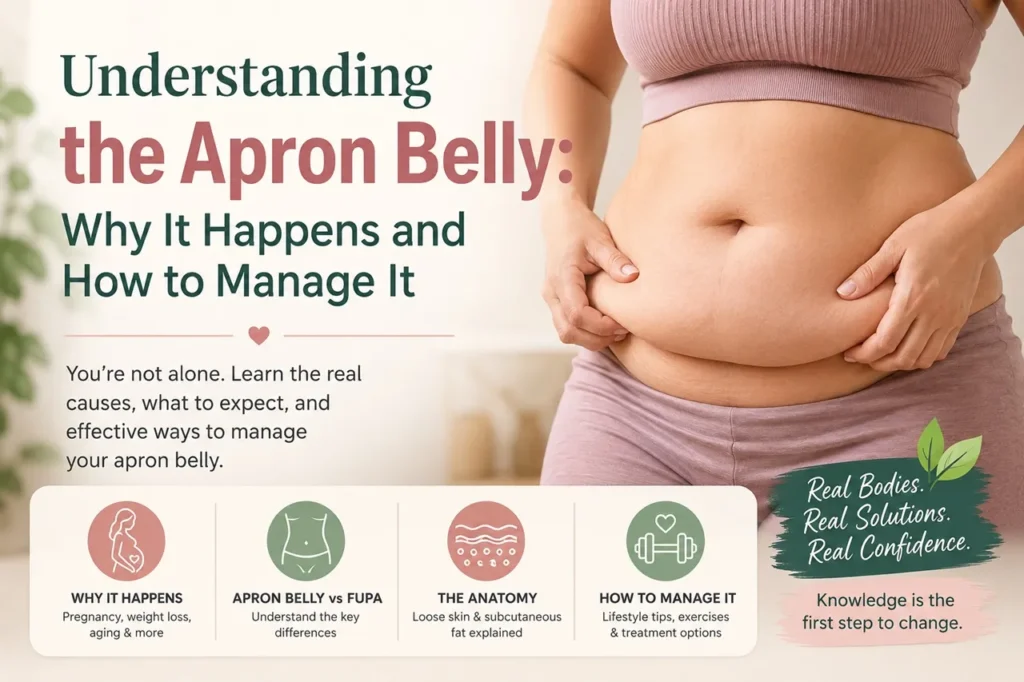

Controlled movement exercises for core strength are low-impact, deliberate movements that prioritise tempo and stability over intensity. They engage the deep abdominal and stabilising muscles without jumping, heavy loads or fast repetitions, which makes them accessible for beginners, people returning to movement, and anyone managing a heavier lower belly.
The eight options below range from seated marching to breath-led core bracing. Each one is graded by its trade-offs, so you can match the exercise to your current mobility, balance, and environment. Start slower than feels necessary. That is almost always the right call.
1. Seated marching
Seated marching is the broadest entry point for controlled movement exercises. You sit upright in a firm chair, lift one knee slowly, lower it, then alternate. It activates the hip flexors and lower abdominals without any floor work or balance demand.
It will not build cardiovascular fitness quickly, but it is accessible for almost everyone. Beginners can reduce the lift height and slow the tempo further until the movement feels natural. For a wider view of how this fits into managing a heavier lower belly, see Apron Belly: Understanding How to Manage.
2. Standing wall push-ups
Standing wall push-ups cost nothing and need only a clear wall. They train the chest, shoulders, and triceps through a slow, deliberate press without putting wrists or knees on the floor.
The compromise is load: wall push-ups are much easier than floor versions, so progression is limited unless you gradually move your feet further from the wall. For readers using movement and exercise as part of a broader lower-belly routine, this pairs well with seated or standing core work.
3. Slow walking with deliberate heel-to-toe steps
Slow, intentional walking, placing the heel first, rolling through the foot and then pushing off the toe, is one of the most underrated controlled movement exercises for digestive and circulatory health. The deliberate pace keeps impact low while still engaging the calves, glutes, and core stabilisers.
This is particularly useful for readers who also want an exercise to stimulate bowel movement, since rhythmic walking gently activates the muscles surrounding the colon. The limitation is that it requires a safe, even surface; uneven ground reduces the control benefit.
4. Standing hip circles
Hip circles performed slowly while standing offer a clean option with fewer trade-offs than most apron belly exercises. You stand with feet hip-width apart, hands on hips, and rotate the pelvis in a wide, smooth circle. There is no jumping, no floor transition, and no equipment.
The movement lubricates the hip joints, gently engages the obliques, and can be done in a small space. It does not load the muscles enough to build much strength, but as a daily mobility habit it is consistent and low-risk. Beginners should reduce the circle size until balance feels secure.
5. Resistance band seated rows
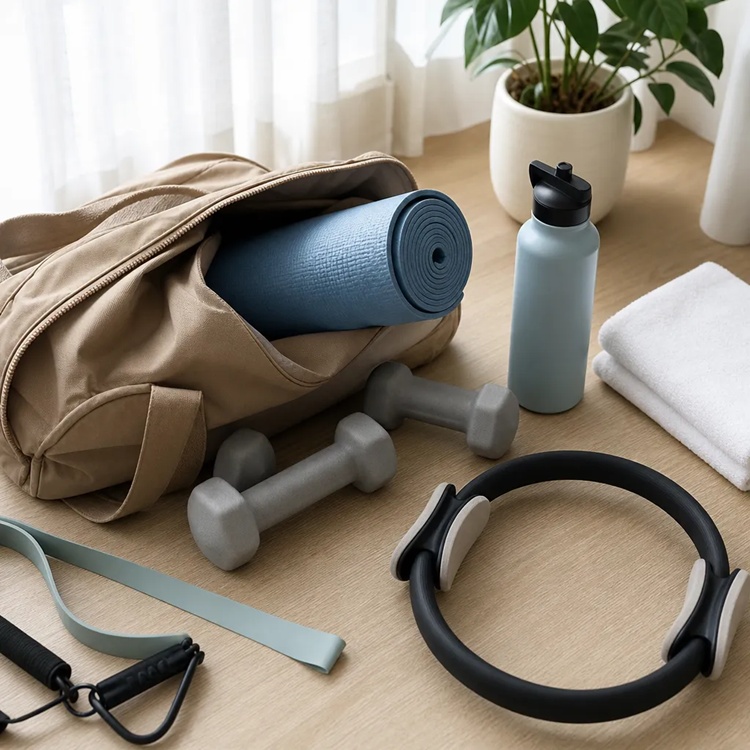
Seated rows using a light resistance band looped around a table leg or door anchor are worth skipping if you need full-range upper-body strength training, because the resistance ceiling is simply too low for that goal. However, for readers whose priority is controlled, joint-friendly movement rather than progressive overload, they are a reasonable fit for core strength and posture.
The band can snap if worn or incorrectly anchored, so inspect it before each session. If that maintenance step feels like a barrier, seated marching or wall push-ups are simpler alternatives with no equipment risk.
6. Tai chi-style weight shifts
Slow lateral weight shifts, standing with feet wider than hip-width and shifting your body weight from one leg to the other in a controlled arc, borrow from tai chi principles without requiring any formal training. The movement builds single-leg stability, which matters for everyday balance, and keeps the body moving continuously without impact.
One detail that makes this controlled movement exercise particularly useful: it can be done holding a counter or chair back for support, making it accessible even when standing balance is uncertain. Progress by gradually reducing the grip on the support surface.
7. Supine knee folds (with a folded towel under the head)
Lying on your back with knees bent and slowly drawing one knee toward the chest, then returning it with control, is a gentler alternative to leg raises or crunches. Placing a folded towel under the head removes neck strain, which is a common reason people abandon floor work.
The angle worth knowing here is that the controlled lowering phase (the eccentric portion) is where most of the abdominal engagement happens. Rushing the return defeats much of the purpose. If getting to the floor is difficult, this move can be adapted on a firm bed.
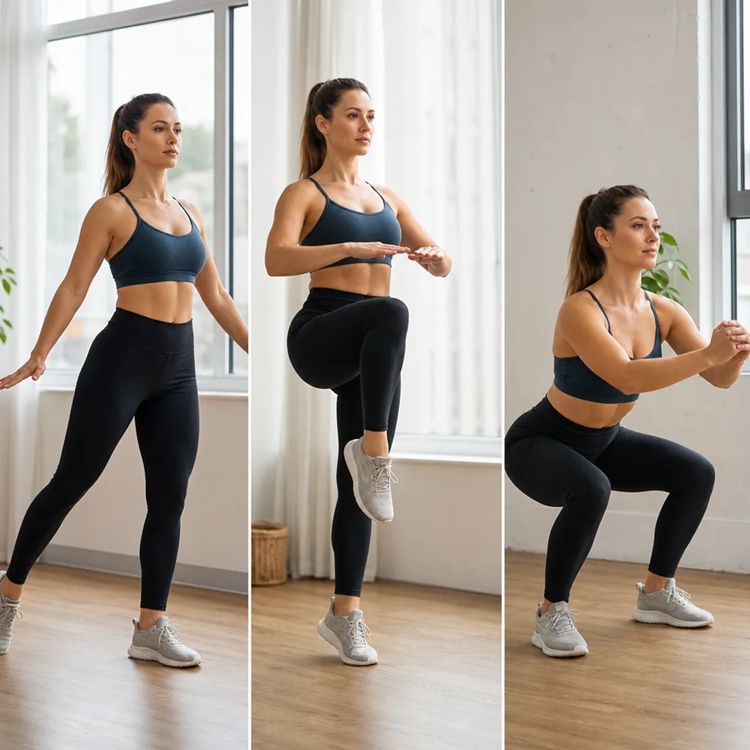
8. Exhale-led standing core bracing
A detail people often overlook in controlled movement exercises is the role of the breath. Standing tall, exhaling fully, and gently drawing the lower abdomen inward, then holding for three to five seconds before releasing, trains the deep transverse abdominis without any visible movement at all.
This is not a substitute for dynamic exercise, but it is a practical addition to any routine and can be done anywhere: at a kitchen counter, waiting for a kettle, or during a walk. Readers who find traditional apron belly exercises uncomfortable due to pressure or skin sensitivity often find this the most tolerable starting point.
FAQ about controlled movement exercises for core strength
What makes an exercise a controlled movement exercise?
Controlled movement prioritises tempo and stability over intensity. Starting slower than feels necessary is almost always the right call, especially if you are returning to movement after a long break.
How do you choose the right controlled movement exercise?
Match the option to your current mobility and environment. If floor transitions are difficult, choose seated or standing options; if balance is uncertain, use a chair or wall for support.
What is the most common mistake with controlled movement?
Rushing the tempo is the most common error. Controlled movement loses most of its benefit when speed increases, because momentum replaces muscular effort.
Can you do controlled movement exercises every day?
Yes. Low-intensity controlled options such as seated marching or standing hip circles can be done daily without recovery concerns, making consistency easier to maintain than with higher-intensity apron belly exercises.
What should you consider before picking an exercise?
Compare floor requirement, balance demand, and equipment need. The best fit is whichever option removes the most barriers to actually doing it each day.
How long does it take to see core strength results from controlled movement exercises?
Controlled movement exercises build endurance and stability gradually, so most people notice easier daily movement within a few weeks of consistent practice. Visible core strength gains depend on frequency, tempo control, and pairing the exercises with overall activity and nutrition.
Do controlled movement exercises replace traditional core workouts?
Controlled movement exercises work best as a foundation or complement rather than a full replacement. They suit people who need low-impact, joint-friendly options, while those seeking maximum strength gains may eventually layer in progressive resistance work.
Recommended next steps
Pick one option from this list that removes the most obstacles (no floor, no equipment, no balance risk) and practise it for a week before adding a second. Consistency with simple movement and exercise outperforms occasional effort with complex routines. If digestive comfort is also a goal, the guidance on exercise to help bowel movement in the linked resources above offers a complementary starting point. For broader context on managing a lower belly, the Apron Belly: Understanding How to Manage hub is a useful reference as you build your routine.