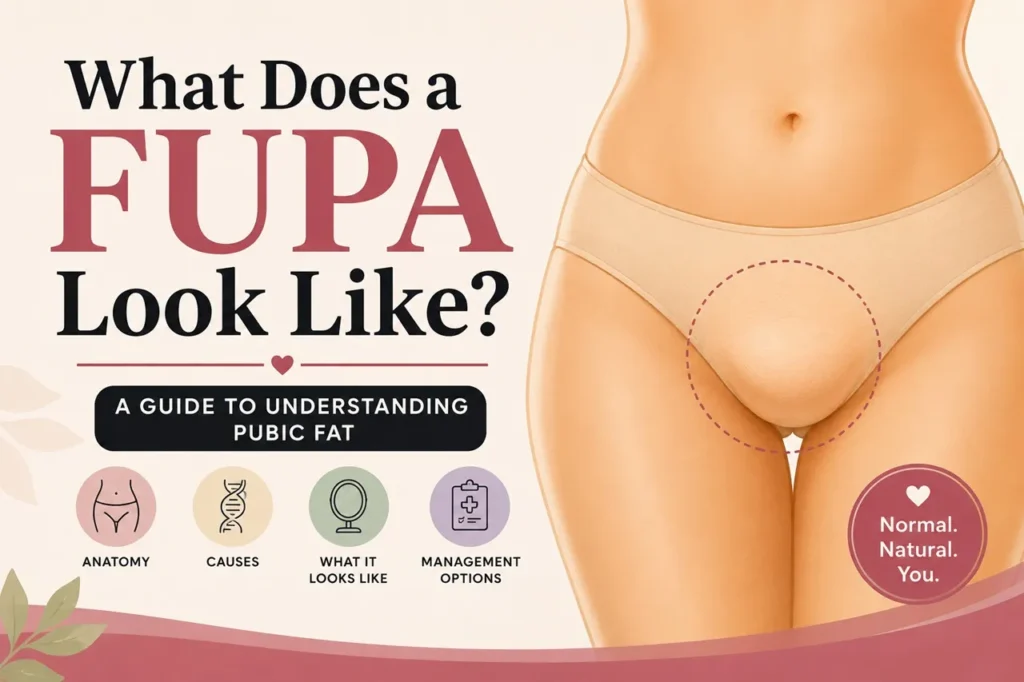

FUPA stands for “fat upper pubic area”. It is the soft layer of fat that sits above the pubic bone and below the belly button. A FUPA is not a medical diagnosis. It is a normal place for the body to store fat, shaped by hormones, genes, pregnancy and weight changes.
Key takeaways
- FUPA stands for “Fat Upper Pubic Area”, the fat above the pubic bone.
- It is not a medical diagnosis, and most bodies carry some fat here.
- Causes include hormones, genes, pregnancy, weight changes and ageing.
- A FUPA is firmer than an apron belly, which is a loose, hanging fold.
- You cannot spot-reduce it, but a calorie deficit and strength training reduce it over time.
If you’ve typed “FUPA meaning” into Google, you’re not alone. Thousands of people search this term every month, yet most explanations online feel either clinical or dismissive. This guide takes a different approach. You’ll learn exactly what FUPA means, why it forms, and how it differs from related terms like apron belly and belly pooch. By the end, you’ll understand your body better and know which next steps actually make sense.

What Does FUPA Stand For?
FUPA stands for “Fat Upper Pubic Area.” It describes the soft tissue that sits just above the pubic bone, below the belly button. Unlike general belly fat, this area tends to feel firmer and more localised, which is exactly why so many people notice it separately from the rest of their stomach.
Importantly, a FUPA isn’t a medical diagnosis. Instead, it’s simply a descriptive term people use for a common, completely normal area of fat storage.
Where Exactly Is the FUPA Located?
The FUPA sits directly over the mons pubis, the rounded mound of tissue above the pubic bone. Consequently, it’s positioned lower than typical “belly fat” and higher than the thighs, making it a distinct zone rather than part of the general midsection. Our guide to what a FUPA looks like describes how it typically appears.
What Causes a FUPA?
A FUPA is caused by a mix of hormones, genes, pregnancy, weight changes, ageing and past surgery. Usually more than one applies at once.
- Hormonal changes, especially higher oestrogen levels, which influence where the body stores fat
- Genetics, since some bodies store fat here before anywhere else
- Pregnancy and childbirth, which stretch the skin and abdominal muscles a great deal
- Weight fluctuations, including both rapid gain and rapid loss
- Ageing, as metabolism naturally slows over time
- Previous abdominal surgery, including C-sections, which can affect the tissue in this region
Because these causes overlap so often, blaming a single factor rarely tells the full story. That said, understanding your specific combination of causes helps you set realistic expectations for change.
Is Having a FUPA Normal?
Yes, entirely. Most bodies, particularly female bodies, naturally carry some fat in this area. In fact, this fat serves a protective function, cushioning the pelvic bone. Therefore, having a FUPA doesn’t indicate poor health or a lack of fitness. It simply reflects normal human anatomy influenced by hormones and genetics.
FUPA vs Apron Belly vs Belly Pooch: What’s the Difference?
These three terms frequently get confused, so a clear comparison helps.
| Term | Location | Texture | Common Cause |
| FUPA | Above the pubic bone | Firm, doesn’t move much | Hormones, genetics, weight changes |
| Apron belly | Hangs over the lower abdomen | Loose, visibly sways | Pregnancy, major weight loss |
| Belly pooch | General lower-belly bulge | Soft, doesn’t hang | Posture, diastasis recti |
As the table shows, a FUPA is generally firmer and more contained, whereas an apron belly involves loose, hanging skin. Meanwhile, a belly pooch relates more to core weakness or muscle separation than fat storage alone.
Can FUPA Be Reduced Naturally?
Yes, to a meaningful extent, though setting realistic expectations matters first. You cannot spot-reduce fat from one specific area through targeted exercise alone. However, an overall calorie deficit combined with consistent strength training does reduce total body fat, which includes fat stored in the FUPA area.
Here’s what genuinely helps:
- A modest, sustained calorie deficit rather than an extreme, unsustainable one
- Strength training that targets the deep core, not just surface-level crunches
- Adequate sleep, since poor sleep raises cortisol, a hormone linked to abdominal fat storage
- Patience, because visible results typically take 8 to 12 weeks of consistency

When Does a FUPA Need Medical Attention?
Generally, a FUPA doesn’t require medical treatment. Still, some people pursue non-surgical treatments or minor surgical procedures if they’ve tried lifestyle changes for several months without their desired outcome, particularly when loose skin is involved rather than fat alone. If that describes your situation, discussing options with your GP provides personalised guidance based on your specific anatomy.
Frequently Asked Questions
What does FUPA mean in slang?
FUPA is an acronym for “Fat Upper Pubic Area.” While it started as internet slang, it’s now widely used to describe fat stored above the pubic bone.
Is FUPA the same as belly fat?
Not exactly. General belly fat spreads across the whole abdomen, while a FUPA specifically refers to fat localised just above the pubic bone.
Can men have a FUPA too?
Yes. Although it’s discussed more often in relation to women, hormonal changes, weight gain, and ageing can cause a FUPA in men as well.
Does pregnancy always cause a FUPA?
Not always, but pregnancy greatly increases the likelihood due to stretched skin, hormonal shifts, and abdominal changes during and after childbirth.
Will losing weight get rid of a FUPA completely?
Often it reduces the area noticeably, but genetics and skin elasticity determine how much visibly changes, even with consistent weight loss.
How is FUPA different from a hernia?
A FUPA is soft fatty tissue, while a hernia involves internal tissue pushing through a weak spot in the abdominal wall. If you notice a hard lump or pain, see your GP to rule out a hernia.
Conclusion
Understanding the real FUPA meaning helps remove unnecessary shame from a completely normal part of many people’s bodies. It’s simply fat stored above the pubic bone, shaped by hormones, genetics, pregnancy, and lifestyle factors working together. While you can’t target it with exercise alone, a sustainable calorie deficit paired with consistent strength training reduces it over time. If you’re ready to take the next step, read our detailed guide on FUPA exercises to start building a realistic, effective routine today.
About the Author
This guide was written by the Apron Belly editorial team, who research body-shape and postpartum wellness topics using credible health sources, including NHS guidance and peer-reviewed studies on fat distribution and hormones. Our mission is to provide clear, judgement-free information that helps readers understand their bodies with confidence.