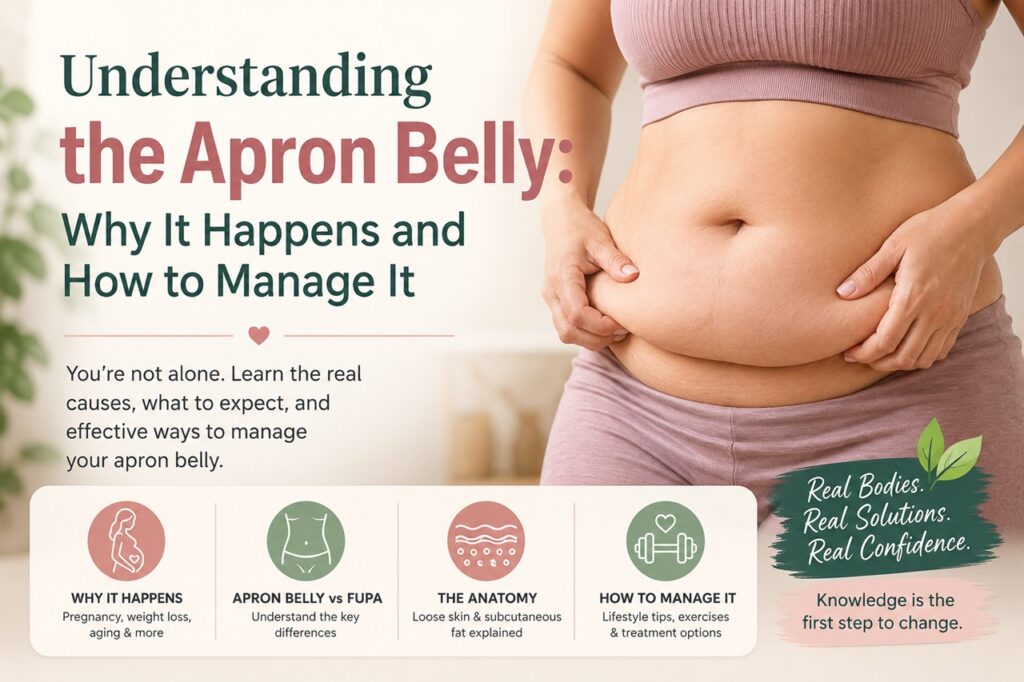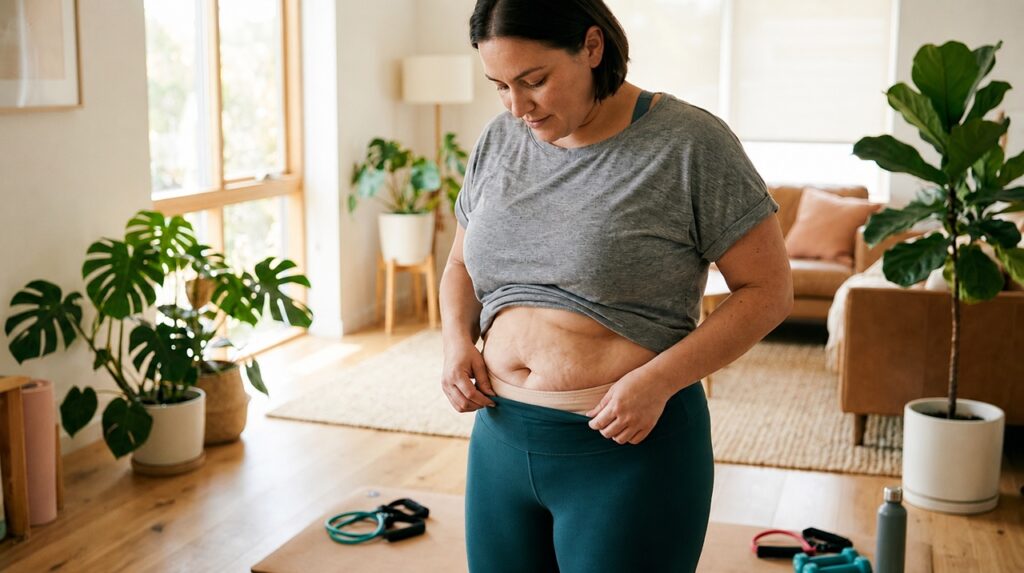

An apron belly, medically called a panniculus or pannus, is a fold of loose skin and fat that hangs from the lower abdomen. After significant weight loss, it often remains because stretched skin loses elasticity and cannot retract on its own. Diet and exercise can reduce underlying fat, but surgical procedures like panniculectomy or abdominoplasty are typically required to remove the skin fold itself.
Losing a significant amount of weight is a real achievement, one that takes months, sometimes years, of sustained effort and discipline. So it can feel deeply disheartening when the scale reflects your hard work, but your abdomen doesn’t quite look the way you expected.
For many people, a fold of loose skin remains in the lower belly long after the weight has gone. It sits below the waistband, causes friction and discomfort, and resists every diet change and core exercise thrown at it. This is the apron belly, and it affects many people who have lost weight through diet, exercise, or bariatric surgery.
This article explains exactly what an apron belly is, why it persists after weight loss, what can realistically be done about it, both surgically and non-surgically, and what genuine before-and-after results look like. The goal here is honest, practical information, not false promises.
What Is an Apron Belly (Pannus)?
An apron belly is a fold of loose, overhanging skin and subcutaneous fat that develops in the lower abdominal area. Medically, this tissue is referred to as a panniculus or pannus, and it is graded by clinicians based on how far it hangs, ranging from Grade 1 (covering the pubic hairline) to Grade 5 (extending to the knees in severe cases).
The key distinction to understand is between subcutaneous fat and a skin flap. Subcutaneous fat sits beneath the skin and responds to caloric deficit over time. A skin flap, however, is primarily excess skin tissue that was once stretched to accommodate a larger body, but has since lost the collagen and elastin needed to retract. These two components often coexist in an apron belly, which is why results from diet and exercise alone are limited.
An apron belly is also commonly associated with diastasis recti, a condition in which the two bands of the abdominal muscles separate during pregnancy or periods of rapid weight gain, leaving a gap that weakens the abdominal wall.
Why Does Apron Belly Happen After Significant Weight Loss?
Skin is elastic up to a point. When the body carries excess weight for a prolonged period, or expands rapidly during pregnancy the skin stretches to accommodate the increased volume. Over time, the connective fibres within the skin break down, and the tissue’s ability to spring back diminishes.
When significant weight loss occurs, the underlying fat shrinks, but the skin envelope that once held it does not automatically follow. The skin has permanently lost elasticity, and no amount of further weight loss will restore it. This is why people who lose 50, 80, or 100-plus pounds through diet and exercise often still have a hanging belly fold.
Several factors influence how severe this becomes:
- Age: Skin produces less collagen after the mid-twenties, reducing its ability to retract.
- Speed of weight loss: Rapid loss gives the skin less time to adapt.
- Genetics: Some people naturally have more resilient skin than others.
- How long the weight was carried: Longer duration means more structural damage to the skin’s support fibres.
- Pregnancy history: Multiple pregnancies compound the stretching effect.
Does Exercise or Diet Get Rid of an Apron Belly?
This is one of the most common misconceptions, and it deserves a direct answer: No, exercise and diet alone cannot remove an apron belly caused by excess skin.
Core exercises like crunches, planks, and leg raises strengthen the muscles underneath the pannus, and that matters. Stronger core muscles improve posture, reduce lower back strain, and can make the abdomen appear slightly more toned. Continued fat loss through a caloric deficit will reduce the subcutaneous fat component of the apron belly, potentially making it smaller and less heavy.
But neither of these interventions can make loose, non-elastic skin retract. Skin that has permanently lost its structural integrity will not tighten through movement or nutrition, regardless of how consistently the effort is maintained.
Non-surgical body contouring treatments like CoolSculpting work by targeting and destroying fat cells through controlled cooling. CoolSculpting can reduce localised fat deposits, but it is not designed to address loose skin. If the primary issue is a skin flap rather than remaining fat, CoolSculpting will not produce meaningful results for the visible hang.
The honest conclusion: lifestyle changes are valuable for health, for fat reduction, and for managing the belly fold day to day. They are not a substitute for surgery when significant loose skin is present.
Medical and Surgical Options: Panniculectomy vs. Tummy Tuck
For people with a significant apron belly caused by excess skin, surgery is the only proven method of removing it permanently. Two procedures are most relevant here:
Panniculectomy
A panniculectomy is a surgical procedure that removes the pannus, the overhanging skin and fat from the lower abdomen. The surgeon cuts away the excess tissue and closes the incision, typically leaving a horizontal scar low on the abdomen.
Crucially, a panniculectomy does not repair the underlying abdominal muscles. It focuses purely on removing the skin fold. Because of this, it is often classified as a medically necessary procedure rather than a cosmetic one, particularly when the apron belly causes chronic skin infections, rashes, or mobility problems. In the UK, NHS funding for panniculectomy is possible in cases where the pannus causes documented, recurrent medical complications, though criteria vary by clinical commissioning group and approval is not guaranteed.
Abdominoplasty (Tummy Tuck)
An abdominoplasty, commonly called a tummy tuck, goes further. In addition to removing excess skin and fat, it also repairs separated abdominal muscles (diastasis recti), resulting in a flatter, firmer abdominal profile.
Because abdominoplasty includes muscle repair and often repositions the navel, it is a more extensive procedure with a longer recovery period, and it is generally classified as cosmetic surgery in the UK, meaning it is not covered by the NHS. Costs at private clinics typically range from £5,000 to £10,000, depending on the surgeon and the complexity of the procedure.
Choosing between the two: A panniculectomy is the more appropriate option when the primary goal is to remove a medically problematic skin fold. An abdominoplasty is better suited to patients who want a more comprehensive aesthetic result, including muscle tightening. A GMC-registered plastic surgeon can assess which procedure fits your anatomy and goals.
Realistic Expectations: Before and After Results
The before-and-after photos circulating online can be inspiring, but they require context.
What surgery can achieve
- Complete removal of the overhanging skin fold
- A significantly flatter lower abdomen
- Relief from skin fold-related rashes, infections, and discomfort
- Improved confidence in clothing and physical activity
What surgery cannot guarantee
- A completely scar-free result. Both procedures leave a horizontal incision scar across the lower abdomen. Skilled surgeons place this low enough to be hidden by most underwear and swimwear, but the scar is permanent. It typically fades from red or purple to a thinner, paler line over 12 to 24 months, but it does not disappear.
- Perfectly symmetrical results. Healing varies between individuals.
- Prevention of recurrence. If significant weight is regained after surgery, the apron belly can return.
Compression garments play an important role in the weeks following surgery. They reduce swelling, support healing tissue, and help the skin conform to its new contour. Most surgeons recommend wearing them consistently for six to twelve weeks post-operatively.
Realistic before and after results show meaningful improvement, not perfection. The skin fold is gone, comfort improves substantially, and the physical reminders of the weight-loss journey take on new forms. For most patients, that is a significant and meaningful outcome.
Recovery and Life After Surgery
Recovery from either a panniculectomy or abdominoplasty requires planning. Key points to understand:
- Initial recovery: Most patients are advised to take 2 to 4 weeks off work, depending on the physical demands of their job. Movement is encouraged early to reduce the risk of blood clots, but strenuous activity is restricted for six to eight weeks.
- Drains: Surgical drains are often placed during the procedure to remove excess fluid. These are typically removed within one to two weeks.
- Swelling: Significant swelling is normal and can persist for several months. Final results are usually visible at the six-month mark, with further refinement up to a year post-surgery.
- Scarring: Keeping incision sites moisturised with silicone-based scar treatments and protecting them from sun exposure helps achieve the best long-term scar outcome.
- Emotional adjustment: Many patients report that the physical change takes time to process emotionally. This is common and worth discussing with a healthcare professional if the adjustment feels difficult.
For UK patients, always verify that your surgeon is registered with the General Medical Council (GMC) and has a specialist interest in plastic and reconstructive surgery. The British Association of Aesthetic Plastic Surgeons (BAAPS) maintains a directory of accredited surgeons.
Frequently Asked Questions
The NHS may fund a panniculectomy if the apron belly is causing documented, recurrent medical problems such as chronic skin infections, rashes, or significant mobility impairment. Purely cosmetic concerns are not funded. You will typically need a GP referral and evidence of the ongoing medical impact. Abdominoplasty (tummy tuck) is considered a cosmetic procedure and is not funded by the NHS.
Most patients return to light daily activities within two to four weeks. Strenuous exercise and heavy lifting should be avoided for six to eight weeks. Swelling can persist for several months, and final results are generally visible around the six-month mark. Full recovery, including scar maturation, can take up to twelve months.
If a stable weight is maintained after surgery, the apron belly is unlikely to return. However, significant weight gain following the procedure can cause the skin to stretch again and the fold to redevelop. Maintaining a consistent, healthy weight is the most important factor in sustaining long-term results.
Exercise and dietary changes can reduce the fat component of an apron belly, potentially making it smaller and less pronounced. However, excess skin that has lost its elasticity cannot be removed without surgery. Non-surgical treatments like CoolSculpting address localised fat, not loose skin. For a significant skin fold, surgery remains the only permanent solution.
Setting Expectations That Match Your Goals
An apron belly after weight loss is not a failure. It is a predictable physical consequence of a body that carried more weight and then changed, often significantly and commendably.
Understanding the difference between loose skin and remaining fat is the foundation of making good decisions. Diet and exercise remain valuable for health, for fat reduction, and for building the core strength that supports daily comfort. But for the skin fold itself, surgery is the only intervention that permanently removes it.
If surgery is something you are considering, consult a GMC-registered surgeon who specialises in post-weight-loss body contouring. Ask to see their before and after results, understand the realistic scar outcomes, and get a clear picture of the recovery timeline before committing.
For further reading, the guides on how to reduce an apron belly and the apron belly before-and-after pictures at apronbelly.co.uk provide additional detail on both non-surgical management and surgical outcomes.
Medical Disclaimer: This content is for informational purposes only and does not constitute medical advice. Always consult with a qualified healthcare professional before considering any surgical or medical treatment options.