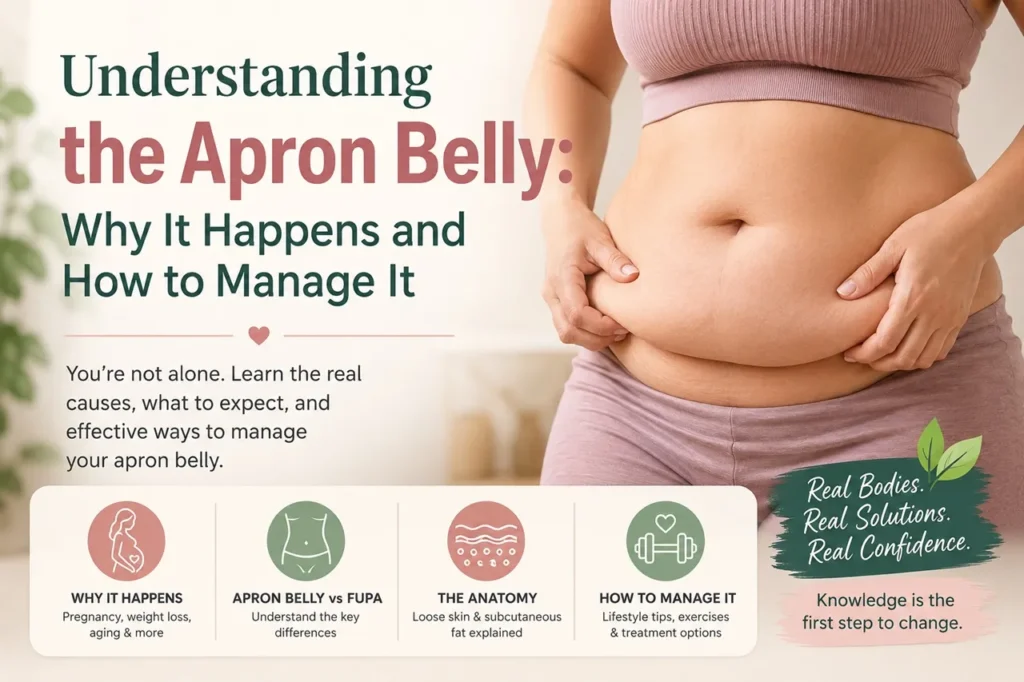
An apron belly is a fold of skin and fat that hangs down from the lower tummy over the pubic area. It is very common in the UK, especially after pregnancy, big weight changes or the menopause, and it is not a sign that you have done anything wrong.
Key takeaways
- An apron belly is a fold of loose skin and fat over the pubic area. Doctors call it a pannus.
- Surgeons grade it from 1 to 5, by how far the fold hangs.
- Common causes include pregnancy, big weight changes, the menopause and ageing skin.
- Fat loss can make it smaller, and deep core work can help it sit flatter.
- Only surgery, such as a panniculectomy or tummy tuck, removes loose skin.
This guide explains what an apron belly is, how doctors grade it, what causes it and whether it is harmful. It also sets out what actually shrinks it, from fat loss and core work to support garments and surgery, so you can choose the right next step for your body.
In short: an apron belly is made of loose skin and the soft fat under it. Fat loss can make it smaller, core work can make it sit flatter, and only surgery removes loose skin.
What Is an Apron Belly?
An apron belly is a hanging fold of lower belly tissue that drapes over the pubic area, a little like a kitchen apron. Doctors call it a pannus or panniculus. You may also hear it called a hanging belly, a mother’s apron or a pannus stomach.
The fold is made of two things. The first is skin that has stretched and lost some of its bounce. The second is subcutaneous fat, the soft, pinchable fat that sits between the skin and the tummy muscles.
An apron belly can be small and only show in tight clothes, or large enough to reach the thighs. It can affect women and men of any size, and many people with a fold are not overweight at all.

Apron Belly Grades: How Doctors Measure the Fold
Surgeons use a five-point scale to describe how far the fold hangs. The grade helps them plan treatment and decide whether surgery is for comfort and health or mainly for appearance.
| Grade | Where the fold reaches | What it usually means |
|---|---|---|
| Grade 1 | The pubic hairline | Mostly a clothing and comfort issue |
| Grade 2 | Covers the pubic area | Sweat rashes in the crease become more common |
| Grade 3 | The upper thigh | Hygiene and walking can become harder |
| Grade 4 | The mid-thigh | Often causes skin problems and back strain |
| Grade 5 | The knees or lower | Usually affects movement and daily life |
Our apron belly grades guide shows each stage in more detail. A small apron belly at grade 1 behaves very differently from a grade 4 fold.
Apron Belly vs FUPA vs Belly Fat
These three are often mixed up, but they sit in different places and respond to different fixes. Knowing which one you have saves a lot of wasted effort.
| Type | Where it sits | What it feels like | Main fix |
|---|---|---|---|
| Apron belly | A fold hanging from the lower tummy over the pubic area | Heavy fold you can lift | Fat loss, support, surgery for loose skin |
| FUPA | A fat pad on the pubic mound itself | Soft fullness, no hanging fold | Overall fat loss |
| Belly fat | Around and above the belly button, partly deep inside | Firm and round if it is deep fat | Diet, activity and sleep |
For a closer look, read our guides to apron belly vs FUPA and apron belly vs belly fat.
What Causes an Apron Belly?
An apron belly forms when skin, fat and the tummy muscles change at the same time. Most people have more than one cause, which is why the fold can look different from one person to the next. Our guide to what causes an apron belly covers each one in depth.
Weight Gain
When you gain weight, the lower tummy often stores more subcutaneous fat. The skin stretches to hold it, and gravity slowly pulls the extra tissue down into a fold.
Big Weight Loss
After large or fast weight loss, the fat shrinks faster than the skin can tighten. The empty, stretched skin then hangs down. This is common after bariatric surgery and weight-loss injections, as our guides to apron belly after weight loss and Ozempic and loose skin explain.
Pregnancy and Diastasis Recti
Pregnancy stretches the skin of the tummy a great deal, and the collagen that keeps it firm can weaken. The two long tummy muscles can also move apart, which is called diastasis recti.
That muscle gap lets the belly push forward, so the fold looks bigger and feels heavier. Our guide to apron belly and diastasis recti includes a home check for the gap.
Caesarean Section
A C-section scar can tether the skin low down. The tissue above the scar is still loose, so it rolls over the scar line and creates a shelf. Read more in our guide to the apron belly hanging over a C-section scar.
Menopause, PCOS and Hormones
Falling oestrogen in midlife moves fat storage from the hips to the tummy, while collagen loss makes skin looser. Our menopause apron belly guide explains this shift.
Insulin resistance in polycystic ovary syndrome can also push fat towards the lower abdomen. See our guide to the PCOS apron belly.
Age and Genes
Skin makes less collagen and elastin every year, so it bounces back less well after any stretch. Your genes also decide where you store fat first, which is why some families are more prone to a lower belly fold.
Can Slim People Get an Apron Belly?
Yes. In a slim body, the fold is usually loose skin rather than fat. It often follows pregnancy, fast weight loss or ageing, and it can be made worse by a muscle gap that lets the lower tummy push forward.
A pinch test helps. If the fold is thin and crepey, loose skin is the main cause. If it is thick and soft, fat is playing a larger part, and fat loss will make more difference.
Is an Apron Belly Harmful?
A small apron belly is usually a comfort issue rather than a health risk. A larger fold can cause real problems, mostly in the skin of the crease and in the back.
- Skin rashes: heat and sweat in the fold can cause intertrigo, a red, sore rash that can pick up yeast. The NHS guidance on intertrigo explains how to treat it, and our apron belly rash guide covers daily care.
- Back pain: the weight of the fold pulls the pelvis forward and strains the lower back, as our guide to apron belly and back pain explains.
- Hygiene and movement: larger folds can make washing, walking and bending harder.
- Health markers: the fold itself is mostly subcutaneous fat, but people with extra weight around the middle can also carry deeper fat that raises the risk of type 2 diabetes and heart disease.
Contact your GP or call NHS 111 if the skin under the fold becomes hot, swollen, very red, weeping or smells bad, or if you notice a lump that bulges when you cough. Our apron belly health risks guide lists the red flags in full.
How to Get Rid of an Apron Belly
The right plan depends on what your fold is made of. Fat can shrink, muscles can get stronger, and skin can be cared for or removed. No cream, wrap or exercise can burn fat from one spot.
| Approach | Reduces fat | Tightens loose skin | Best for |
|---|---|---|---|
| Calorie deficit and protein | Yes | No | Soft, thick folds |
| Walking and strength training | Yes, slowly | No | Everyone |
| Deep core exercises | No | No, but the fold sits flatter | After pregnancy or with a muscle gap |
| Support belts and shapewear | No | No, but they lift and smooth | Daily comfort and clothing fit |
| Panniculectomy or tummy tuck | Some | Yes | Large folds or loose skin that will not shrink |
Our step-by-step guide on how to get rid of an apron belly puts these in order. Here is the short version.
Lose Fat Steadily
A small calorie deficit, with protein at each meal and plenty of fibre from oats, beans, vegetables and fruit, helps you lose fat without losing muscle. Aim for about 0.5 to 1 kg a week, which gives skin the best chance to settle.
Our diet and nutrition guide for an apron belly gives UK-friendly meal ideas and swaps.

Move More and Build Strength
The NHS advises adults to do 150 minutes of moderate activity a week and strength work on two days. Walking is an easy start, and our guide to walking for an apron belly shows what 30 minutes a day can do.
Strength training protects muscle while you lose fat, so your shape firms up rather than just shrinking.
Train the Deep Core
Crunches and sit-ups are not the answer, and they can push a weak tummy outwards. Gentle moves that train the transverse abdominis, the deep muscle that wraps around your middle like a corset, help the fold sit flatter.
| Exercise | How to do it | Sets |
|---|---|---|
| Belly breathing with a draw-in | Lie with knees bent, breathe out and gently draw the lower tummy in towards the spine | 5 holds of 10 seconds |
| Pelvic tilts | Lie with knees bent and flatten your lower back into the floor, then relax | 3 x 12 |
| Dead bugs | Arms up, knees bent at 90 degrees, lower opposite arm and heel slowly | 3 x 10 each side |
| Incline plank | Forearms on a worktop or sofa arm, body straight from head to heels | 3 holds of 20 to 30 seconds |
Stop any move that makes your tummy dome or causes pain. Our guide to effective apron belly exercises adds more options, including gentle beginner moves at home that suit larger folds.
Support and Care for the Skin
Wash and fully dry the crease every day, and use a cotton liner on hot days. A well-fitted apron belly support belt lifts the fold and eases back strain, while the right shapewear for an apron belly smooths clothing lines.
Our apron belly skin care guide covers sore skin, and our guide on tightening apron belly skin without surgery sets out what non-surgical treatments can and cannot do.
Apron Belly Surgery: Panniculectomy vs Tummy Tuck
When loose skin is the main cause, surgery is the only way to remove it. Most surgeons want your weight to be stable for at least six to twelve months first, and many advise waiting until you have finished having children.
| Panniculectomy | Tummy tuck (abdominoplasty) | |
|---|---|---|
| What it removes | The hanging fold of skin and fat | Loose skin and fat from the whole lower tummy |
| Muscle repair | No | Yes, the muscles are stitched together |
| Belly button | Left in place | Repositioned |
| Main goal | Comfort, hygiene and health | Shape and a flatter tummy |
| On the NHS? | Sometimes, if strict criteria are met | Rarely, as it is usually seen as cosmetic |
Read our guides to panniculectomy vs tummy tuck, getting apron belly surgery on the NHS and apron belly surgery costs in the UK before you book a consultation.
Apron Belly Before and After: What Is Realistic?
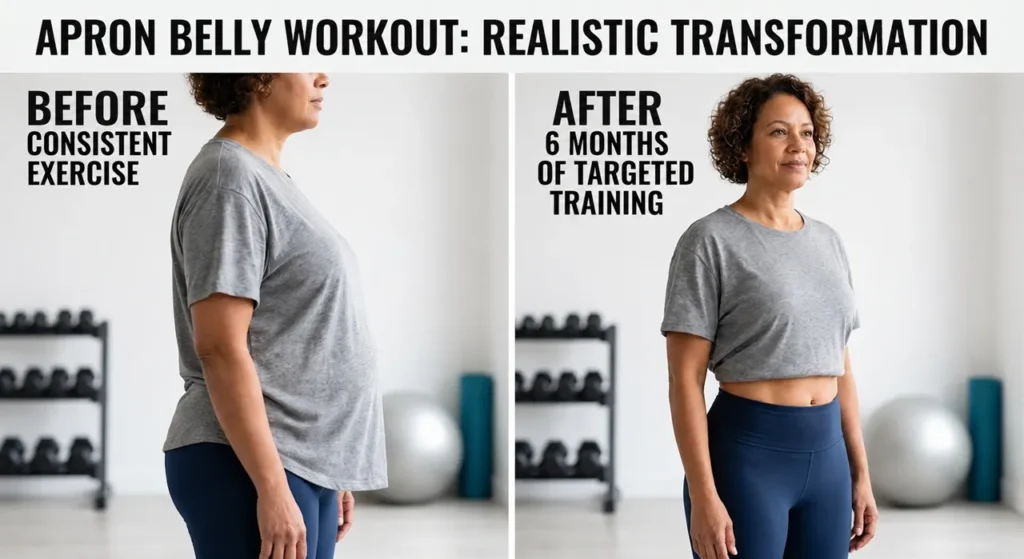
Without surgery, a realistic result is a smaller, softer fold, not a flat tummy. Before and after pictures online can be misleading. A fold that has vanished completely is almost always the result of surgery, not diet or exercise alone.
With fat loss and core work, a thick apron usually becomes smaller, softer and less heavy over several months. Some loose skin often stays, especially after large weight loss or several pregnancies.

After a panniculectomy or tummy tuck, the fold is gone and the lower tummy looks flat, with a long scar low down. Our apron belly before and after pictures guide shows what to look for in real results.

Living Comfortably With an Apron Belly
Whatever you decide, small changes can make each day easier. The right clothes, a good sleep position and simple skin care all help.
- Choose high-waisted knickers and jeans that sit above the fold. See our guides to the best underwear and best jeans for an apron belly.
- Sleep on your side with a pillow under the fold, as our guide on how to sleep with an apron belly explains.
- Pick swimwear with ruching or a higher waist, like the styles in our apron belly swimsuit guide.
Frequently Asked Questions
What is an apron belly?
An apron belly is a fold of loose skin and fat that hangs from the lower tummy over the pubic area. Doctors call it a pannus or panniculus. It is common after pregnancy, weight changes and the menopause.
Can you get rid of an apron belly without surgery?
You can make it smaller. Steady fat loss shrinks the fatty part, and deep core work helps it sit flatter. Loose skin does not shrink much on its own, so surgery is the only way to remove it fully.
Is an apron belly permanent?
Not always. A fold that is mostly fat can shrink a lot with weight loss. A fold that is mostly stretched skin tends to stay. Our guide on whether an apron belly is permanent explains the difference.
Can men get an apron belly?
Yes. Men can develop an apron belly after weight gain or large weight loss. It works the same way, with loose skin and fat forming a fold over the pubic area.
Does walking help an apron belly?
Yes, walking helps you lose fat and eases back strain. It will not target the fold directly, but 30 minutes most days, alongside healthy eating, can make a clear difference over a few months.
Can I get apron belly surgery on the NHS?
Sometimes. A panniculectomy may be funded if the fold causes ongoing health problems, such as repeated skin infections, and you meet strict weight criteria. A tummy tuck for appearance is rarely funded.