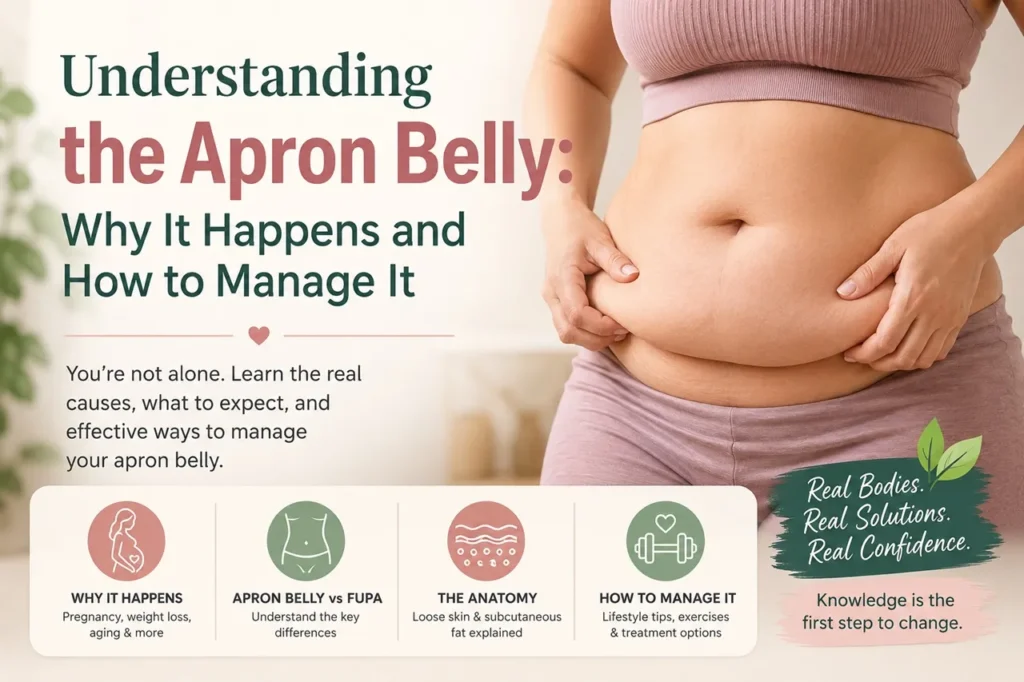
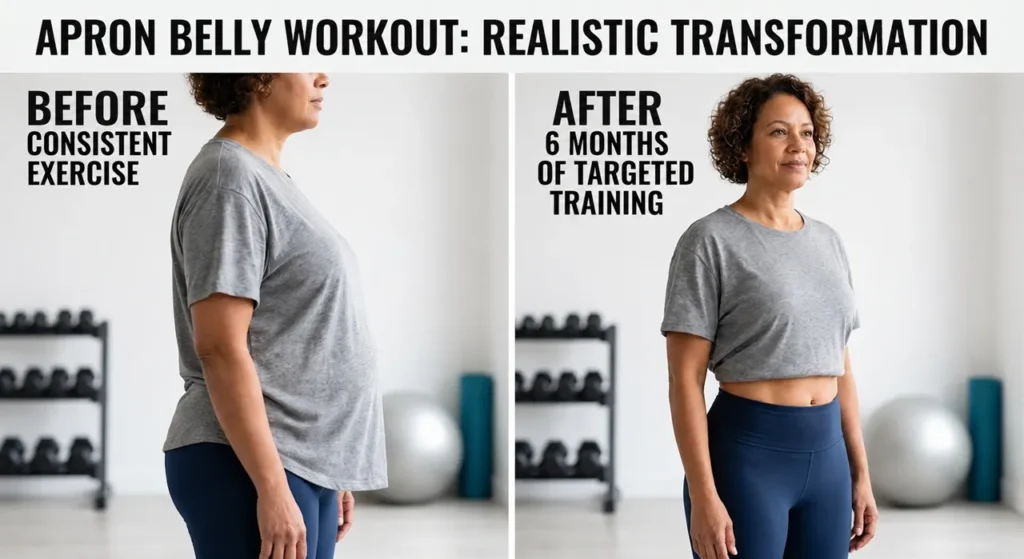
Apron belly before and after exercise results depend on what your fold is made of. Exercise can make an apron belly smaller, firmer and more comfortable, but it cannot remove loose skin. A fold that is mostly fat can shrink a lot over 6 to 12 months. A fold that is mostly stretched skin will change far less.
Key takeaways
- Exercise burns body fat and strengthens the deep core, but it does not shorten stretched skin.
- Your waist and posture usually change before the fold looks different in photos.
- Most people see clear changes after 3 to 6 months of steady training and healthy eating.
- Deep core work, walking and strength training help more than sit-ups or crunches.
- If the fold is mostly loose skin, surgery is the only way to remove it.
This guide explains what really changes when you exercise with an apron belly, and when. It sets out a week-by-week timeline, a simple 12-week plan and the moves to avoid. It also covers the health gains you will not see in photos, why progress can stall, and an honest way to track your own results.
What Exercise Can and Cannot Change in an Apron Belly
An apron belly, or panniculus, is a fold of skin and fat that hangs from the lower tummy. Our guide to what an apron belly is explains how it forms. Exercise affects each layer of the fold in a different way.
| Layer | What exercise does | How much it changes |
|---|---|---|
| Fat inside the fold | Burns body fat, as long as you also eat in a small calorie deficit | A lot, slowly |
| Fat around the organs | Visceral fat deep in the belly often responds to exercise before the fold does | Moderately, within months |
| Deep tummy muscles | Strengthens the transverse abdominis, which holds the belly in like a corset | A lot, within weeks |
| Posture | Improves pelvic position, so the lower belly sits flatter | Quickly |
| Loose skin | Very little; stretched skin does not shrink back much with training | Little or none |
No exercise burns fat from one spot. Your body decides where fat comes off first, and the lower belly is often one of the last places to change. That is why steady, whole-body training matters more than hundreds of tummy exercises.
Is Your Fold Mostly Fat or Mostly Skin?
This is the single biggest factor in your before and after result. A quick pinch test gives you a good idea.
- Thick and soft when pinched: the fold is mostly fat. Exercise and diet can make it much smaller.
- Thin, crepey and loose: the fold is mostly skin. Exercise will firm the area beneath it, but the skin will largely stay.
- A mix of both: the most common picture. Expect the fold to shrink and lift, with some loose skin left.
Folds that follow several pregnancies or large, fast weight loss tend to have more loose skin. Age, sun damage, smoking and genetics also reduce how well skin recoils. Our guide to apron belly fat vs loose skin explains the difference in more detail.
Apron Belly Before and After Exercise: A Week-by-Week Timeline
Changes come in a set order. Strength and comfort improve first, fat loss follows, and the shape of the fold changes last. The table below shows what most people notice at each stage.
| Week or month | What you will probably notice | What has not changed yet |
|---|---|---|
| Week 1 | Muscle soreness that fades within a few days. You learn to switch on the deep core. | Nothing visible. Any early drop on the scales is mostly water. |
| Week 2 | Moves feel easier. You can walk further before tiring. | The fold looks the same in photos. |
| Weeks 3 to 4 | Easier to stand tall, lift and get up from the floor. Less lower back ache. | Waist measurement may only move by a centimetre or two. |
| Weeks 5 to 8 | Waist measurement drops. Waistbands feel looser. Less sweating and rubbing in the crease. | The overhang still looks similar from the front. |
| Weeks 9 to 12 | Better fitness and sleep. Friends may notice you look trimmer in clothes. | The fold has started to shrink but still hangs. |
| Months 4 to 6 | The fold is smaller, softer and lighter, and sits a little higher. | Loose skin is now easier to see. |
| Months 6 to 12 | The fold reaches its new shape. Core strength and fitness are much better. | Any skin left at this point rarely shrinks further with exercise. |
A steady rate of fat loss, about 0.5 to 1 kg a week, gives your skin the best chance to settle. Faster loss tends to leave more loose skin. If you have a lot of weight to lose, the timeline simply stretches. Each stage still comes in the same order.
Benefits You Will Feel Before You See Them
Photos only tell part of the story. Many of the most useful changes happen inside the body, often weeks before the fold looks different.
- Less visceral fat: this deep belly fat is linked to type 2 diabetes and heart disease, and it often shrinks early.
- Better blood sugar control: muscles use more glucose after each session, even before you lose weight.
- Fewer skin problems: a lighter fold traps less sweat, so rashes and soreness in the crease become less frequent.
- Less back ache: a stronger core and glutes take strain off the lower back.
- Better mood and sleep: regular activity helps with both, which makes healthy eating easier to keep up.
A useful health check is your waist-to-height ratio. Measure your waist at the belly button and divide it by your height. A result under 0.5 is generally seen as a healthier range. It often improves long before the scales move much.
The Exercises That Make the Biggest Difference
The best plan mixes three types of training. Together they burn fat, protect muscle and give the fold firmer support from underneath. The NHS physical activity guidelines advise adults to do at least 150 minutes of moderate activity a week, plus strength work on 2 days.
1. Deep Core Work (3 to 5 Days a Week)
These moves train the transverse abdominis without pushing the belly outwards.
- Belly breathing with a draw-in: lie with knees bent, breathe out and gently draw your lower tummy towards your spine. Hold for 10 seconds, 5 times.
- Pelvic tilts: flatten your lower back into the floor, then relax. 3 sets of 12.
- Dead bugs: arms up, knees bent at 90 degrees, then slowly lower the opposite arm and heel. 3 sets of 8 each side.
- Bird dogs: on hands and knees, reach one arm forward and the opposite leg back. 3 sets of 8 each side.
- Incline plank: forearms on a worktop or sturdy bench, body straight. 3 holds of 20 to 30 seconds.
2. Low-Impact Cardio (Most Days)
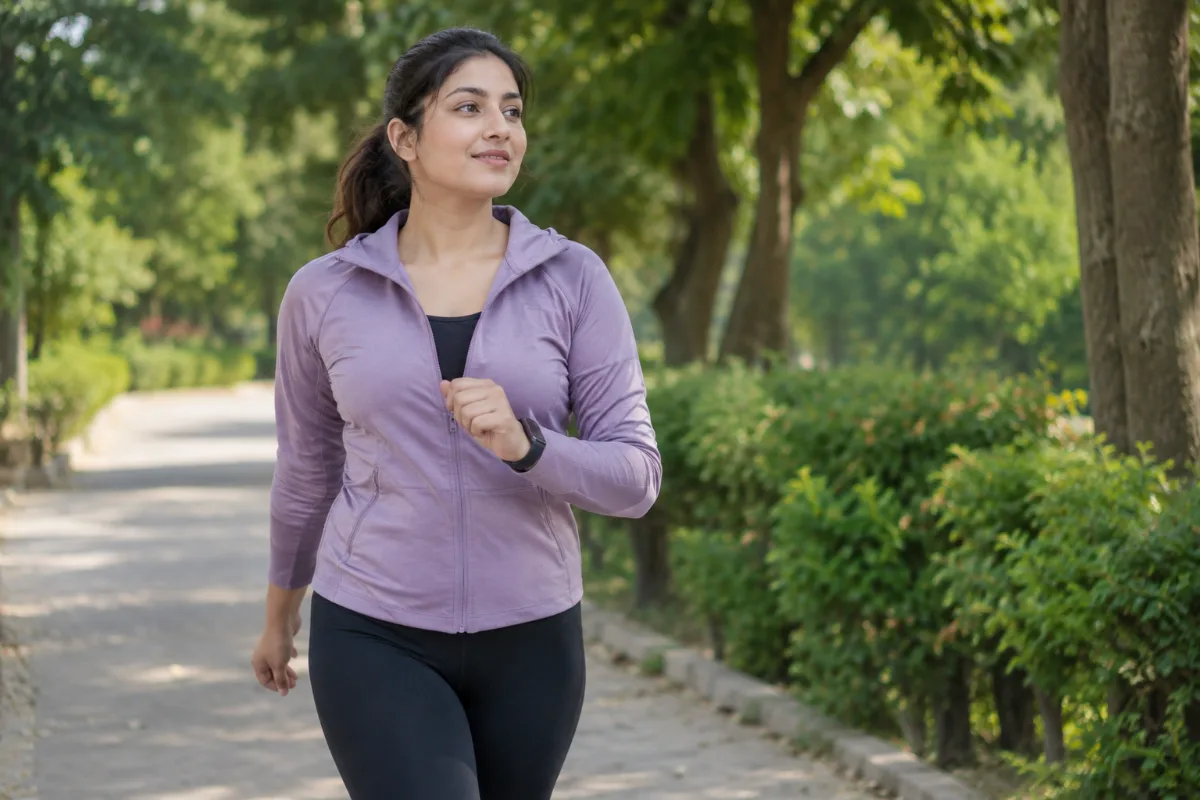
Brisk walking is the easiest place to start. Our guide to walking for an apron belly shows what 30 minutes a day can do. Swimming, cycling, cross-trainers and incline walking also work well, because they move the whole body without jarring the fold. Aim for a pace where you can talk but not sing.
3. Strength Training (2 to 3 Days a Week)
Chair squats, glute bridges, wall press-ups and light dumbbell rows build muscle all over. More muscle helps you keep weight off and makes your shape look firmer as fat comes off. Add a little weight or a few more repetitions every week or two, so your muscles keep adapting.
For step-by-step instructions and more options, see our full guide to apron belly exercises.

A Simple 12-Week Plan
Start where you are and build slowly. Each session should feel challenging but never painful. If a week feels too hard, repeat it before moving on.
| Weeks | Deep core | Cardio | Strength |
|---|---|---|---|
| 1 to 4 | 10 minutes, 3 days a week | Walk 20 minutes, 4 days a week | 1 short session a week |
| 5 to 8 | 15 minutes, 4 days a week | Walk 30 minutes, 5 days a week | 2 sessions a week |
| 9 to 12 | 15 minutes, 5 days a week | 30 to 40 minutes most days, add a hill or a swim | 2 to 3 sessions a week |
Wear a well-fitted support belt or high-waisted support shorts during walks and workouts if the fold bounces or rubs. They make movement more comfortable and protect the skin in the crease.
Protecting Your Skin While You Train
Sweat and friction under the fold can quickly lead to soreness or a rash. A few simple habits keep the skin healthy so you do not lose training days.
- Wash and dry the crease gently after every session, patting rather than rubbing.
- Wear moisture-wicking fabrics, not cotton, which holds sweat against the skin.
- Use a barrier cream or an anti-chafe balm before longer walks.
- See your GP or pharmacist if a rash smells, weeps or does not settle within a week.
Exercises to Avoid or Adapt
- Sit-ups and full crunches: they can push a weak tummy outwards and strain your neck.
- Double leg raises: too much load on the lower belly for most beginners.
- Full floor planks at the start: begin on an incline and lower the height as you get stronger.
- High-impact jumping: it makes a heavy fold swing and rub. Use marching or step-ups instead.
Stop any move that makes the middle of your tummy dome or bulge, or that causes pain. Doming can be a sign of a gap between the tummy muscles.
Why Food Decides How Much the Fold Shrinks
Exercise supports fat loss, but your diet decides how much fat actually comes off. You need a small, steady calorie deficit. Very low-calorie crash diets are not the answer, because they often cause muscle loss and are hard to keep up.
- Include protein at every meal, such as eggs, fish, chicken, Greek yoghurt, lentils or tofu.
- Fill half your plate with vegetables and add fibre from oats, beans and wholegrains.
- Cut back on ultra-processed snacks, sugary drinks and alcohol.
- Drink water regularly, especially on training days.
Our diet and nutrition guide for an apron belly gives UK-friendly meal ideas.
Why Your Results May Stall
Almost everyone hits a plateau at some point. It rarely means exercise has stopped working. More often, one of these factors is holding progress back.
- Eating back the calories burned: a long walk can be undone by one large snack.
- No progression: the same routine for months becomes too easy to drive change.
- Poor sleep and stress: both raise hunger and make belly fat harder to shift.
- Hormonal change: menopause, PCOS and some medicines make fat loss slower, not impossible.
- A mostly skin fold: once the fat has gone, the remaining overhang will not respond to more training.
Review your food, add a little challenge to your sessions and give it another 6 to 8 weeks. If nothing moves, speak to your GP to rule out a medical cause.
How to Track Your Own Before and After
Progress photos are useful, but only if you take them the same way each time.
- Take photos first thing in the morning, in the same spot and light.
- Wear the same close-fitting underwear.
- Take a front view, a side view and a relaxed seated view.
- Measure your waist at the belly button every 4 weeks.
- Note how you feel: back ache, rashes, energy and how clothes fit.
Our guide to apron belly before and after results shares real stories and explains how to judge photos fairly.
Exercise After Pregnancy or a C-Section
Gentle pelvic floor exercises and deep breathing can usually start soon after birth. Wait until your postnatal check, usually at 6 to 8 weeks, before more demanding exercise. After a caesarean, recovery often takes longer. The NHS guide to your post-pregnancy body explains what is safe and when.
Many women also have a gap between the tummy muscles after pregnancy. Our guide to apron belly and diastasis recti includes a simple home check. A women’s health physiotherapist can help if the gap is large.
When Exercise Has Done All It Can
If your weight has been stable for 6 months or more and a fold of loose skin remains, exercise has probably reached its limit. At that point, the fold is mostly skin, and only surgery can remove it.
- A panniculectomy removes the hanging fold to help with rashes, hygiene and comfort.
- A tummy tuck also tightens the tummy muscles and reshapes the lower belly.
Read our guide to panniculectomy vs tummy tuck to compare the two. Surgeons usually want a stable weight before operating. The fitness you build now still pays off, because a strong core and a stable weight lead to a smoother recovery.
FAQs
Can exercise get rid of an apron belly completely?
Not on its own. Exercise and a calorie deficit can shrink the fat in the fold and firm the muscles beneath it. Loose skin does not shrink much, so a fold that is mostly skin will usually stay.
How long does it take to see apron belly results from exercise?
Most people feel stronger within 2 to 4 weeks and see a smaller waist within 2 to 3 months. Clear changes to the fold itself usually take 3 to 6 months of regular exercise and steady eating.
What is the best exercise for an apron belly?
There is no single best move. A mix of deep core work, brisk walking and strength training works best, because it burns fat, protects muscle and builds support under the fold.
Are crunches bad for an apron belly?
They are not the best choice. Crunches and sit-ups can push a weak tummy outwards and strain the neck. Dead bugs, pelvic tilts and incline planks are safer and train the deep core better.
Why is my apron belly not getting smaller with exercise?
The usual reasons are eating too much to create a deficit, too little strength work, or a fold that is mostly loose skin. Check your waist measurement over 8 weeks before judging the scales or photos.
Will loose skin tighten if I keep exercising?
Only a little. Skin may firm slightly as fat comes off and muscle builds, especially when you are younger. Heavily stretched skin rarely shrinks back fully, even with regular training.
This article is for general information only and is not medical advice. Speak to your GP or a physiotherapist before starting a new exercise plan, especially after pregnancy, surgery or if you have a health condition.