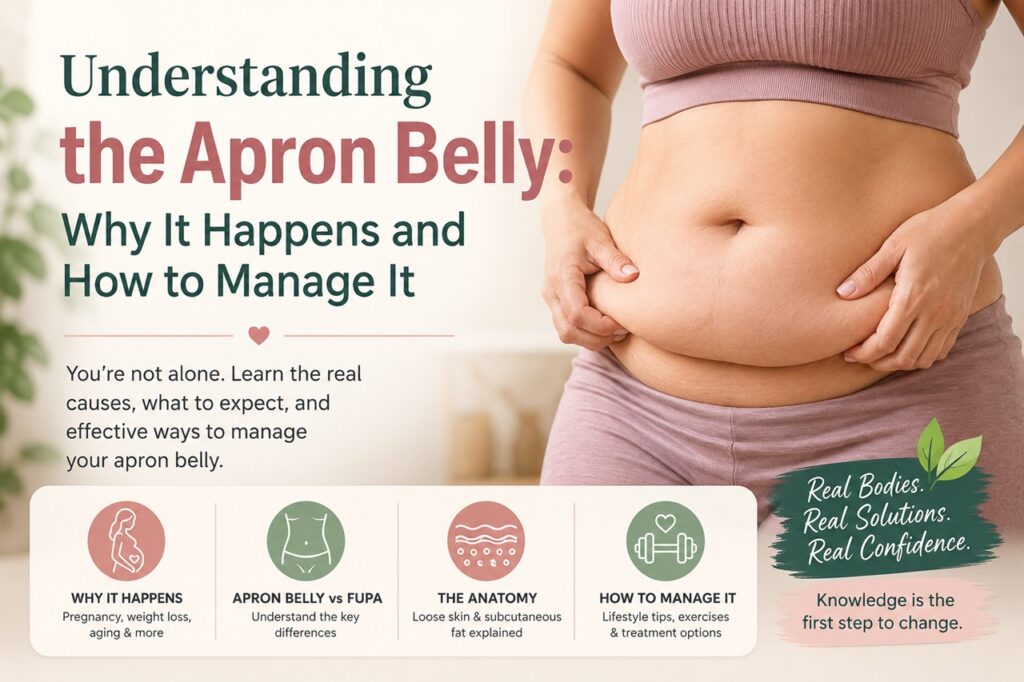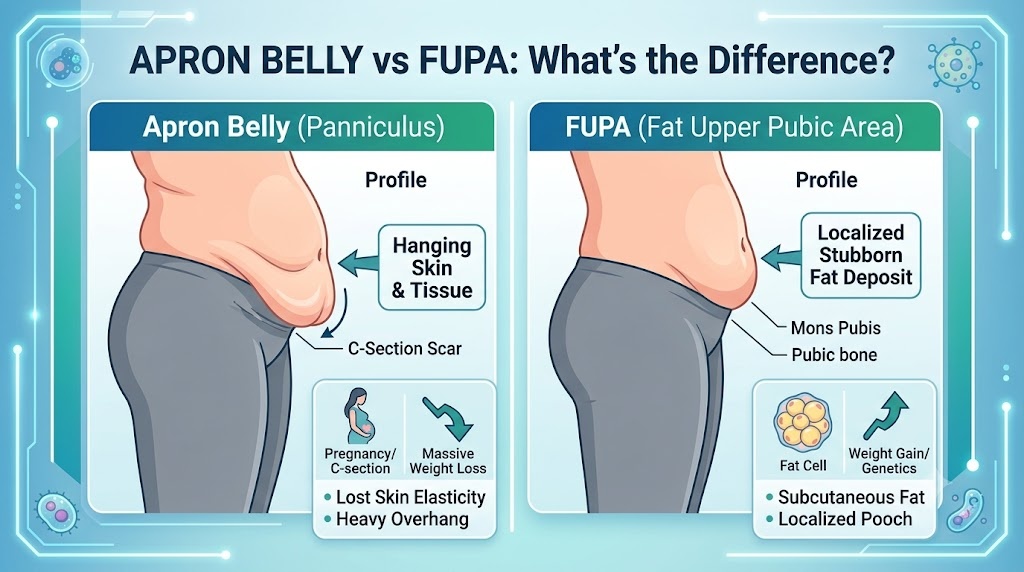

If you are dealing with an apron belly, medically known as a pannus stomach or abdominal pannus, you know how frustrating it can be. This overhanging flap of excess skin and tissue that drops over your waistline is incredibly common yet rarely discussed openly. Whether it developed after pregnancy, a C-section scar, or significant weight loss, an apron belly isn’t just about appearance. The excess skinfold can trap moisture and heat, leading to physical discomfort such as chafing, posture issues, and recurring skin irritations.
The most common question people ask is: Can you lose an apron belly with just diet and exercise? While targeted stomach crunches can strengthen your core muscles, they won’t make a true pannus disappear. Because an apron belly involves overstretched skin that has lost its elastic recoil, achieving real size reduction requires a targeted approach.
In this comprehensive guide, we will break down the exact strategies for getting rid of an apron belly, exploring everything from noninvasive body contouring (like CoolSculpting) and core rehabilitation for diastasis recti to surgical solutions like a panniculectomy or a full abdominoplasty.
What Exactly Is a Mother’s Apron?
The abdominal pannus isn’t simply extra weight. It is a distinct body comprised of fat and skin cells that fall just below the abdominal line. Doctors evaluate it on a scale of 1 to 5 based on how deeply it hangs. A hang that is grade one gets to the pubic hairline, while the grade five hang extends to the knees.
Knowing what you are considering will help you choose the right solution. The top layer is a plethora of abdominal skin that has lost its snap. Below that skin lies subcutaneous fat, the soft fat you can squeeze. In some cases, deep visceral fat in the belly pushes everything outward, making the hanging look more obvious.
The Real Reasons Your Stomach Overhang Formed
Your body’s shape and structure change over time, and skin can be stretched to a certain extent before it begins to lose its shape. Many distinct factors trigger this shape to take on.
1. Rapid Changes in Body Size
If you suffer from extreme weight loss, the body shrinks; however, your skin doesn’t shrink as much. The skin is stretched to accommodate the weight loss. When the weight is gone, the skin’s capacity falls. This is often the case following bariatric surgery because weight loss occurs more quickly than the skin can adjust.
2. The Effects of Having a Baby
During pregnancy, the core of your body expands dramatically over the course of nine months. This results in a significant reduction in the skin’s elastic recoil. The skin’s fibers stretch until their limit. If you were a victim of a Cesarean section, then the tale becomes more complex. The scars from a Cesarean section create a tight, straight line that runs across the lower part of your stomach. The loose skin above the scar tissue is then draped to the sides of the scar, giving the appearance of a shelf.
3. Muscle Separation Hidden Underneath
A baby in your arms or carrying the weight of a lot could tear the tissues that hold the stomach muscles. This is referred to as diastasis recti. When the muscles are separated from each other, they are unable to keep the organs inside your body. The belly expands in the opposite direction, causing your loose skin and fat to slide farther.
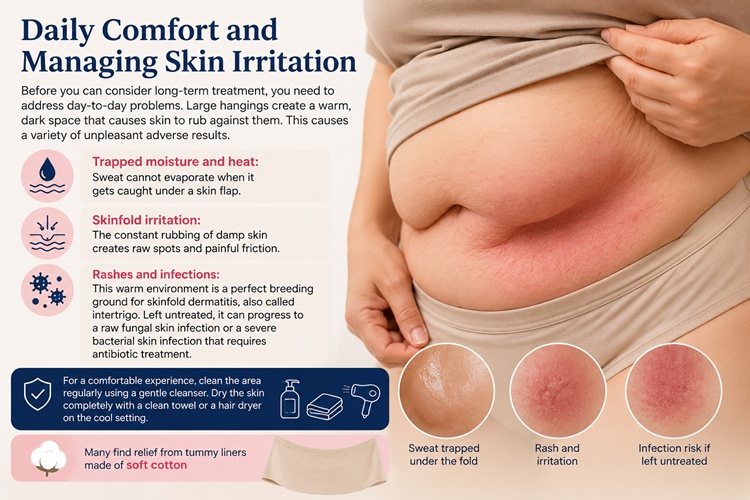
Daily Comfort and Managing Skin Irritation
Before you can consider long-term treatment, you need to address day-to-day problems. Large hangings create a warm, dark space that causes skin to rub against them. This causes a variety of unpleasant adverse results.
- Trapped moisture and heat: Sweat cannot evaporate when it gets caught under a skin flap.
- Skinfold irritation: The constant rubbing of damp skin creates raw spots and painful friction.
- Rashes and infections: This warm environment is a perfect breeding ground for skinfold dermatitis, also called intertrigo. Left untreated, it can progress to a raw fungal skin infection or a severe bacterial skin infection that requires antibiotic treatment.
For a comfortable experience, clean the area regularly using a gentle cleanser. Dry the skin completely with a clean towel or a hair dryer on the cool setting. Many find relief from tummy liners made of soft cotton, tucked under the flaps to soak up sweat that builds up throughout the day. It is also possible to apply anti-chafing creams to reduce friction and keep your skin dry.
Can You Shift a Hanging Belly with Diet Alone?
Your body can’t tell you exactly where to use fat. If you consume fewer calories than you burn, your body takes energy from everywhere. To reduce the excess fat around your belly, you need to maintain a steady caloric deficit.
Make sure you are eating clean protein sources like fish, chicken, and eggs, in addition to lots of vegetables and whole grains. These foods keep you full, so you don’t overeat. Drinking plenty of fluids helps keep your skin as healthy as possible. When your body’s fat percentage decreases, the weight of the apron hanging from your waist will reduce as well. But remember that diets only shrink fat cells. It is not able to make stretched-out thin skin appear.
Home Exercises That Actually Help the Core
Traditional sit-ups push your upper body upwards, which can make a muscle separation look more severe. Instead, you should perform exercises that draw your stomach to the side and build the deep abdominal muscles.
The Stomach Vacuum
This technique targets the transversus abdominis, which acts as a natural corset within your body. Inhale everything out of your lungs. Then you should pull your belly button back towards your spine as strongly as you can. Maintain that position for 10 to twenty seconds, taking deep breaths. Releasing and repeating this five times.
Modified Planks
Make yourself a push-up position, but place all your body weight onto your forearms, not your hands. Maintain your body straight between your thighs and your head. Engage your glutes and pull your stomach up tight. If you have a full-plank injury to the lower part of your back, lower your knees towards the floor while keeping the core in place. Keep them for 30 seconds.
Glute Bridges
Lie on your back, bend your knees, and keep your feet flat on the floor. Inflate your buttocks and raise your hips until your body is in an even line between your shoulders and your knees. This will strengthen the glutes and lower back muscles that help to support your pelvis, as well as improve your posture.
Noninvasive Options for Skin and Fat
If you’re not interested in surgery, certain treatment options can reduce small amounts of fat or tighten moderate skin looseness. They work best with smaller Aprons.
Although non-invasive treatments may slightly reduce fat thickness, they don’t remove large amounts of excess tissue. If your skin has lost its elasticity, these treatments will only offer a minor improvement.
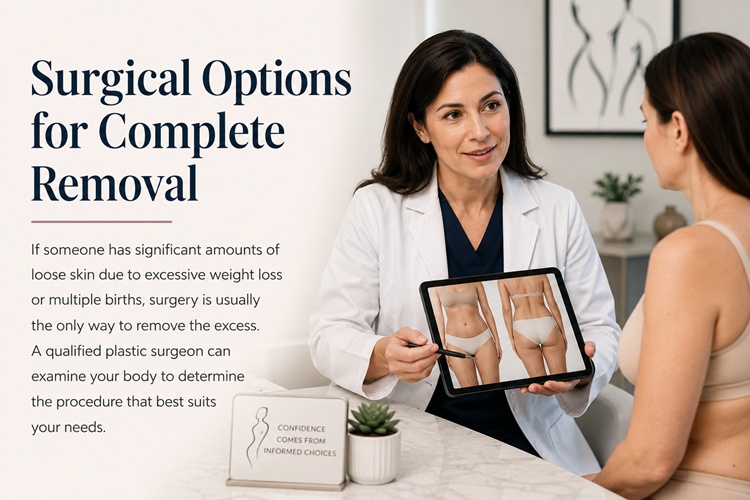
Surgical Options for Complete Removal
If someone has significant amounts of loose skin due to excessive weight loss or multiple births, surgery is usually the only way to remove the excess. A qualified plastic surgeon can examine your body to determine the procedure that best suits your needs.
The Panniculectomy
This is a procedure that is only functional. The surgeon creates an incision from the hip to the hip and then removes the skin flap and fat. They don’t pull the underlying abdominal muscles and don’t relocate the stomach button.
The purpose of this procedure is to treat chronic skin inflammation, back pain, and mobility problems. Since it is a physical health issue and is covered by health insurance, certain plans might cover it if you report the skin problems you experience over a period of time.
The Full Abdominoplasty
Also known as a tummy tuck, it is an option for cosmetic surgery. The surgeon removes excess skin and pulls off excess fat, then fixes diastasis recti by stitching the muscles back together.
This results in a flat, strong abdominal wall. Additionally, surgeons create a brand new opening to your belly button to allow it to sit naturally with your new abdominal shape. The insurance usually doesn’t cover this as it’s an elective procedure.
Preparing for Your Recovery Journey
If you opt to undergo an operation for the removal of your appendix, you should prepare yourself for a lengthy healing time. The procedures need general anesthesia and can take some time to finish.
You’ll need to take 2 to 4 weeks off work to rest. A gentle walk around the house immediately after surgery is recommended to maintain blood flow and prevent clots. But it is important to refrain from heavy lifting or strenuous exercise for at least 6 weeks to ensure your muscles and incisions heal safely. A compression garment worn at this time can help reduce swelling and support your new body shape while you heal.
Small Daily Habits for Long-Term Success
If you decide to undergo surgery or stick with a natural approach to managing your weight, you must follow a daily routine to help keep your body healthy and strong.
- Stand tall: Slouching pushes your stomach forward, which makes any hang look larger. Practice rolling your shoulders back and keeping your core gently engaged as you walk.
- Moisturize carefully: Keep the skin on your belly hydrated from the outside with simple lotions to support its natural barrier.
- Stay active: Regular walking, swimming, or cycling burns calories and keeps your heart healthy without putting excessive stress on your joints.
- Track your skin health: Check the skin fold daily for redness or odor so you can treat irritation before it becomes an infection.
Controlling your belly’s apron takes patience and time. Concentrate on keeping your skin in good shape, strengthening your core muscles, and exploring options with a medical specialist to determine the best option for your needs.
Frequently Asked Questions (FAQs)
It all depends on the factors that make up the stomach’s overhang. If the overhang is primarily subcutaneous fat, creating an ongoing calorie deficit through a balanced diet and engaging in regular exercise could shrink fat cells and reduce the overall size of the overhang.
A hanging belly forms an incredibly deep fold in which skin is squeezed tightly against itself. This region holds body heat and moisture since air can’t circulate freely. If sweat remains in the area, the normal yeast and bacteria on the skin break it down and cause an unpleasant scent, skinfold irritation, and red patches.
Certain health insurance policies cover a panniculectomy, but they have strict eligibility requirements. Insurance companies consider this an operational procedure rather than an elective cosmetic procedure.
Recovery from a complete Tummy tuck is a significant procedure that requires general anesthesia. The majority of patients require between 2 and 4 weeks off from their normal jobs to recover and relax. For the first few weeks, you’ll wear an empathetic support band or a compression garment to help control fluid retention.
Diastasis recti is a major factor in how your stomach appears. If your abdominal muscles split due to pregnancy or sudden shifts in weight, they weaken structurally. With a weak muscle wall, your internal organs naturally press upwards against your lower belly.
Final Thoughts
The burden of an unflattering stomach is daunting. However, understanding the structure of your belly can help you make the best decisions to suit your needs. The abdominal pannus may result from a significant life event, such as an abortion, a C-section, or a significant weight loss. The solution is feasible.
For some, it’s about making a point of focusing on comfort at home, using a tummy liner to prevent fungal dermatitis-related infections, and performing targeted core exercises to help with diastasis recti. For those with significant excess skin and a need to meet with an expert plastic surgeon to discuss a surgical panniculectomy or a cosmetic abdominoplasty, this may be the most effective way to get relief.
Each body reacts differently to changes in weight and lifestyle. Concentrate on strengthening from the inside, keeping your skin hydrated, and selecting a treatment plan that best suits your individual health goals and daily routine. For more information visit the website home page.