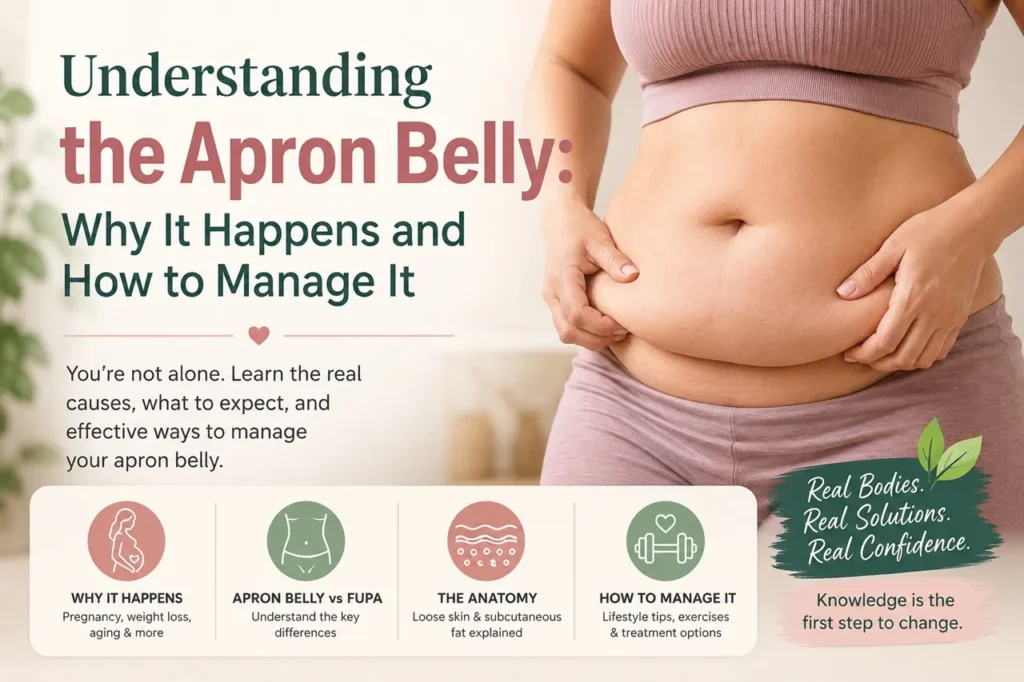

Quick Answer
The best way to get rid of apron belly depends on two things: how far the fold hangs (its grade) and whether it is mostly fat or mostly loose skin. Fat responds to steady weight loss and exercise. Loose skin that hangs over the pubic area or thighs usually needs surgery to remove it.
- Grade 1 and many grade 2 overhangs often improve a great deal with fat loss and strength work
- Grade 3 and above usually leaves loose skin behind, even after weight loss
- Ask your GP about weight management support, medicines and, if skin problems persist, a surgical referral
There is no single best way to get rid of apron belly that suits everyone. A small fold of fat above a jeans waistband and a heavy skin apron that rests on the thighs are both called an apron belly, yet they respond to completely different treatments. Doing the right thing for your type saves months of frustration.
This guide is a decision tool. It helps you work out what you have, then matches each option, from a calorie deficit to a panniculectomy, to the grade and cause it actually helps. For the full step-by-step plan with exercises and meal ideas, read our main guide on how to get rid of apron belly without crunches. You can also browse every article on fat loss in our belly fat hub.
What Is the Best Way to Get Rid of Apron Belly?
The best way to get rid of apron belly is to match the treatment to the cause: reduce body fat with a moderate calorie deficit and regular activity, build core and whole-body strength, and consider surgery only for loose skin that remains once your weight has been stable. Most people need the first two steps whatever their grade. Surgery is the only option that physically removes a hanging skin fold.
Why one plan does not fit every apron belly
An apron belly, also called a pannus, is made of skin and the fat beneath it. If fat makes up most of the fold, losing weight shrinks it. If the skin has been stretched by pregnancy, ageing or large weight loss, it may stay in place even when the fat has gone. That is why two people following the same diet can end up with very different results.
The two questions to answer first
Before choosing a plan, ask yourself:
- How far does the fold hang when I stand up straight?
- When I pinch it, is it thick and soft (mostly fat) or thin and crepey (mostly skin)?
Your answers point you to the right column in the tables below.
Step 1: Work Out Your Apron Belly Grade
Doctors and surgeons describe a pannus using a five-point scale based on how far it hangs. Our guide to apron belly grades covers each stage in detail. In short:
| Grade | Where the fold reaches | What usually helps most |
|---|---|---|
| Grade 1 | Covers the pubic hairline but not the genitals | Fat loss, strength training, posture work |
| Grade 2 | Covers the genitals | Fat loss first, then reassess skin |
| Grade 3 | Reaches the upper thigh | Weight loss plus skin care; surgery often needed for the skin |
| Grade 4 | Reaches the mid thigh | Medical weight support, skin care, surgical assessment |
| Grade 5 | Reaches the knees or beyond | Specialist care, skin protection, surgical assessment |
How to check at home
Stand in front of a full-length mirror in underwear, feet hip-width apart. Relax your tummy rather than sucking it in. Note where the lowest edge of the fold sits. Repeat every few weeks in the same light so you can track change honestly.
Grade is not a judgement
The scale is a clinical tool. It helps you and your GP talk about the same thing, and it is often used when surgery is considered. It says nothing about your worth or your effort.

Step 2: Decide Whether It Is Fat, Loose Skin or Both
Grade tells you how big the fold is. The fat versus skin question tells you what it is made of, and this decides whether non-surgical methods can shrink it. Our article on apron belly fat vs loose skin goes deeper into the test below.
The pinch test
Gently pinch the fold between your thumb and fingers. A thick, firm handful suggests a good amount of fat. A thin layer that feels like soft fabric and stays creased after you let go suggests loose skin. Most people have a mix of both.
Clues from your history
- Mostly fat: gradual weight gain, fold grows and shrinks as your weight changes.
- Mostly skin: fold appeared or stayed after pregnancy, after losing a lot of weight, or with age.
- Both: a heavier fold with stretch marks and some looseness, common after several pregnancies.
Step 3: Match the Right Treatment to Your Type
Once you know your grade and what the fold is made of, the options fall into place. The table shows what each approach can and cannot change.
| Option | Reduces fat | Tightens skin | Removes the overhang |
|---|---|---|---|
| Calorie deficit | Yes | No | Only if the fold is mostly fat |
| Exercise and strength training | Helps | No | No, but improves support and posture |
| Weight loss medicines | Yes | No | Only if the fold is mostly fat |
| Non-surgical skin tightening | No | Slightly, in mild cases | No |
| Panniculectomy | Removes fat in the fold | Removes loose skin | Yes |
| Tummy tuck | Removes fat in the fold | Removes and tightens skin | Yes, and can repair muscles |
If your fold is mostly fat (often grades 1 to 2)
Focus on steady fat loss and strength. This is where non-surgical methods work best, and many people see the fold shrink and lift as their waist gets smaller.
If your fold is mostly loose skin (often grades 3 to 5)
Weight loss and exercise still matter for your health and for surgical eligibility, but they will not remove the skin itself. Good skin care and support garments keep you comfortable while you plan the next step.

Losing the Fat: Diet That Works Long Term
For most people, fat loss is the foundation, whatever their grade. A smaller fold is lighter, easier to keep clean and less likely to rub.
Aim for a moderate deficit
The NHS advises cutting around 600 calories a day from your usual intake as a safe and sustainable way to lose weight, and its guide to calories and weight loss explains how to find your starting point. The NHS also suggests aiming to lose 0.5kg to 1kg (1 to 2lbs) a week. Slower, steady loss is easier to keep up than crash dieting.
Build meals around protein and fibre
Protein helps you keep muscle while you lose fat, and fibre keeps you full. Simple swaps work well: eggs or Greek yoghurt at breakfast, a palm-sized portion of chicken, fish, beans or tofu at lunch and dinner, and half your plate as vegetables or salad.
Exercise: What It Can and Cannot Do
You cannot burn fat from one spot by exercising that area. Crunches will not melt an apron belly. Exercise still matters because it raises the calories you use, keeps muscle as you lose weight and improves the support your core gives your lower belly.
Follow the NHS activity guidelines
The NHS recommends adults do at least 150 minutes of moderate activity a week, such as brisk walking, plus strengthening activities that work all the major muscle groups on at least 2 days a week. Walking is a good place to start if the fold makes other activities uncomfortable.
Choose core work that supports, not strains
Deep core exercises such as dead bugs, glute bridges and side planks build strength without pushing the belly forward. If you have had a baby, check for a gap between your tummy muscles first. A support belt can make walking and exercise far more comfortable if the fold bounces or rubs.
Medical Help: Weight Management and Medicines
If diet and activity on their own have not worked, you do not have to keep trying alone. Your GP can refer you to support, and in some cases suggest medicines.
Weight management programmes
The NHS offers weight management programmes that can include coaching, group support and healthy eating advice. You can self-refer to some local services. People who need more support may be referred to a specialist weight management service.
Weight loss medicines
Depending on your BMI and any health conditions affected by your weight, you may be able to have medicines such as semaglutide, tirzepatide, liraglutide or orlistat. The NHS page on treating overweight and obesity explains that these are prescribed alongside diet and lifestyle advice. Faster weight loss can leave more loose skin behind, which our guide to Mounjaro and apron belly covers in detail.
Weight loss surgery
Bariatric surgery may be offered on the NHS if you have a BMI of 40 or over, or 35 or over with conditions such as type 2 diabetes or high blood pressure. Lower thresholds apply for people from some ethnic backgrounds. It reduces fat, but large weight loss often leaves an apron of skin that needs separate treatment later.
Removing Loose Skin: Non-Surgical and Surgical Options
If you have lost the fat and the fold remains, the question becomes what to do about the skin. Our article asking is apron belly permanent explains why stretched skin rarely springs back fully.
Non-surgical skin tightening
Radiofrequency and ultrasound treatments heat the deeper skin layers to encourage collagen. They can give a small improvement in mild laxity, but they do not lift a hanging apron. Our review of non-surgical skin tightening explains what to expect.
Panniculectomy
A panniculectomy removes the hanging skin and fat below the belly button. It is mainly done to relieve problems such as rashes, infections and difficulty with hygiene or movement. Some people can get it on the NHS if they meet strict local criteria, which our guide to apron belly surgery on the NHS sets out.
Tummy tuck
A tummy tuck (abdominoplasty) removes loose skin and fat and can tighten the tummy muscles. It is classed as cosmetic surgery, so it is not usually available on the NHS. Our comparison of panniculectomy vs tummy tuck helps you see which one fits your goals.
Worked Examples: Choosing a Plan by Type
These examples show how the decision process works. They are illustrations, not real patients. Whatever the plan, waist trainers, slimming creams and endless crunches will not remove fat or skin.
Example 1: grade 1, mostly fat
A woman in her 40s has a small fold above her waistband that has grown slowly over several years. The pinch test shows a thick layer of fat. Her best plan is a 600 calorie daily deficit, regular brisk walking and two strength sessions a week. She reviews her grade every month, and our guide to how long it takes to lose an apron belly helps her set a realistic timeframe.
Example 2: grade 3, mostly skin after weight loss
A man has lost a large amount of weight and kept it off for over a year. The fold now reaches his upper thighs and feels thin. More dieting will not remove it. His best plan is daily skin care, a support garment and a GP appointment to ask about a surgical referral, bringing notes of any rashes or infections.
Frequently Asked Questions
What is the best way to get rid of apron belly fast?
There is no safe fast fix. A moderate calorie deficit, regular activity and strength training shrink the fat over months. Only surgery removes loose skin quickly, and it is usually only suitable once your weight has been stable.
Can you get rid of apron belly without surgery?
Yes, if the fold is mostly fat. Grade 1 and many grade 2 overhangs can shrink a great deal with weight loss and exercise. A fold made mostly of loose skin is unlikely to go away without surgery.
How do I know if my apron belly is fat or skin?
Pinch the fold. A thick, firm handful suggests fat, while a thin layer that stays creased suggests loose skin. Your history also helps: a fold that stayed after pregnancy or big weight loss is usually skin.
Do weight loss injections get rid of apron belly?
They can reduce the fat inside the fold, but they do not tighten skin. Faster weight loss can leave more loose skin behind, so pair any medicine with strength training and good skin care.
When should I see a GP about my apron belly?
See your GP if the fold causes repeated rashes, infections, pain or problems with hygiene or movement, or if you want help to lose weight. They can check your health, offer weight support and discuss a referral.
The Bottom Line
The best way to get rid of apron belly is the one that matches your grade and what your fold is made of. Fat loss and strength training help almost everyone and may be all you need for a smaller fold. A heavy skin apron needs a medical conversation about surgery. Work out your type, choose the right tools and give yourself time.
Your next step
Check your grade in the mirror today and do the pinch test. Then follow the matching plan in our realistic UK guide to getting rid of apron belly, and book a GP appointment if skin problems are part of the picture.
Featured image: tape measure by Jacek Halicki, Wikimedia Commons, CC BY-SA 4.0, cropped.