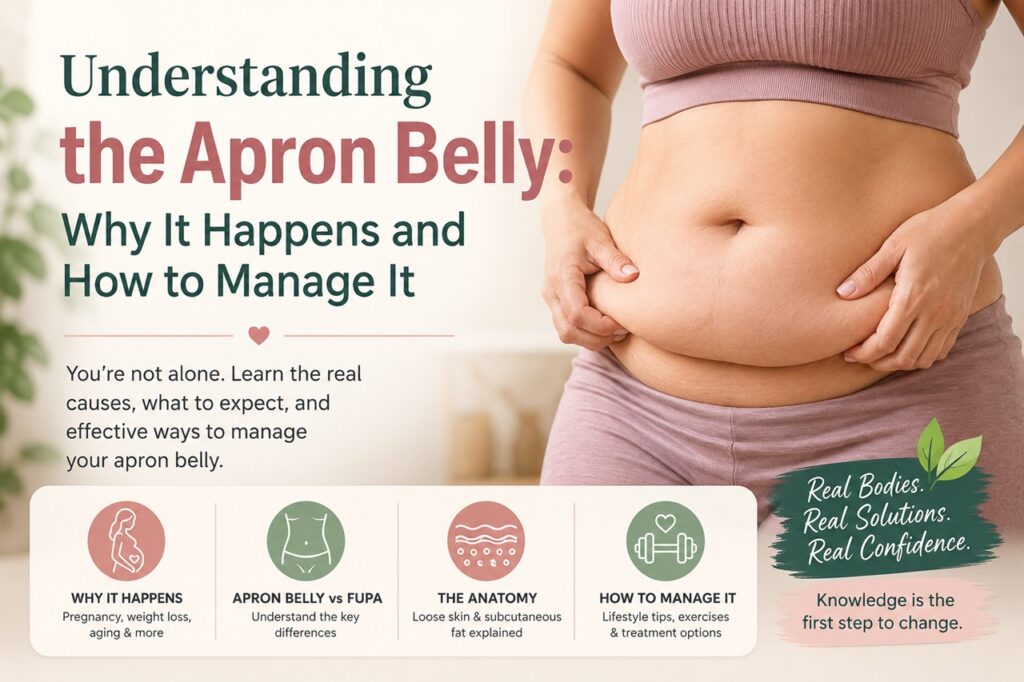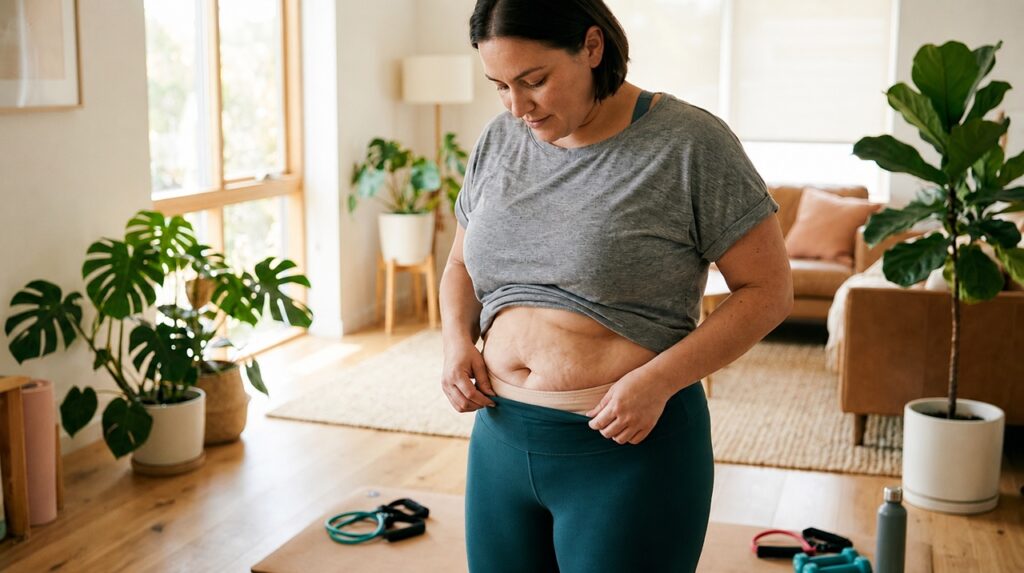


1. Start with the outcome you actually need
The goal is not a vigorous workout — it is gentle gut motility. Exercise to stimulate bowel movement is most effective when it creates rhythmic internal movement rather than high-intensity strain. Straining can actually worsen pelvic floor tension and make things harder.
Decide before you begin whether you need a quick prompt or a longer-term daily habit. That distinction shapes which moves you choose and when you do them. Good apron belly and digestive health management starts with knowing what outcome you are actually chasing.
2. Set up the simplest workable system
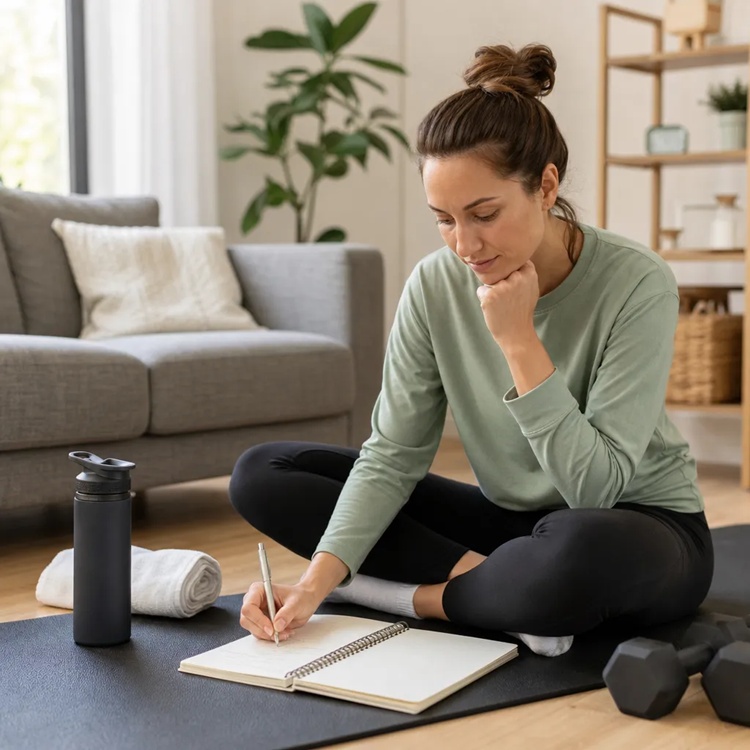
A ten-minute morning routine is enough to get started. Exercise helps bowel movement most reliably when it happens at a consistent time — ideally within thirty minutes of waking, before breakfast, when the gastrocolic reflex is naturally active.
Drink a glass of water first. Lay out a yoga mat or clear a small floor space. Understanding how the apron belly forms helps explain why the lower abdomen often holds tension that disrupts digestion — keeping that in mind makes the routine feel purposeful rather than arbitrary.
3. Follow the process without overcomplicating it
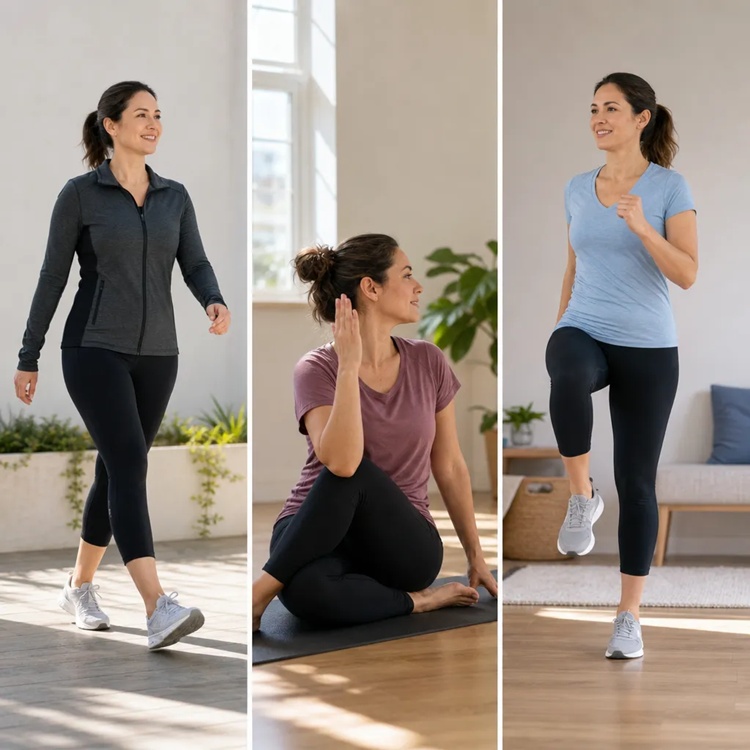
Work through these seven moves in order. Each one is gentle enough for most fitness levels, but stop if you feel sharp pain.
- Supine knee-to-chest pulls — lie on your back, draw one knee toward your chest, hold for five seconds, alternate sides for one minute
- Seated torso twists — sit upright in a chair, rotate slowly left then right, ten repetitions each side
- Cat-cow on all fours — arch and round the spine in slow cycles for ninety seconds
- Diaphragmatic breathing — lie flat, breathe deeply into the belly for two minutes
- Standing hip circles — feet shoulder-width apart, circle the hips slowly in both directions for one minute
- Brisk walking — even a ten-minute walk counts; the vertical movement jostles the colon gently
- Child’s pose — kneel and fold forward, holding for sixty seconds to release abdominal tension
Exercise for bowel movement does not need to be complicated. Consistency matters more than intensity. For more ideas on movement for a heavier lower belly, the linked guide covers adapted approaches that work well alongside this routine.
4. Check what is working and what is not
After one week, note whether frequency, ease, or comfort has improved. Exercise to stimulate bowel movement should produce a gradual, noticeable shift — not a dramatic overnight change. If nothing has changed after ten to fourteen days of consistent effort, the problem may need a different approach.
Watch for these signs that the routine is helping:
- Less bloating after meals
- More predictable timing
- Reduced straining
If you notice worsening discomfort, blood, or unexplained weight loss alongside constipation, stop self-managing and see a doctor promptly.
5. Adjust when your situation changes
Travel, illness, or a change in diet can all disrupt whatever rhythm you have built. Exercise to help bowel movement in these situations often means scaling back to just the walking and the breathing exercises rather than abandoning the habit entirely.
If you are recovering from surgery or have a pelvic floor condition, some of the floor-based moves may need modification. A pelvic health physiotherapist can advise on safe alternatives. Exercise helps bowel movement best when it is adapted to your current physical state rather than applied rigidly.

6. One more thing that makes a difference
Hydration is not optional. Exercise to stimulate bowel movement loses much of its effect if you are dehydrated, because the colon draws water from stool when the body is short of fluid, making stools harder and slower to pass.
Aim for at least 1.5 to 2 litres of water across the day, with a glass before your morning routine. Warm water or warm herbal tea in the morning can be particularly effective at prompting the gastrocolic reflex alongside movement.
7. Another angle worth knowing
Posture during the actual toilet visit matters more than most people realise. Sitting with the knees slightly elevated — using a small footstool to raise the feet — changes the anorectal angle and makes evacuation easier without any additional straining.
This is not a substitute for exercise for bowel movement, but it works well as a complement. Someone who has done their morning movement routine and then sits in a better-aligned position on the toilet is giving their body every mechanical advantage available. Small positional adjustments like this are easy to sustain long-term.
FAQ about exercise to stimulate bowel movement
How do you stimulate a bowel movement quickly?
A short brisk walk combined with a glass of warm water is one of the fastest gentle approaches. Exercise to help bowel movement works most quickly when timed with the natural gastrocolic reflex shortly after waking.
What is the 3-3-3 rule for bowel movement?
The 3-3-3 rule is a general guideline suggesting that a healthy range is anywhere from three bowel movements per day to three per week. Exercise helps bowel movement frequency trend toward the more regular end of that range over time.
Where to press to stimulate bowel movement?
Gentle clockwise abdominal massage — following the path of the colon from the lower right, up, across, and down to the lower left — can encourage movement. This is a complement to exercise for bowel movement, not a replacement.
What will trigger a bowel movement?
Common triggers include physical movement, a warm drink, food intake, and the gastrocolic reflex after waking. Exercise to stimulate bowel movement works by activating several of these mechanisms at once.
What should readers know first about exercise to stimulate bowel movement?
Consistency and timing matter more than intensity. Exercise to help bowel movement is most effective when done at the same time each day, ideally in the morning when the body’s natural digestive reflexes are already active.
How do you choose the right exercise to stimulate bowel movement approach?
Match the intensity to your current fitness and health status. Exercise helps bowel movement whether you choose walking, yoga-based moves, or breathing work — the key is choosing something you can repeat daily without discomfort.
What mistakes should you avoid with exercise to stimulate bowel movement?
Avoid exercising intensely on an empty stomach and then ignoring hydration. Exercise to help bowel movement can backfire if dehydration makes stools harder, so always pair movement with adequate fluid intake.
Is exercise to stimulate bowel movement worth it for daily use?
Yes, for most people. Regular exercise helps bowel movement frequency and consistency over time, and the moves involved are gentle enough to sustain as a long-term daily habit without risk for most healthy adults.
Recommended next steps
Try the seven-move sequence for one week at the same time each morning, paired with a glass of water before you begin. Note any changes in frequency or comfort. If exercise to stimulate bowel movement is not producing results after two weeks of consistent effort, speak to your GP to rule out an underlying cause. For readers managing lower-abdominal concerns alongside digestive health, the broader guides on this site offer practical context for understanding how movement, posture, and body composition interact.